- Category
- War in Ukraine
56 Dead Dolphins Found Along Black Sea Coast as Russia’s War Pushes Ecosystem Toward Collapse
 Prefer U24 Media on Google
- Authors

-c439b7bd9030ecf9d5a4287dc361ba31.jpg "Photo of Katherina Popilnichenko")
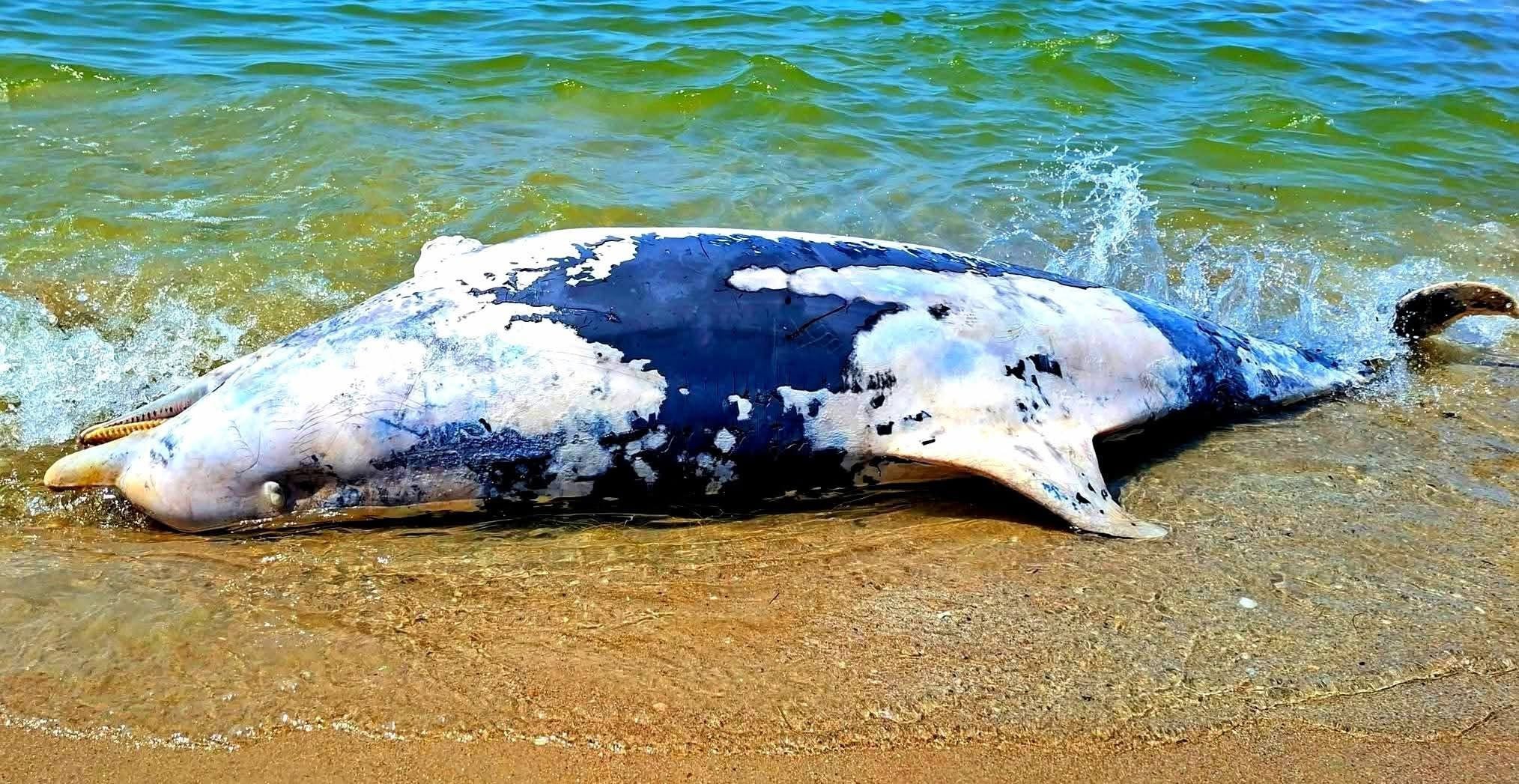
Scientists from the Tuzly Lagoons National Nature Park reported that 56 dead dolphins were found along the Black Sea coast within the park’s territory during June 2026.
Researchers state that the environmental and military pressure on the Black Sea has reached a critical limit, pushing the entire ecosystem to the brink of collapse. Since the beginning of Russia’s full-scale invasion of Ukraine, experts estimate that approximately 100,000 Black Sea cetaceans across three distinct species have died in the Black and Azov seas.
We bring you stories from the ground. Your support keeps our team in the field.
In addition to the dead dolphins documented along the Tuzly Lagoons coastline over the last month, shell-shocked marine mammals were also discovered near Odesa. Experts attribute the high mortality rates directly to ongoing military operations in the region.
According to the national park administration, constant deadly military activity, including mine explosions, bombings, missile launches, and the deployment of powerful naval sonar systems, is systematically destroying the unique biodiversity of the sea.
Massive volumes of chemical pollutants, compounded by the environmental consequences of the Kakhovka Dam disaster , have further exacerbated the damage.
The problem remains highly complex, as Black Sea cetaceans are forced to confront multiple severe hazards simultaneously. Park scientists noted that each destructive factor reinforces the others, triggering a chain-reaction mechanism of mortality.
Daily pressure on these unique populations compromises their survival rates, immune systems, and overall genetic potential for recovery.
The Tuzly Lagoons National Nature Park warned that without international intervention to halt the aggression, the Black Sea faces the permanent loss of its primary marine inhabitants, which have symbolized the region’s wild nature for thousands of years.
The environmental fallout from Russia’s shadow fleet has already struck a devastating blow to marine life, as evidenced by a massive petroleum spill in the Black Sea that contaminated an area exceeding 200 square kilometers.
Environmentalists traced the slick to the sanctioned vessel Sofia, a prime example of the aging, unmaintained tankers operating without legitimate insurance or oversight. This disaster followed another catastrophic incident in the Kerch Strait, where two decades-old tankers leaked at least 4,000 tons of highly toxic fuel oil into the water.
Because this heavy fuel oil settles directly onto the seabed, it remains there for years, systematically destroying fragile benthic ecosystems and wiping out local seafloor habitats. These continuous toxic discharges and chemical pollutants from Russia's maritime operations have put immense stress on the region’s marine flora and fauna, compounding the ecological damage and disrupting vital coastal biodiversity.
Discuss this article:




-efa69d4733b5af9f7cd0a642f85424a6.jpeg "Thick black smoke rises from the heavily damaged Proton-Electrotex plant in Orel, Russia, following a reported strike. (Source: Exilenova+)")