- Category
- War in Ukraine
EU SAFE Loans Could Unlock Non-EU Patriot Missiles as Ukraine Faces Interceptor Shortage
 Prefer U24 Media on Google
- Authors

-111f0e5095e02c02446ffed57bfb0ab1.jpeg "Photo of Roman Kohanets")
Ukraine may use European Union loan financing to buy interceptor missiles from countries outside the bloc, a European Commission spokesman confirmed at a briefing in Brussels on August 6, Ukrinform reported.
Balázs Ujvári, a Commission spokesman, explained that Kyiv sets its own defense priorities and submits the corresponding funding requests to Brussels for processing. He emphasized that Ukraine may seek financing for interceptor missiles and other equipment, even when those systems are manufactured outside the EU.
We bring you stories from the ground. Your support keeps our team in the field.
"The process is led by Ukraine. Ukraine determines the needs, analyzes the situation on the battlefield and determines its defense requirements. This is what we call 'delivery schedules,' which we study and process," Ujvári stated.
He noted that spending remains centered on weapons built inside the EU and Ukraine, but that exceptions are written into the framework. "I am not aware of any problems. I simply want to emphasize that it is Ukraine that must determine what it needs. The main focus is on weapons produced in the EU and Ukraine, but if, for some reason, a need arises to depart from that rule, such a possibility is also provided for under the relevant rules," he declared.
Ujvári added that negotiations with Kyiv are continuing and that contracts and schedules are being cleared quickly.
"Our negotiations are ongoing, the schedules and contracts continue to arrive, we review them extremely quickly, and then we make the corresponding payments," he confirmed, reporting no difficulties so far with the distribution of funds.
He declined to detail the ongoing talks, indicating that approved decisions would be announced once internal EU procedures conclude.
Commission spokeswoman Anitta Hipper reminded reporters that EU High Representative for Foreign Affairs and Security Policy Kaja Kallas had earlier urged member states holding air defense stockpiles to release them to Ukraine.
The new rules allow Kyiv to apply for financing to buy missiles from third countries whenever the required weapons cannot be produced or procured within the EU, opening a path to several states that already arm Ukraine's air defenses.
Confirmed and prospective suppliers include:
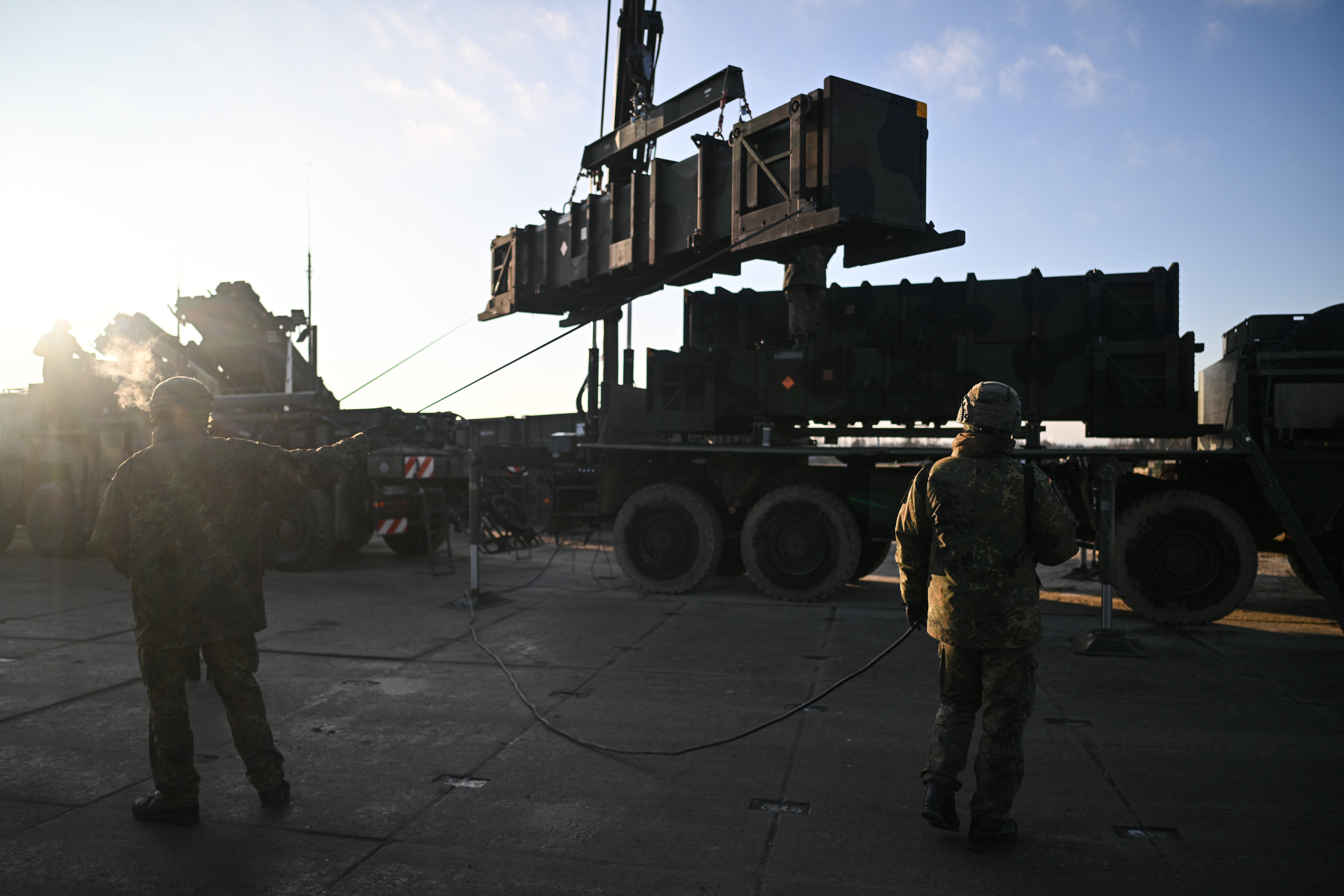
the United States, Kyiv's largest backer, which has delivered at least three Patriot batteries alongside NASAMS, Avenger, and HAWK systems and agreed in July 2026 to license Patriot interceptor production inside Ukraine;
Germany, the second-largest donor, which has transferred five Patriot batteries and 14 IRIS-T SLM systems and in April 2026 backed a $3.7 billion Raytheon contract for several hundred PAC-2 GEM-T missiles produced on German soil;
Poland, which supplied five PAC-3 MSE missiles in 2026 to intercept ballistic targets;
the Netherlands, which provided a radar and three Patriot launchers and joined the United Kingdom, Norway, and Sweden in contributing $500 million toward US-made weapons under the PURL initiative;
Romania and Spain, which handed over one Patriot battery and eight air defense systems, respectively;
Israel, which passed a single Patriot battery to Ukraine through the US and remains a potential source of Barak MX and David's Sling systems, though no such transfers have been confirmed.
Norway has continued to deliver NASAMS systems, with more than a dozen arriving by the middle of 2026.
The European loan financing at the heart of these procurement plans has already left a mark on Ukraine's own weapons industry.
Kyiv's Fire Point is developing the FP-7.x interceptor under Project Freya, as a lower-cost alternative to imported Patriot rounds, has tied a recent production shortfall to delays in funding expected through the same European Union loan.
Discuss this article:
-4a56a6b482ec132402c16ef6fcabf9a2.png)


-c439b7bd9030ecf9d5a4287dc361ba31.jpg "Photo of Katherina Popilnichenko")