- Category
- War in Ukraine
Even Russia’s Baltic Fleet Isn’t Safe as Ukraine Hits a Warship 1,000 Kilometers From the Frontline
Russia continues to lose its navy—including its newest ships—and now even far from the Black Sea. Russia’s leader Vladimir Putin has brought the war onto Russian soil, where there is no longer safety, even thousands of kilometers from the front line.
 Prefer U24 Media on Google
- Authors

-29a1a43aba23f9bb779a1ac8b98d2121.jpeg "Photo of Illia Kabachynskyi")
Ukraine’s Special Operations Forces (SOF) reported on October 4 striking the Russian corvette Grad, a Buyan-M class missile ship of Project 21631. While reports of attacks on Russia’s fleet have become routine in Ukraine’s General Staff updates, this operation stands out for several reasons.
Deep inside Russia
The first reason is the Grad’s location.
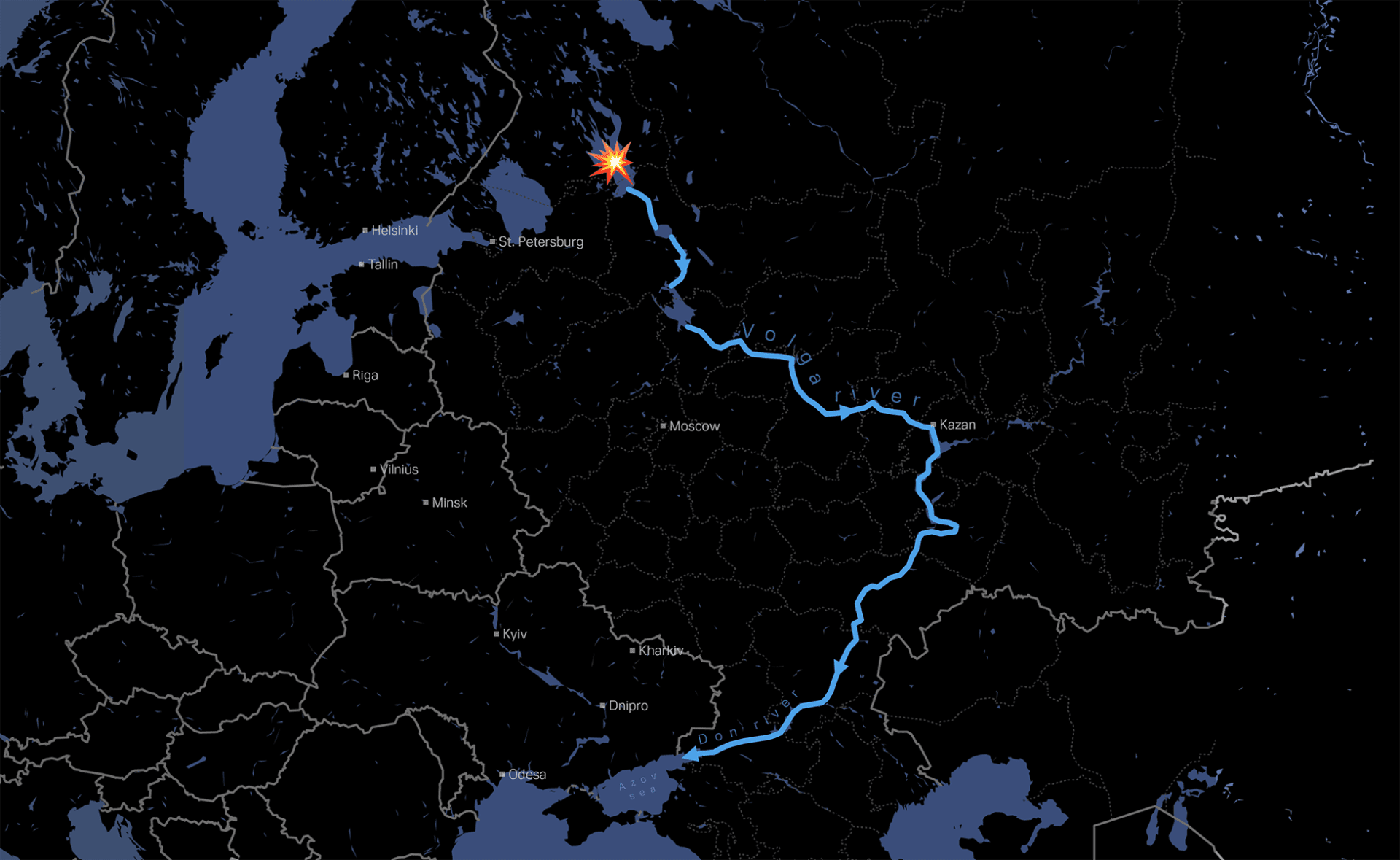
The Grad is part of Russia’s Baltic Fleet. At the time of the strike, it was located in Lake Onega—nearly 1,000 kilometers from the front line.
The SOF did not disclose how or with what weapon the Grad was hit, stating only that the “strike hit the starboard section of the ship’s engine compartment.” The extent of the damage is still being assessed.
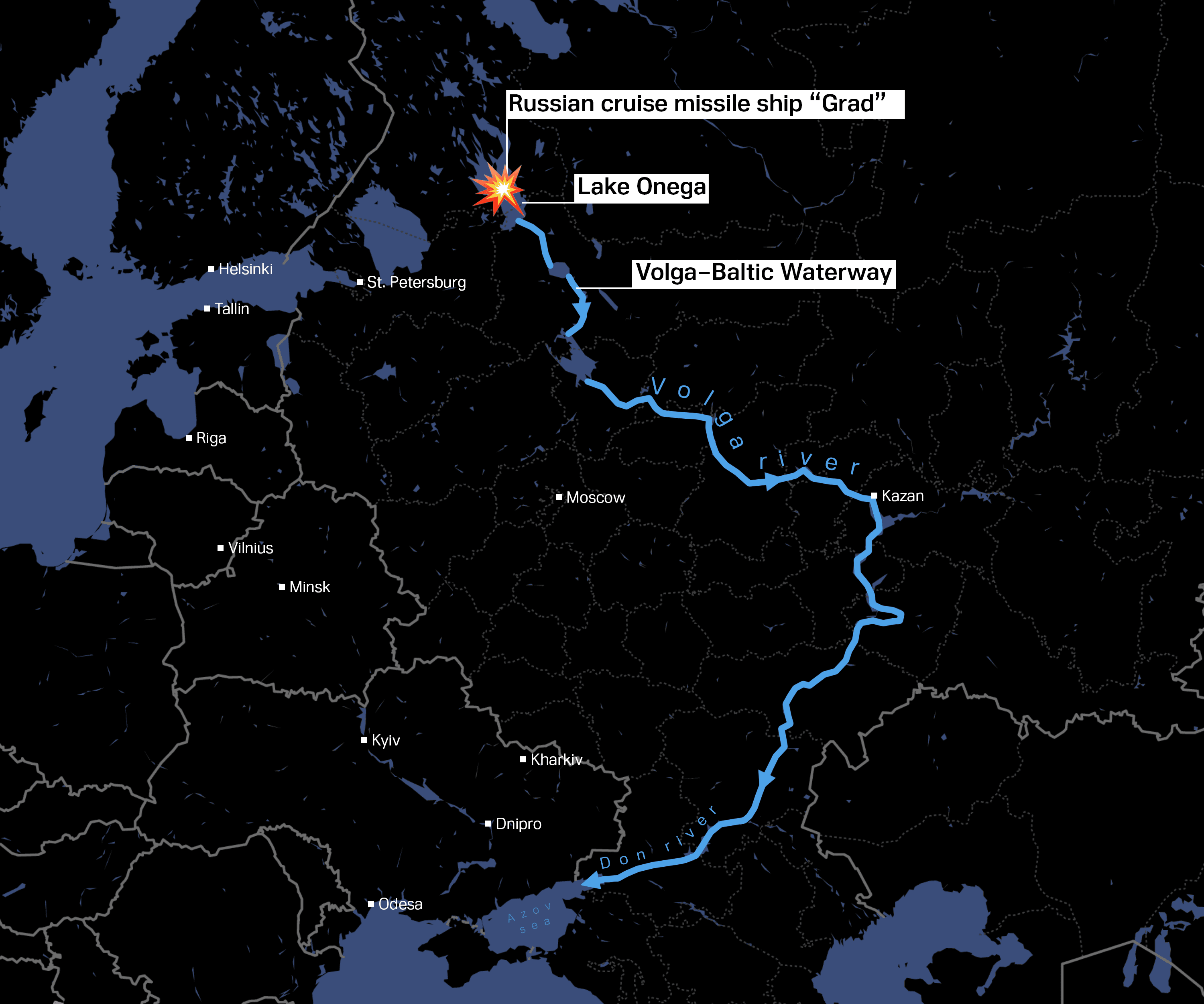
This means Ukrainian forces carried out a military operation deep inside Russian territory—far beyond the active combat zone.
Importantly, the Grad was moving from the Baltic Sea toward the Caspian Sea via Russia’s rivers and lakes, following the Volga–Baltic Waterway. This route is also part of the passage to the Sea of Azov: after the Volga–Baltic system, it connects to the Volga–Don Canal, leading through the Don River to the Azov and then the Black Sea.
Because Türkiye does not allow warships to pass through the Bosporus, this inland route is one of Russia’s few options for transferring small naval vessels to reinforce its Black Sea Fleet.
The SOF operation demonstrates that even this supposedly safe route is vulnerable—and that the Russian fleet can be destroyed long before reaching Ukrainian shores.
Why hitting the Grad matters
The second distinctive feature is the vessel itself — the Grad.
The Grad is a relatively new addition to Russia’s naval arsenal. It is a small missile ship of Project 21631 Buyan-M. Russia currently operates 12 such vessels; the Grad is the tenth. It was laid down in 2017, launched in 2021, and officially entered service on December 29, 2021.
The ship's displacement is 949 tons, its length is 75 meters, its crew is 32, and its maximum speed is 25 knots. Its operational range is about 2,500 miles (over 4,000 kilometers).
Ships of this class can launch Kalibr or Oniks missiles from an eight-missile vertical launcher. They are also equipped with artillery systems and machine guns and can deploy mines and depth charges.
The main role of the Buyan-M class is coastal defense, primarily in maritime zones.
Russia’s extensive system of rivers and canals allows these relatively compact vessels to move between different fleets via inland waterways.
The extent of the Grad’s damage remains unknown.
However, what truly matters is not just the damage itself, but the strike’s significance. Ukraine is now consistently hitting targets deep within Russian territory—hundreds and even thousands of kilometers from the front line. The record so far is more than 2,000 kilometers away, in Tyumen, where a refinery was attacked on October 6.
This demonstrates both Ukraine’s readiness and its growing capability for asymmetric warfare. Putin has become the president who brought war to Russia—across vast portions of its territory.
Discuss this article: