- Category
- War in Ukraine
Five-Meter-Tall Russians Go to War: AI Is Faking Putin’s Battlefield Victories in Ukraine
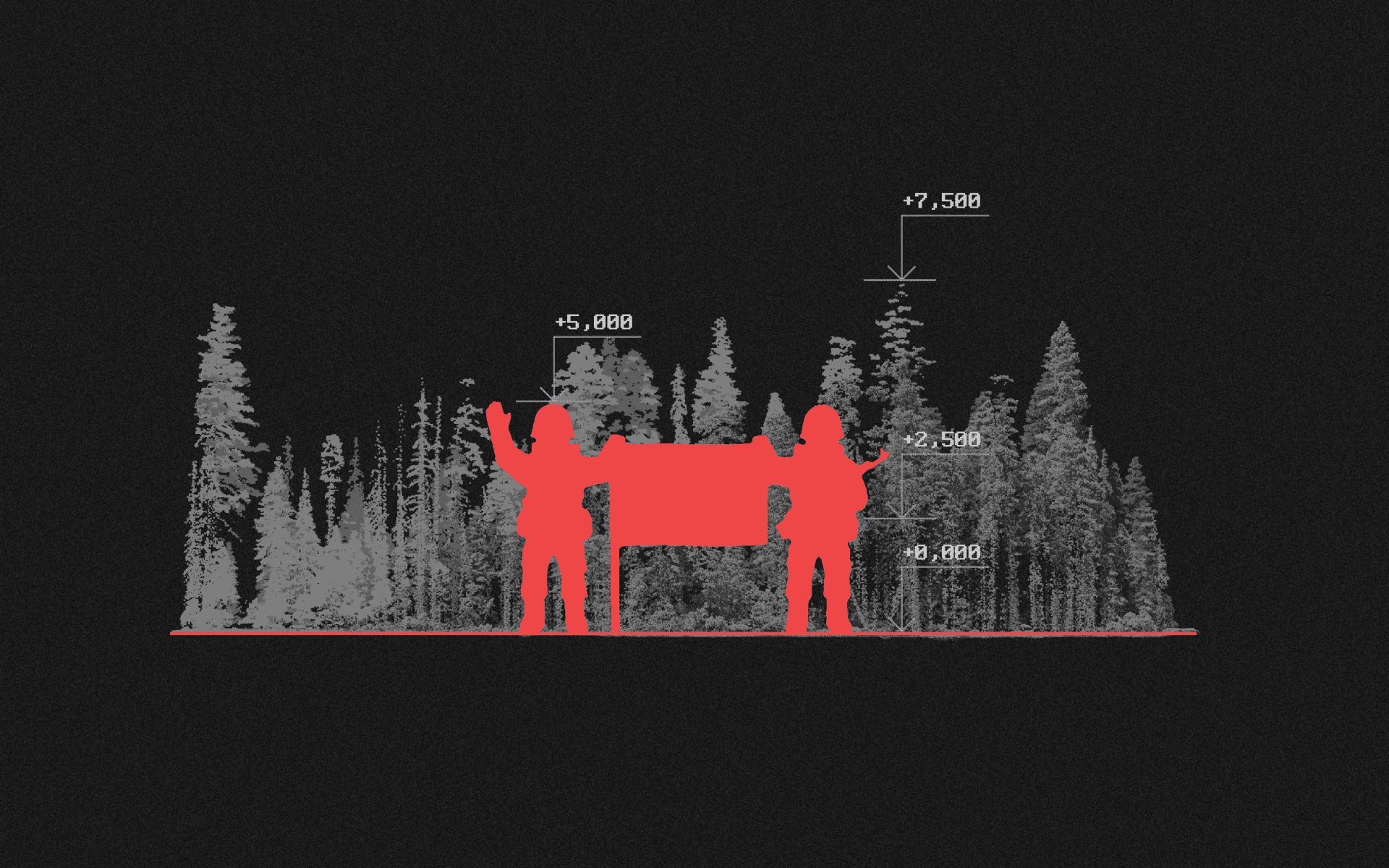
Russia is increasingly fabricating not only the scale of its battlefield successes, but also the evidence supposedly proving them. Russian flags appear where there are no Russian troops. Where there are no soldiers, artificial intelligence adds them in. And sometimes the results are so convincing that Russian soldiers grow to five meters tall and simply dissolve on camera.
 Prefer U24 Media on Google
- Authors


On October 1, Vladimir Putin touted yet another round of major successes by the Russian military. According to him, Russian forces supposedly captured “1,301 square kilometers of Ukrainian territory” in September alone.
The problem is that no one else can see an advance of that scale — not even openly pro-Russian sources. For example, the Russian OSINT project Slivochny Kapriz, which maintains its own battlefield map, estimated that the territory under Russian control expanded by 177.1 square kilometers in September. That is roughly 7.3 times less than Putin claimed.
The assessment by the US-based Institute for the Study of War (ISW) is even worse for the Kremlin. Russian forces captured 175.54 square kilometers in September, while Russia lost control of 256.35 square kilometers of territory. That leaves Russia with a net loss of 80.81 square kilometers for the month.
-2386d89295678553e91e27f1a0d592e3.png)
If areas where Russian assault troops managed to infiltrate but failed to establish control are also taken into account, the result is worse still: ISW estimates Russia’s net loss at 175.18 square kilometers. The analysts put their conclusion unusually bluntly: Putin’s claims are so disconnected from the situation on the battlefield that they “resemble hallucinations.”
And these hallucinations are becoming chronic.
On September 19, the Russian Defense Ministry claimed that since the beginning of the year, Russian forces had supposedly captured more than 5,300 square kilometers and more than 220 settlements. At the time, ISW had confirmed the capture of only 147.7 square kilometers. Ukrainian forces, meanwhile, had liberated at least 972.56 square kilometers as of that date, according to ISW.
But Moscow has found a way to demonstrate successes that do not exist. In military slang, the practice is known as “flag planting.”
The tactic existed even before the current boom in generative AI. Small Russian groups would try to infiltrate far ahead between Ukrainian positions, reach a building or the outskirts of a settlement, unfurl a Russian flag in front of a drone camera, and immediately flee—or, more often, be killed shortly afterward. The mere appearance of the flag would then be used as evidence that Russia supposedly controlled the settlement.
But now there is no longer always a need to send a soldier with a flag—one can simply be generated.
ISW has documented the widespread circulation by Russian sources of videos showing flags being raised that were created or altered using AI, beginning in June 2026.
Between June 1 and August 30, analysts identified at least 35 suspicious videos. Commercial detection systems assessed at least 10 of them with high confidence as having been altered using artificial intelligence. ISW believes the true number may be significantly higher.
One such video appeared on July 27. Russian Telegram channels showed what was purportedly a Russian soldier raising a flag on the outskirts of Bilyi Kolodiaz in the Kharkiv region. The figure towered over the trees as though he were about five meters tall, and at one point simply dissolved into the greenery.
On August 3, the Russian Defense Ministry announced that Bilyi Kolodiaz had been captured.
On August 24, channels published a similar video from Dolynka in the Zaporizhzhia region. Once again, the people carrying flags had bizarre proportions. That same day, the Russian Defense Ministry announced that the village had been captured.
In another video, from Mykolaipillia in the Donetsk region, a Russian flag at one point literally dissolves into the roof of a house.
In early September, Putin announced that Russian forces had captured Sviatohirsk. On September 2, Volodymyr Rybalkin, head of the city’s military administration, recorded a video in the city center refuting that claim. Later, Russian pro-war channels apparently took footage from that very video and used AI to replace Rybalkin with a Russian soldier supposedly standing in the same location.
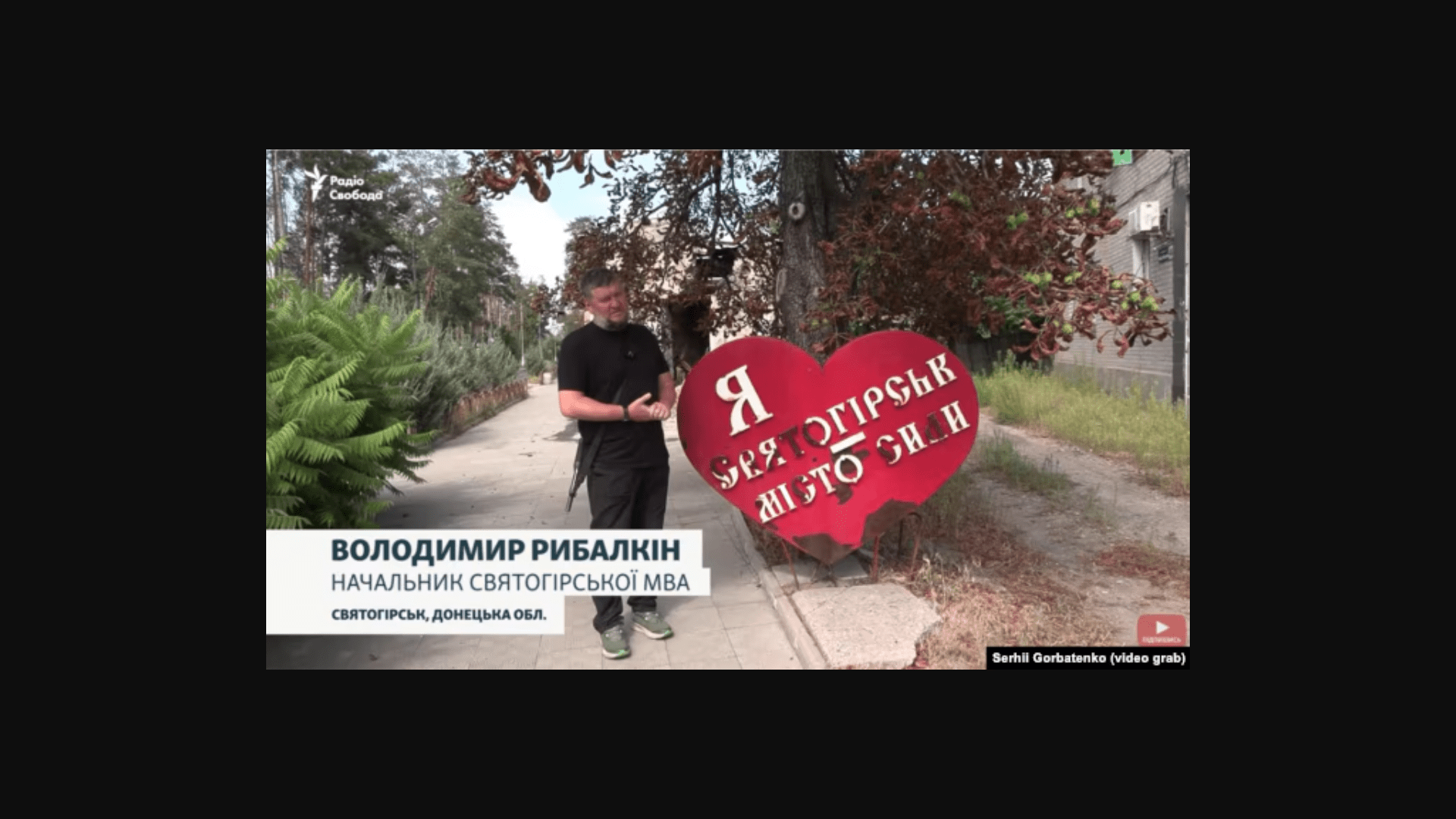
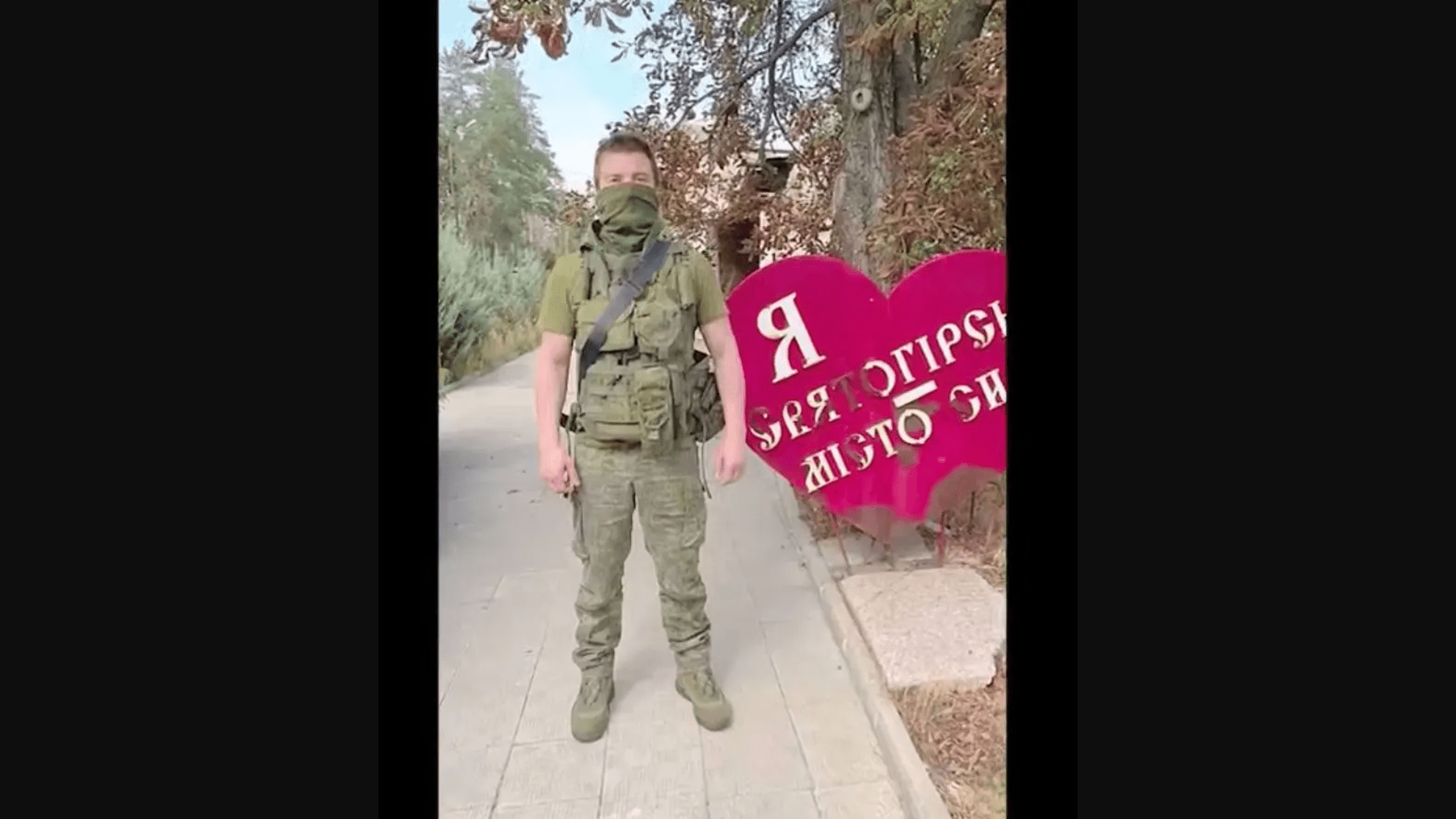
In other words, the Russians took a video that disproved their fake claim and turned it into “evidence” supporting that very same claim.
A few days later, Andrii Biletskyi, commander of Ukraine’s Third Army Corps, even posted a video—a completely real one—showing himself walking around Sviatohirsk and describing the city as being in the rear.
Even Russian propaganda Telegram channels are mocking the AI-generated flag-planting stunts: “Take a drone operator. He sends a Mavic to the designated area and records 15–20 seconds of footage. The video is then downloaded, and AI is used to insert a soldier waving a flag. Mission accomplished. Back at headquarters, everyone is convinced that the area is under our control, and they plan operations accordingly. Then soldiers are sent in and get their asses kicked.”
Real village, fake soldier
There is an important detail that makes these fakes significantly more dangerous than ordinary AI-generated video. The Russians use real footage of a specific settlement that can be accurately geolocated. AI is then used to add a soldier and a Russian flag onto that footage.
As a result, the traditional OSINT principle of “find the building and determine its coordinates” no longer guarantees that the event actually took place. The geolocation may be correct—what is fake is the presence of the Russian soldier. The creators of such videos use rapid cuts, zooms, and pans to keep the person or flag on screen for as little time as possible.
ISW suggests that, for now, this does not appear to be a single centralized Russian military program, but rather a practice used by individual units and pro-war bloggers. There may be several motives: convincing foreign audiences that the Russian advance is relentless—or convincing their own superiors that an order to capture yet another village has been carried out.
The result is that commanders first receive inflated reports. The Defense Ministry then colors in areas on its maps that its forces do not actually control. Putin subsequently talks about 1,301 square kilometers captured in a single month.
And when reality differs that dramatically from the Kremlin’s reports, AI is used to generate the reality they need.
I kept the original figures, attributions, links, and distinctions between verified facts and attributed claims intact.
Discuss this article:



-111f0e5095e02c02446ffed57bfb0ab1.jpeg "Photo of Roman Kohanets")