- Category
- War in Ukraine
France Just Rehearsed a Nuclear Strike With Rafales—Here’s How Operation Poker Works
 Prefer U24 Media on Google
- Authors


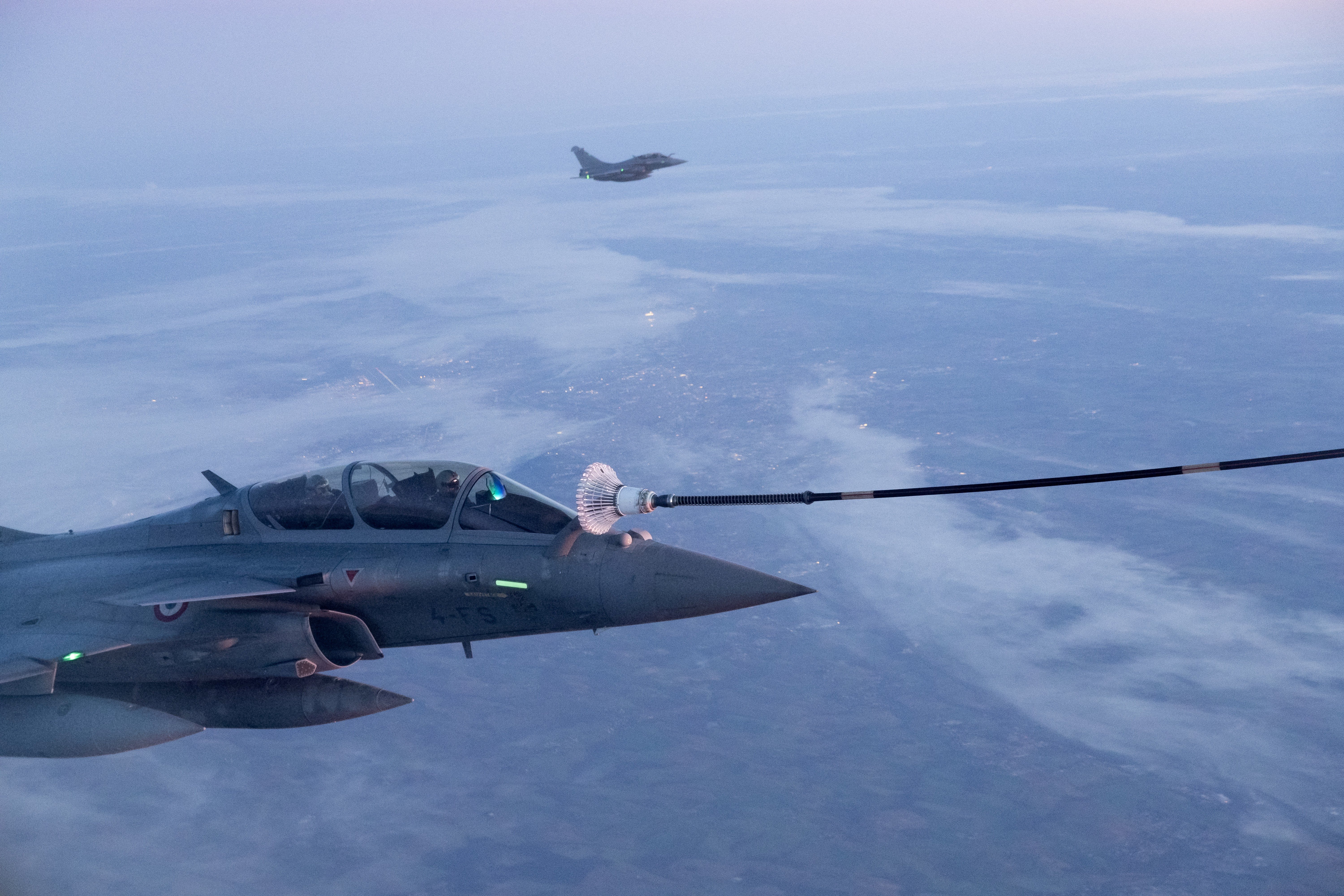
France’s Air and Space Force has rehearsed one of the country’s most consequential military missions: breaking through hostile defenses and delivering a nuclear-armed missile to a precise launch point using Rafale fighters.
The exercise, known as Operation Poker, involved operations linked to the Saint-Dizier and Taverny air bases, both central to France’s airborne nuclear deterrent, Le Parisien reported on September 28.
We bring you stories from the ground. Your support keeps our team in the field.
Saint-Dizier hosts Rafale units assigned to France’s Strategic Air Forces, while the underground command infrastructure at Taverny helps direct nuclear operations.
The exercise is designed to test virtually the entire strike sequence under realistic conditions—with one major exception.
“We use real equipment, we test real procedures in extremely adverse conditions, with around 50 aircraft in the air. The only thing that is prohibited is flying with real nuclear warheads under the wings,” French military personnel explained.
Rafale B from the Strategic Air Forces (1/4 Gascogne squadron) carrying a mock-up of ASMPA-R supersonic nuclear cruise missile flying alongside a A330MRTT during today's POKER 2026-01 strategic exercise that aims at simulating a full nuclear raid.
— Etienne Marcuz (@Etienne_Marcuz) March 17, 2026
The exercise involved as many… https://t.co/EQct7h3djw pic.twitter.com/mlon0IXTls
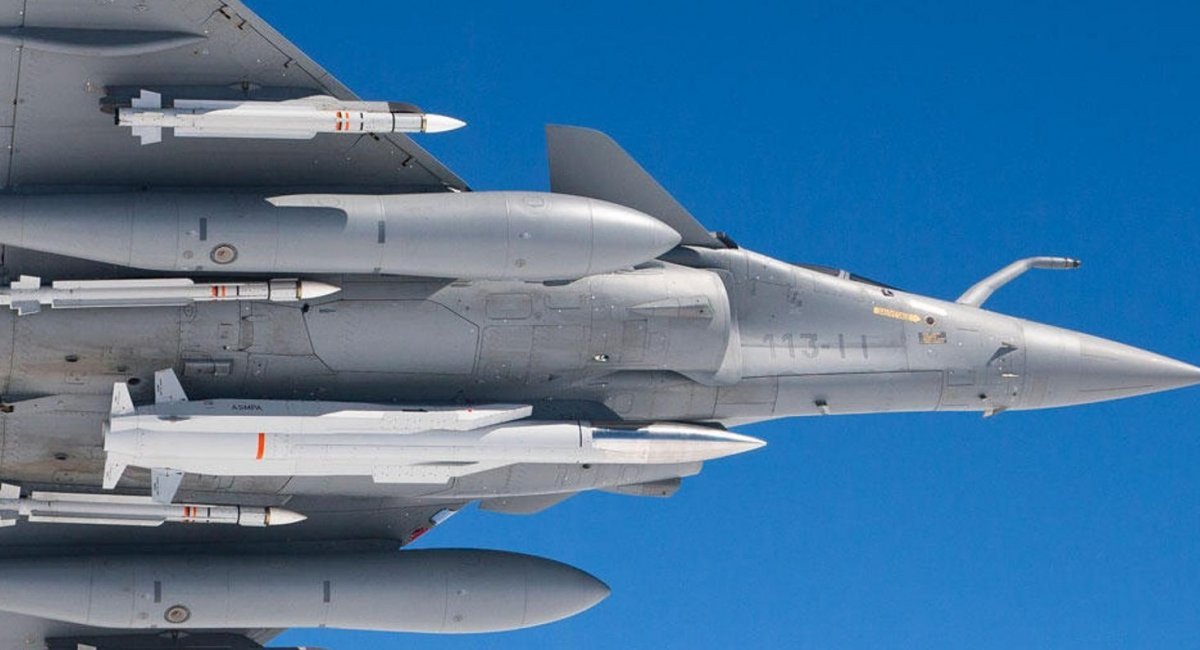
Rafale crews involved in the simulated strike did not carry operational nuclear weapons. Instead, they flew with inert training versions representing France’s ASMP-A air-launched nuclear missile, which could be jettisoned safely if an emergency occurred.
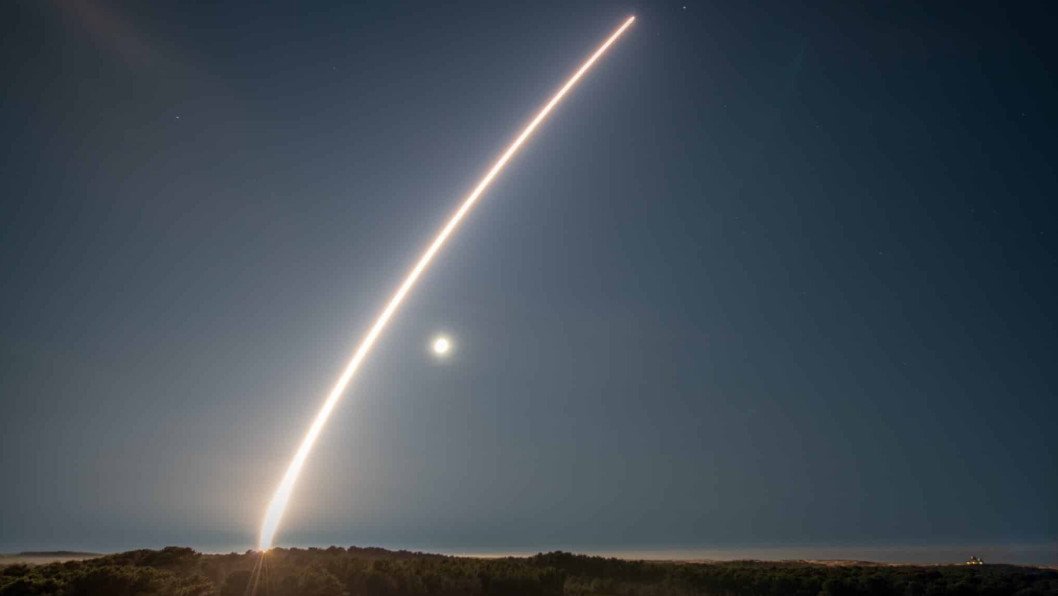
The operational ASMP-A is a supersonic cruise missile carried by the Rafale and forms the airborne component of France’s nuclear deterrent. Public estimates put its range at roughly 500 kilometers, or about 310 miles. France officially confirms that the missile carries its TNA thermonuclear warhead, although Paris does not publicly disclose its current explosive yield.
During Poker, French forces split into opposing teams. The “red” force simulated an enemy trying to detect, intercept and stop the raid, while the “blue” force attempted to penetrate those defenses and deliver its simulated nuclear weapon to the required launch point at exactly the planned time.
“It is about guaranteeing that tomorrow and the day after tomorrow we will still have the ability to conduct such a raid, even as technology evolves faster and faster,” French military personnel said.
For the Rafale crews, that means a demanding mission lasting roughly six to eight hours.
During the nighttime flight, the fighters may refuel several times from aerial tankers before approaching the simulated target area. Crews then have to maneuver at very high speed and, during portions of the mission, at very low altitude to reduce their exposure to enemy air defenses.
The objective is not simply to prove that a Rafale can carry a nuclear missile. Poker tests whether the entire system—command centers, fighters, tankers, crews, communications and supporting aircraft—can function together under the conditions expected during a high-intensity war.
France has conducted Poker exercises for decades, generally several times each year. Earlier 2026 iterations involved around 40 aircraft, including Rafale B fighters and A330 MRTT Phénix tankers, operating against simulated air-to-air and ground-based threats.
For French crews, the exercise is ultimately intended to make sure the nuclear weapon never has to be used.
“The purpose of our mission is to prevent war, and therefore the use of nuclear weapons. Poker is a demonstration of force precisely so that this does not happen,” said Commander Jean-Baptiste, who recently qualified for the mission by participating in the exercise.
Personnel assigned to the nuclear mission must regularly repeat that training.
“Each of them has to participate in at least one such operation per year,” Jean-Baptiste said.
France currently maintains several air bases connected to its nuclear mission, including Saint-Dizier, Istres and Avord. Luxeuil is also expected to regain a nuclear role as France prepares for the future Rafale F5.
Orders for the airborne deterrent ultimately flow through the command structure at Taverny, roughly 200 kilometers from Saint-Dizier, where military personnel operate from a hardened underground command center.
Earlier, Germany and France put their nuclear-deterrence cooperation into practice for the first time, staging a joint air force drill with nuclear-capable French Rafale jets and German Eurofighters.
Discuss this article:
-9a7b3a98ed5c506e0b77a6663f5727c5.png)

-c439b7bd9030ecf9d5a4287dc361ba31.jpg "Photo of Katherina Popilnichenko")

-29a1a43aba23f9bb779a1ac8b98d2121.jpeg "Photo of Illia Kabachynskyi")