- Category
- War in Ukraine
Leaked Files Reveal Struck Russian Plant Was Feeding Kh-101, R-37M and Oreshnik Missile Programs
 Prefer U24 Media on Google
- Authors


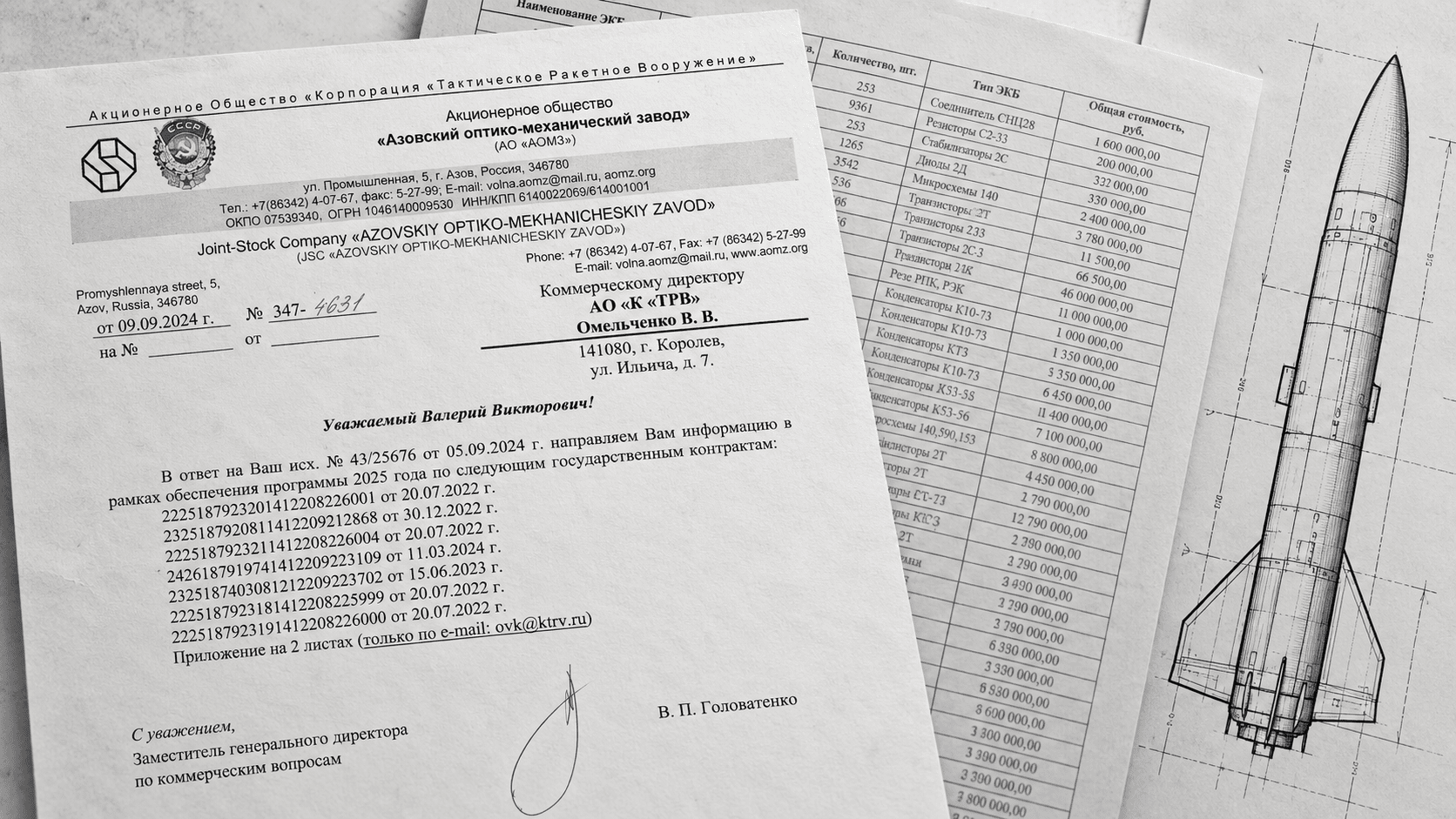
A Russian optical plant struck on September 26 was involved in the production chains of at least seven Russian missile programs, including the Kh-101 cruise missile, R-37M long-range air-to-air missile, and Oreshnik intermediate-range ballistic missile, newly published internal documents indicate.
We bring you stories from the ground. Your support keeps our team in the field.
According to Dallas Analytics on September 26, records obtained from the Azov Optical-Mechanical Plant, or AOMZ, show that the facility’s role extended well beyond its publicly known production of tank sights, rangefinders, and thermal imaging equipment.
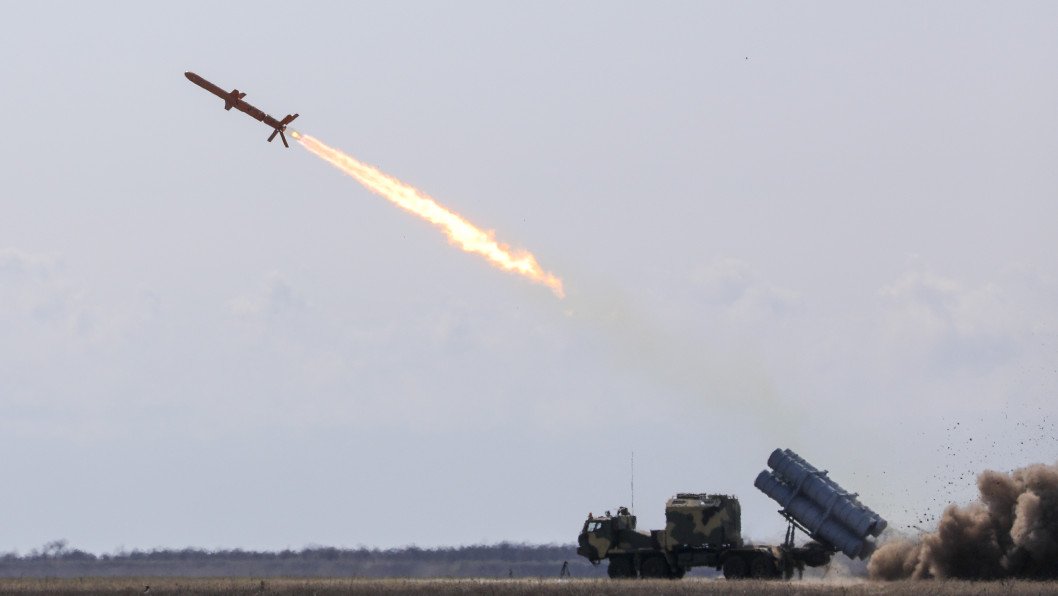
The documents include internal correspondence, state contract records, and industrial cooperation schedules covering the period from April 2023 through March 2025. They involve AOMZ, Russia’s Tactical Missiles Corporation, the Michurinsk Plant Progress, and the Kurganpribor design bureau.
Dallas Analytics said the correspondence also shows direct oversight of production by Russian Defense Ministry military representatives stationed at enterprises participating in the state defense order system.
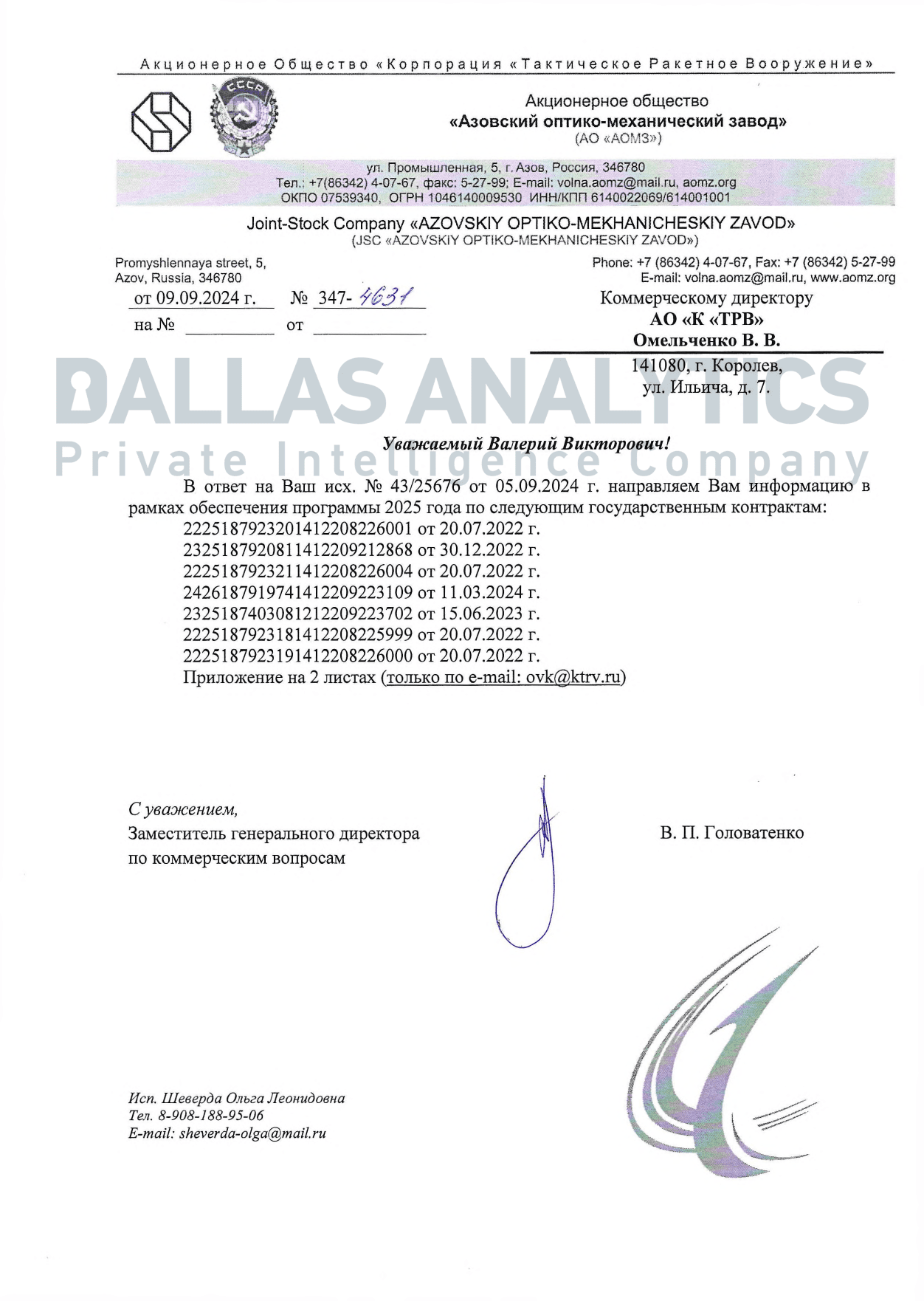
One document dated September 9, 2024, refers to seven state contracts connected to AOMZ’s 2025 production program. Five of those contracts were signed in 2022.
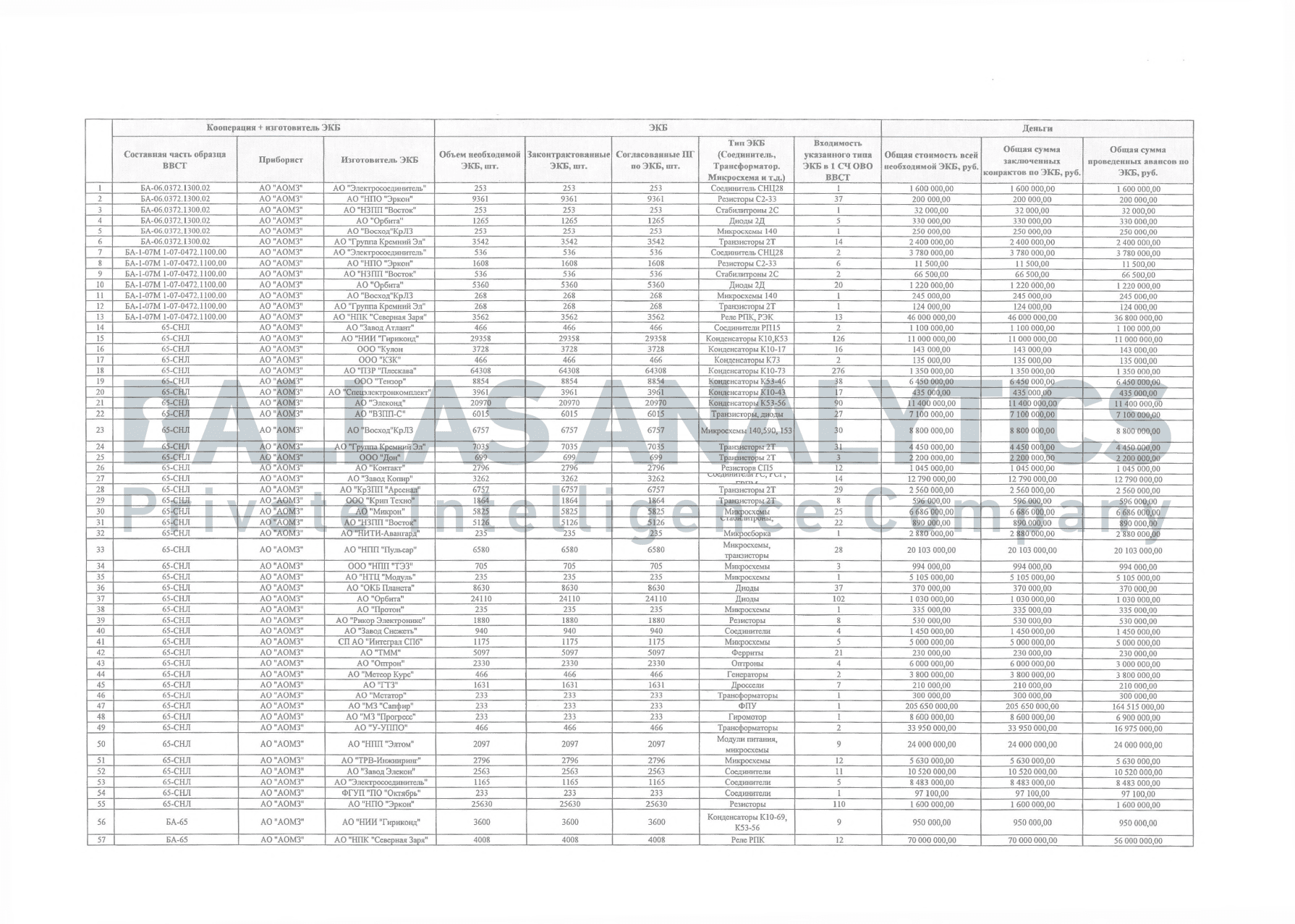
An attached two-page production schedule contains 71 component entries, identifying suppliers, required quantities, installation rates, and funding. The component budget for the 2025 program totaled 583.6 million rubles, with 497.6 million rubles already paid in advances, according to the documents.

The records also provide details on components used in several Russian cruise missiles.
For the Kh-101 air-launched cruise missile, Dallas Analytics identified AOMZ as the producer of two major assemblies: the Otblesk navigation lidar and a flight automation unit responsible for controlling missile systems and flight surfaces.
The Kh-101 is carried by Russian Tu-95MS and Tu-160 strategic bombers and has been extensively used in strikes against Ukraine. The same records connect AOMZ to flight automation systems for the Kh-35U and Kh-59/Kh-69 missile families.
Dallas Analytics also identified 44 component suppliers in the plant’s documentation, including Russian manufacturers of capacitors, resistors, semiconductors, connectors, relays, and optoelectronic equipment.
Among them is TRV-Engineering, the procurement arm of the Tactical Missiles Corporation holding. The company is listed as supplying microcircuits for the Kh-101 navigation system. Dallas Analytics has previously identified TRV-Engineering as an intermediary involved in obtaining foreign electronic components.
Separate correspondence reviewed by Dallas Analytics names AOMZ as an assembler and supplier of components for the system designated 760K (L), described in the documents as a modification of the R-74 family of air-to-air missiles developed by Russia’s Vympel design bureau.
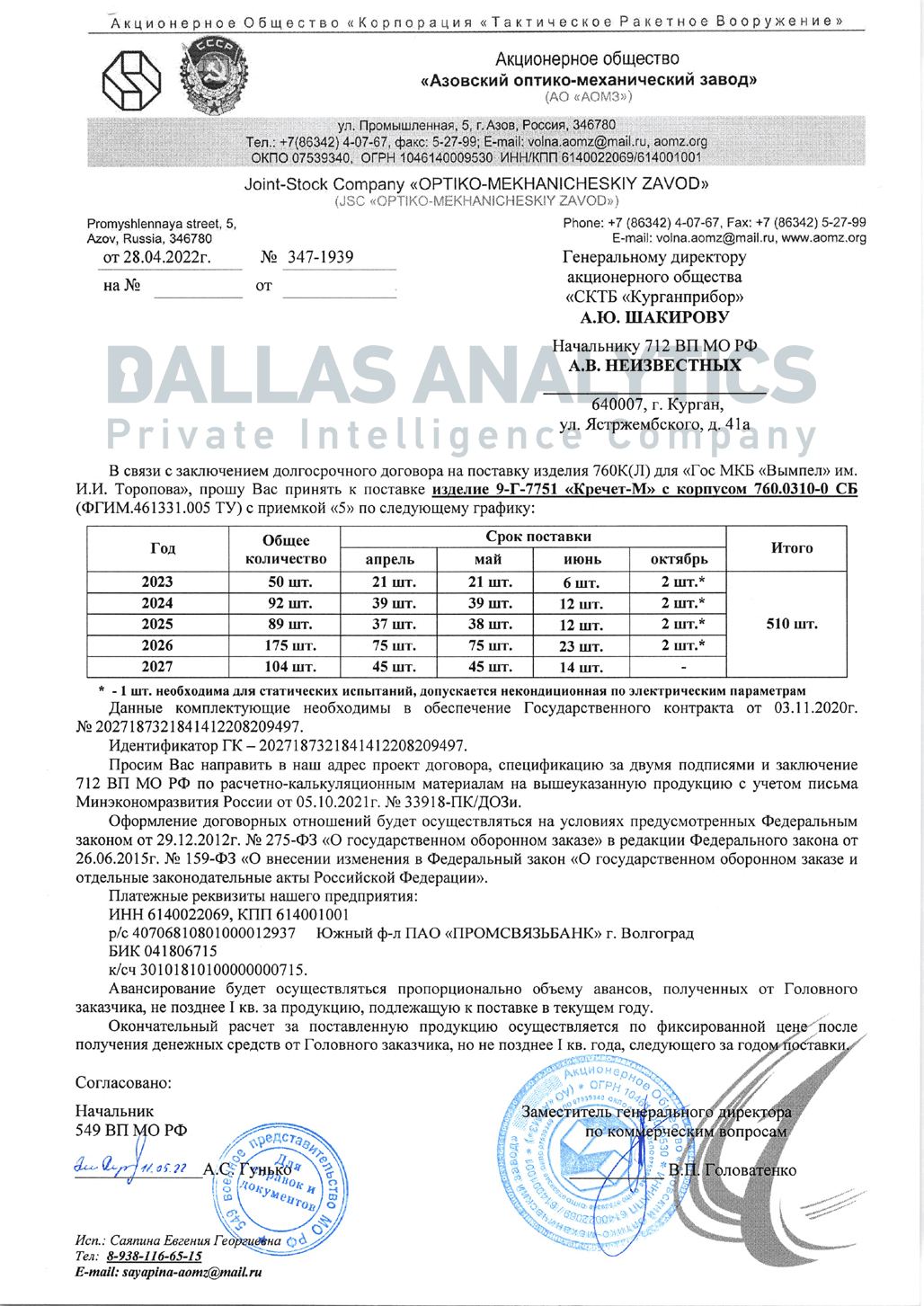
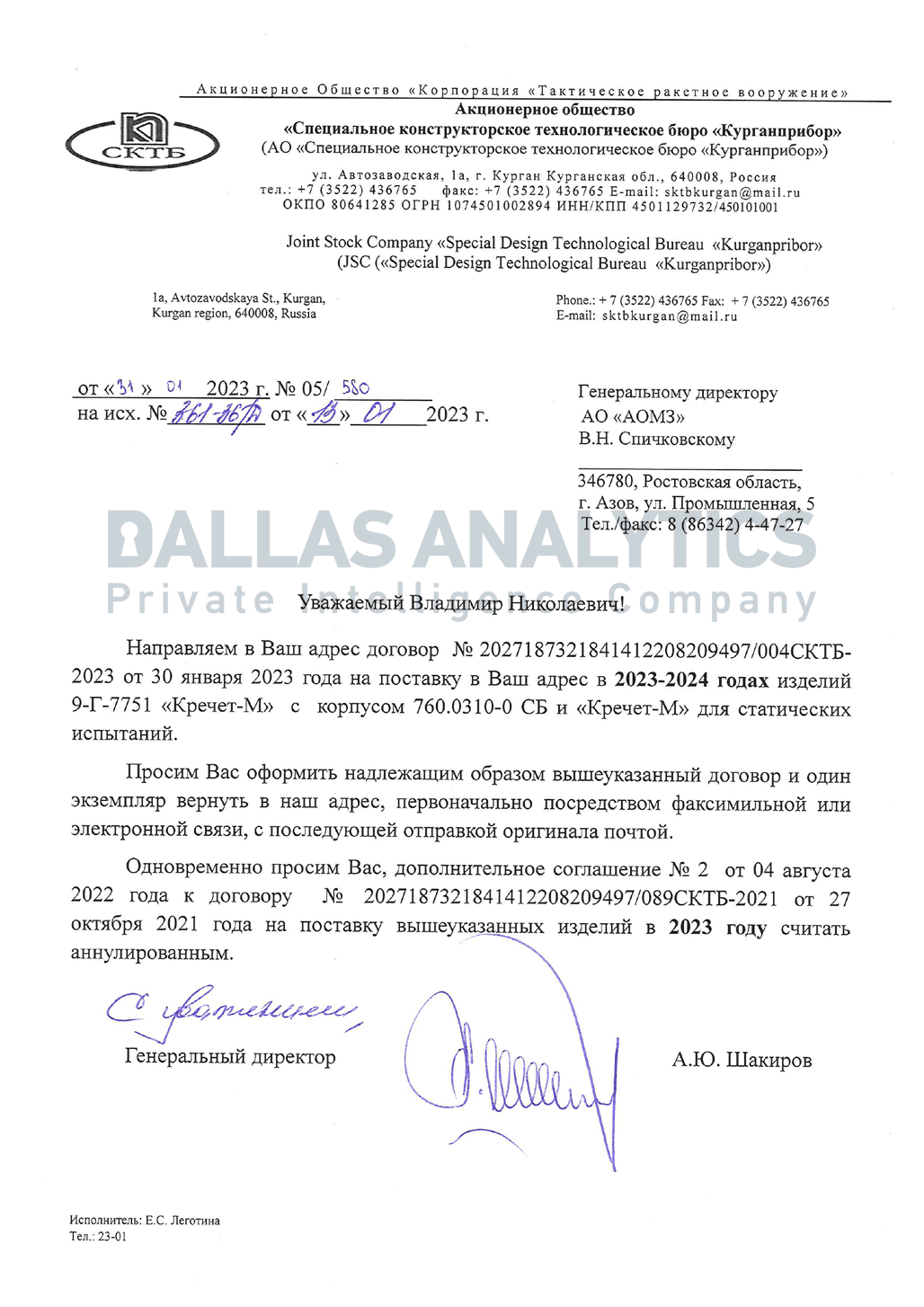
The R-74 family forms part of the weapons package developed for Russia’s Su-57 fighter aircraft. The documents also place AOMZ within the production chain for components used in the guidance system of the Oreshnik, Russia’s nuclear-capable intermediate-range ballistic missile.
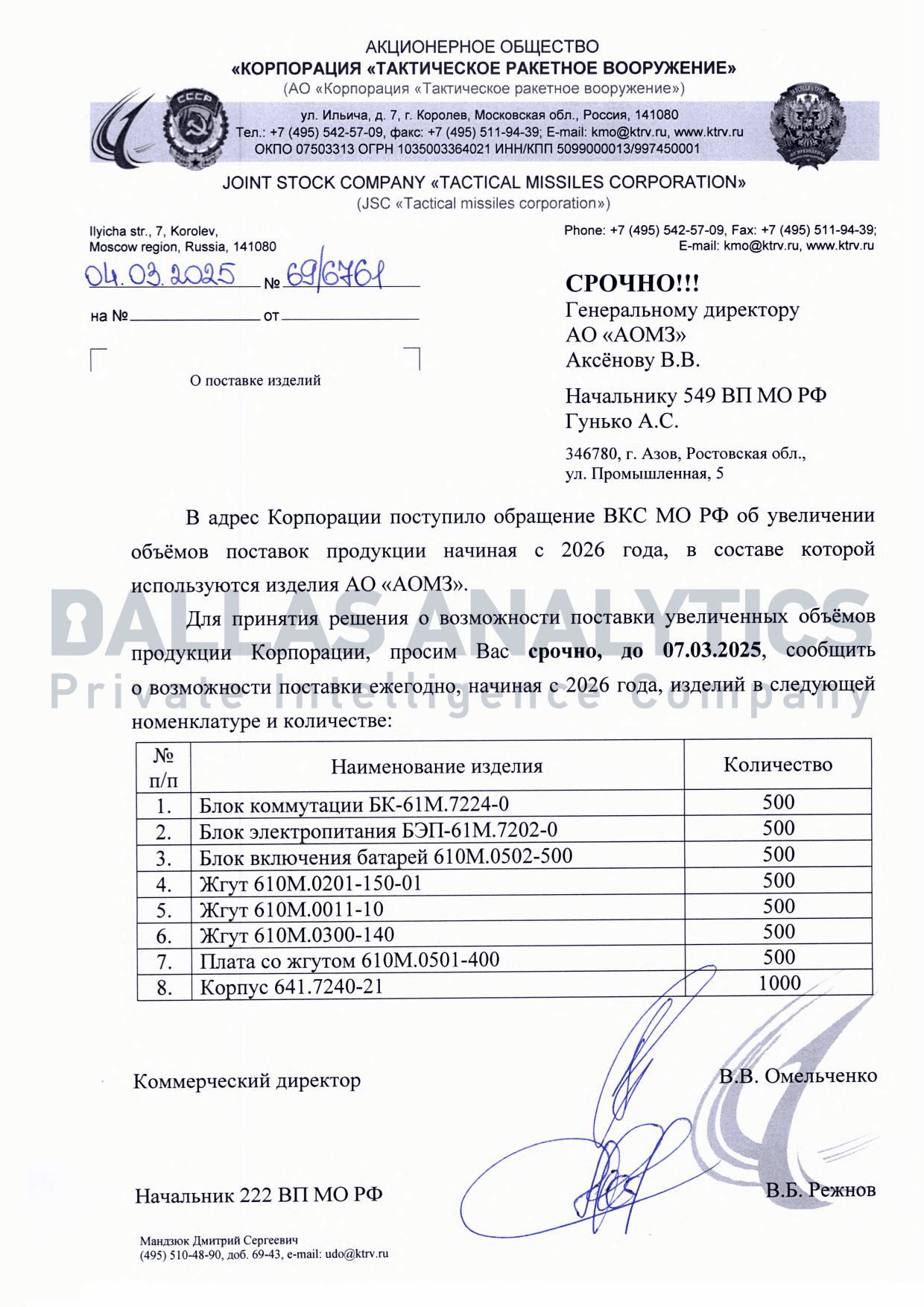
Another document, dated March 4, 2025, details plans to increase production of components for the R-37M long-range air-to-air missile from 2026.
According to Dallas Analytics, Tactical Missiles Corporation informed AOMZ that the Russian Aerospace Forces were seeking higher delivery volumes and gave the plant three days to determine whether it could meet the requirement.
The requested annual production included 500 units each of several switching, power supply, battery activation, wiring, and circuit-board assemblies, together with 1,000 missile housings.
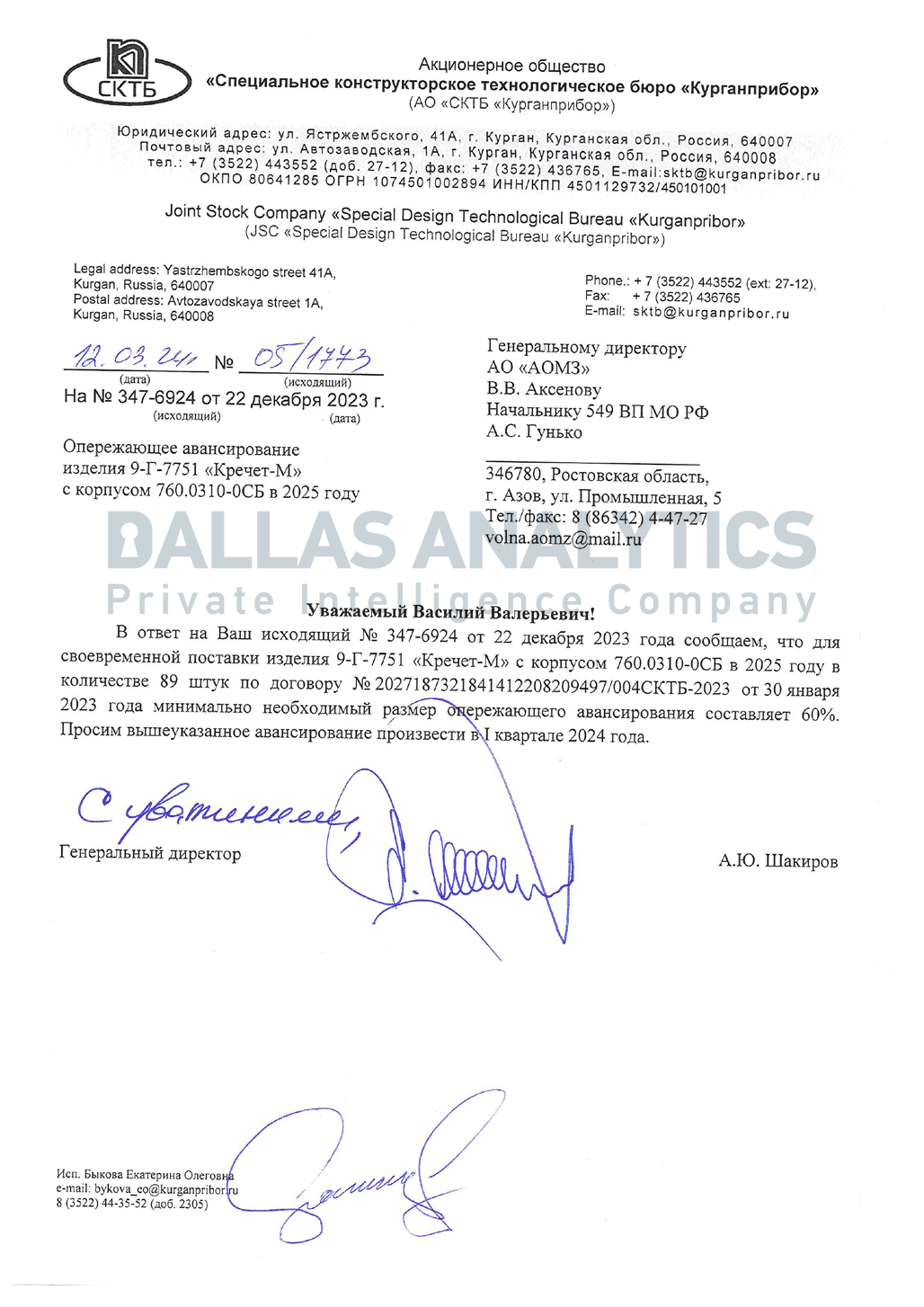
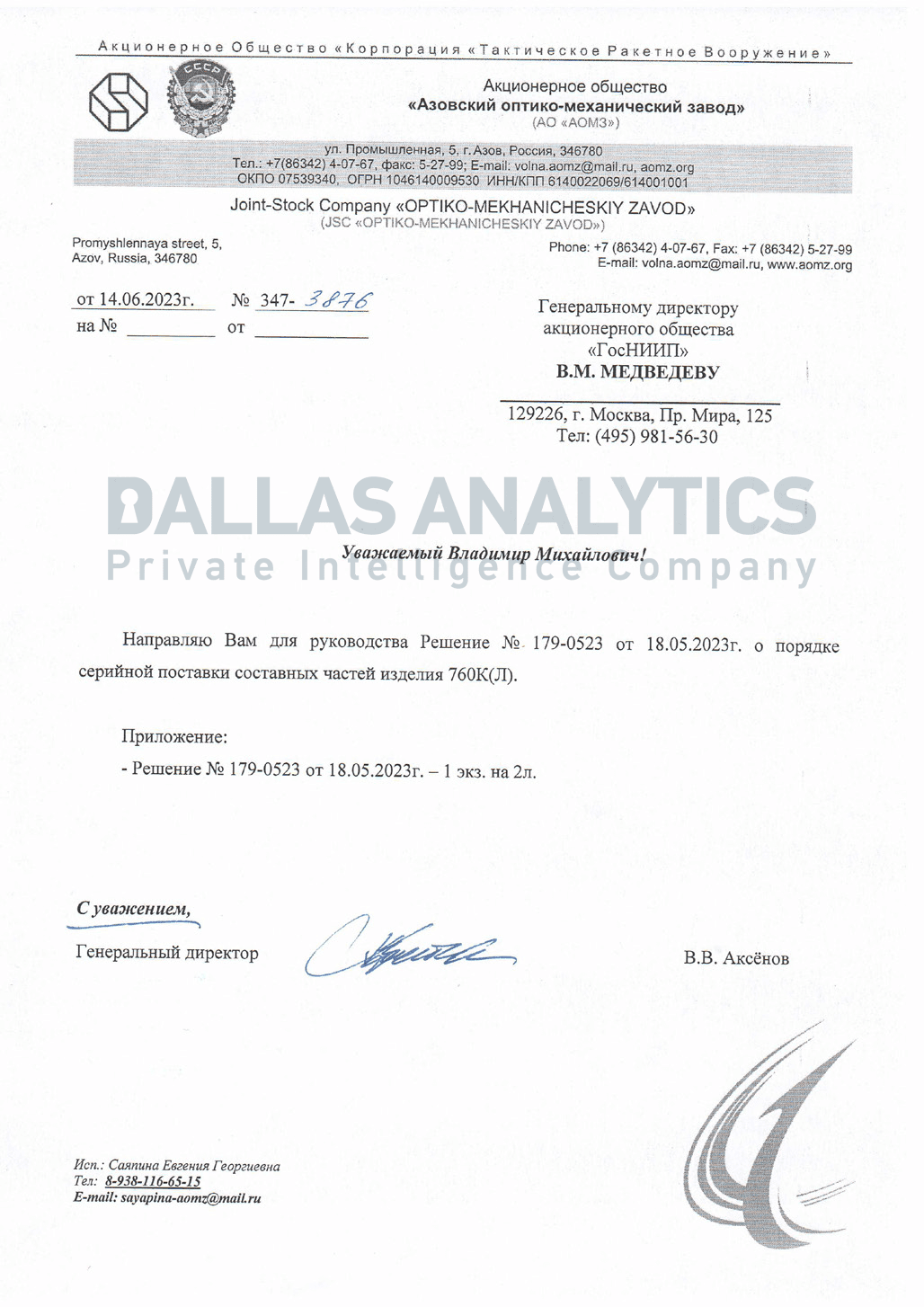
Based on the quantities listed in the correspondence, Dallas Analytics assessed that the request corresponded to components for as many as 500 R-37M missiles annually.
The R-37M is a long-range air-to-air missile with a reported engagement range of roughly 300 kilometers and is used by Russian aircraft against targets at extended distances.
The investigation also links AOMZ to the production of seeker components for the Kh-31P anti-radiation missile, which is designed to target radar systems.
AOMZ has been subject to international restrictions for several years. The plant was added to the US Entity List in April 2022 as a facility associated with Tactical Missiles Corporation and has also faced sanctions from the European Union, United Kingdom, Canada, Japan, Switzerland, Australia, New Zealand, and Ukraine.
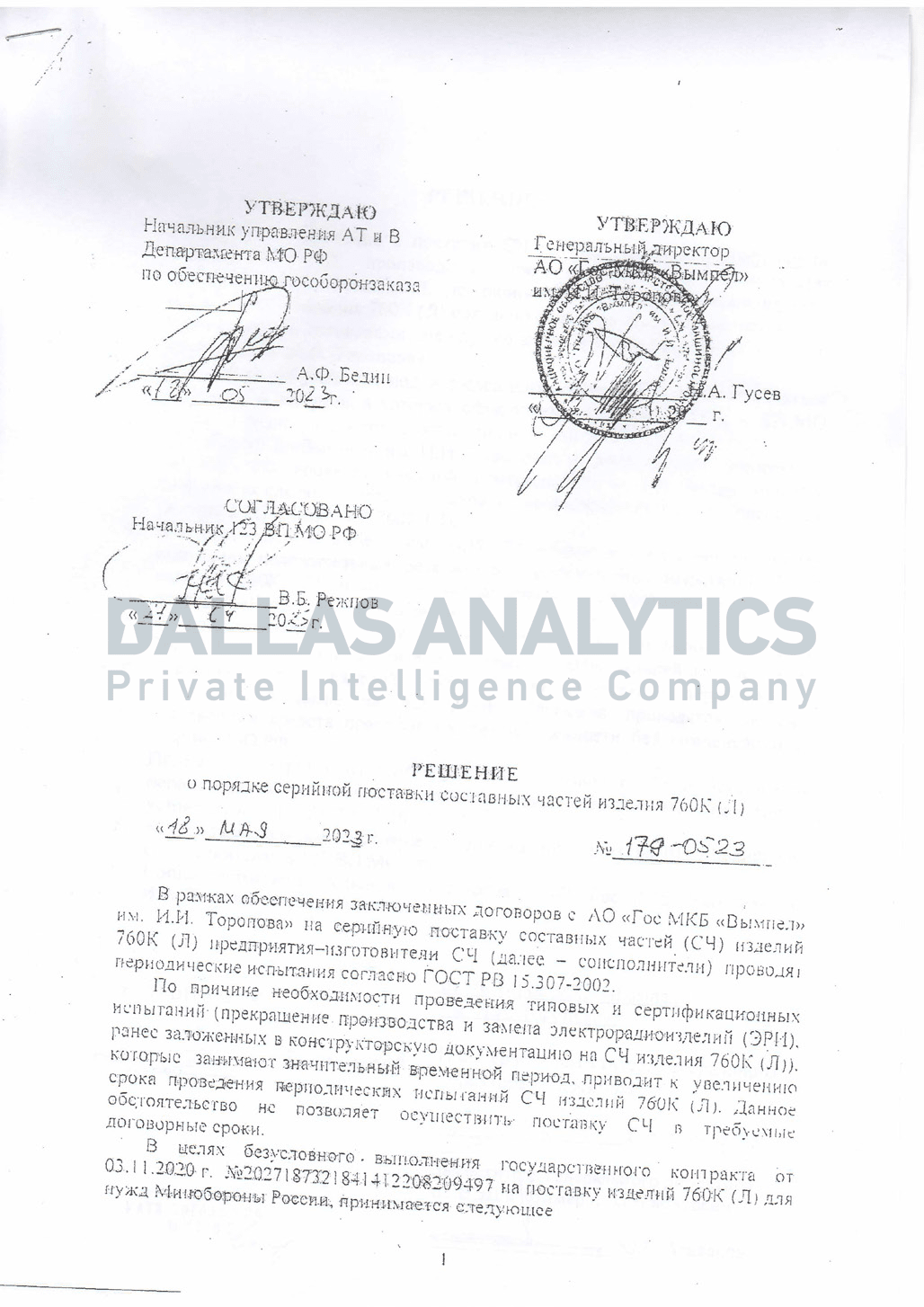
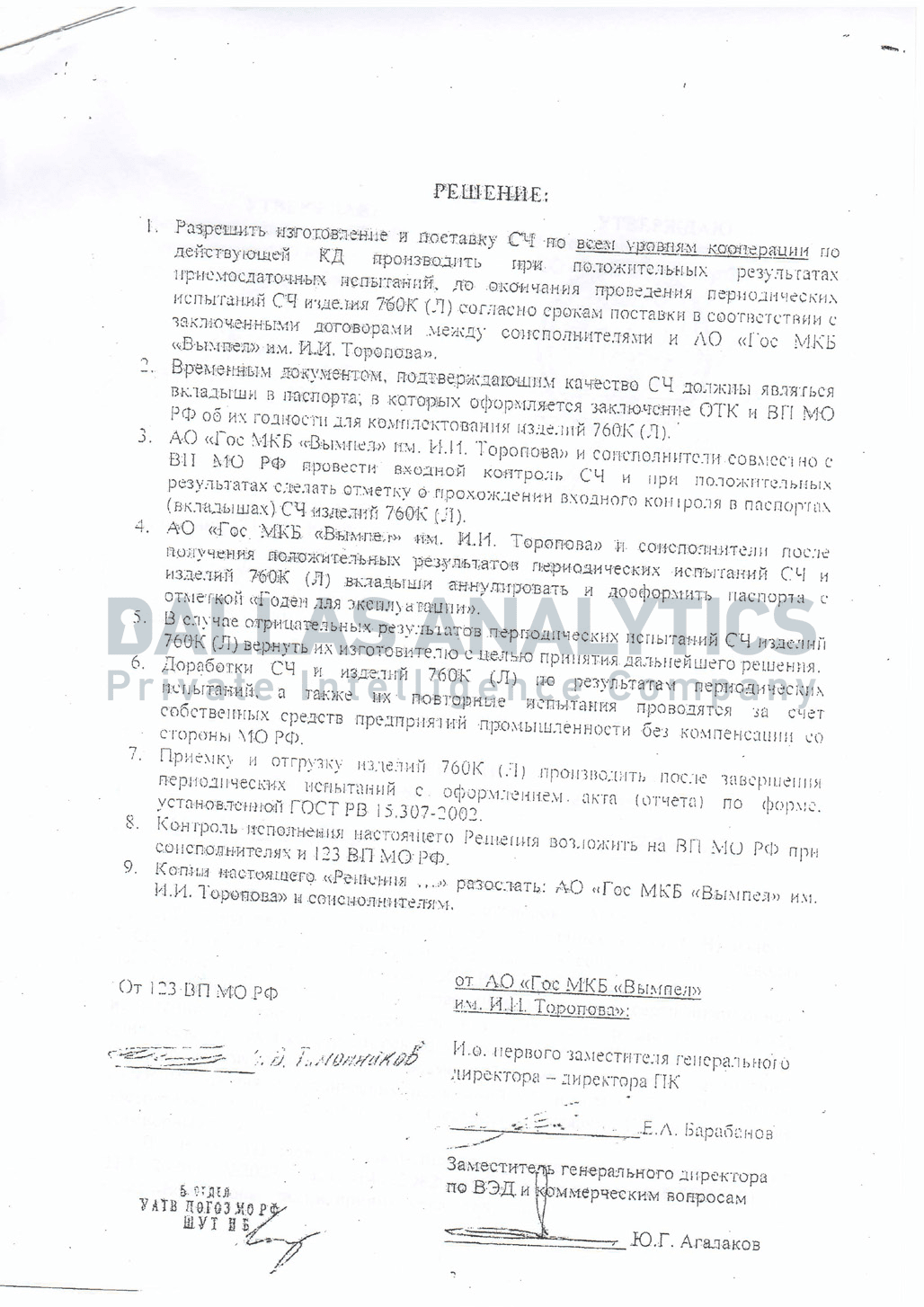
Dallas Analytics argues that the documentation shows how Russian missile production continues to rely on broader networks of suppliers and procurement intermediaries despite restrictions placed directly on final manufacturers.
The group assessed that a prolonged disruption at AOMZ could affect production of navigation and flight-control systems for the Kh-101 and other cruise missiles, electrical assemblies for the R-37M, and components used in anti-radiation weapons.
However, Dallas Analytics noted that disruption at one production site would more likely delay output than permanently eliminate Russia’s ability to manufacture the systems, particularly if alternative supply chains and component procurement networks remain operational.
Earlier, in July 2025, Ukrainian strike drones targeted the Azov Optical-Mechanical Plant in Russia’s Rostov region. Russian authorities said air defenses had repelled the attack, while eyewitness footage showed drones approaching the facility followed by explosions and smoke.
Discuss this article:
-9a7b3a98ed5c506e0b77a6663f5727c5.png)


-29a1a43aba23f9bb779a1ac8b98d2121.jpeg "Photo of Illia Kabachynskyi")

-72b63a4e0c8c475ad81fe3eed3f63729.jpeg "Photo of Cyril Barabaltchouk")
-111f0e5095e02c02446ffed57bfb0ab1.jpeg "Photo of Roman Kohanets")