- Category
- War in Ukraine
Moscow Deploys 300,000 CCTV Cameras to Trap Draft Evaders and Dissidents
 Prefer U24 Media on Google
- Authors

-72b63a4e0c8c475ad81fe3eed3f63729.jpeg "Photo of Cyril Barabaltchouk")
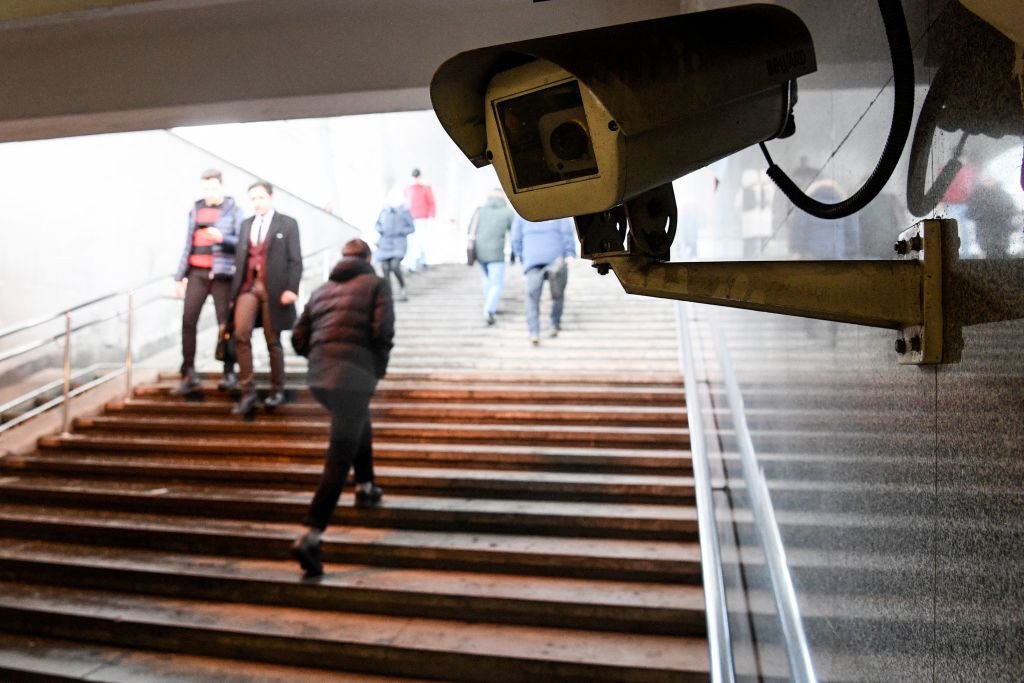
Moscow’s integration of cutting-edge digital amenities has transformed the Russian capital into one of the world’s most heavily monitored cities, weaponizing urban convenience to enforce an expanding surveillance state, The New York Times reported on September 15.
While residents utilize facial recognition for daily transactions and subway access, the city’s network of roughly 300,000 CCTV cameras is increasingly deployed by the Kremlin to track political dissidents and enforce military conscription.
We bring you stories from the ground. Your support keeps our team in the field.
The technological dragnet has fundamentally altered how the Russian state manages military recruitment. Following the mass exodus of draft-eligible men in 2022, authorities introduced electronic summonses via the centralized State Services app. These digital notices carry full legal weight and automatically bar recipients from leaving the country.
With biometric tracking deeply embedded in Moscow’s public transit and urban infrastructure, draft evaders are effectively trapped, forced to abandon the subway system and navigate the city in fear of triggering facial recognition alerts.
Despite the system’s efficiency, severe internal friction has emerged between Russian technocrats and the Federal Security Service (FSB). According to an anonymous official involved in developing the digital infrastructure who spoke to The New York Times, the FSB’s political-policing department favors analog control methods and views artificial intelligence as a threat to its sprawling apparatus of human agents.
This conflict routinely spills into public view; in March, security services abruptly shut down mobile internet access across central Moscow for over two weeks following a security scare, paralyzing the billions of dollars invested in the city’s digital services, according to the publication.

Russian leader Vladimir Putin has framed the development of artificial intelligence as an existential necessity for Russian sovereignty, demanding domestic innovation insulated from Western influence. However, the reality of Russia’s technological sector contradicts these ambitions.
Crippled by Western sanctions that restrict access to advanced microchips and hollowed out by the mass exodus of top technical talent since the 2022 full-scale invasion of Ukraine, Russia remains highly dependent on foreign architecture. The New York Times writes that the country’s flagship AI models, developed by state-aligned banks and tech monopolies, rely heavily on Chinese open-source blueprints as Moscow attempts to build an isolated digital perimeter.
Moscow’s efforts to build an isolated digital perimeter also extend to web infrastructure, with the recent development of a state-approved browser designed to enforce domestic encryption algorithms. Following Google’s removal of Russian electronic signature plugins from its platforms, a sanctioned cryptographic firm is creating a domestic alternative to Western browsers.
The new software, which integrates encryption protocols explicitly approved by the Federal Security Service (FSB), is expected to become mandatory for all Russian government institutions within two years of receiving necessary security certifications.
Discuss this article:

-c439b7bd9030ecf9d5a4287dc361ba31.jpg "Photo of Katherina Popilnichenko")



-13f6cc2abf0d398b26e476746a3650f4.jpg "Maj. Alexei Karavaev, commander of Russia’s 11th Tank Regiment killed by Ukrainian artillery in October 2026.")
