- Category
- Latest news
Russia’s Orthodox Church Calls for Creation of “Spiritual” AI Based on “Traditional Values”
 Prefer U24 Media on Google
- Authors

-72b63a4e0c8c475ad81fe3eed3f63729.jpeg "Photo of Cyril Barabaltchouk")
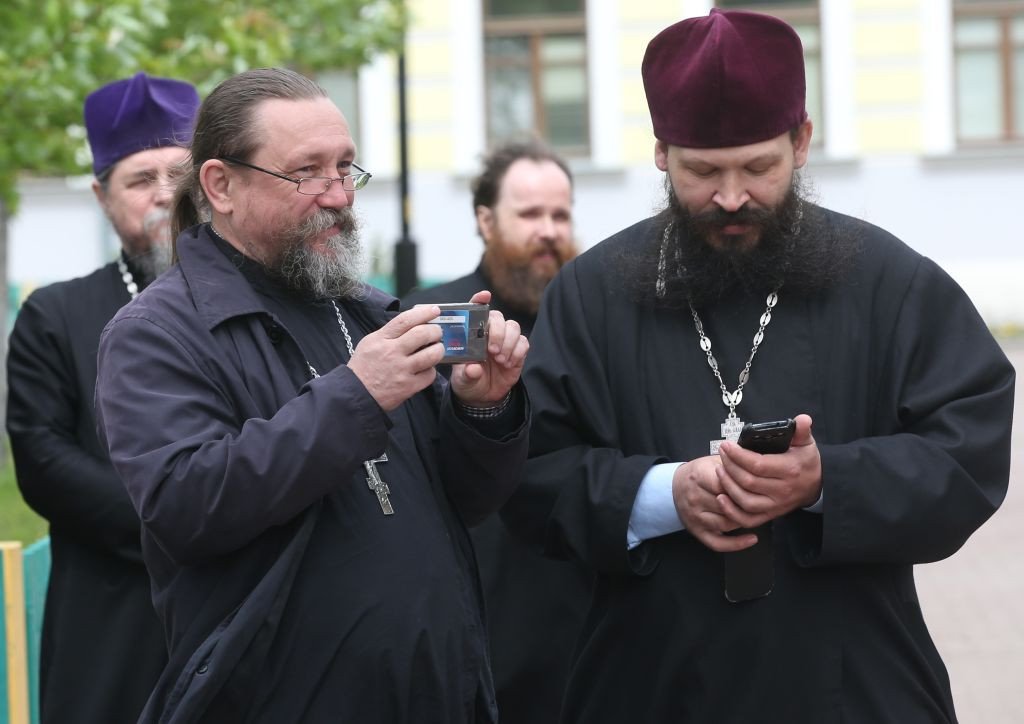
Russia’s pro-Kremlin religious establishment has called for the creation of a “Orthodox” artificial intelligence rooted in what it describes as traditional spiritual values, arguing that reliance on Western AI systems poses ideological risks, The Moscow Times reported on January 16.
The proposal was voiced by representatives of the World Russian People’s Council, a body closely linked to the Russian Orthodox Church. Deputy chairman Mikhail Ivanov said Western AI models, trained on “alien values,” could distort interpretations and introduce undesirable ideas into Russia’s information space.
We bring you stories from the ground. Your support keeps our team in the field.
Russia, he argued, needs its own technology with clear moral and spiritual guidelines. “This is not about replacing a pastor or automating faith. It should be a safe guide to verified sources of knowledge,” Ivanov said, adding that such an AI should strictly rely on the canons of the Russian Orthodox Church, according to Moscow Times.
The idea has also been promoted by Orthodox businessman Konstantin Malofeev, who called for a sovereign Russian AI trained on what he described as “correct” sources, ranging from the Gospel and Domostroi to the works of Dostoevsky, Pushkin, Lomonosov, Ivan Ilyin, and Alexander Dugin.
In a manifesto published on Telegram, Malofeev linked the initiative to statements by Russian leader Vladimir Putin and Patriarch Kirill of Moscow and All Russia about the dangers of uncontrolled technological development, arguing for an autonomous “Russian AI” within a sovereign internet, Moscow Times reported.
Patriarch Kirill has repeatedly warned that artificial intelligence is “more dangerous than nuclear energy,” claiming Western technologies are often tools of political manipulation that promote political correctness and impose a particular worldview.
He has urged strict state and public control over a sovereign AI and warned of risks ranging from the erosion of human responsibility to apocalyptic consequences if technological threats are ignored.
Putin has echoed these concerns, accusing Western AI systems of russophobia and bias, and saying their dominance in Russia is unacceptable. He has argued that such algorithms are capable of “canceling” Russian culture by downplaying the country’s contributions to science, art, and literature, and has called for domestic AI development based on so-called traditional values.
Despite the rhetoric, Russia remains a marginal player in the global AI market. On the LM Arena platform, where users rank AI models, leading Russian systems such as Sber’s GigaChat and YandexGPT do not appear in the top 20.
According to Stanford University’s Global AI Vibrancy Tool, published in November, Russia ranks 28th out of 36 countries, The Moscow Times wrote.
“Russia is years behind in developing its own AI. It has already lost this race, and catching up is impossible,” Yury Podorozhny, a former head of Yandex Maps and Yandex Metro services, told The Wall Street Journal.
Previously, it was reported that Vladimir Putin marked the Orthodox Christmas holiday by drawing a comparison between Russian soldiers and Jesus Christ, calling their mission a “sacred” one.
Discuss this article:
-4a56a6b482ec132402c16ef6fcabf9a2.png)

-c439b7bd9030ecf9d5a4287dc361ba31.jpg "Photo of Katherina Popilnichenko")