- Category
- War in Ukraine
Putin Demands the Donetsk Region He Has Failed to Capture for 11 Years
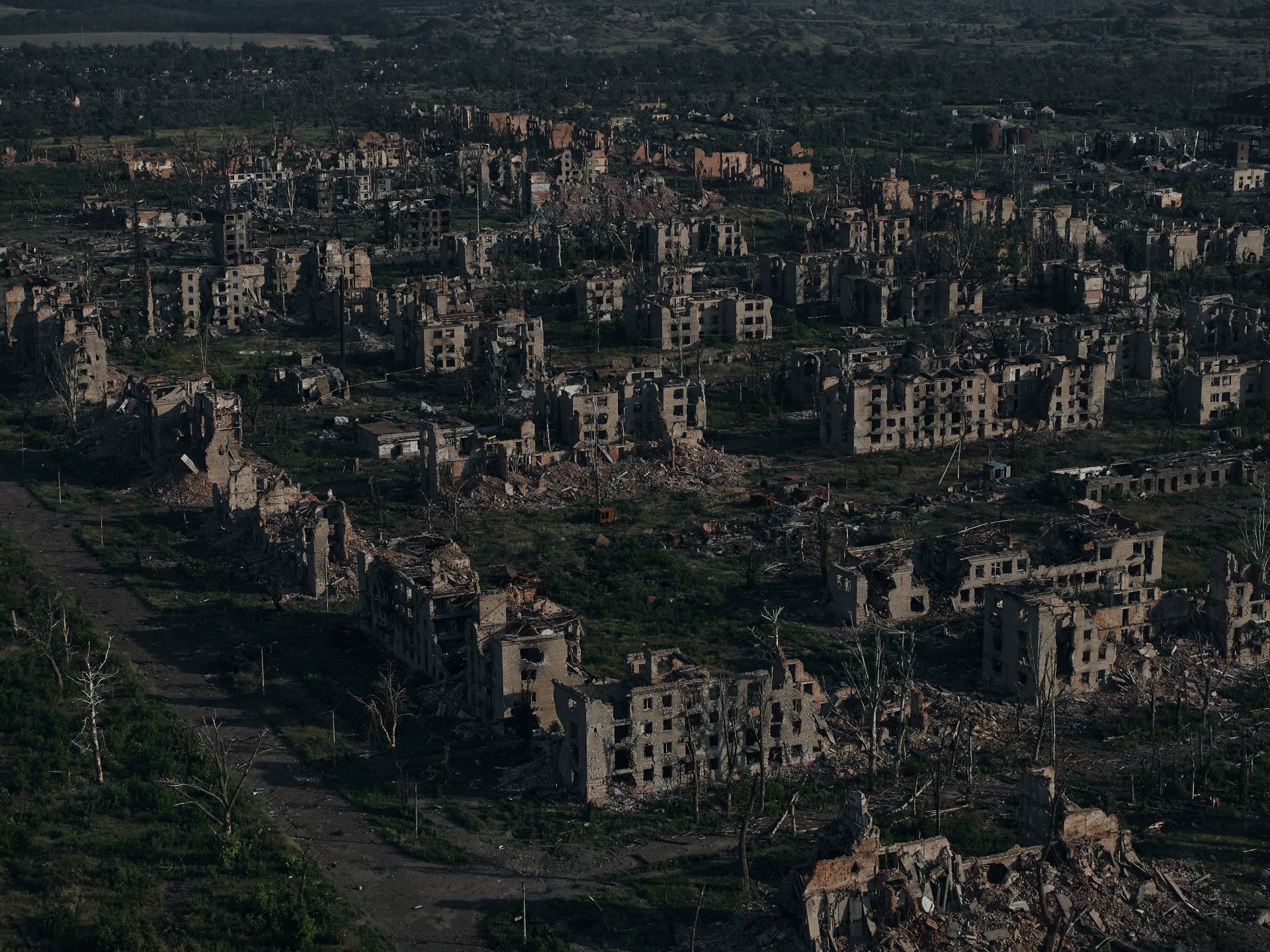
Among the conditions laid out by Russian leader Vladimir Putin during the Alaska talks is the full surrender of the Donetsk region, part of Ukraine’s sovereign territory. For Putin, such a concession would be a gift: hundreds of thousands of his soldiers have failed to take the region in more than a decade of fighting.
 Prefer U24 Media on Google
- Authors

-29a1a43aba23f9bb779a1ac8b98d2121.jpeg "Photo of Illia Kabachynskyi")
Talks began between US President Donald Trump and Putin on August 15 in Alaska. Neither side issued a clear public statement following the meeting, but leaks to the press revealed that one of the Kremlin leader’s demands was the complete transfer of the Donetsk region under Moscow’s control.
The request itself sounds peculiar, as though Putin already holds the Donetsk region and all that remains is to formalize the deal. In reality, the Russian army is far from occupying the entire region, and quite possibly may never succeed in doing so.
For instance, in early August, a small Russian unit managed to break through the front line, advancing a few kilometers over several days. That success proved short-lived. The following week, Ukraine’s Armed Forces retook seven settlements from Russian troops (Hruzke, Rubizhne, Novovodiane, Petrivka, Vesele, Zolotyi Kolodiaz) and destroyed more than 1,300 Russian soldiers along with over 200 pieces of equipment. Thirty-seven Russian troops were captured.
Ukraine’s counterattacks not only stopped the incursion and restored control over the settlements but also allowed advances in several sectors. To suggest that the Donetsk region is in Putin’s hands is absurd.
The Donetsk region that is not captured
US intelligence assessments have speculated that Russia might take full control of Donetsk within the next two months. Such claims raise doubts when compared against historical data, forecasts, and battlefield realities.
Before the full-scale invasion, Russia controlled less than half of the Donetsk region. By July 2022, about 55% of its territory was under occupation. As of August 2025, Russia controls roughly 75% of the region’s 26,517 square kilometers. Over the past 12 months, it has seized fewer than 4,000 square kilometers, and in the last three months, just over 1,000. At that pace, full control would take about 18 months.
But it is not that simple. For more than six months, Russia has failed to capture Pokrovsk. Kostiantynivka has held just as long. Chasiv Yar has withstood for years. Ahead still lie major cities such as Sloviansk and Kramatorsk—where, judging by Russia’s past sieges in Avdiivka, Vuhledar, and Bakhmut, battles could drag on for years.
Meanwhile, Russian losses are staggering. One Ukrainian brigade defending Pokrovsk recently reported eliminating 260 Russian soldiers in just a week. Despite Kremlin propaganda, there has been no breakthrough on the front.
Pushing deeper into Ukraine is costing Moscow dearly: for the past year, Russian casualties have exceeded 30,000 killed and wounded per month. Irrecoverable losses already surpass 1 million troops. Taking full control of Luhansk, Donetsk, Kherson, and Zaporizhzhia regions would take Russia nearly five years, tripling its total losses, the UK Defence Ministry reported. Whether Moscow has the resources for such a campaign remains highly uncertain, with its budget already under severe strain.
Recognizing this, Putin has sought to frame Donetsk as a bargaining chip. But the US and Europe must clearly see this for what it is—a bluff—and avoid concessions. Ukraine already understands this and will not surrender the Donetsk region.
Guarantees that mean nothing
Alongside the demand for the Donetsk region, Moscow has reportedly offered assurances that it will not attack Ukraine or any other European country again.
History offers perspective. In 1991, Moscow recognized Ukraine’s independence. That same year, the Soviet Union was formally dissolved, and the Kremlin acknowledged Ukraine as a sovereign nation. In 1994, Russia signed the Budapest Memorandum. And yet, in 2003, it encroached on Ukrainian territory, followed by war in 2014—the attempted annexation of Crimea and occupation of parts of the Donetsk and Luhansk regions. At the time, Russia pledged to resolve the conflict peacefully, signed the Minsk agreements, and Putin shook hands with Chancellor Merkel.
Then came the full-scale war of February 24, 2022, with Moscow discarding all prior guarantees.
Why should anyone believe this time will be different?
Discuss this article:
-72b63a4e0c8c475ad81fe3eed3f63729.jpeg "Photo of Cyril Barabaltchouk")

-111f0e5095e02c02446ffed57bfb0ab1.jpeg "Photo of Roman Kohanets")
-e88c01988249cd60b6f04f79d29156b7.jpeg "Damage to “Cosmogony,” the largest painting in Ukraine, following a Russian drone attack on Lutsk on October 13, 2026. (Source: @sashyyna/Instagram)")
