- Category
- War in Ukraine
Russia Builds Giant Hangars Near Moscow. Here’s What They Could Hide
 Prefer U24 Media on Google
- Authors


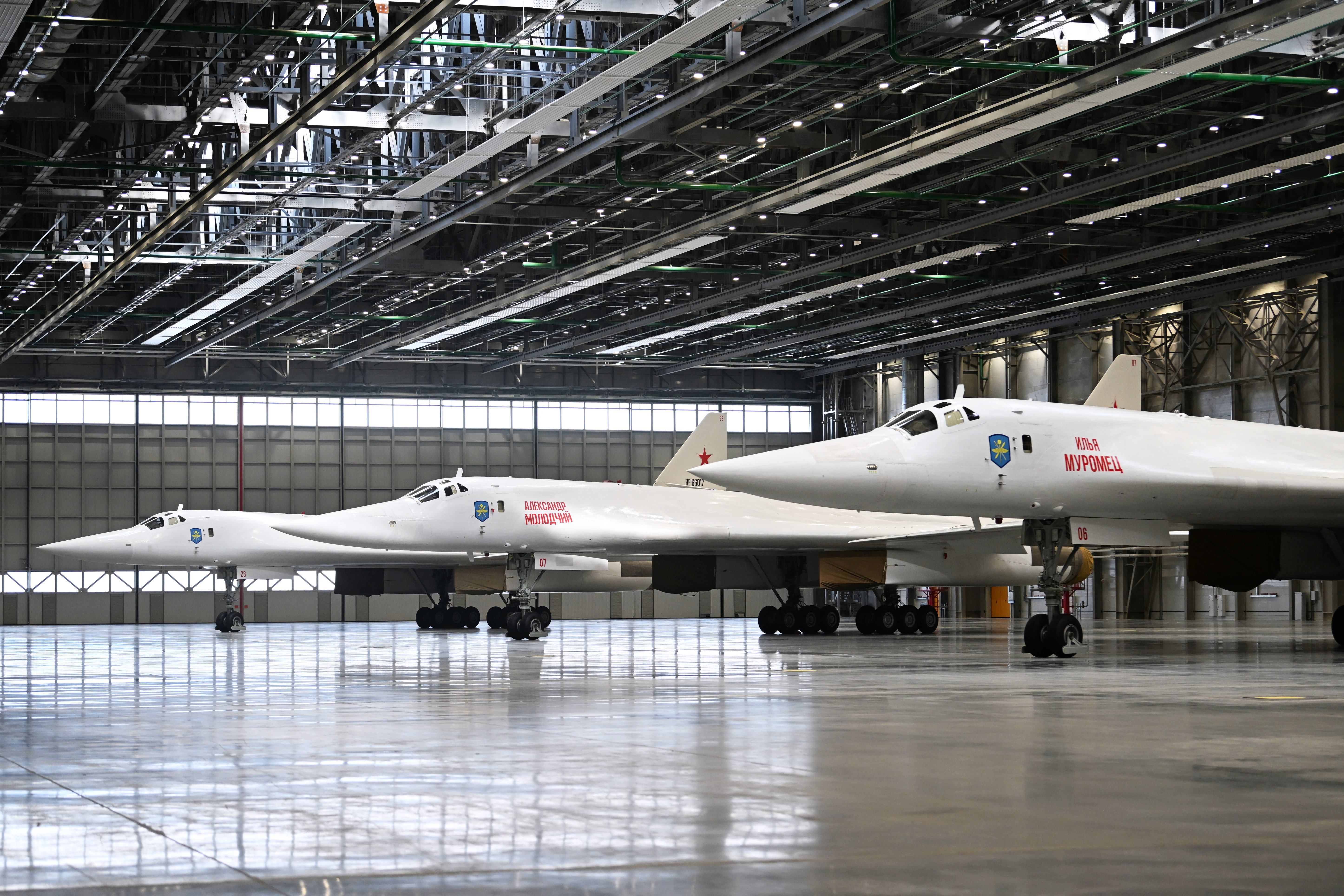
Russia is nearing completion of several large aircraft hangars at the Ramenskoye airfield near Moscow, with their dimensions and location suggesting they could support testing, maintenance, or modernization of Russia’s Tu-160, Tu-95, and Tu-22M3 strategic bombers.
We bring you stories from the ground. Your support keeps our team in the field.
New satellite imagery published by the AviVector analytical group on October 4 shows significant progress on several large aircraft hangars under construction at the Ramenskoye airfield near Moscow. The structures were first identified under construction in March 2026.
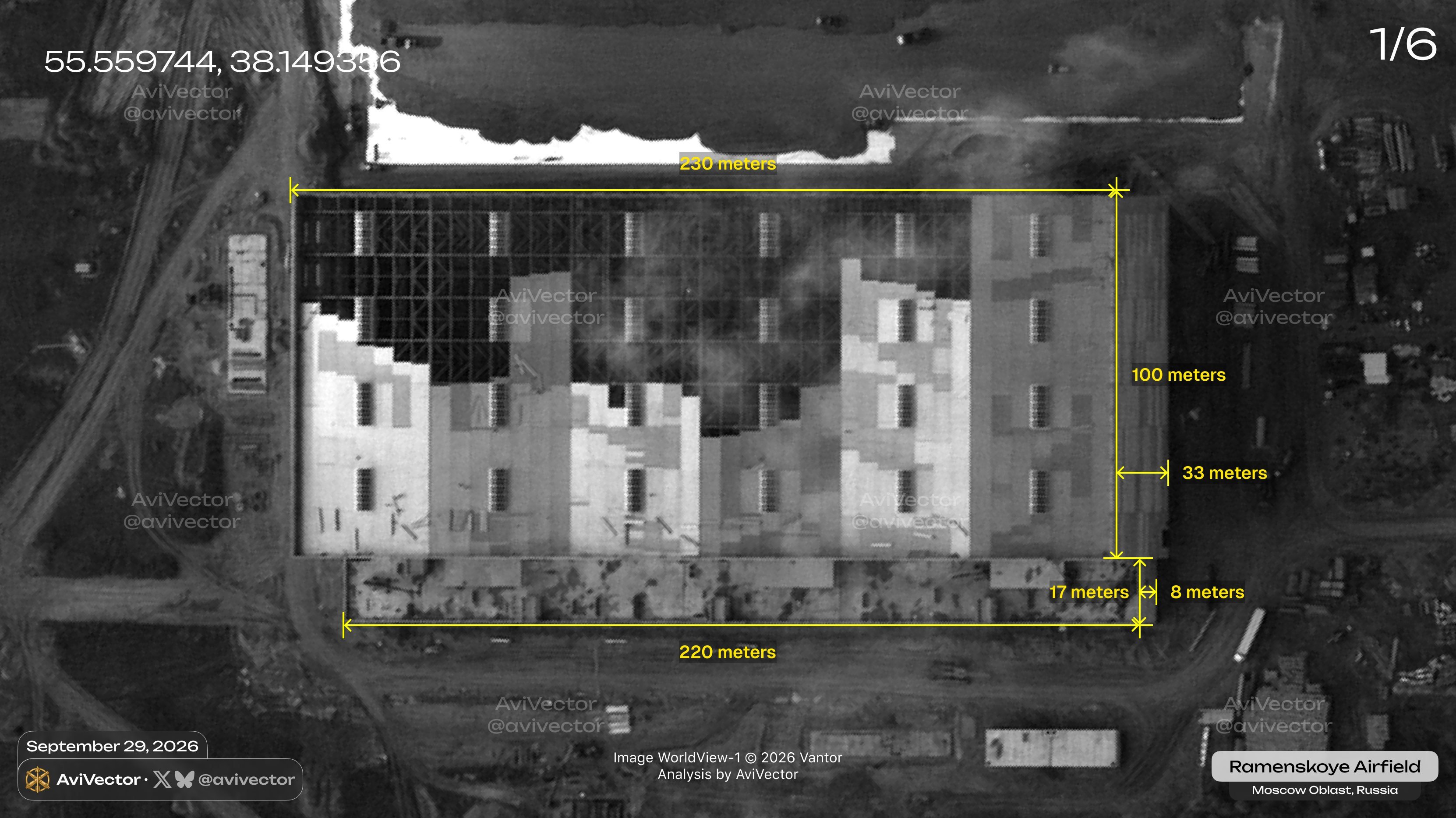
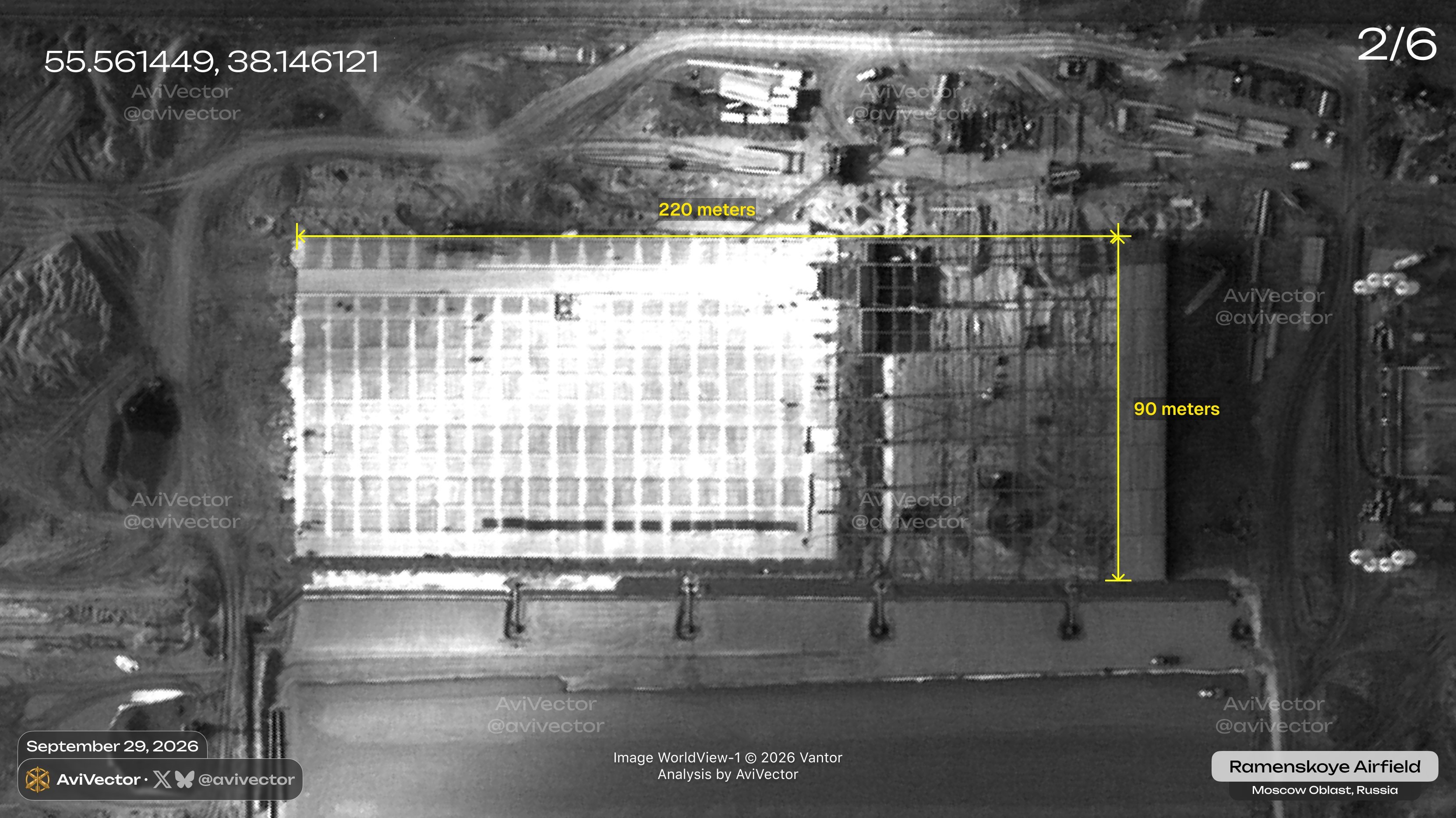
The largest building measures approximately 100 by 230 meters (328 by 755 feet) and stands about 33 meters (108 feet) high. It is divided into three hangar sections, each roughly 77 meters (253 feet) wide. An adjoining structure measures about 17 by 220 meters (56 by 722 feet), while a second major building covers approximately 90 by 220 meters (295 by 722 feet).
The scale of the main structure exceeds what would normally be required simply to shelter aircraft. Each of its three sections is around 21 meters (69 feet) wider than the maximum wingspan of a Tu-160, Russia’s largest operational bomber, while the building’s depth exceeds the aircraft’s length by roughly 46 meters (151 feet).
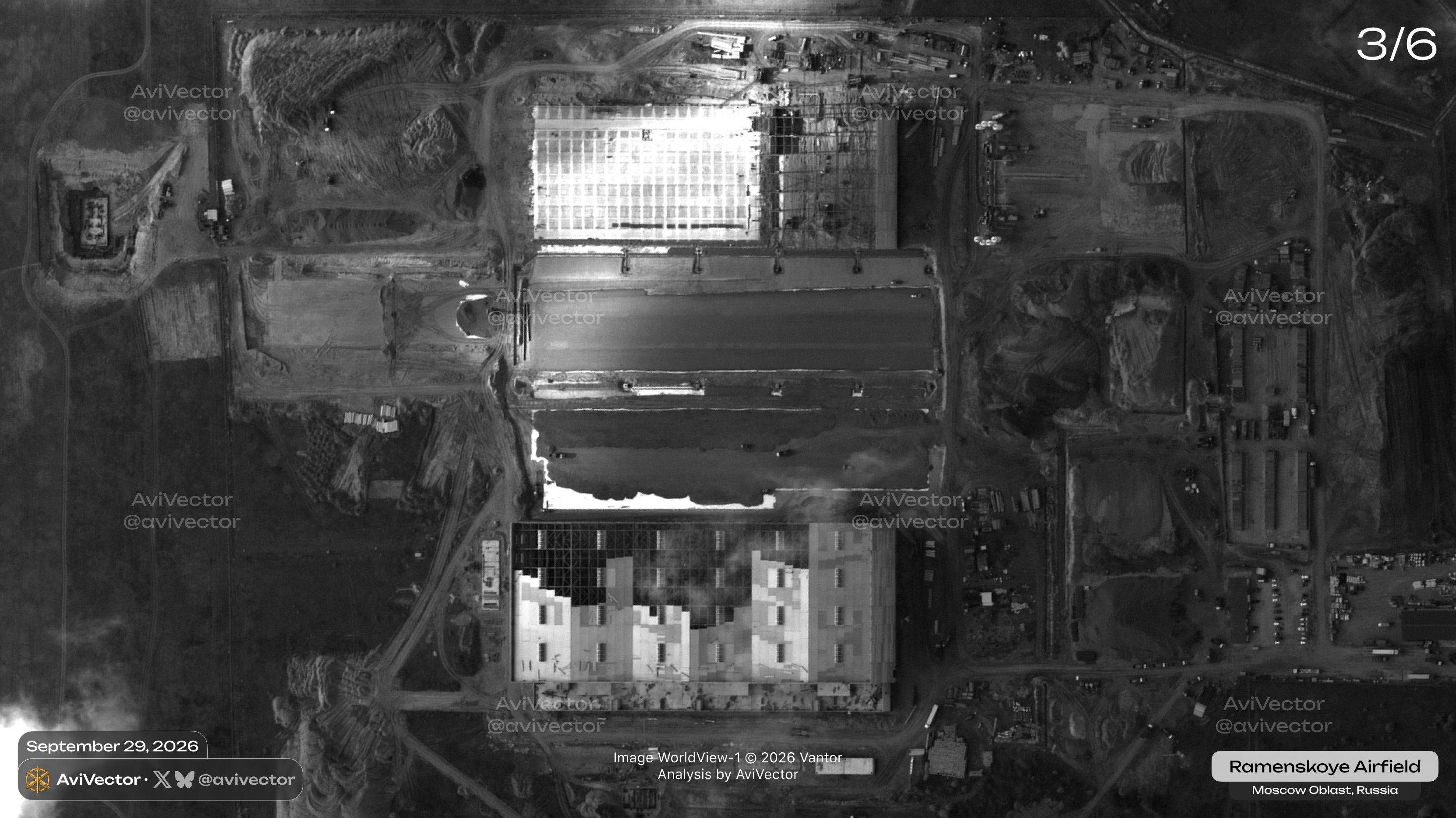
The 33-meter height is also about 2.5 times the height of the Tu-160, potentially providing sufficient space for cranes, elevated work platforms, and other equipment used during aircraft maintenance, testing, or modernization.
The construction site is connected by road to the Gromov Flight Research Institute, although satellite imagery currently shows no direct taxiway linking the new buildings to the airfield’s runway.
The imagery also shows lighter metal-framed hangars nearby. Unlike reinforced aircraft shelters, these structures would provide little protection against potential drone or missile strikes.
Ramenskoye, located in Zhukovsky in the Moscow region, is part of the Gromov Flight Research Institute’s aviation testing complex and hosts experimental, state, and civilian aviation operations. Zhukovsky International Airport, which opened in 2016, operates from the same airfield.
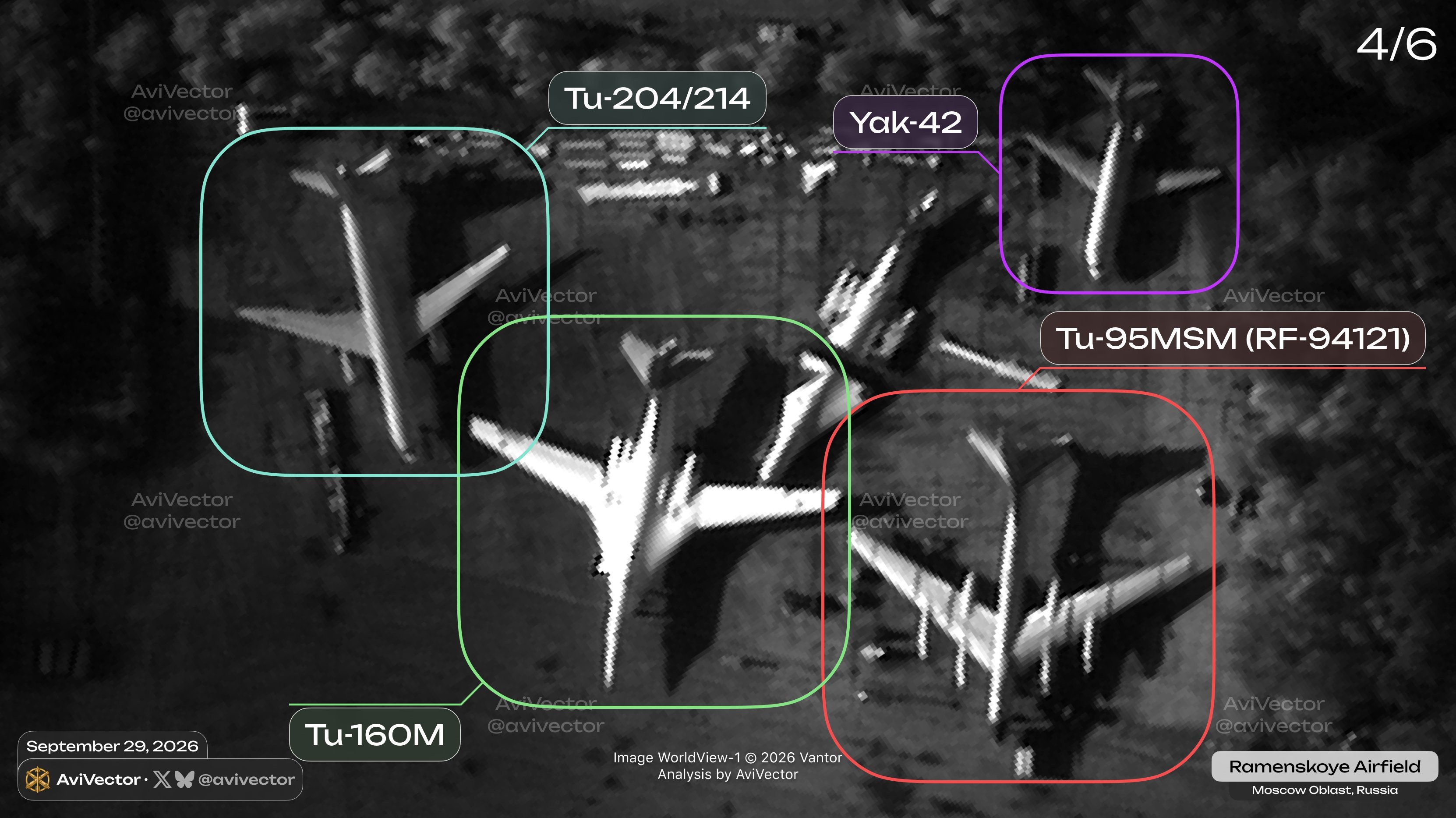
The site is also used by Russian aircraft manufacturers for flight-testing programs. Sukhoi facilities at Zhukovsky have supported testing of the Su-57 fighter, while Yakovlev uses the complex for certification work involving the MC-21 airliner and the Russian-built version of the Superjet.
Tupolev also maintains testing and research facilities at the site. Its programs include experimental and upgraded versions of the Tu-160M, Tu-95MS, and Tu-22M3—the same bomber families that the dimensions of the new hangars could accommodate.
However, the buildings’ purpose has not been independently confirmed. Another possibility is that the construction is connected to the expansion of the permanent exhibition complex previously used for the MAKS International Aviation and Space Salon.
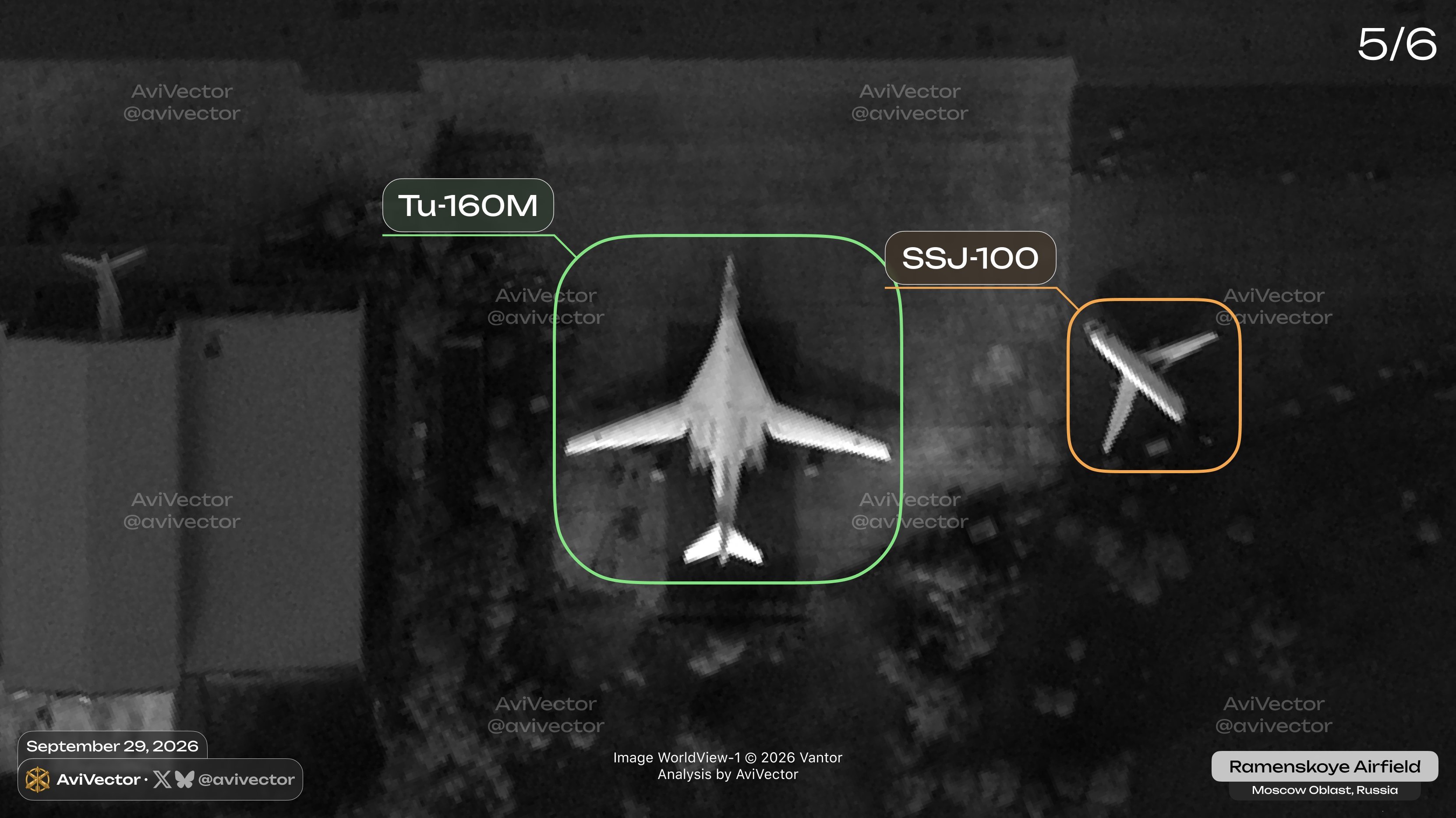
The MAKS exhibition grounds are located immediately next to the construction site. The complex covers more than 42 hectares, including over 40,000 square meters of indoor exhibition space and more than 45,000 square meters dedicated to outdoor aircraft displays.
The proximity of the new buildings to those facilities leaves both aviation testing and exhibition-related use as possible explanations for the construction. Satellite imagery alone does not establish the final purpose of the structures.
Earlier, Russian Tu-160, Tu-95MS, and Tu-22M3 strategic bombers were spotted at Ramenskoye alongside major new construction, with the activity assessed at the time as more likely linked to testing, modernization, and exhibition preparations than to a permanent bomber deployment.
Discuss this article: