- Category
- War in Ukraine
Russia Could Soon Produce 500 Shahed and Jet Drones Daily, Ukrainian Intelligence Warns
 Prefer U24 Media on Google
- Authors


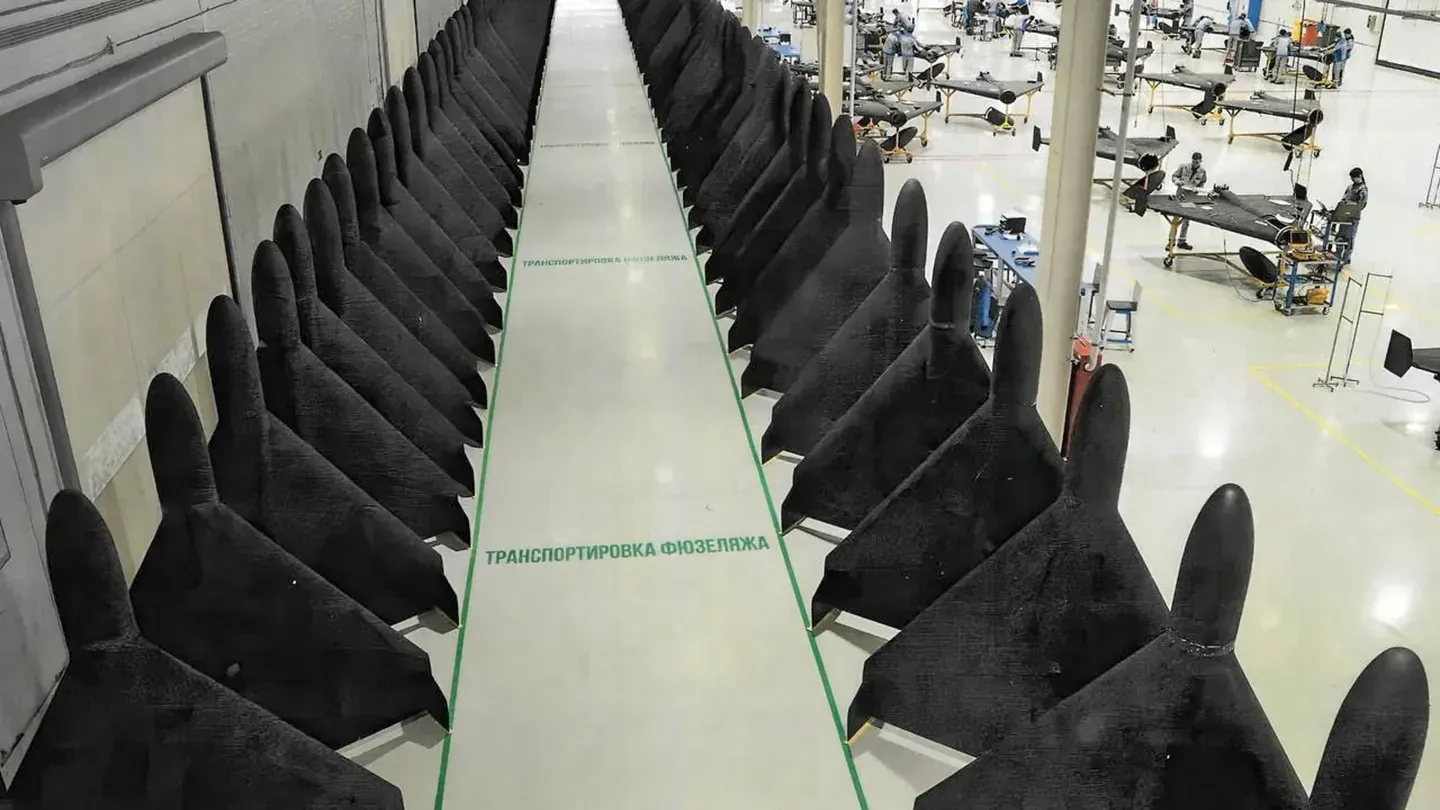
Russia is rapidly scaling up production of long-range strike drones and could reach a manufacturing pace of roughly 500 UAVs per day by early 2027 if current plans are fulfilled, according to new data cited by Defense Express from Ukraine’s military intelligence agency on May 15.
According to Defense Express, Russia plans to manufacture a total of 110,000 long-range drones of all types in 2026, including approximately 60,000 strike drones and another 50,000 decoy UAVs designed to overwhelm Ukrainian air defenses.
We bring you stories from the ground. Your support keeps our team in the field.
The figures, sourced from Ukraine’s Main Intelligence Directorate (HUR), suggest Moscow intends to increase overall long-range drone production by around 40% compared to 2025.
However, Defense Express emphasized that claims of Russia producing 1,000 drones per day are not supported by current intelligence estimates.
Instead, the publication projects a gradual monthly rise in output throughout 2026. Based on HUR data analyzed by Defense Express, Russia’s average daily production rate could climb from roughly 142 drones per day in January 2026 to about 455 drones per day by December.
If the trend continues into early 2027, Russia could eventually cross the 500-drones-per-day threshold.
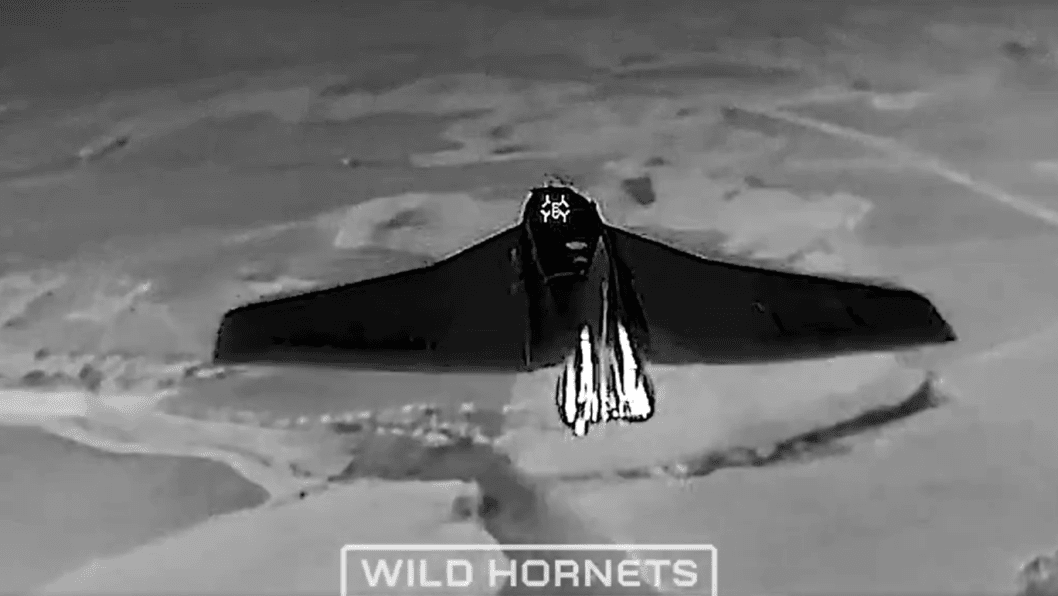
According to calculations published by Defense Express, roughly 55% of those UAVs are expected to be strike drones similar to the Iranian-designed Shahed series, while the remainder would consist largely of decoys and false targets used to saturate Ukrainian defenses.
That production capacity would theoretically allow Russia to stage attacks involving up to 1,000 drones in a single day through stockpiling, including around 550 actual strike drones. However, Defense Express noted such assaults would likely be occasional rather than daily, requiring periods of reduced activity to accumulate inventory.
The report also highlighted Russia’s growing focus on jet-powered variants of the Geran drone family, including the Geran-3, Geran-4, and the newly introduced Geran-5 cruise missile-type platform.
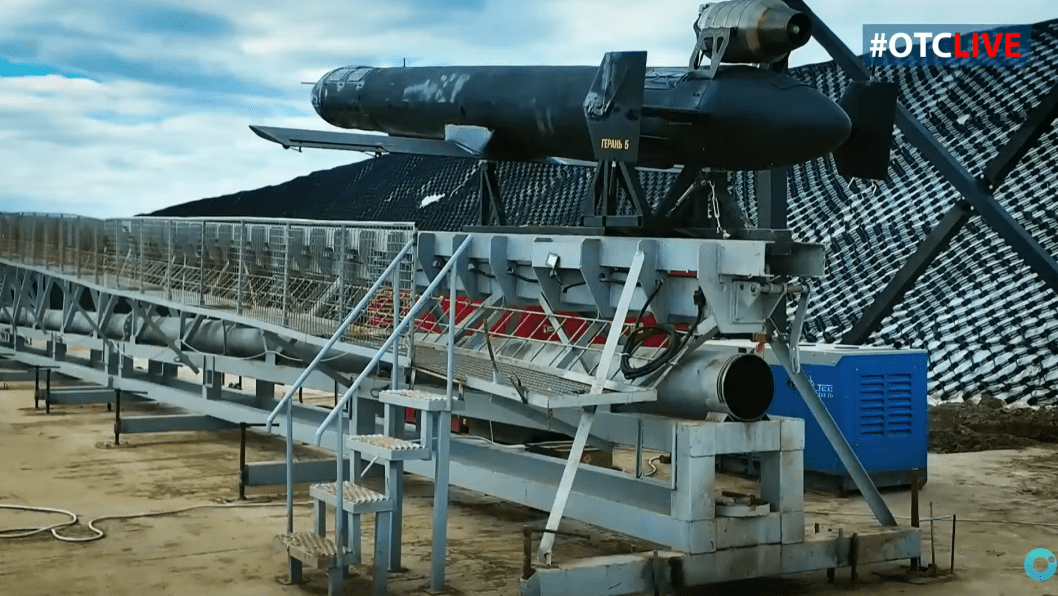
According to HUR data cited by Defense Express, Russia has already launched serial production of the Geran-4 jet drone and the Geran-5 lightweight cruise missile, while full-scale production of the Geran-3 is expected to begin later this year.
Unlike propeller-driven Shahed drones, the jet-powered Geran platforms fly significantly faster, complicating interception efforts.
The Geran-3 reportedly uses a Chinese-made Telefly JT80 turbojet engine and can cruise at around 300 km/h, compared to roughly 180 km/h for standard Shahed drones.
During attack runs or while passing through heavily defended airspace, it can reportedly accelerate to around 370 km/h and strike targets at ranges up to 1,000 kilometers.

Meanwhile, the Geran-4 is believed to reach speeds of up to 500 km/h. It was also reported that Russia has experimented with equipping the platform with R-60 air-to-air missiles.
The Geran-5, unveiled publicly during Russia’s May 9 parade, is described by Defense Express as a low-cost compact cruise missile capable of speeds up to 600 km/h with a range approaching 1,000 kilometers.
Ukrainian intelligence reportedly believes Russia is still using the jet-powered systems in limited numbers, primarily for testing and operational experimentation.
Special “drone ports” are being used to support their deployment, including facilities in Russia’s Oryol region and another site reportedly built near occupied Donetsk close to the front line.
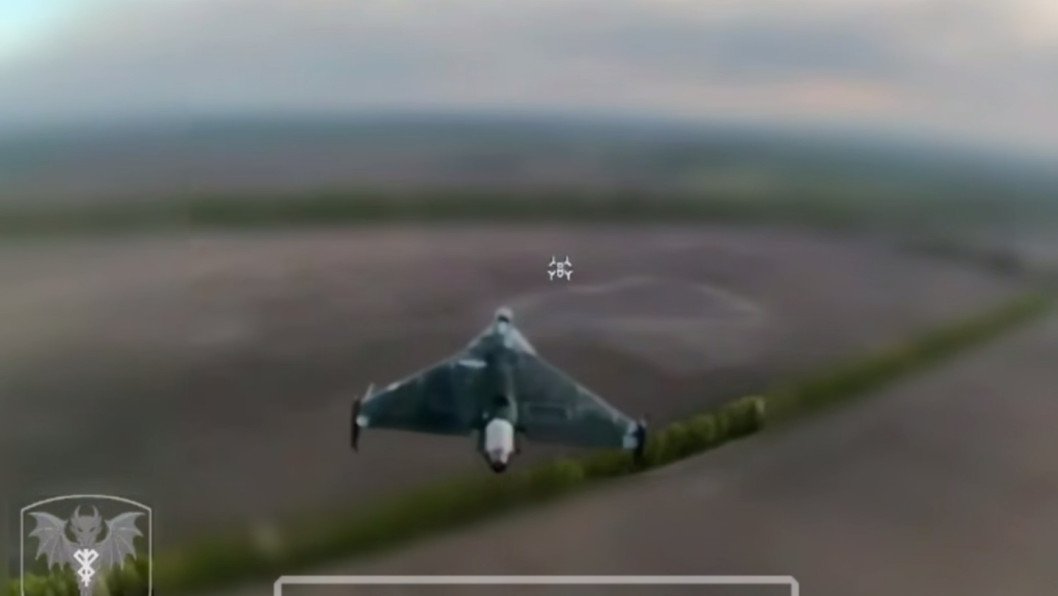
According to Defense Express, the increased speed of the jet-powered Geran variants poses the greatest danger to frontline and border regions, where reduced flight times sharply narrow Ukraine’s interception window.
Earlier, Ukrainian P1-SUN interceptors downed Russian Gerbera drones equipped with FPV drones on board for the first time.
The P1-SUN is a Ukrainian-made interceptor drone produced by SkyFall. It is designed to strike Shahed drones and other aerial targets. The company states the interceptor can reach speeds of 310 kilometers per hour and operate at altitudes of up to 9,000 meters.
Discuss this article:
-9a7b3a98ed5c506e0b77a6663f5727c5.png)




-efa69d4733b5af9f7cd0a642f85424a6.jpeg "Thick black smoke rises from the heavily damaged Proton-Electrotex plant in Orel, Russia, following a reported strike. (Source: Exilenova+)")