- Category
- War in Ukraine
Russia Just Lost One of Its Rare $400,000 “Eyes” for Iskander Missile Strikes
 Prefer U24 Media on Google
- Authors


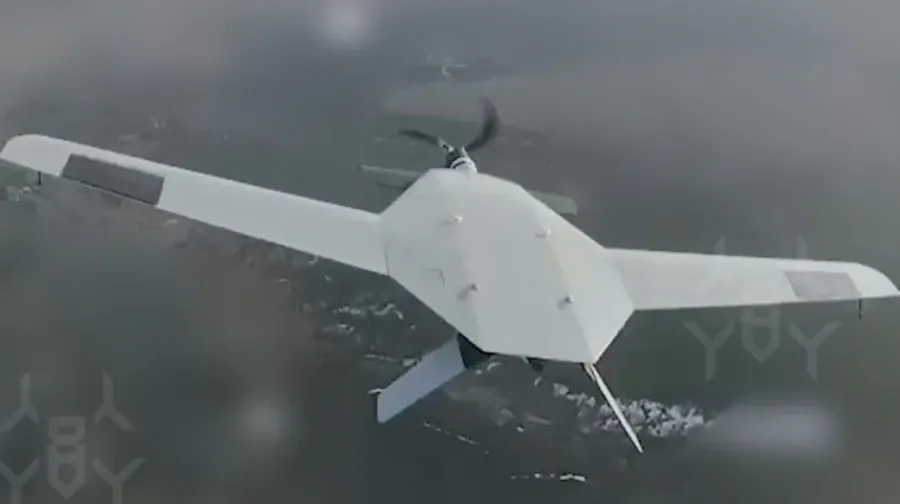
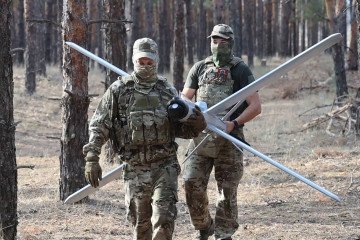
Ukrainian border guards from the Strix unit destroyed a rare Russian Skat 450M reconnaissance drone on the Southern Slobozhanshchyna axis, Ukraine’s State Border Guard Service reported on June 4.
We bring you stories from the ground. Your support keeps our team in the field.
The Skat 450M is a Russian deep-reconnaissance UAV equipped with an optical camera and a thermal imaging system.
Russia uses the drone to spot targets and guide strikes by Iskander operational-tactical missile systems. One such UAV is estimated to cost around $400,000.
🏆 Border guards of the Strix unit destroyed the second rare enemy reconnaissance UAV "Skat 450M" in the South-Slobozhansky direction. pic.twitter.com/BaBJ3nxZ3m
— MAKS 26 🇺🇦👀 (@Maks_NAFO_FELLA) June 4, 2026
According to the service, this is already the second rare drone of this type destroyed by fighters of the Strix unit.
Ukrainian border guards said that throughout the entire war, Ukraine’s Armed Forces have shot down no more than 20 drones of this type.
Publicly available information on the Skat-450M remains limited, and the system is considered one of the least documented UAVs in Russian service. It is believed to feature an unconventional airframe designed to reduce radar visibility while maintaining aerodynamic performance.
The drone’s structure also minimizes external components, helping reduce the risk of damage during landing, including parachute recovery. It is reportedly capable of operating in extreme temperatures, ranging from minus 45 to plus 45 degrees Celsius.
The loss of another Skat 450M is significant because the drone is not a mass-produced battlefield quadcopter, but a specialized reconnaissance platform used to search for targets deep behind the front line and support high-value Russian missile and artillery strikes.
Earlier, Ukraine revealed new details about Litavr, a high-speed interceptor drone developed by F-DRONES and designed to hunt enemy UAVs at ranges exceeding 40 kilometers.
Discuss this article:
-4a56a6b482ec132402c16ef6fcabf9a2.png)