- Category
- War in Ukraine
How Ukraine Plans to Intercept 95% of Russian Air Threats: Inside Kyiv’s Defense Strategy

Ukraine’s Defense Ministry says it is building an air defense system capable of intercepting 95% of Russia’s airborne threats. Early results are already visible: interceptor drones have doubled their success rate against Shaheds in just four months, while low-cost anti-Shahed missiles are now entering testing.
 Prefer U24 Media on Google
- Authors

-29a1a43aba23f9bb779a1ac8b98d2121.jpeg "Photo of Illia Kabachynskyi")
Ukraine’s Defense Minister Mykhailo Fedorov held another meeting with journalists, where he outlined the team’s work over the past several months. As stated from the very beginning, the core vision remains Air-Land-Economy:
protect the skies,
stop Russia on the ground,
and inflict maximum exhaustion on the Russian economy.
The goal is to force Russia to the negotiating table through sustained pressure. Ukraine is actively moving toward that objective.
We bring you stories from the ground. Your support keeps our team in the field.
Ukraine increases Russia’s troop losses
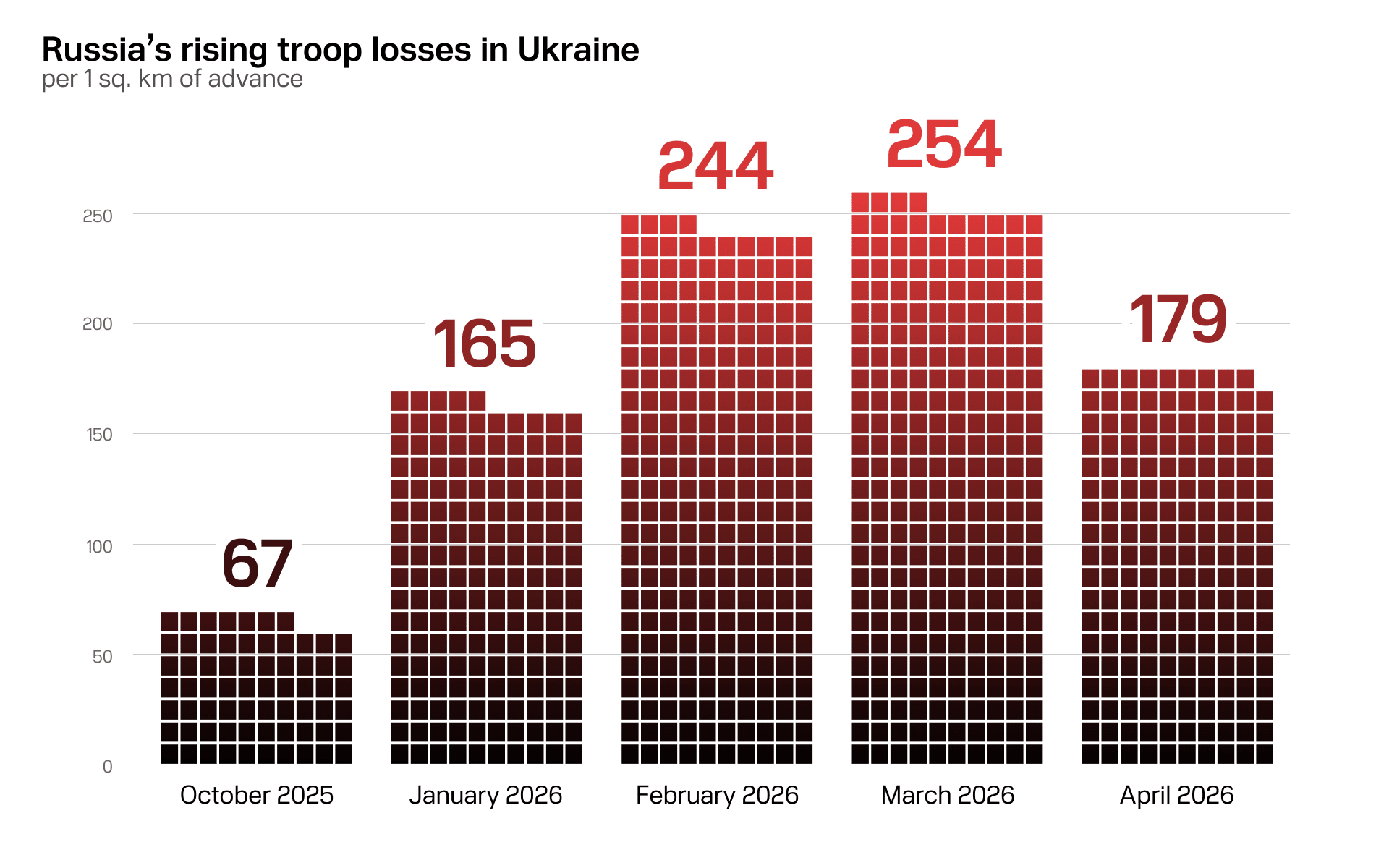
The Defense Ministry’s strategic target is to inflict at least 200 casualties for every square kilometer of Russia’s advance. Current trends show Ukraine moving steadily toward that benchmark:
October—67 casualties per 1 km²
January—165 per 1 km²
February—244 per 1 km²
March—254 per 1 km²
April—179 per 1 km²
The trend indicates that Ukraine has significantly slowed Russia’s advance and is gradually regaining the initiative in certain sectors of the front, including retaking territory.
Confirmed and verified Russian military losses have also increased:
December 2025—34,544 killed and wounded
March—35,351
April — 35,203
An important factor in slowing Russian advances was the February 2026 shutdown of Starlink access for Russian forces. Russia has so far failed to find a полноценная replacement, giving Ukraine a critical advantage on the battlefield.
How Ukraine’s “Middle Strike” drone strategy works
Fedorov also identified the development of the middle strike capability as a key factor in stopping the Russian military.
“We have actively begun procuring mid-strike drones, which have become one of the key technological advantages on the front line,” told us Fedorov. “We deliberately prioritized this direction, and the results are now visible. Data dashboards already show a clear pattern: the more enemy forces are destroyed at operational depth, the fewer assault operations occur on the front line.”
-0dc38916235b2c5f4485ce75aa99572b.jpg)
Drones with a flight range of up to 200 kilometers are targeting Russian logistics, weapons depots, command posts, and air defense systems. This also affects Moscow’s ability to organize new attacks.
These results also demonstrate that assistance provided by European partners is being used as effectively as possible, says Fedorov.
“Over the past few months, the very logic of our communication with international partners has changed,” Fedorov told us. “Successes across every domain are changing the tone of these conversations. Our partners see the momentum on the battlefield, the results of deep-strike and mid-strike operations, rising enemy losses, the effectiveness of interceptions, and the growing pressure on Russia’s economy.
Together with the President and the diplomatic team, we explain to our partners that Ukraine is doing its homework—reforming the procurement system, launching tenders, saving resources, building transparent mechanisms, and proving the effectiveness of decisions through concrete results. And this is producing results.
Now it is important that our partners do their part and help scale what is already working effectively today. This is a win-win for the security of all Europe.”
Protecting Ukraine’s skies from Shaheds and missiles
The primary focus is expanding a “small”—or “short-range”—air defense system. The interception rate of Shahed drones by interceptor drones has doubled over the last four months, even as the number of Shaheds launched by Russia each month has increased by 35%. Deliveries of interceptor drones have also risen by 2.6 times over the same period.
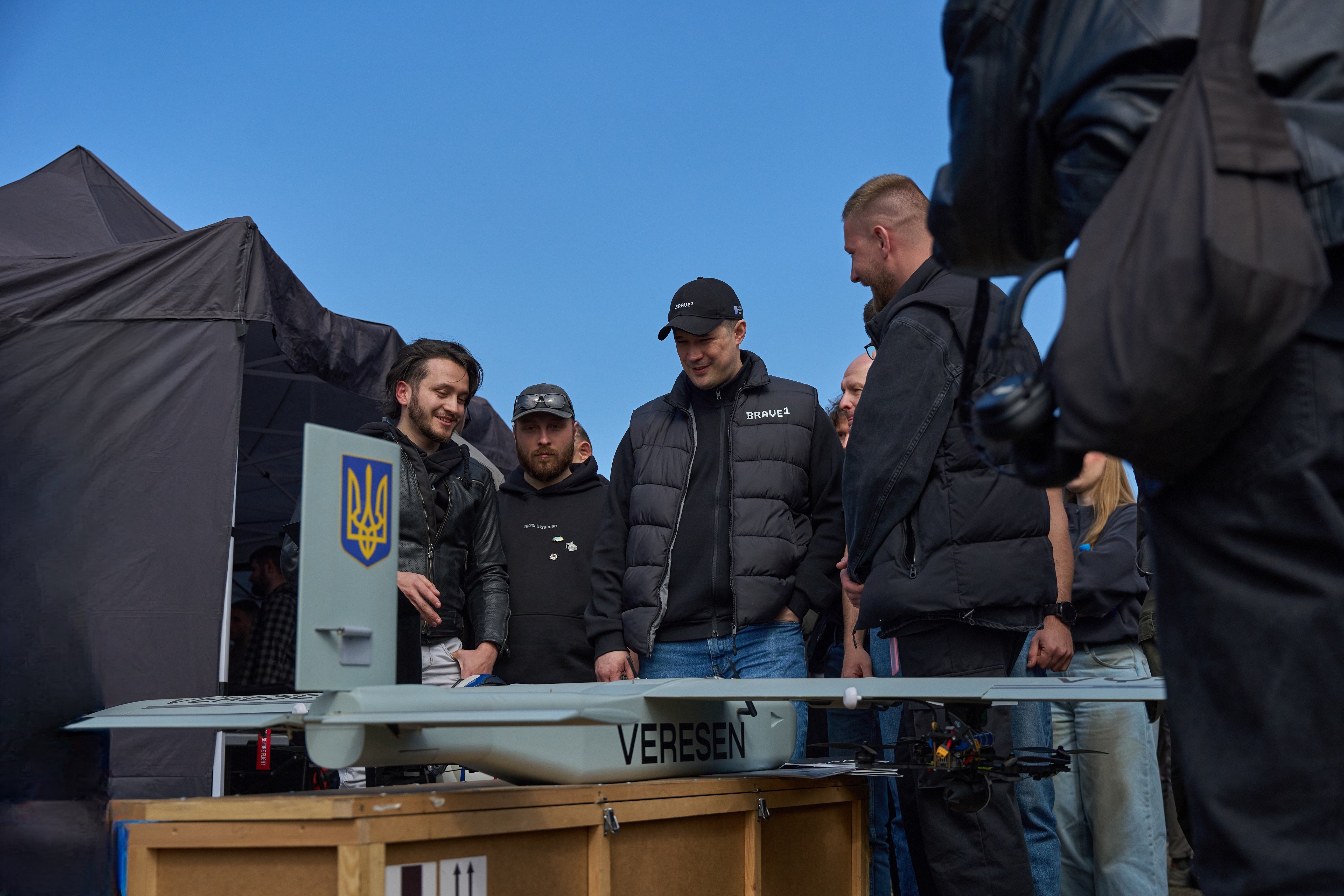
The Ministry is now also focused on developing low-cost missiles designed to shoot down Shaheds. Fedorov says several solutions are already close to operational readiness and have entered testing. The goal is to scale production dozens of times over and build sufficient stockpiles ahead of the autumn-winter period. These missiles are specifically intended to destroy jet-powered Shaheds.
Another area of work is after-action review. Following every large-scale attack, the Air Force and military units conduct detailed analyses. Each missile and drone flight path is examined, along with interception points, technical details, and the reasons why certain targets were not destroyed. The reviews also assess what changes are needed in the operations of mobile fire groups, electronic warfare systems, or interceptor drones. This process helps improve the effectiveness of Ukraine’s air defense forces.
Private air defense groups are also being developed. Twenty-seven companies have already joined the experimental project and are currently at different stages of readiness for combat missions. This includes training personnel, purchasing equipment—such as interceptor UAVs, EW systems, radars, and automated turrets—as well as receiving weapons from Armed Forces stockpiles, including machine guns and explosives.
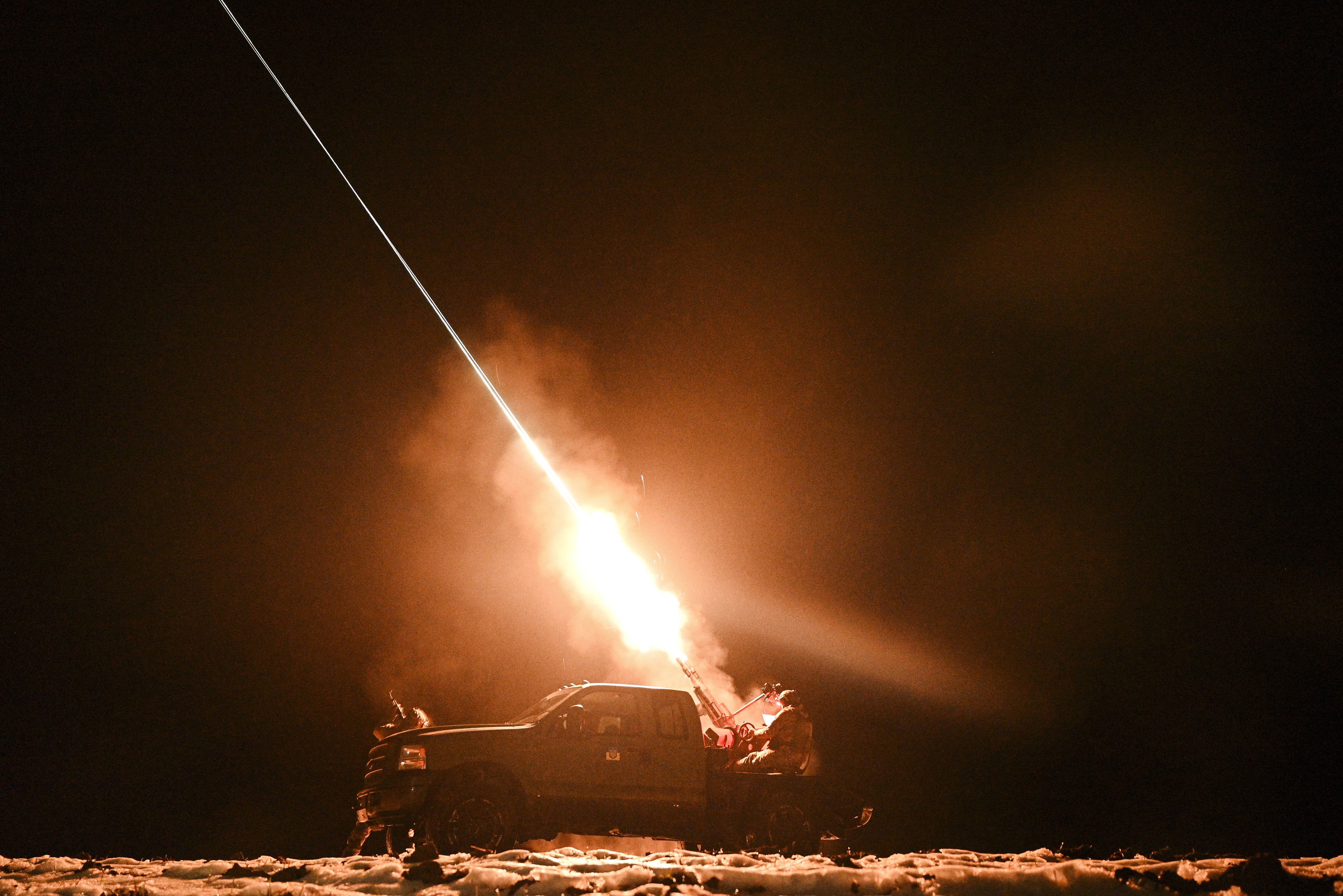
Some of these groups are already operational. Units in the Kharkiv and Odesa regions have reportedly destroyed around 20 Russian Shahed drones and reconnaissance UAVs. Ukrainian military personnel have also confirmed the interception of a jet-powered Shahed in the Kharkiv region.
Major changes in the Ukrainian military
One of the key areas of work is supplying the army.
“Comparing the first four months of 2026 with the entire previous year shows a fundamentally different scale,” says Fedorov. “Supplies have increased for fiber-optic FPV drones, heavy bombers, fixed-wing reconnaissance drones, middle strike drones, deep strike drones, Mavic-type drones, light bombers, Shahed interceptors, and other systems,” Fedorov explained.
The anti-corruption track is also advancing. This summer will mark the transition to tender-based procedures in defense procurement. For example, a recent procurement of long-range 155 mm artillery rounds achieved savings of more than 16%. The next step is to move drone procurement to competitive tendering as well.
The Ministry’s team is also working on a comprehensive transformation of recruitment and service conditions within Ukraine’s Defense Forces. Several initial projects are currently being prepared for implementation, including a fair compensation model, a new contract system with clearly defined terms of service and a transparent rotation framework, new approaches to staffing military units, reducing the rate of unauthorized absence from service, and other reforms.
Discuss this article:


-80134f2dc17b4a887d01513a1c7bc929.png "Illustration of Russian military infrastructure targeted by Ukrainian strikes in temporarily occupied eastern Ukraine. (Source: General Staff of the Armed Forces of Ukraine)")