- Category
- War in Ukraine
Russia May Have Fewer Than 900 Combat-Ready Tanks Left in Storage
 Prefer U24 Media on Google
- Authors


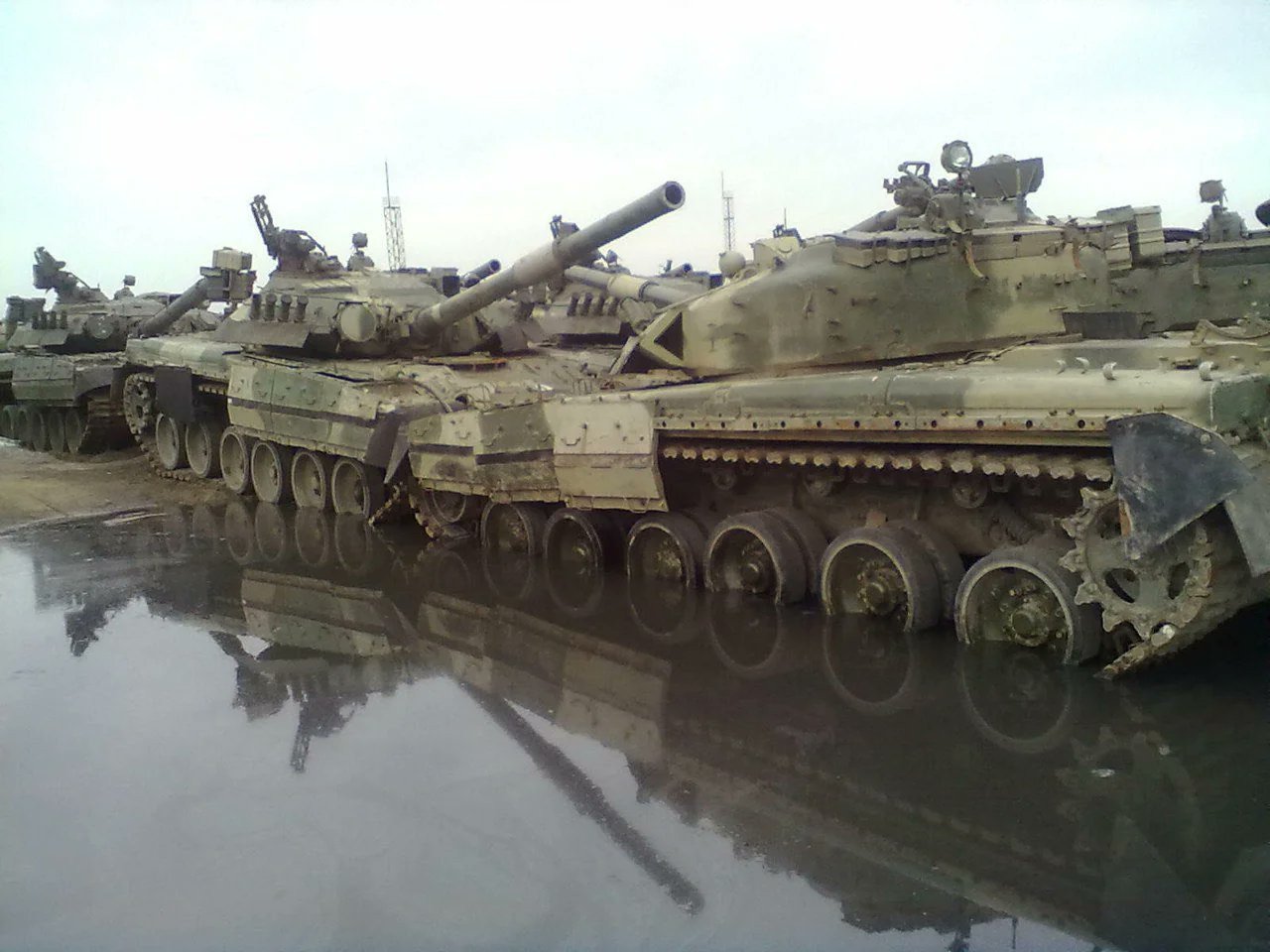
Russia may have only around 851 tanks remaining in deployable reserve despite more than 2,000 vehicles still visible at storage sites.
We bring you stories from the ground. Your support keeps our team in the field.
According to a June 10 report by Defense Blog, citing satellite imagery analysis published by open-source researcher Jompy on June 9, a large share of the tanks still present at Russian storage facilities are unlikely to return to service due to deterioration, cannibalization for spare parts, and other technical limitations.
Jompy identified approximately 2,088 tanks across the storage sites, including T-54/55, T-62, T-64, T-72, and T-80 series vehicles, as well as a number of unidentified tanks located at a transit facility.
2/ This is what remains in storage as of the latest imagery I could find. As usual, numbers still look big, but there are caveats. pic.twitter.com/aVAWERaBSS
— Jompy (@Jonpy99) June 9, 2026
A major reduction in the estimate comes from the exclusion of around 440 T-64 tanks. According to the analysis cited by Defense Blog, the type is unlikely to play a significant role in Russia’s force generation efforts due to its limited use within the Russian military and challenges related to maintenance and spare parts availability.
The assessment also excludes approximately 50 unidentified tanks located at Russia’s 904th storage base. Jompy argues that the site functions primarily as a transit hub for equipment moving between storage facilities and operational units rather than as a long-term reserve depot.
After removing those vehicles from the count, the estimated reserve falls to approximately 1,598 tanks. Jompy then applied additional reductions based on the apparent condition of vehicles visible in satellite imagery.
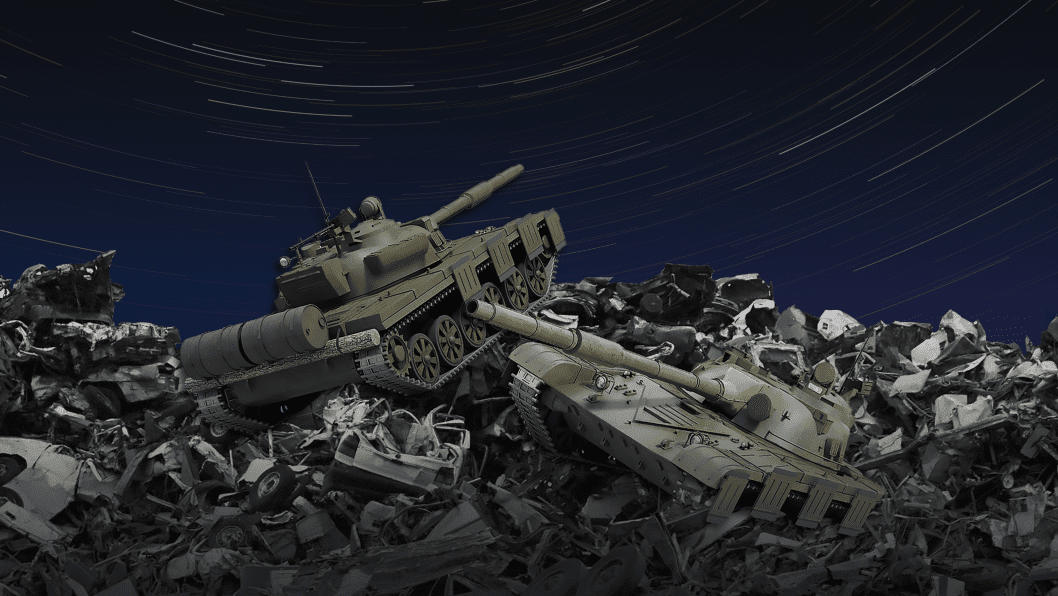
The analysis notes that some storage facilities contain large numbers of tanks that have remained untouched for extended periods despite Russia’s ongoing efforts to refurbish armored vehicles for frontline service.
At the 769th storage base, around 200 T-62 tanks appear to have remained in place for at least two years while other equipment was removed. Similar patterns were reportedly observed at the 349th base, where approximately 250 T-72 Ural tanks have not been selected for refurbishment.
According to the analysis, many of the remaining T-72B and T-80 variants may also be unsuitable for restoration because they have been used as sources of spare parts. Satellite imagery reviewed by Jompy reportedly shows dismantled vehicles, turretless hulls, and other signs of extensive cannibalization at several storage locations.
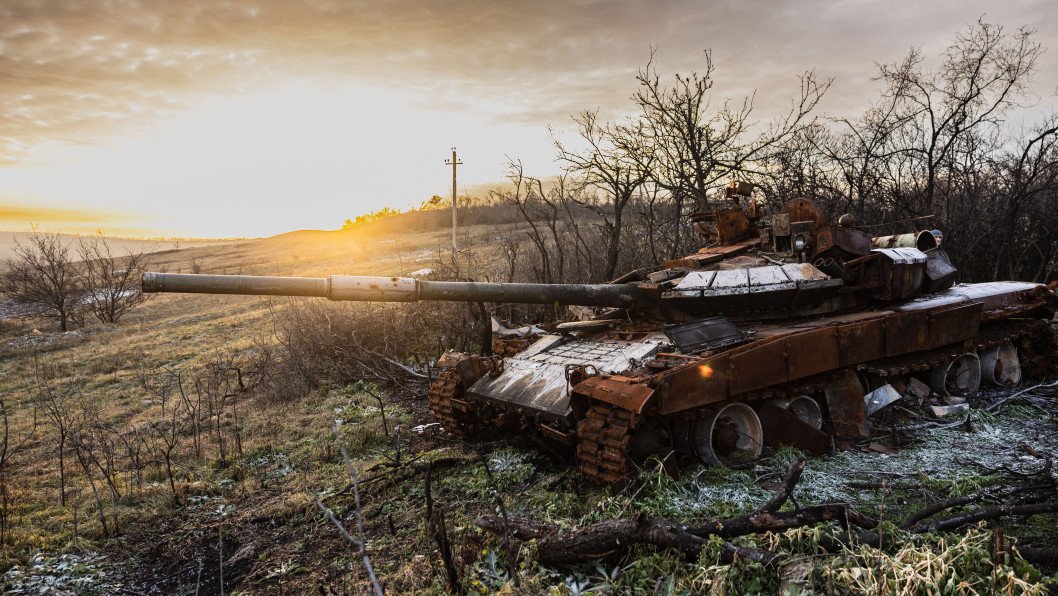
Based on those observations, the analyst estimates that Russia’s remaining usable reserve consists primarily of older Soviet-era models, including large numbers of T-62 tanks, roughly 100 T-54/55s, and approximately 150 T-72A tanks.
Defense Blog also highlighted the situation at Omsktransmash, one of Russia’s principal tank refurbishment facilities. According to Jompy’s assessment, current modernization rates could exhaust available T-80 hulls suitable for upgrade within approximately 12 months unless additional vehicles are drawn from storage or new production capacity is expanded.
Earlier, Russian forces increasingly equipped tanks with improvised anti-drone armor structures known as “mangals” in an effort to protect vehicles from Ukrainian FPV drone attacks. However, Russian tank crews later reported that the additional weight and design of these structures contributed to mechanical failures, while shortages of factory-produced reactive armor forced some units to rely on improvised alternatives.
Discuss this article:
-9a7b3a98ed5c506e0b77a6663f5727c5.png)


-72b63a4e0c8c475ad81fe3eed3f63729.jpeg "Photo of Cyril Barabaltchouk")