- Category
- War in Ukraine
Russia Hails Its T-80BVM Tank as a Stealthy “Assassin” Despite Hundreds of Battlefield Losses
 Prefer U24 Media on Google
- Authors



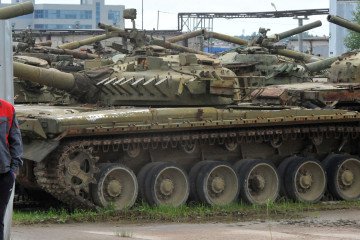
Russia’s state-owned defense conglomerate Rostec has described its upgraded T-80BVM main battle tank as a stealthy battlefield “assassin” capable of approaching enemy positions undetected, despite documented losses of hundreds of these vehicles during Russia’s full-scale invasion of Ukraine.
We bring you stories from the ground. Your support keeps our team in the field.
According to Defence Blog on October 19, Rostec presented the Soviet-designed tank’s modernization as a combination of speed, firepower, camouflage, and mobility, claiming it can perform several battlefield roles ranging from breaking through defensive lines to striking targets from long distances.
Russian T-80BVM sporting a massive cope cage, as well as a significant amount of add on armor.
— OSINTtechnical (@Osinttechnical) November 10, 2023
Belongs to the 29th CAA, operating outside of Vuhledar. pic.twitter.com/dRPud6TMv8
“It’s also an assassin which, thanks to a quiet and powerful gas turbine engine and camouflage, can make fast and unnoticed flanking maneuvers,” Rostec said, according to a translation published by Defence Blog.
The Russian defense company also described the T-80BVM as a “steel battering ram” capable of penetrating enemy defenses while operating under the threat of FPV drones.
In another proposed role, Rostec characterized the vehicle as a long-range “sniper,” claiming it can use reconnaissance drones to identify and engage targets approximately 10 kilometers away with only a few shots.
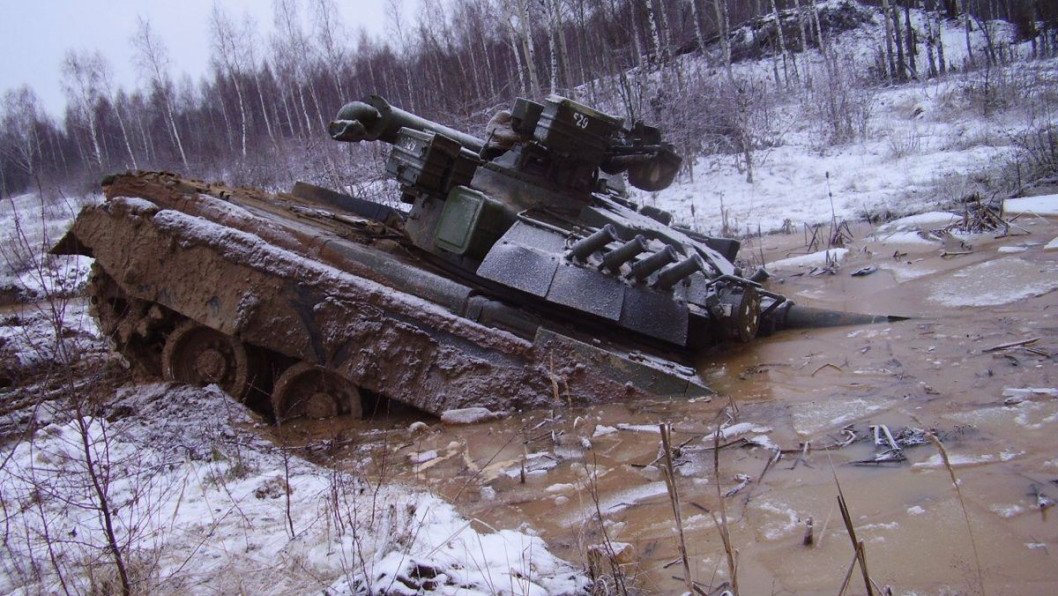
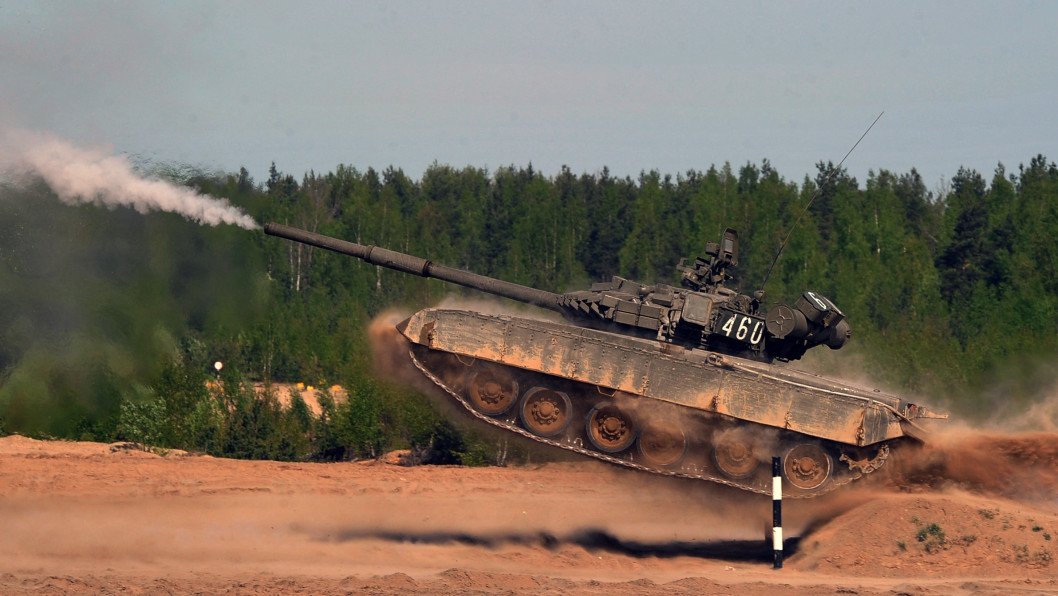
Rostec further promoted the tank’s mobility by calling it a “flying” tank, referring to demonstrations in which T-80 vehicles have launched off ramps during Russian military exhibitions.
The T-80BVM is a modernized version of the Soviet-era T-80BV, equipped with a 1,250-horsepower GTD-1250 gas turbine engine and a 125 mm 2A46M-1 smoothbore cannon.
Its upgrades include an improved fire-control system, additional armor protection, and the ability to launch guided missiles through its main gun.
However, the gas turbine engine that Rostec presents as an advantage also has significant drawbacks. While it provides strong acceleration and reliable operation in extremely cold conditions, it consumes considerably more fuel than the diesel engines powering Russia’s T-72 and T-90 tanks.
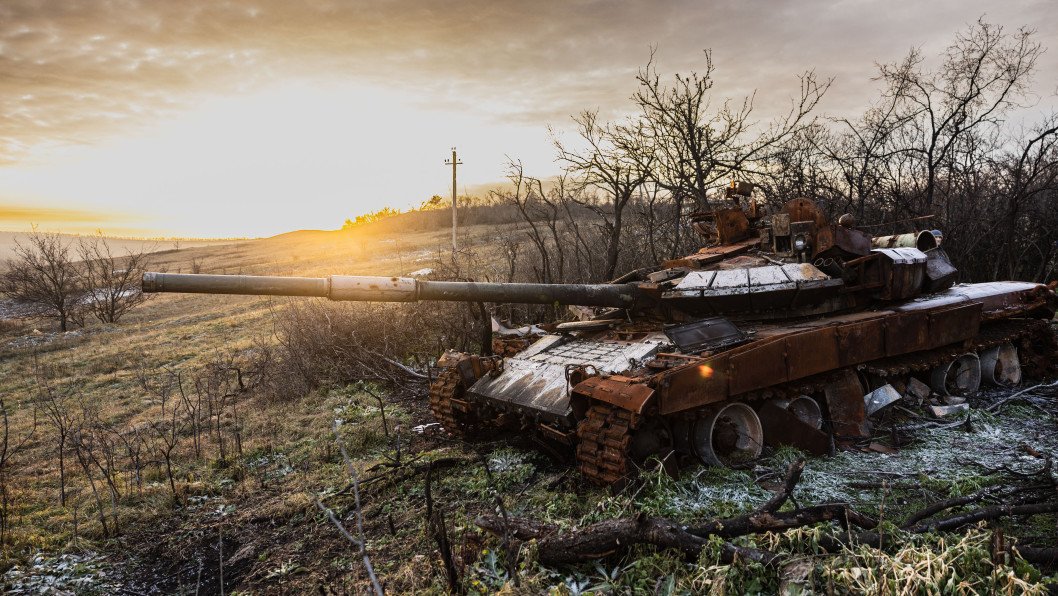
The tank’s claimed ability to operate undetected also contrasts with its documented battlefield losses in Ukraine.
According to open-source intelligence monitoring group Oryx, at least 1,311 Russian T-80-series tanks have been visually confirmed as destroyed, damaged, abandoned, or captured since the beginning of the full-scale invasion.
Among them are 264 T-80BVM tanks, including 150 standard variants and 114 vehicles of the 2022 modernization. The figures represent only losses supported by photographic or video evidence, meaning the actual number could be higher.
Despite these losses, Russian manufacturer Uralvagonzavod, part of Rostec, continues upgrading older T-80BV tanks from storage to the T-80BVM configuration and supplying them to Russian forces.
Earlier, Russian forces were spotted deploying T-80BVM tanks fitted with extensive steel-cable armor designed to protect against Ukrainian FPV drones.
The modifications, nicknamed “steel hedgehogs,” aim to entangle incoming drones and prevent their explosive payloads from detonating, although the additional weight and bulk could reduce the tanks’ maneuverability.
Discuss this article: