- Category
- Latest news
Russia Turns Tanks Into “Steel Hedgehogs” to Survive Ukraine’s FPV Drone Attacks
 Prefer U24 Media on Google
- Authors


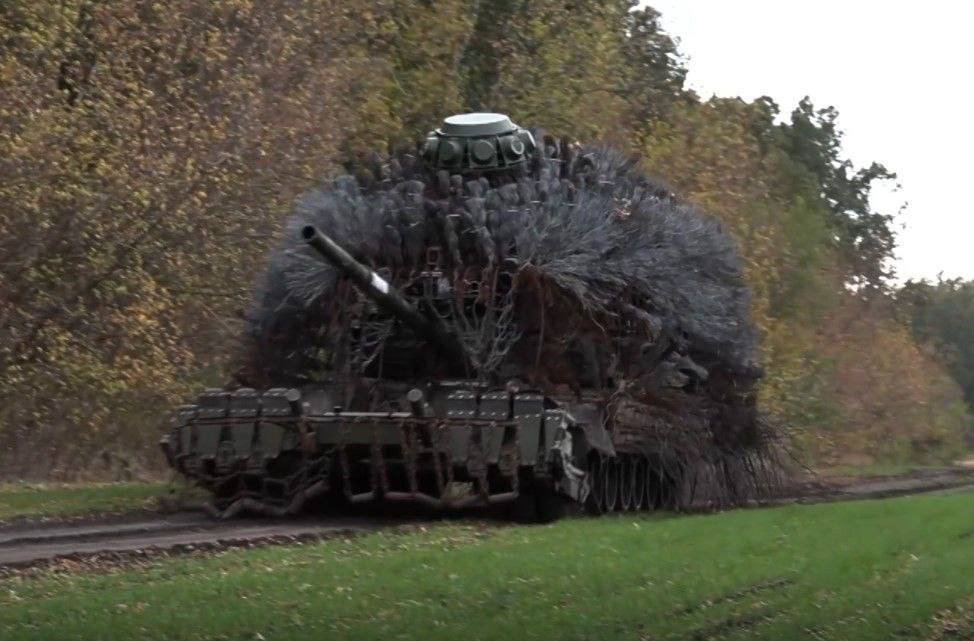
Russian forces have begun deploying modified T-72 and T-80 tanks fitted with extensive anti-drone structures made of thick metal cables, according to the Telegram channel Vodohrai, which published photos of the vehicles on November 2.
The images show T-80BVM and T-72B3 models equipped with mine plows—TMT-K and KMT-7 respectively—and covered with dense overhead “grill” frameworks wrapped in steel cables.
Russia’s tanks are turning into “hedgehogs.” 🦔
— Ivan Khomenko (@KhomenkoIv60065) November 3, 2025
New battlefield photos show T-72 and T-80 tanks covered in thick steel cables and EW gear to stop Ukrainian FPV drones. pic.twitter.com/VrM62e575g
The cables extend across the upper, rear, and partially frontal areas of the tanks, even enclosing the suspension systems.
One of the photographed T-80BVM units also carries an electronic warfare (EW) system mounted above the cable armor. According to Vodohrai, these reinforced structures are intended to interfere with first-person-view (FPV) drones increasingly used by Ukrainian forces on the front line.
Unlike earlier “grill” or “shed” armor designs, these cable domes—dubbed “hedgehogs” by Russian troops—aim to damage drone propellers, entangle their frames, and prevent detonation of their explosive payloads upon impact.
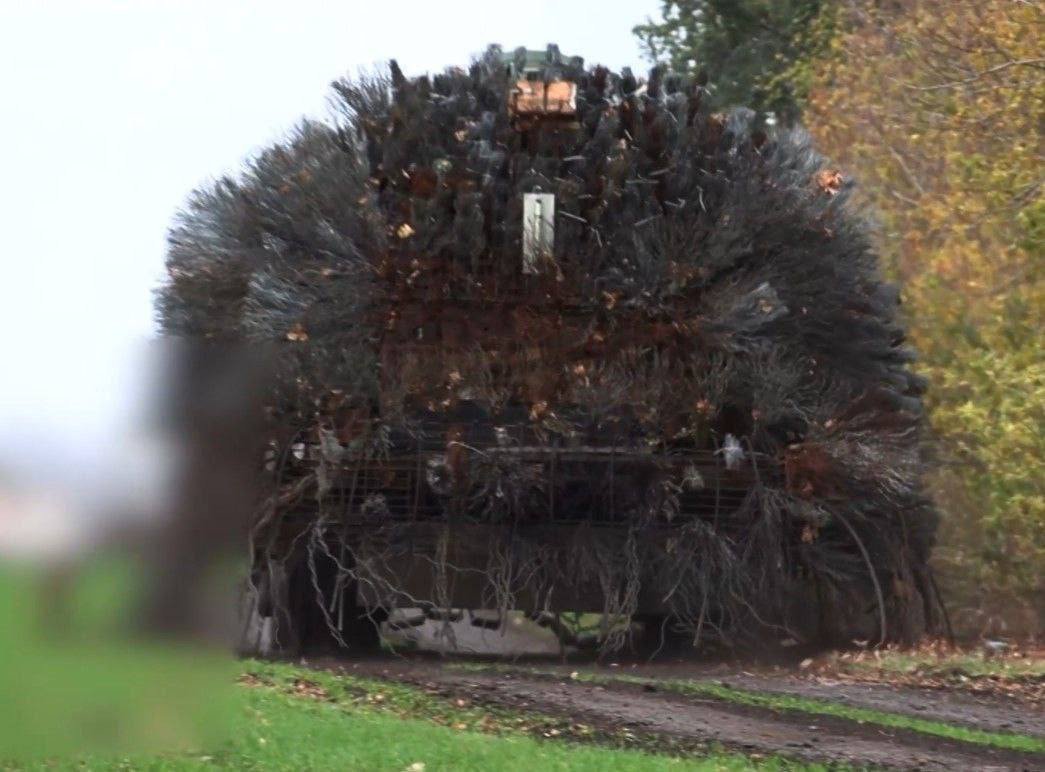
However, the modification adds significant weight and bulk to the tanks, potentially affecting maneuverability and field maintenance.
Earlier, Russian troops were filmed welding dozens of sharp metal spikes onto old UAZ-452 vans — a makeshift “Hedgehog” design meant to detonate Ukrainian FPV drones on contact. The improvised armor reflects Russia’s growing reliance on field-engineered solutions as drones continue to dominate the front lines.
Discuss this article:
-4a56a6b482ec132402c16ef6fcabf9a2.png)


-72b63a4e0c8c475ad81fe3eed3f63729.jpeg "Photo of Cyril Barabaltchouk")
-e88c01988249cd60b6f04f79d29156b7.jpeg "Damage to “Cosmogony,” the largest painting in Ukraine, following a Russian drone attack on Lutsk on October 13, 2026. (Source: @sashyyna/Instagram)")


-dd35be762f08867915b1187d08f5b7cb.jpg "Aftermath of a Ukrainian Neptune missile strike on a Russian Borisoglebsk airfield, October 15, 2026.")