- Category
- War in Ukraine
Russia Tank Manufacturer Floats Robotic AI Replacement for Flawed Armata Platform
 Prefer U24 Media on Google
- Authors

-c439b7bd9030ecf9d5a4287dc361ba31.jpg "Photo of Katherina Popilnichenko")
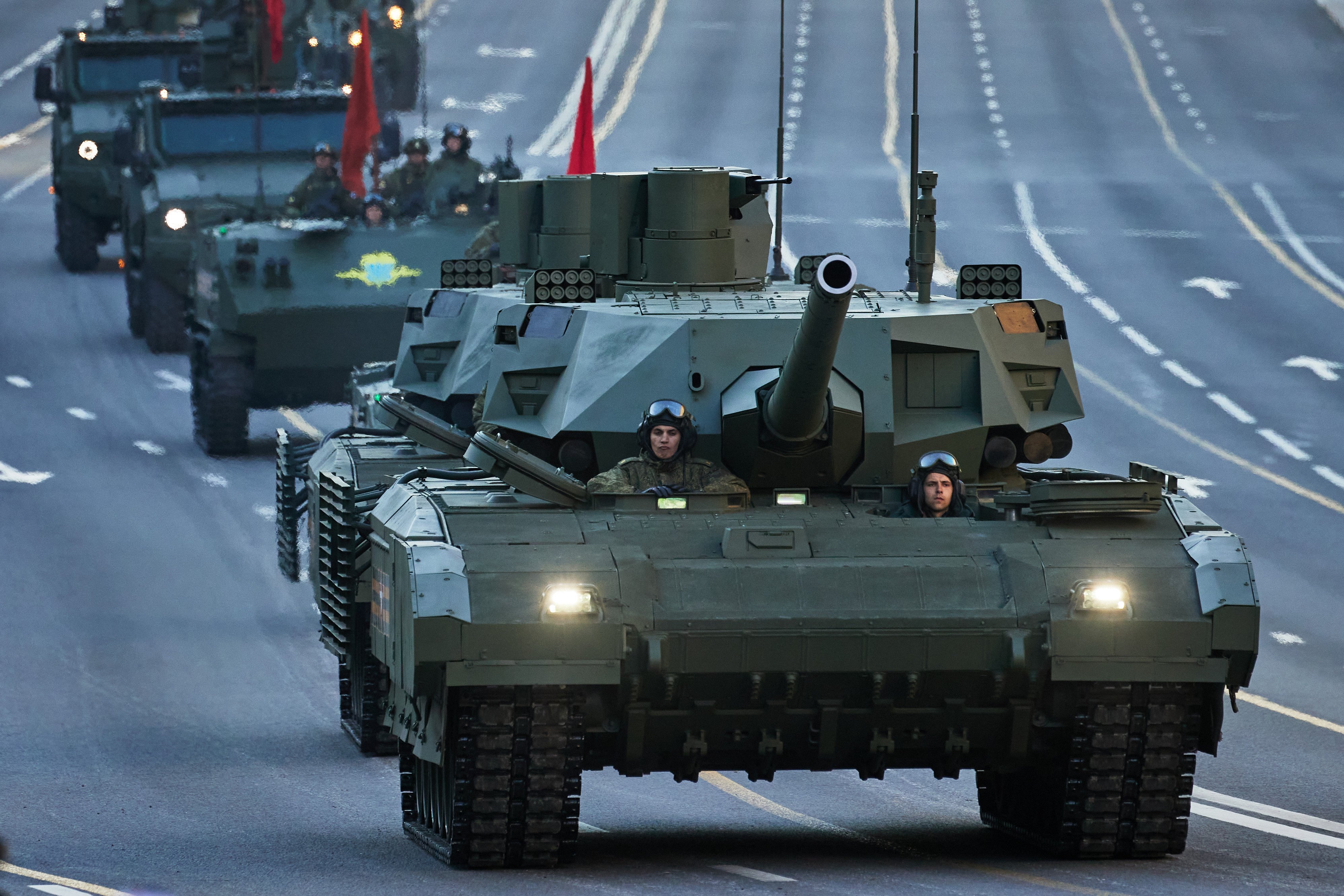
Amid the fading prospects of the T-14 Armata, Russia’s state-owned Uralvagonzavod has begun discussing the development of a next-generation main battle tank.
The company’s director general, Alexander Potapov, recently hinted at a shift toward incorporating artificial intelligence and high levels of platform robotization in future armored vehicle designs, according to Defense Express on June 8.
We bring you stories from the ground. Your support keeps our team in the field.
These prospective machines are intended to reflect lessons learned during Russia’s full-scale invasion of Ukraine, as well as incorporate technical advancements derived from the existing T-90 series.
Despite these public statements, there is little clarity on whether a concrete design for such a tank exists or if these concepts are merely speculative. Potapov refrained from providing specific details on the platform, leaving analysts to question whether the project is an actual engineering endeavor or a strategic attempt to project military capability.
The focus on AI and remote-operated systems suggests an attempt to modernize, yet the industry has struggled to effectively counter the threat posed by unmanned aerial systems, often relying on rudimentary field modifications only years into the war.
The conversation around this new generation of equipment marks a significant departure from the marketing of the T-14 Armata, which was once touted as the future of Russian armored warfare.
-cffb2370f04a12ec2ee6d0a7b426fd5d.png)
The Armata has effectively been relegated to a "parade tank" status, with officials from the Rostec state corporation previously indicating that the platform is too expensive for large-scale procurement, favoring the continued reliance on the more cost-effective T-90.
Integration of advanced protective systems also remains a significant hurdle. Existing active protection systems, such as the Arena, are largely based on designs from the 1980s and 1990s and have not seen widespread deployment.
Furthermore, the effectiveness of such technology against modern FPV drones remains unproven in combat environments, with even high-profile international systems struggling to neutralize these low-cost, agile threats.
Uralvagonzavod may look to incorporate developments from existing robotic initiatives, such as the "Shturm" heavy assault complex, though transforming these prototypes into reliable, mass-produced frontline vehicles remains a substantial challenge for the Russian defense sector.
Previously, the Ukrainian defense company ArmSpetsTekhnolohiya unveiled a deeply modernized version of the Soviet-era BRDM-2 reconnaissance vehicle, known as the BRDM-2M, during the Defense Builder Accelerator Demo Day.
This upgrade transformed the original platform into a multi-role vehicle capable of transporting personnel, conducting evacuation missions, and operating remotely using technology developed by the Estonian company Telearmy.
The modernized vehicle featured a redesigned hull with improved armor protection, a powerful 300-horsepower engine, and an integrated drive-by-wire architecture that allowed for electronic control of steering, braking, and transmission functions. Additionally, the BRDM-2M was equipped with the domestically developed MBU-1 remote weapon station, which included a 12.7 mm Browning machine gun, thermal imaging, and a laser rangefinder to enhance its combat effectiveness on the battlefield.
Discuss this article:
-9a7b3a98ed5c506e0b77a6663f5727c5.png)

-72b63a4e0c8c475ad81fe3eed3f63729.jpeg "Photo of Cyril Barabaltchouk")