- Category
- War in Ukraine
Russia Turns Airstrikes on Ukraine’s Railways, the Nation’s Main Lifeline
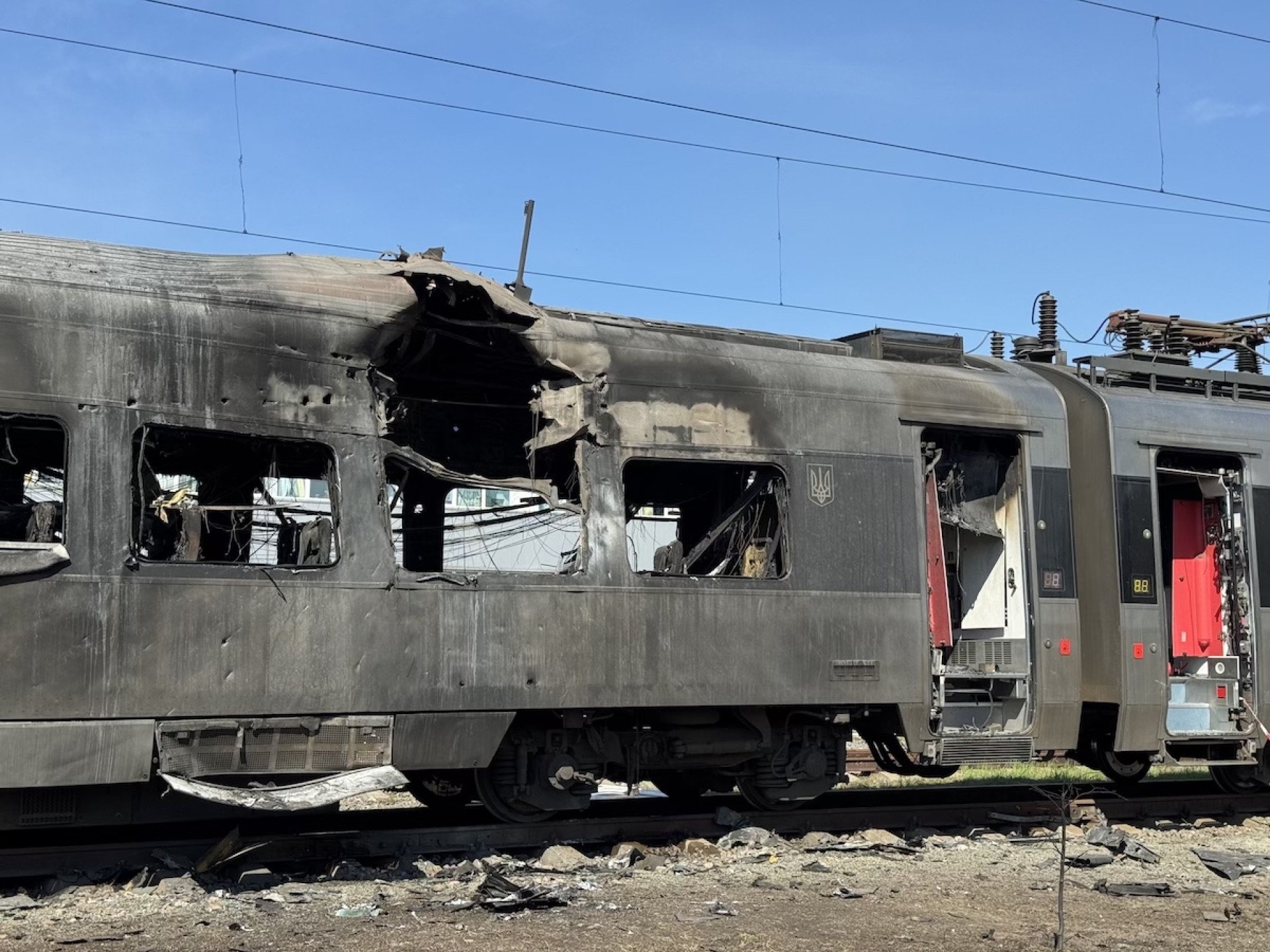
For more than two months, Russian drones and missiles have been striking Ukraine’s railway infrastructure. Major stations, terminals, trains, and power substations have been hit. Since the first day of Russia’s full-scale war, the railway has been both a symbol of resilience and Ukraine’s only artery capable of sustaining large-scale, constant logistics.
 Prefer U24 Media on Google
- Authors

-29a1a43aba23f9bb779a1ac8b98d2121.jpeg "Photo of Illia Kabachynskyi")
On the morning of September 18, Russia attacked railway infrastructure in the Poltava region, carrying out the strike with Geran-2 drones, according to preliminary reports. One person was injured, repair work is needed, and trains will be running with delays.
A day earlier, Ukraine’s state railway company Ukrzaliznytsia, reported a massive strike on its infrastructure, which caused delays to trains across multiple regions. The hardest-hit areas were on the Odesa and Dnipro routes.
Russia hits civilian arteries
Airstrikes in Ukraine have been constant, but since July 2025, Russia has focused on a new target: railway infrastructure. One of the main objectives has been substations that power the rail network. The attacks have caused delays, route changes, and forced the deployment of additional personnel, rolling stock, and repair crews. Ukrainian teams are attempting to restore service within hours after each strike.
These attacks are, above all, terror against civilians. Since the start of the full-scale invasion, Ukraine’s airports have been closed and all air travel suspended. Railways remain one of only two options for crossing the border—or traveling between cities—alongside road transport. In major Ukrainian cities, commuter trains are also a vital part of daily life: in Kyiv, hundreds of thousands rely on them to get to work every day.
The railway is virtually the only option for rapid, large-scale evacuation—something already proven effective at the onset of Russia’s full-scale war.
Strikes on key hubs
Another crucial factor is the economy. Ukraine depends on railways to transport freight—thousands of wagons carrying raw materials, resources, and fuel. Strikes on this network are a form of economic pressure on Kyiv.
The choice of targets underscores this:
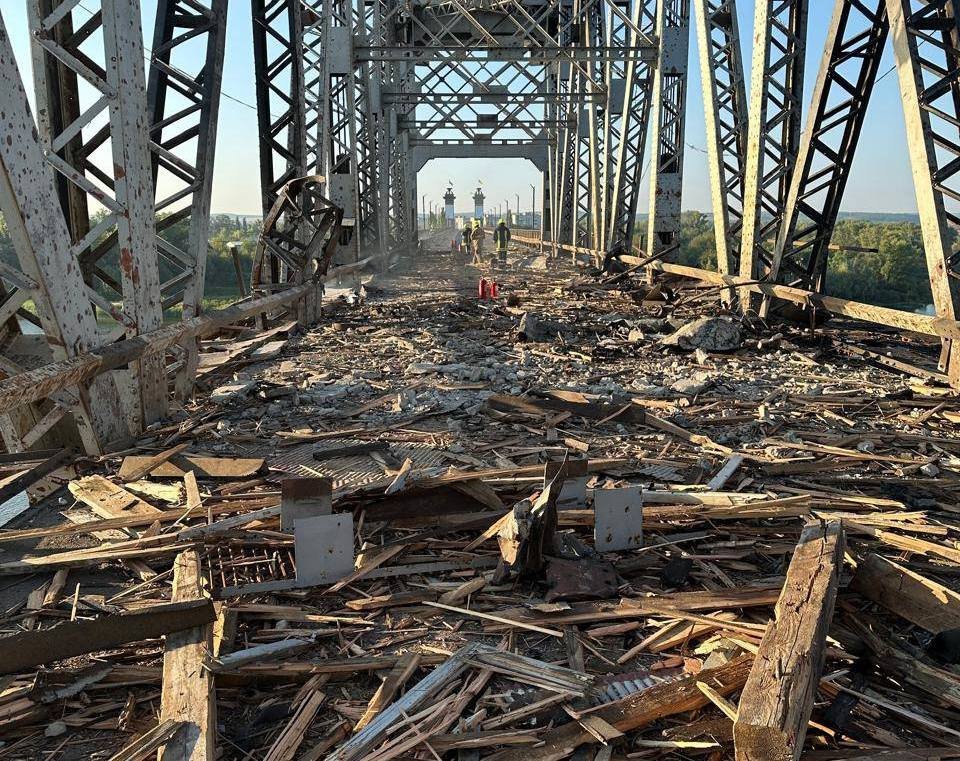
In early September, the city of Kremenchuk suffered a massive attack. One of the main targets was a bridge over the Dnipro River, which carries both road and rail traffic. Damage to the railway cut off one of the few crossings for many kilometers, temporarily paralyzing a major industrial region.
At the same time, strikes hit railway hubs such as Lozova in Kharkiv region and Koziatyn in Vinnytsia region—critical junctions for the Ukrainian network. Attacks on them were designed to disrupt train traffic across entire regions.
Another Russian strike hit a depot in Kyiv, where a passenger train was preparing for departure. A direct hit by a Shahed drone set one of the cars ablaze and destroyed it completely. This depot is where civilian trains are readied before entering service.
“Railway diplomacy” under threat
Such targeted strikes are a clear sign that Russia continues its campaign of terror against civilians while also seeking to undermine Ukraine’s economy by crippling logistics. Strikes have hit regions across the country in an effort to inflict widespread, systemic damage.
This strategy is not new. At the start of the full-scale invasion, Russia targeted Ukraine’s fuel infrastructure, bombing depots and storage facilities, which caused constant fuel shortages for the population. To counter this, Ukraine was forced to create a dispersed storage system. Later, Russia shifted to energy and gas infrastructure, striking production facilities and storage sites.
Now, railways are under attack in an effort to disrupt one of Ukraine’s most vital lines of communication with its partners. “Railway diplomacy” has become a defining term for Ukraine: trains remain the only way foreign leaders, ministers, and delegations can reach Kyiv, as exceptions for air travel are made for no one. Even former US President Joe Biden traveled to Kyiv by train. This lifeline is critical today, given the intense diplomatic efforts by Kyiv, Europe, and the United States to engage Moscow in talks.
Discuss this article:
-6c7b568bf1f65853b7afd9dc1c3ca1fe.jpeg)

-2386d89295678553e91e27f1a0d592e3.png "Ukraine Just Wrapped Up a Four-Season Military Operation: 277 km² Cleared, 8,000 Russian Troops Eliminated")

-c439b7bd9030ecf9d5a4287dc361ba31.jpg "Photo of Katherina Popilnichenko")

-111f0e5095e02c02446ffed57bfb0ab1.jpeg "Photo of Roman Kohanets")