- Category
- War in Ukraine
Russia Unleashes 24-Hour Barrage on What Feeds, Moves, and Heats Ukraine
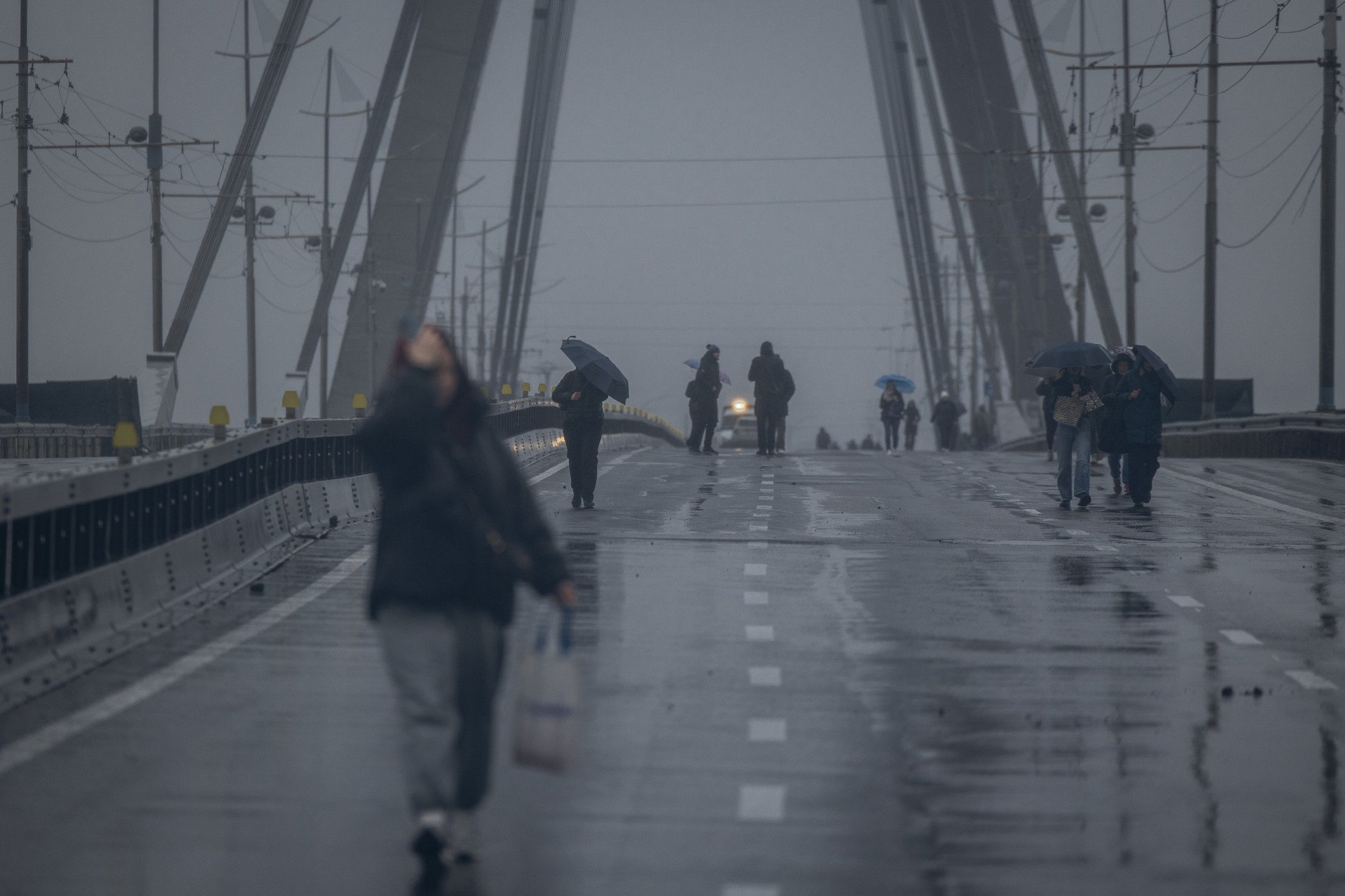
Seven ballistic missiles fired at two bridges in Kyiv, food warehouses hit in Dnipro, energy facilities attacked across Ukraine—in just 24 hours, Russia struck more than 46 communities, targeting the infrastructure that keeps Ukrainian civilians alive.
 Prefer U24 Media on Google
- Authors


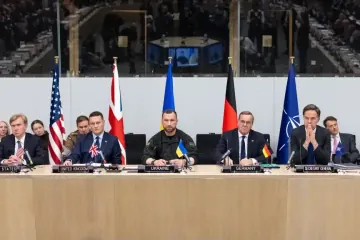
Ukraine’s efforts to bring Russia to the negotiating table to halt the fighting and reach an agreement face resistance from Moscow: the Kremlin’s delegation in Abu Dhabi had neither the authority nor the desire to do so.
In October 2026, Russian strikes killed at least 372 civilians and injured another 1,981 in Ukraine. This was the highest October toll since the start of the full-scale invasion—95% higher than in October 2025, according to a UN report.
Russia sought to surpass its own grim record in early November: an attack on a humanitarian aid distribution point in Komyshuvakha, Zaporizhzhia region, on November 2 killed 72 people, with four others still missing. The search operation, which lasted two weeks, came under Russian attack nine more times.
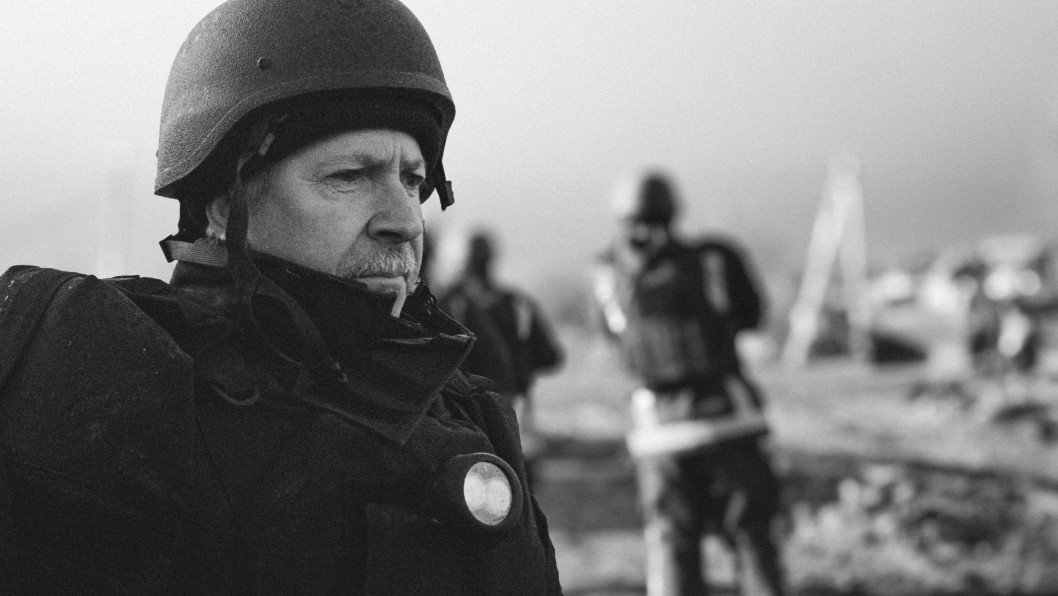
Ukraine remains under constant, large-scale combined attacks by Russian drones and missiles. These daily assaults share a common aim: the Kremlin seeks to attack and destroy everything at once.
Our team reconstructed a single 24-hour period, from 6 a.m. on November 16, 2026, to 6 a.m. on November 17, 2026, to show the reality Ukrainians face while the world naively hopes that Putin’s Russia is preparing for negotiations.
A day under constant Russian fire
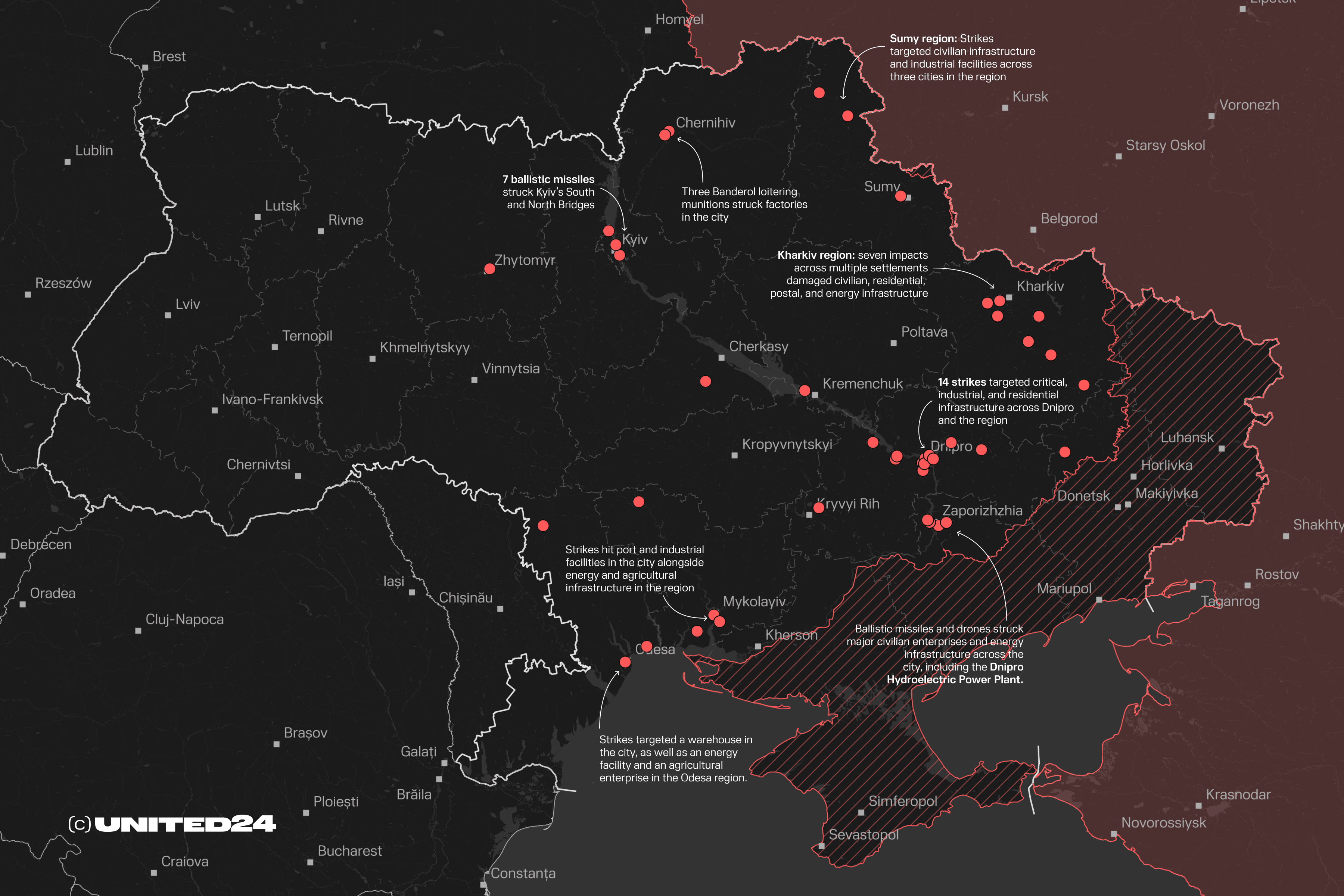
In just 24 hours, Russia launched 38 missiles of various types at Ukraine:
One Kh-22 cruise missile;
14 Banderol loitering munitions;
23 Iskander-M/KN-23 ballistic missiles.
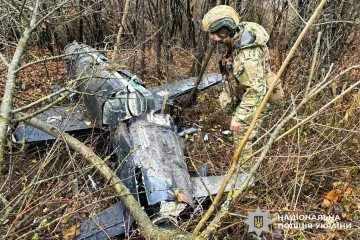
A shortage of interception capabilities meant that all the missiles, including the ballistic missiles, hit their targets. Russia also launched 286 drones of various types, including jet-powered drones. Ukraine intercepted or suppressed 239 of them. The strikes spanned the country.
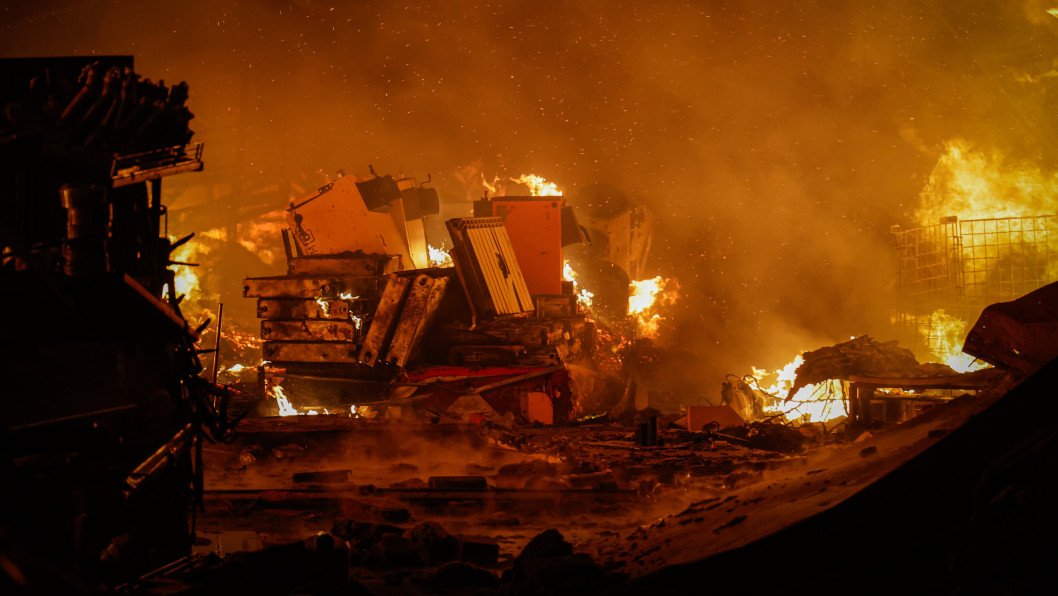
Ukraine’s major cities came under attack:
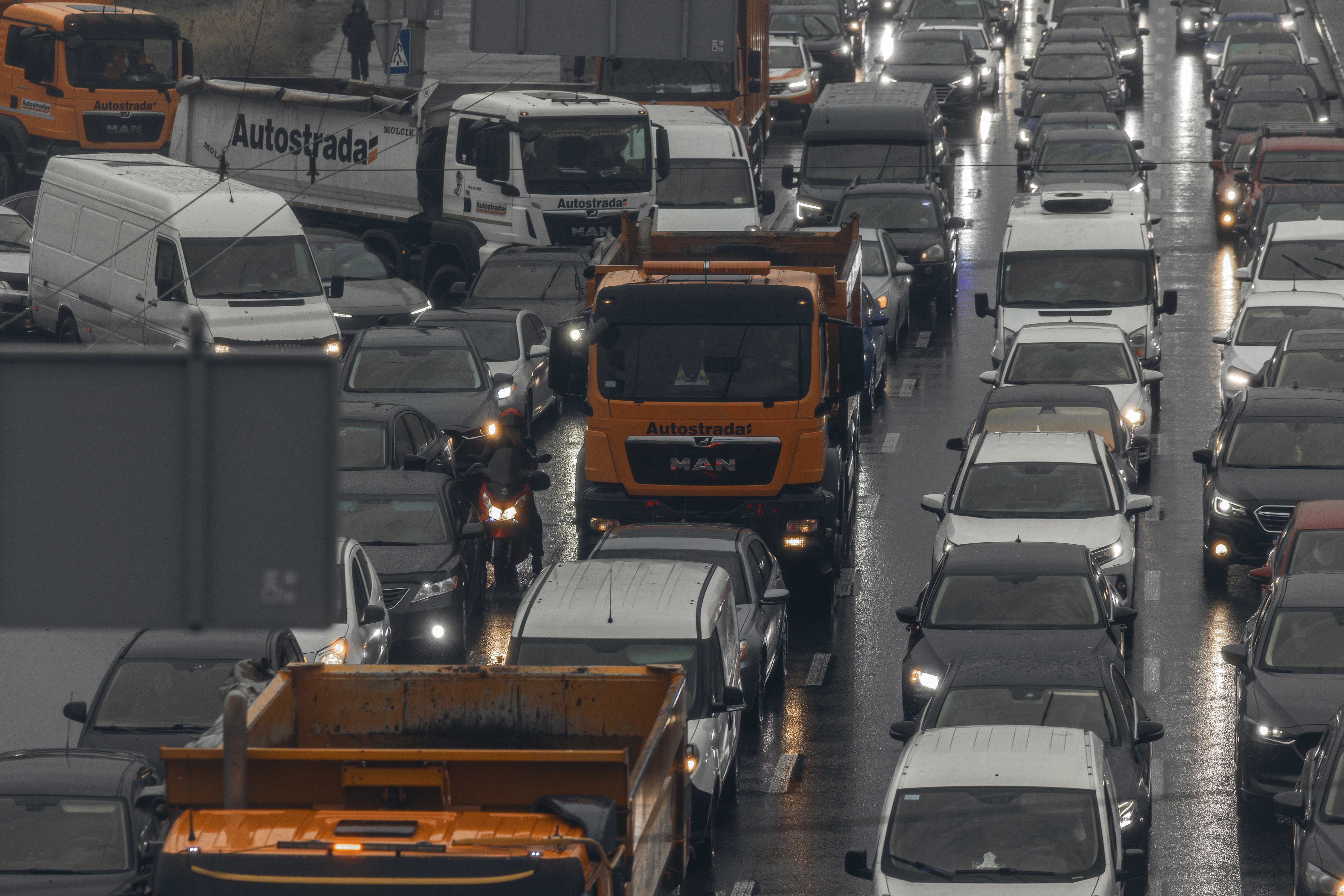
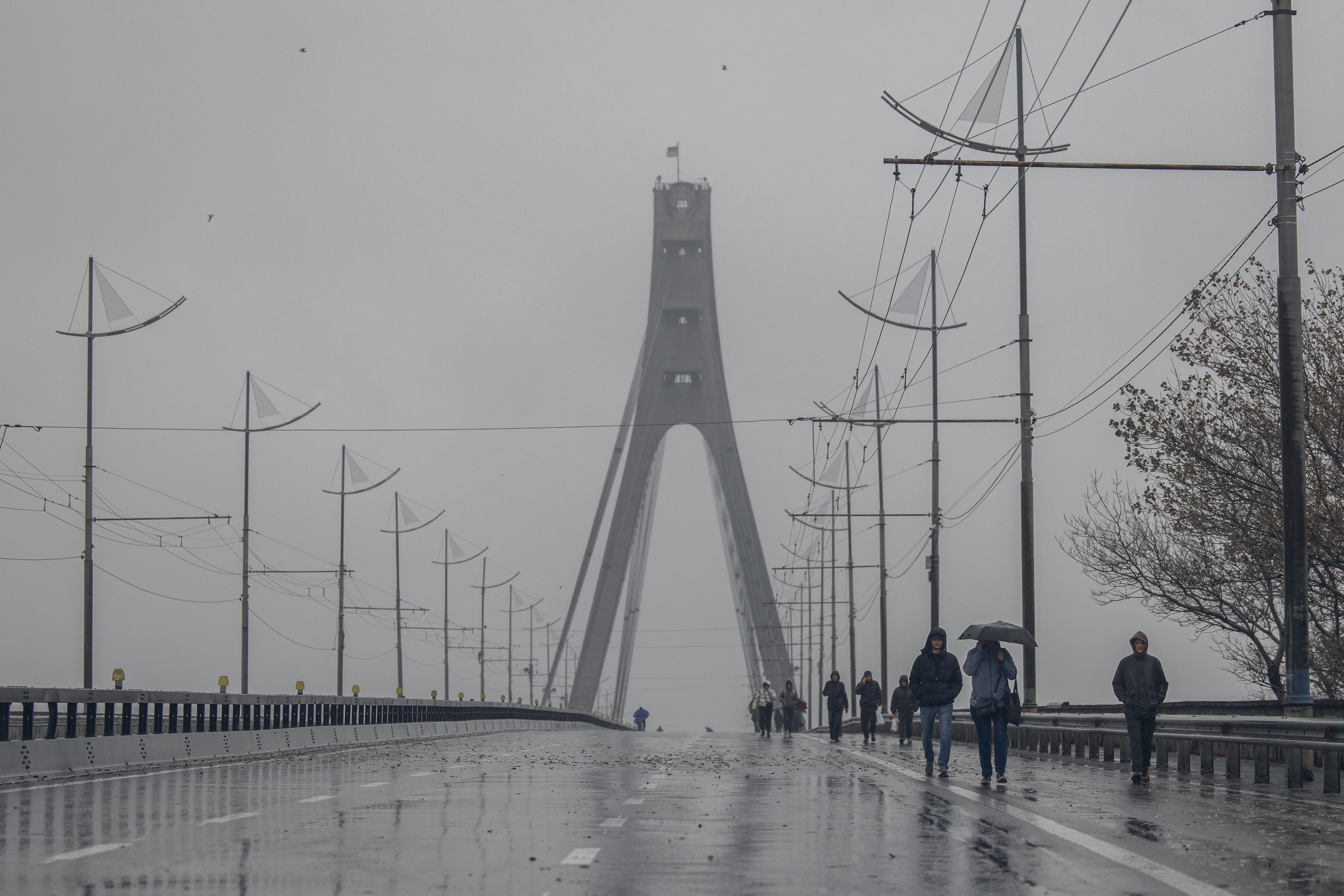
Kyiv: Russia’s ballistic missile strikes targeted North and South bridges, major crossings connecting the capital’s two banks. The strikes damaged road surfaces, trolleybus infrastructure, metro tracks, and district heating infrastructure. A total of seven ballistic missiles were fired at the two bridges. Another strike targeted a manufacturing facility in the Kyiv region.
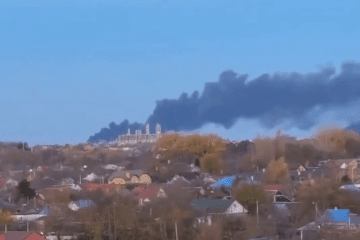
Dnipro: Russia’s eight strikes hit the city over the course of the day. Targets included railway infrastructure, food warehouses, and three manufacturing facilities, one of which produced oil. A metallurgical plant was also damaged. Seven people were injured, and two were killed in the city. Six more strikes hit cities in the Dnipropetrovsk region, damaging energy and railway infrastructure, manufacturing facilities, and residential buildings.
Odesa: A Russian strike hit a warehouse, while two more targeted an energy facility and an agricultural enterprise in the Odesa region.
Zaporizhzhia: Russian strikes targeted several of the city’s largest enterprises. Targets included energy infrastructure, notably the Dnipro Hydroelectric Power Plant. The city was attacked with ballistic missiles and drones.
Mykolaiv: Two strikes targeted port infrastructure and manufacturing facilities. Elsewhere in the region, strikes hit energy infrastructure and an agricultural enterprise. At least two civilians were injured.
Chernihiv: Three of Russia’s Banderol missiles were used to attack factories in the city, killing at least two people and injuring others.
Kharkiv region: Seven impacts were recorded across several communities, damaging civilian infrastructure, residential buildings, a post office, and energy facilities. Over ten people were injured.
Sumy region: Russian strikes targeted civilian infrastructure and manufacturing facilities in three cities, injuring at least three people.
The damage extended to facilities that store and move Ukraine’s harvest. Russian attack on an agricultural terminal in Stepanivka, Sumy region, damaged six grain silos, four railway wagons, and grain handling equipment. A grain warehouse at Mykolaiv’s commercial seaport was also damaged, while strikes in the Dnipropetrovsk region damaged railway tracks and three locomotives.
Damage to Kyiv’s South Bridge also disrupted district heating, leaving 317 buildings in Kyiv’s Darnytskyi district without heat as of the morning of November 17. Traffic across both bridges was suspended, along with part of the capital’s green metro line.
Missile and drone strikes also hit cities in the Cherkasy, Kirovohrad, and Donetsk regions, as well as Zhytomyr and Kryvyi Rih. Civilian and energy infrastructure, as well as manufacturing facilities, were damaged.
Russia’s war on Ukraine’s winter energy supply
In total, strikes were recorded in more than 46 communities across Ukraine in a single day. In those 24 hours, Russia killed nearly 10 people in Ukraine and injured more than 20 others.
The attacks follow a sustained campaign against Ukraine’s energy systems. Between October 2025 and March 2026, the UN documented at least 423 Russian attacks on electricity facilities and 74 strikes on heating infrastructure. Hundreds of thousands of civilians experienced heating interruptions during extreme cold, according to the UN Human Rights Office.
More than 30% of Ukrainian households depend on district heating. When those systems fail, residents turn to electric heaters, increasing demand on an already strained power grid. The International Energy Agency warned on November 4 that Ukraine is likely to face electricity shortages this winter, with their severity depending on Russian attacks and weather conditions.
The sites damaged show that Russia is terrorizing civilians, seeking to make Ukrainians’ lives as difficult as possible during the winter. Strikes are hitting logistics routes, residential and energy infrastructure, administrative buildings, commercial properties, and manufacturing facilities.
All of this is happening as Ukraine, Europe, and the United States try to bring Russia to the negotiating table with the minimum goal of halting the fighting and stopping the loss of life. Russian leader Vladimir Putin, meanwhile, continues to attack Ukraine day after day, unwilling to come to the negotiating table.
Discuss this article: