- Category
- War in Ukraine
Russia Wants a New Supersonic Passenger Jet. Its Last One Was Too Loud, Costly, and Dangerous
 Prefer U24 Media on Google
- Authors


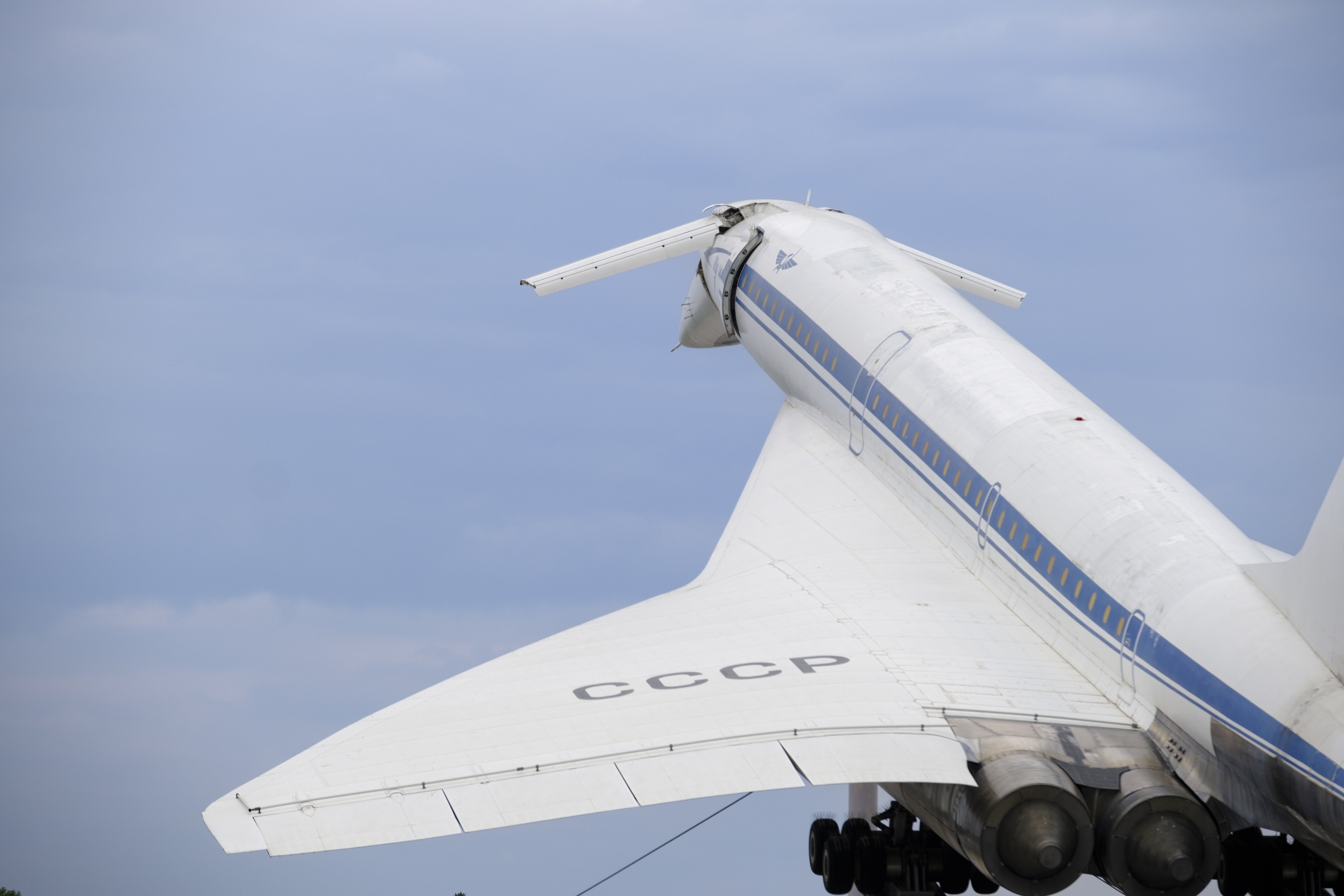
Russia’s United Aircraft Corporation has started building a prototype of a new supersonic civilian airliner, a project that could revive one of the Soviet Union’s most ambitious—and most troubled—aviation experiments, according to Defense Mirror on June 4.
UAC chief Vadim Badekha said work on the aircraft is already underway at the Zhukovsky National Research Center and is no longer limited to paper studies.
We bring you stories from the ground. Your support keeps our team in the field.
“Such work is underway at the Zhukovsky National Research Center, and we’re actively supporting it. It’s no longer just on paper, but in hardware. A prototype of such an aircraft is underway, and we believe the Zhukovsky National Research Center will be successful in this endeavor,” Badekha said, responding to a question from Russian state media agency TASS.
The disclosure suggests Moscow has not abandoned its ambition to return to the supersonic passenger aircraft race, even as Russia’s aviation industry remains under pressure from sanctions linked to its war against Ukraine. Those restrictions have limited access to advanced electronics, aircraft components, and other critical technologies.
The first passenger flight for the Soviet Tupolev Tu-144 took place on November 1, 1977, on the Aeroflot route from Moscow to Almaty, Kazakhstan. That same year, the country celebrated the 60th anniversary of the 1917 October Revolution and adopted the 1977 Soviet Constitution.… https://t.co/AnXlUf4NKy pic.twitter.com/zYuTxYpoHS
— Char (@cqc_coffee_guns) June 1, 2026
The proposed aircraft is being discussed as a possible successor to the Tupolev Tu-144, the Soviet supersonic airliner that first flew in 1968 and was later abandoned after a short and troubled operational history.
The Tu-144, often compared with the Franco-British Concorde, could fly at about Mach 2.04, or roughly 2,180 kilometers per hour, cutting long-distance travel times almost in half. Modern passenger aircraft such as the Boeing 777 typically cruise at around 900 kilometers per hour, prioritizing fuel efficiency, reliability, and passenger comfort over raw speed.
Concorde low pass and landing at the Farnborough Airshow 1974 💙💙💙
— Virginie Sigonney 🇫🇷 (@GinieSigonney) June 4, 2026
.
.
.
🎥©️ British Movietone#Concorde #Aviation #Avgeek pic.twitter.com/h2GEkiF94L
But the Tu-144 became a symbol not only of Soviet ambition, but also of the cost of rushing a prestige project into service. Built largely as a Cold War propaganda answer to Concorde, the aircraft suffered from severe economic inefficiency, mechanical unreliability, extreme cabin noise, and major safety concerns.
Supersonic flight was expensive by nature. In the West, that cost was partially offset by premium ticket prices. In the Soviet Union, where passenger fares were fixed and heavily subsidized, revenues could not cover the aircraft’s fuel and maintenance costs.
Tickets reportedly cost around 80 rubles, equivalent to about $110 to $120 USD at the time’s official rate, far below what was needed to make the service viable, and commercial flights often operated half-empty.
The Tu-144 was also plagued by reliability problems. It had been rushed into development to beat Concorde into the air, leading to serious engineering compromises. During its brief passenger service between Moscow and Alma-Ata, Aeroflot reportedly had to keep backup aircraft ready just to ensure that at least one functioning Tu-144 could fly the route.
The passenger experience was notoriously uncomfortable. The aircraft’s engines were extremely loud, and early versions required afterburners to maintain supersonic speed. Noise and vibration inside the cabin were so severe that passengers often could not speak to each other and had to write notes instead.
The program was further damaged by safety failures. In 1973, a Tu-144 broke apart during a demonstration flight at the Paris Air Show in one of the most infamous aviation disasters of the Cold War.
“Concordski” crash was 53 years ago
— Francisco Cunha (@OnDisasters) June 3, 2026
June 3 1973: Paris Air Show Tu-144 crash (France). On a demonstration flight, the 2nd production Tu-144, a Soviet Supersonic Transport, breaks apart on a steep dive. All six aboard and eight on the ground die.
The enquiry determined that… pic.twitter.com/Zso4w6axtl
In May 1978, a Tu-144D suffered a fatal engine failure and crash-landed during a pre-delivery test flight, effectively ending the aircraft’s passenger service future.
The new Russian concept remains vague. No scale model, engine choice, or detailed configuration has been publicly presented.
Defense Mirror reported that the civil airliner project could borrow design and development resources from the PAK-DA strategic bomber program, Russia’s future long-range aircraft project, reportedly being developed by Tupolev.
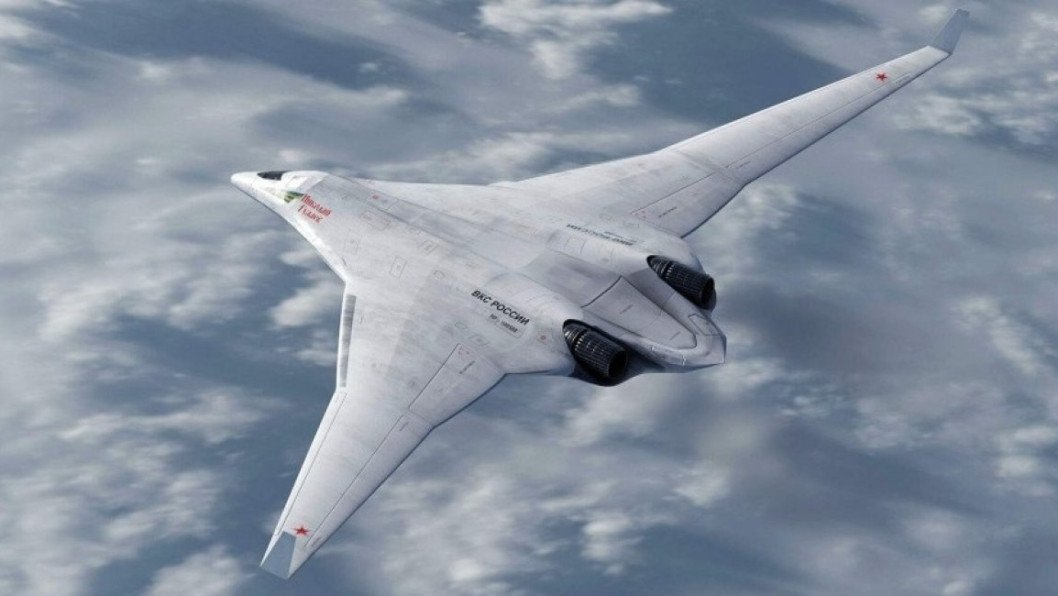
Recent leaked documents cited by Defense Mirror suggested that the PAK-DA, codenamed “Poslannik,” may fly within the next two to three years, with contracts awarded to Russian companies for key components. The possible use of related research for a civilian supersonic aircraft suggests Moscow may be trying to repurpose military aviation work for a prestige civil project.
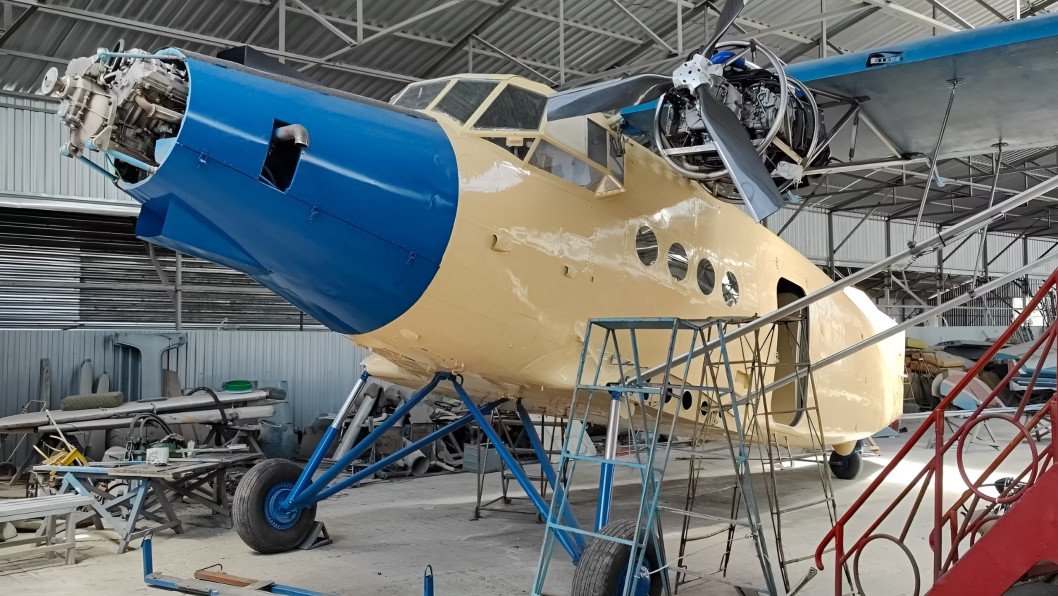
Earlier, reports emerged that Russia was considering restoring up to 700 Soviet-era An-2 aircraft currently in storage after efforts to develop a modern replacement failed.
Discuss this article:
-9a7b3a98ed5c506e0b77a6663f5727c5.png)