- Category
- World
France Scrambled Rafales 39 Times Over the Baltics—One Intercept Revealed a Rare Russian FSB Jet
 Prefer U24 Media on Google
- Authors


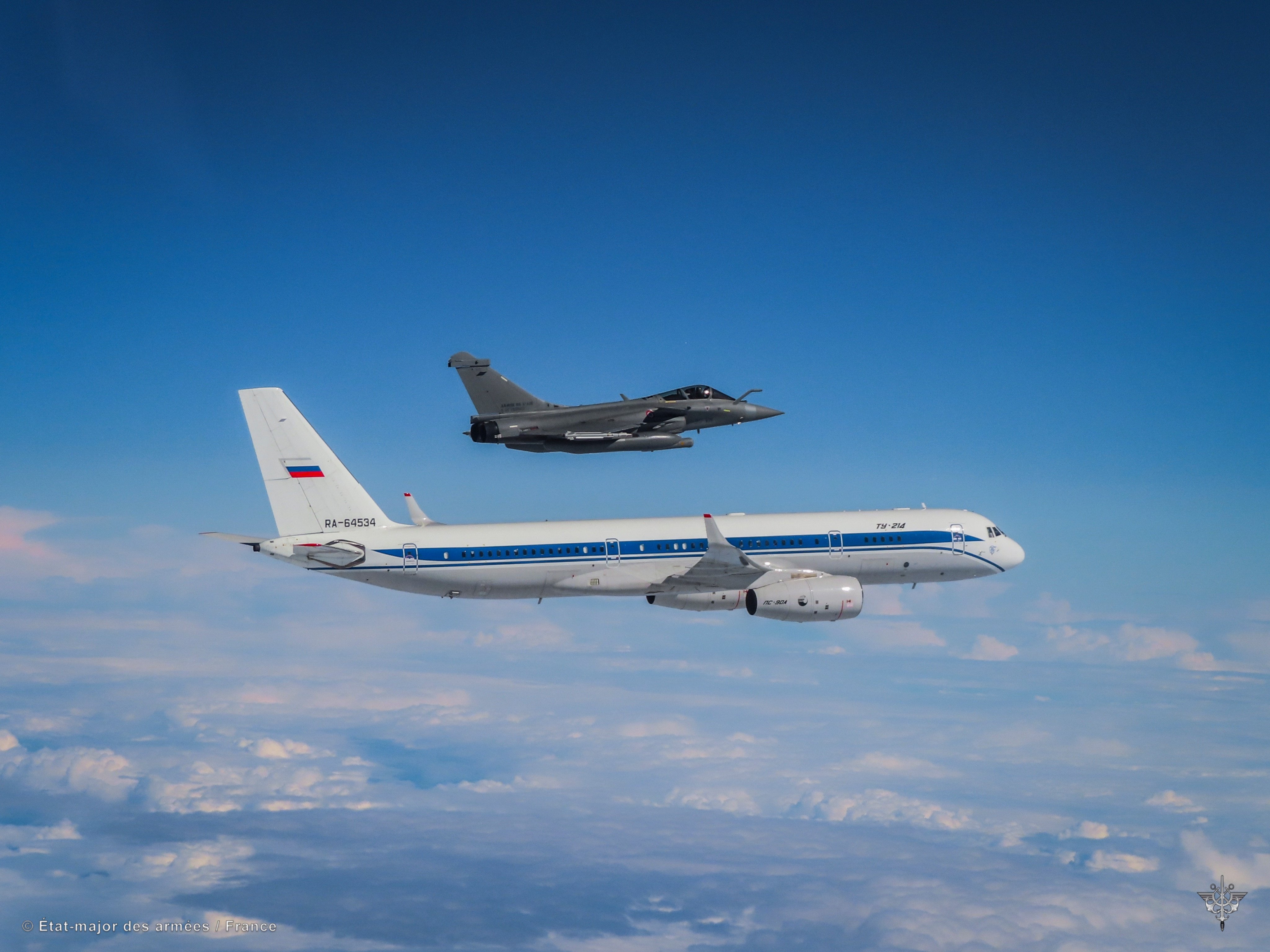
France has revealed a rare close encounter over the Baltic Sea between a Rafale fighter and a Russian FSB command aircraft equipped with an unusual laser-based self-defense system also fitted to aircraft used by Russian leader Vladimir Putin.
The French Air and Space Force published the image on August 16 as part of a recap of its four-month NATO Baltic Air Policing deployment, which ran from April 1 through July 31.
We bring you stories from the ground. Your support keeps our team in the field.
French crews logged 540 flight hours, 39 real-world Alpha Scrambles, and 69 training Tango Scrambles during the rotation. Alpha Scrambles are launched in response to unidentified or potentially concerning aircraft, while Tango Scrambles are conducted for training.
One of those missions brought a French Rafale alongside a Russian Tupolev Tu-214 over the Baltic.
Aviation journalist Piotr Butowski identified the Russian aircraft as RA-64534, a Tu-214PU command-and-communications variant operated by Russia’s Federal Security Service, or FSB.
A Tu-214, intercepted by the French over the Baltic Sea, has an LSZ-100 laser self-defence system (follow the arrow). If my notes are correct, this RA-64534 is the one the FSB leadership is using.
— Piotr Butowski (@piotr_butowski) August 16, 2026
The LSZ-100 and LSZ-200 systems are also on the Il-96-300s flown by Putin. pic.twitter.com/uOirVUNXdj
Butowski also spotted a particularly unusual feature on the aircraft: an LSZ-100 laser self-defense system.
“A Tu-214, intercepted by the French over the Baltic Sea, has an LSZ-100 laser self-defence system. If my notes are correct, this RA-64534 is the one the FSB leadership is using. The LSZ-100 and LSZ-200 systems are also on the Il-96-300s flown by Putin,” Butowski wrote.
Aircraft registry and flight-tracking records identify RA-64534 as a Tu-214PU used by the FSB. The specialized aircraft is configured for command, communications, and transportation of senior Russian officials.
The encounter offered a relatively rare view of one of Moscow’s more sensitive government aircraft during an operational NATO intercept.
France deployed to Lithuania under the 71st Baltic Air Policing rotation, marking its 12th participation in the NATO mission since 2007.
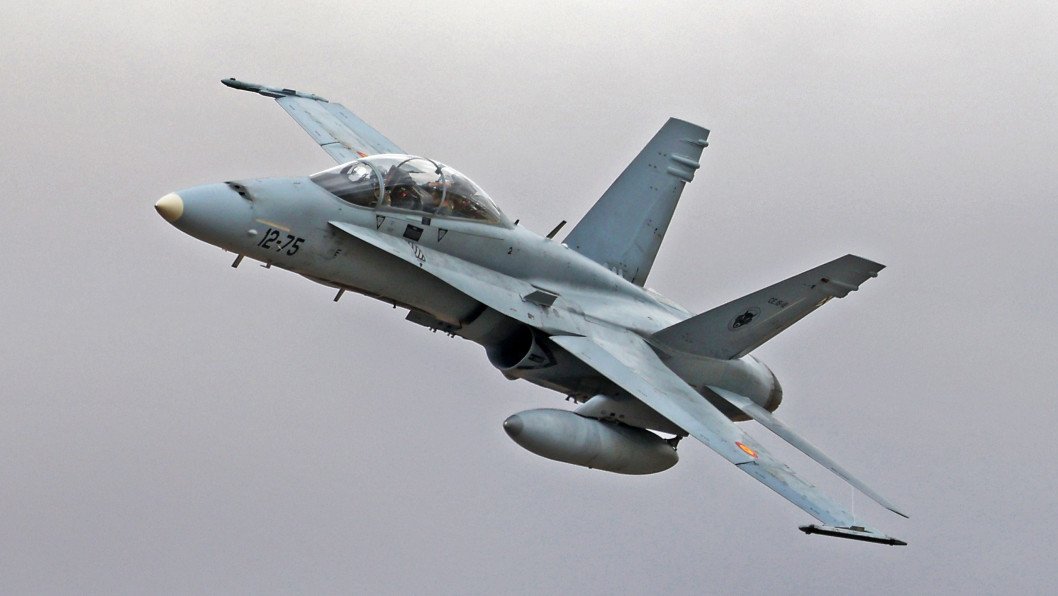
Four two-seat Rafale B fighters from Saint-Dizier Air Base handled the first half of the deployment between April 1 and May 31. They were replaced by four single-seat Rafale C fighters from Mont-de-Marsan for June and July.
Around 200 French personnel rotated through Šiauliai Air Base in Lithuania during the mission.
The French detachment’s responsibilities extended beyond intercepting Russian military aircraft. According to France’s Ministry of Armed Forces, the Rafales also helped monitor Poland’s eastern border for unauthorized drones and missiles.
French crews trained with Estonian and Lithuanian forces on drone detection and interception, while most Rafale C training sorties involved at least one allied country, particularly Poland and Romania.
The Numbers Don't Lie !
— NATO Allied Joint Force Command Brunssum - JFCBS (@NATOJFCBS) August 5, 2026
Compare July 25 with July 26 and the picture is impossible to ignore: Alpha Scrambles along @NATO's Eastern Flank increased by more than 250%.
The reason? Russian 🇷🇺 military aircraft repeatedly flew close to NATO airspace without a flight plan and… pic.twitter.com/YEPlddV8ST
France operated under alternating readiness levels throughout the mission. During “hot” weeks, Rafale crews had to be airborne within 15 minutes of an alert. During “cold” weeks, the permitted response window expanded to three hours.
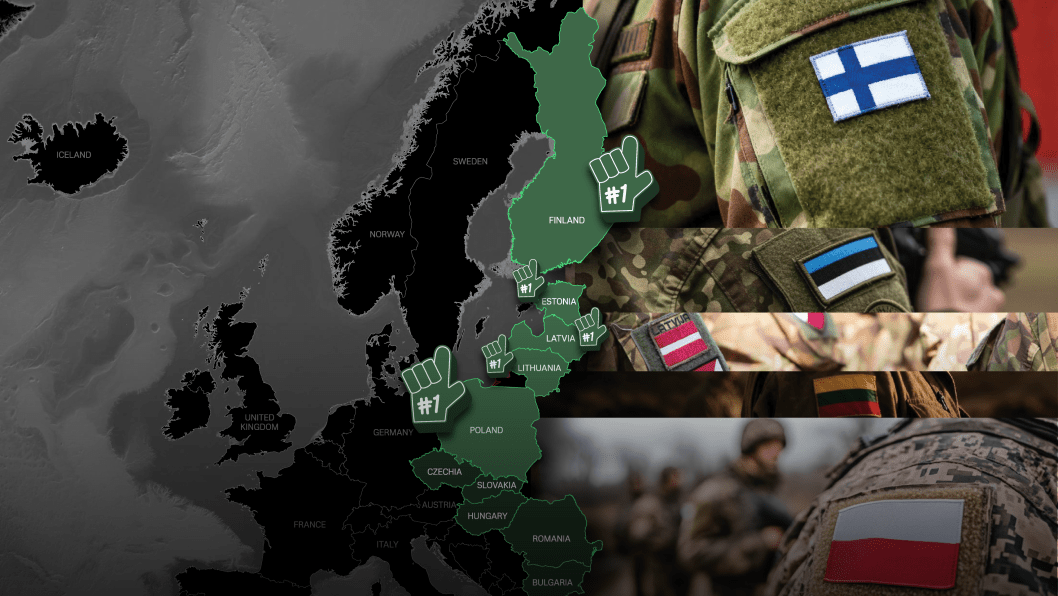
The deployment came amid a sharp increase in Russian military aviation activity along NATO’s eastern flank.
Earlier, NATO’s Allied Joint Force Command Brunssum reported that scramble launches under enhanced Air Policing missions increased by 250% between July 2025 and July 2026 compared with the previous 12-month period.
Discuss this article:
-9a7b3a98ed5c506e0b77a6663f5727c5.png)

-111f0e5095e02c02446ffed57bfb0ab1.jpeg "Photo of Roman Kohanets")


-72b63a4e0c8c475ad81fe3eed3f63729.jpeg "Photo of Cyril Barabaltchouk")