- Category
- War in Ukraine
Russia’s Plan to Capture Donbas by March 2027 Is Unrealistic, Says Ukrainian Presidential Official
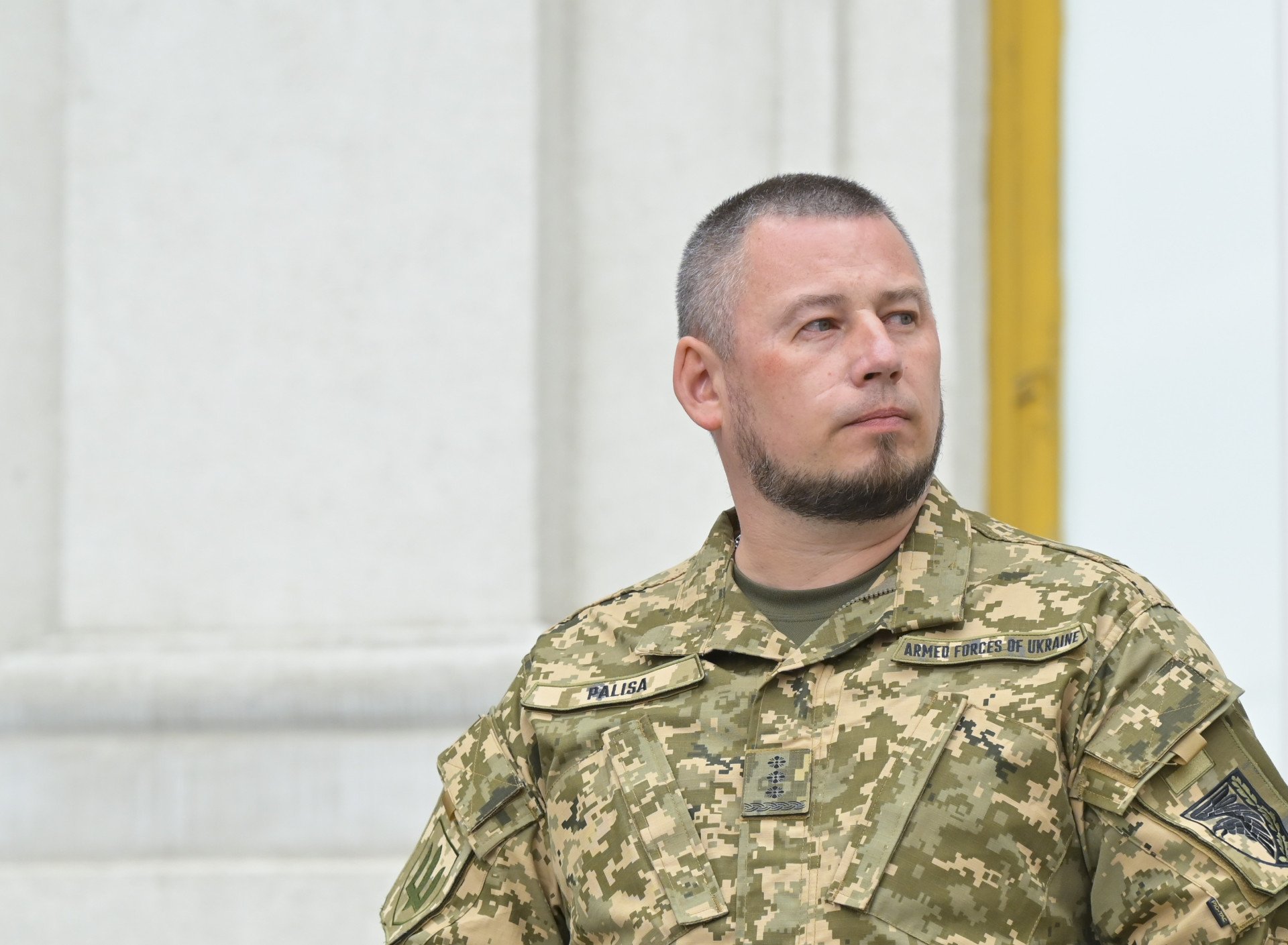
Russia’s goal is to take full control of the Donetsk and Luhansk regions by the end of 2026. Russia’s military leadership reportedly considers that deadline unrealistic and is asking for more time. Ukraine’s Deputy Head of the Office of the President Pavlo Palisa says that even Moscow’s extended timeline for capturing the regions have little to do with battlefield reality.
 Prefer U24 Media on Google
- Authors

-29a1a43aba23f9bb779a1ac8b98d2121.jpeg "Photo of Illia Kabachynskyi")
Deputy Head of the Office of the President of Ukraine Pavlo Palisa met with journalists in Kyiv to discuss the situation on the front and explain how the fighting is developing today. A UNITED24 Media editor attended the meeting and reported the key takeaways.
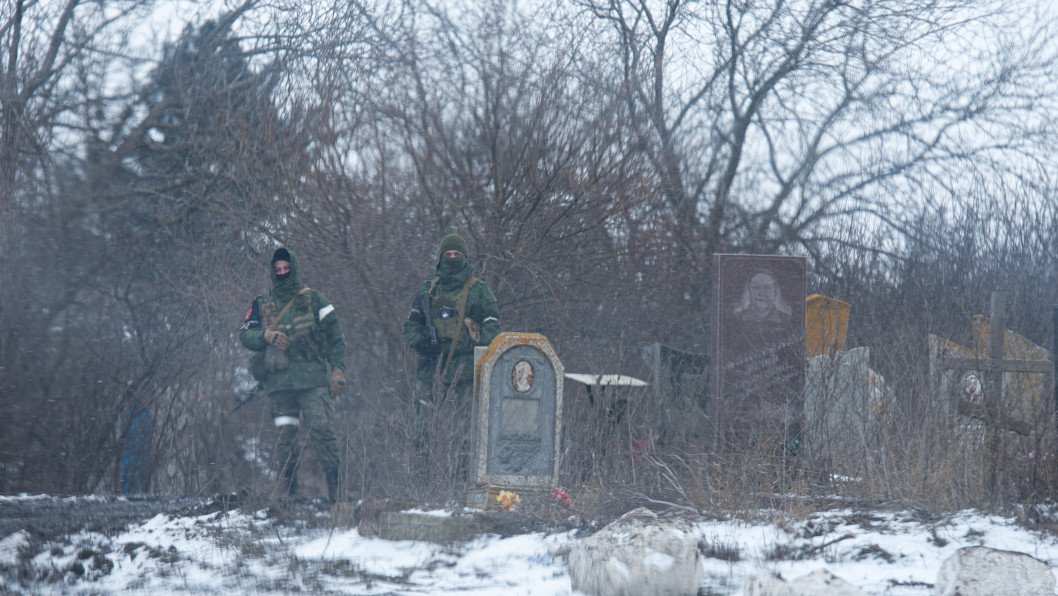
🔥 Drone struck a group of Russian soldiers at a checkpoint in the Donetsk region pic.twitter.com/RomLUDP9pK
— MAKS 26 🇺🇦👀 (@Maks_NAFO_FELLA) August 29, 2026
What is happening on Ukrainian front lines
There is an ongoing trend toward a slowdown in Russia’s rate of advance, says Palisa. On some sectors of the front, there are grounds for “limited optimism,” while units of Ukraine’s Air Assault Forces have been conducting active operations in the Oleksandrivka sector for an extended period.
Moscow’s immediate objective is the Donetsk region. The Kremlin wants it captured by December 31, 2026, while Russia’s military leadership is asking for an additional three months, describing March 31, 2027, as a more realistic deadline.
“My subjective opinion is that even by March 31, this is an unrealistic scenario,” he said.
Here, Palisa’s assessment corresponds with what is happening on the battlefield: Russian forces have made minimal gains in Donetsk region, while their spring-summer campaign can be described as a failure.
-35b17025dbb7c3caf5e97535b5d5ef82.jpg)
At the same time, plans remain in place to establish a buffer zone in the Kharkiv and Sumy regions, and partially in Chernihiv region, to a depth of up to 20 kilometers, with the possibility of expanding it further. This is connected to the increasing depth of the drone “kill zone.”
The Kremlin is also planning for a potential offensive toward Kyiv and Chernihiv.
“I want to emphasize: planning and preparing,” said Palisa. “Several options were indeed being considered. We did receive intelligence to that effect, verified by several sources.”
At the same time, there are currently no signs that Russia is forming an offensive grouping in these directions.
The General Staff of the Armed Forces of Ukraine has already developed the corresponding defensive measures.
Mobilization in Russia
In July, verified Russian losses—killed and wounded—amounted to 43,000 personnel, compared with 37,000 newly recruited troops. That is a difference of 6,000 in a single month, Palisa says.
This trend of Russia operating at a manpower “deficit” has continued at least since February of this year, contributing to the situation now seen on the battlefield, Palisa says. Russia is no longer able to compensate for heavy losses through recruitment in the way it did in previous years.
“If we consider the objectives Russia’s political leadership has set for its Armed Forces,” he said, referring to Russia’s plans regarding capturing Donetsk and Luhansk regions.
“Then with the forces currently available and the present rate of recruitment and manpower replenishment, it is obvious both to them and to us that they are incapable of achieving their strategic objectives.”
The figures previously announced remain relevant, he said: 300,000 people are expected to be mobilized this year and another 300,000 during the first half of next year. The Kremlin has reportedly been leaning toward this option since the beginning of the year.
However, conscription is only one challenge. These people must then be clothed, equipped, educated and trained in basic military skills, all of which will require substantial resources. Therefore, a sudden influx of large numbers of Russian troops onto the battlefield should not be expected.
In Palisa’s assessment, these forces will ultimately be sent to Ukraine to fight there. Military provocations against the Baltic states, Poland, or other NATO countries are unlikely, given the difficulties Russia already faces in waging its war against Ukraine, where it has been unable to achieve significant results.
Ukraine’s strikes on Russian territory
A war of this scale requires enormous financial resources from Russia.
“And we are trying to deprive the Russians of the ability to earn that money,” Palisa explained.
This is the primary reason behind Ukraine’s long-range strikes against military targets on Russian territory, and their number is expected to increase.
“The population of the Russian Federation is now feeling their effects,” said Palisa. “We are demonstrating successes, primarily in our ability to apply pressure to vulnerable points and centers of gravity, according to certain priorities and a certain logic. This is gradually producing a cumulative effect and is intended to deliver the result our country needs.
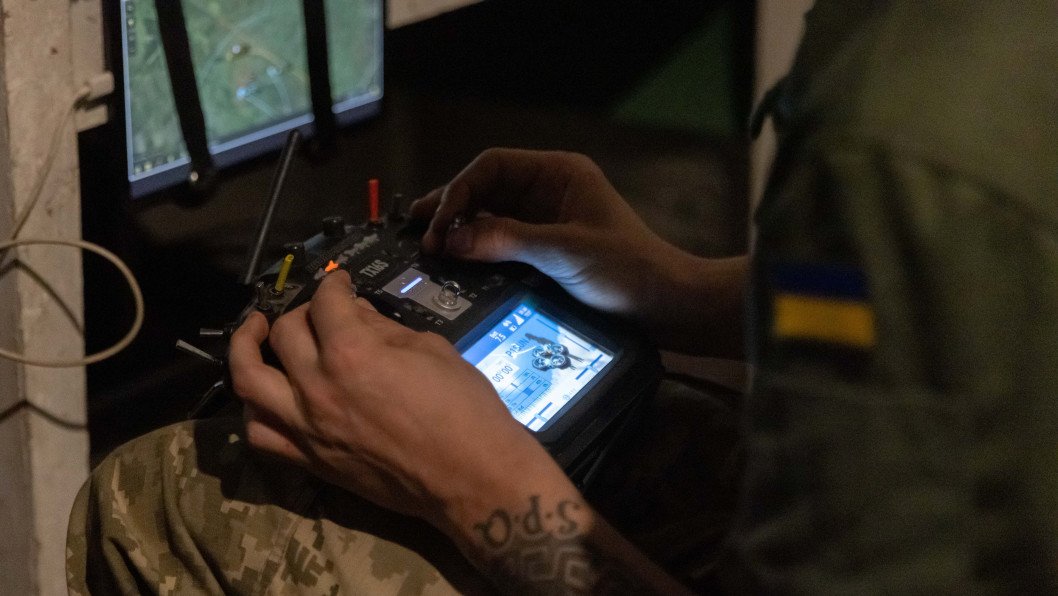
We are developing these capabilities during the war, under extremely difficult conditions—although, of course, with extraordinary support from our partners. We are capable of shifting the war to a certain extent into a new phase.
First and foremost, this concerns strikes against targets that, from a military perspective, do not produce an immediate effect but strategically have a major and long-lasting impact on the enemy.”
This includes strikes against infrastructure affecting energy exports, which account for a significant portion of Russia’s budget; strikes against vessels belonging to the shadow fleet; and attacks on the Russian logistics infrastructure, as well as networks and facilities that enable the functioning of Russia’s logistics system. Such strikes produce both primary and secondary effects.
The challenge of jet-powered drones
Russian forces have significantly increased their use of jet-powered UAVs. Their numbers are expected to continue growing because Russia sees them as effective, says Palisa.
Kyiv experienced the threat firsthand on August 27, when air-raid alerts sounded 13 times in a single day, lasting a combined 15 hours.
“Offensive capabilities always stay ahead of defensive capabilities. We will undoubtedly have to adapt. That will take time,” Palisa said.
He added that the interceptor drones Ukraine currently possesses, which could theoretically intercept jet-powered drones, have so far failed to demonstrate the expected level of effectiveness. Manufacturers, however, are working to address the problem.
By contrast, man-portable air-defense systems, various systems deployed for point air defense, and combat aircraft have demonstrated significant effectiveness.
Ukraine is therefore calling on its partners to provide more air-defense systems to protect its cities.
Discuss this article: