- Category
- War in Ukraine
Russia Occupied and Russified Donbas, Then Mobilized Its People. New Data Reveals the Cost
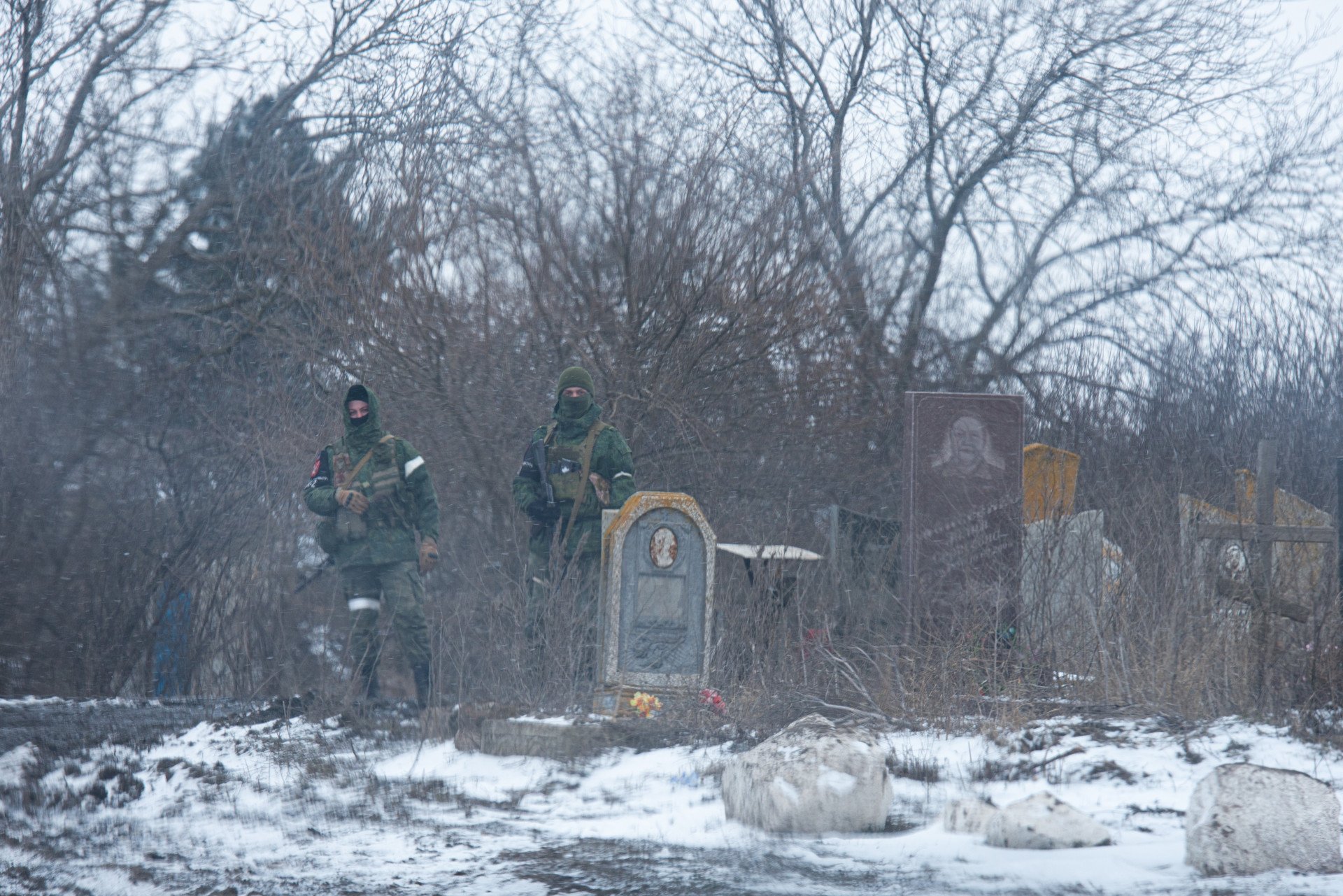
Two armies. One year. More than 107,000 combat hospitalizations. Void Group says the numbers reveal the brutal price Moscow paid to keep pushing through Donbas.
 Prefer U24 Media on Google
- Authors


Russia’s occupation of eastern Ukraine did not stop at taking territory. Moscow absorbed local armed formations, imposed Russian military structures, mobilized residents of occupied Donetsk, and turned them into manpower for the same war that had seized their homes.
Two Russian combined-arms armies responsible for some of Moscow’s heaviest fighting in eastern Ukraine generated 107,149 combat-related hospitalizations in 2025, according to an analysis of Russian military medical records published by Ukrainian intelligence research group Void Group on August 6.
We bring you stories from the ground. Your support keeps our team in the field.
Void Group said it obtained access to servers belonging to the Russian Defense Ministry’s Main Military Medical Directorate, or MMMD, a centralized system that processes military hospitalization data.
The group’s 2025 database contains 917,245 military hospitalizations overall. According to Void Group, the 51st Combined Arms Army accounted for 88,248 of them, while the 8th Combined Arms Army recorded another 63,005.
Combat-related cases represented 63,203 hospitalizations in the 51st Army and 43,946 in the 8th—107,149 combined.
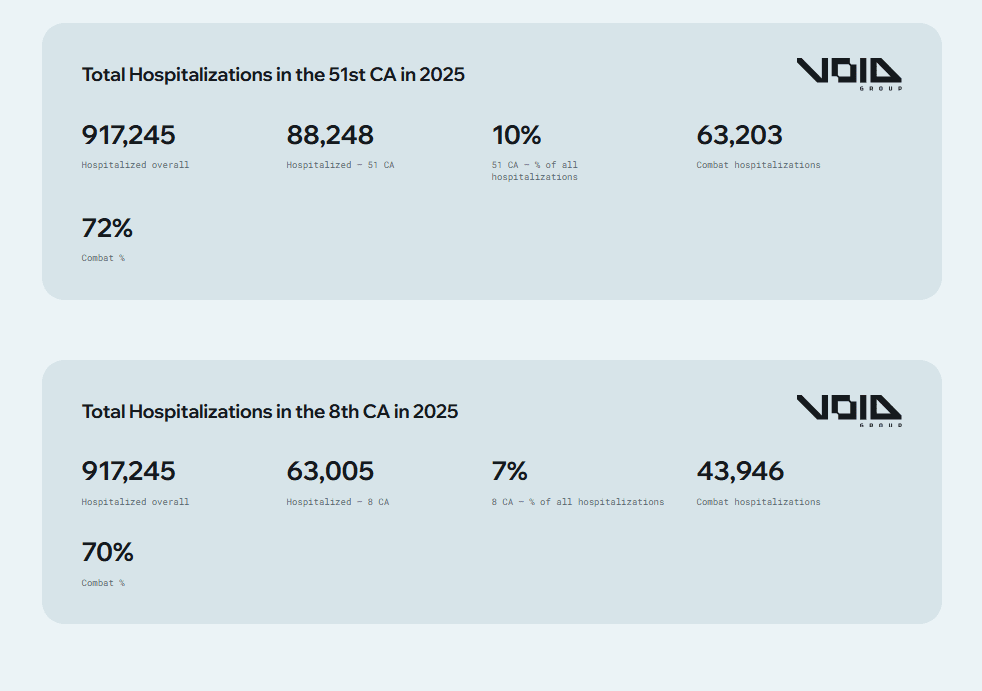
Together, the two formations accounted for roughly 17% of every Russian military hospitalization recorded in the database, despite representing only a fraction of Russia’s overall force.
Void Group says it has made individual records available for spot-checking and plans to release broader access to the underlying dataset. The figures have not been independently verified.
❗️At night, pilots of the 🇺🇦Unmanned Systems Forces carried out a series of middle-strike attacks on the temporary deployment point of the 🇷🇺90th Engineer-Sapper Regiment of the 51st Army of the Russian Federation in the settlement of Pionerske, Donetsk region.
— 🪖MilitaryNewsUA🇺🇦 (@front_ukrainian) June 6, 2026
The regiment was… pic.twitter.com/G9wxoFpX0h
How Russia built armies from occupied population
According to Void Group, the two armies are deeply connected operationally and historically.
The 51st Combined Arms Army is perhaps the clearest example of how Russia converts occupation into manpower.
According to Void Group, the formation is the successor to the former 1st Army Corps of the so-called Donetsk People’s Republic, which Moscow created from armed groups operating in occupied eastern Ukraine and later integrated into the Russian military.
Many of its units trace their origins to formations established after Russia began its war in Donbas in 2014. The 132nd Separate Motorized Rifle Brigade, for example, grew out of armed formations associated with occupied Horlivka, while other brigades evolved from separatist units that Moscow eventually absorbed into its regular command structure.
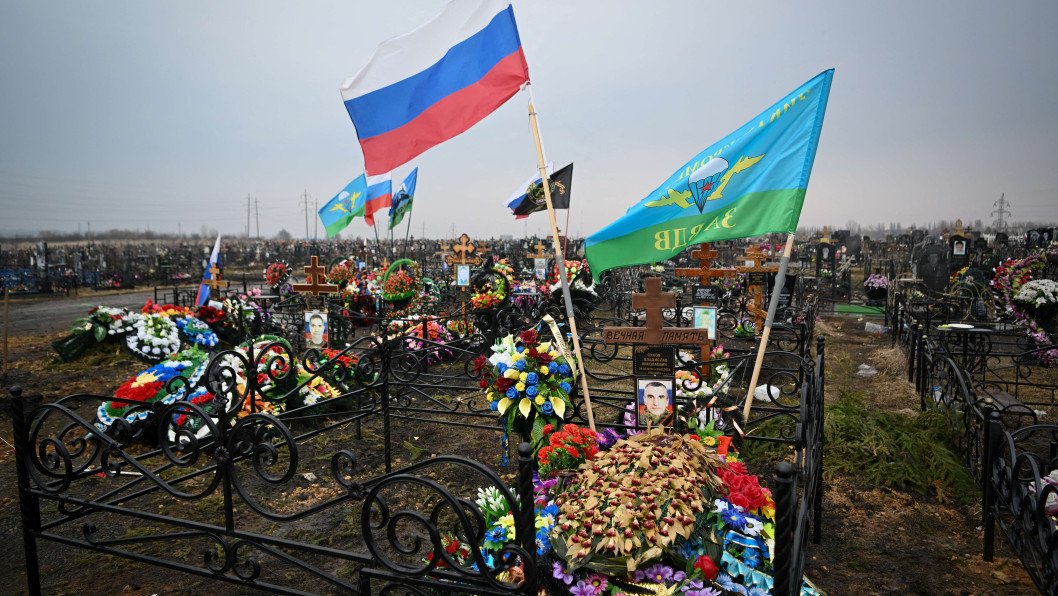
Residents of occupied Donetsk region—including people mobilized under Russian occupation—were subsequently funneled into these formations.
In effect, Russia first seized the territory, spent years integrating and Russifying its institutions, and then drew manpower from the population it controlled to continue fighting against Ukraine.
Void Group argues that the 51st Army became a kind of first-wave assault force across Donbas: local and occupation-raised units were committed to difficult sectors, while more conventional Russian formations from the 8th Combined Arms Army were brought in when the front needed reinforcement or stabilization.
The 8th Army adds another layer to the same manpower model.
Its formations include troops recruited from Russia’s southern regions, ethnic republics, and peripheral territories—including units associated with Tatarstan, Bashkortostan, Chuvashia, and other areas that have undergone generations of political and cultural Russification.
Void Group’s analysis argues that Moscow repeatedly draws heavily on these populations for manpower-intensive warfare, placing them alongside residents of occupied Ukrainian territories in some of the most attritional sectors of the front.
thats looks like russian 51st Army MTLBs, very distinctive https://t.co/4V9wQx4sZu
— imi (m) (@moklasen) June 12, 2026
The two armies therefore illustrate a broader pattern: Russia expands territorially, absorbs and Russifies populations under its control, and then turns those same populations into military manpower for further expansion.
That is what makes their 2025 hospitalization numbers especially revealing. They measure not only the intensity of the fighting, but the human cost of the system Moscow built to sustain it.
Until 2024, the formation was effectively subordinate to the 8th Combined Arms Army, before being separated into its own army-level command.
The 51st Army: 63,000 combat hospitalizations
Void Group’s records show the 51st Army leading all Russian formations in total hospitalizations, with 88,248 cases during 2025. Roughly 72% were categorized as combat-related.
The army fought across the Toretsk, Kostiantynivka, Pokrovsk, Dobropillia, and Chasiv Yar sectors during the year, according to Void Group’s reconstruction of its movements.
Its losses remained consistently high through much of 2025.
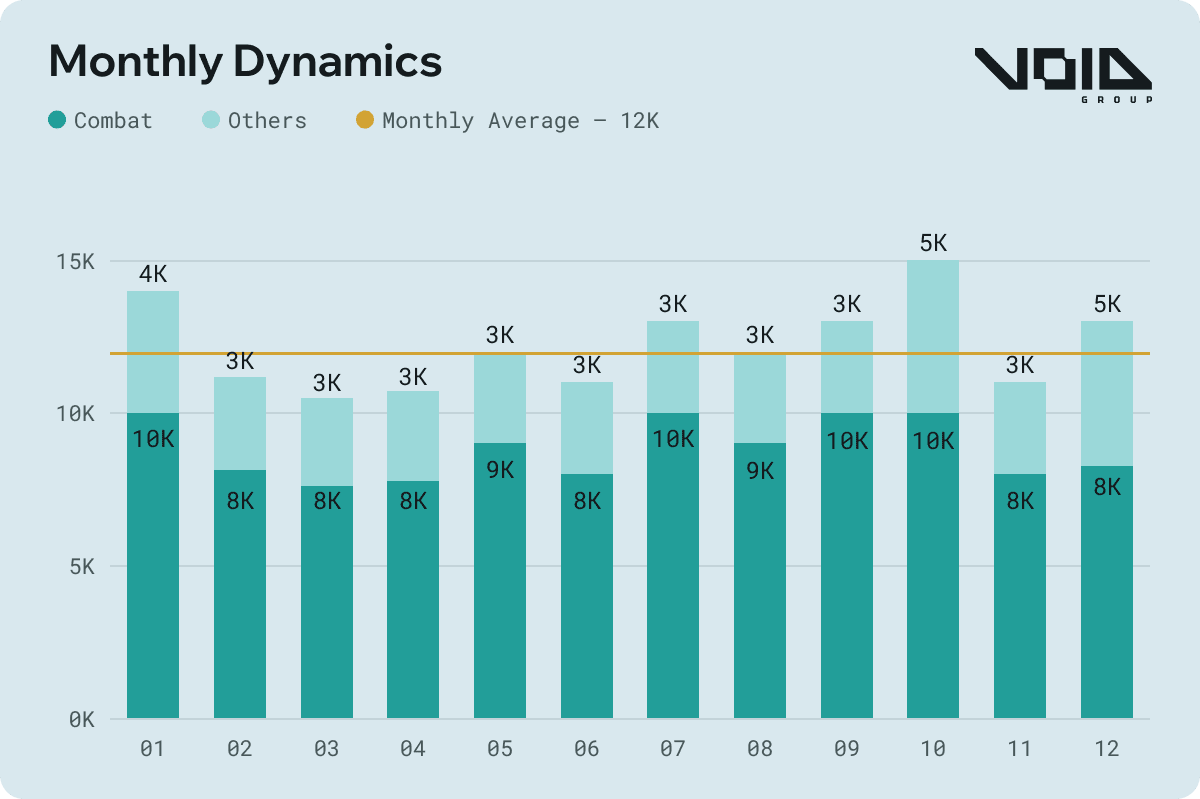
Void Group identified particularly heavy hospitalization numbers around Toretsk early in the year, followed by another major period of losses during Russia’s push near Dobropillia in late summer.
The group cited medical records from individual troops to illustrate the severity of the fighting, including soldiers suffering amputations, penetrating shrapnel wounds, burns, and extensive blast injuries.
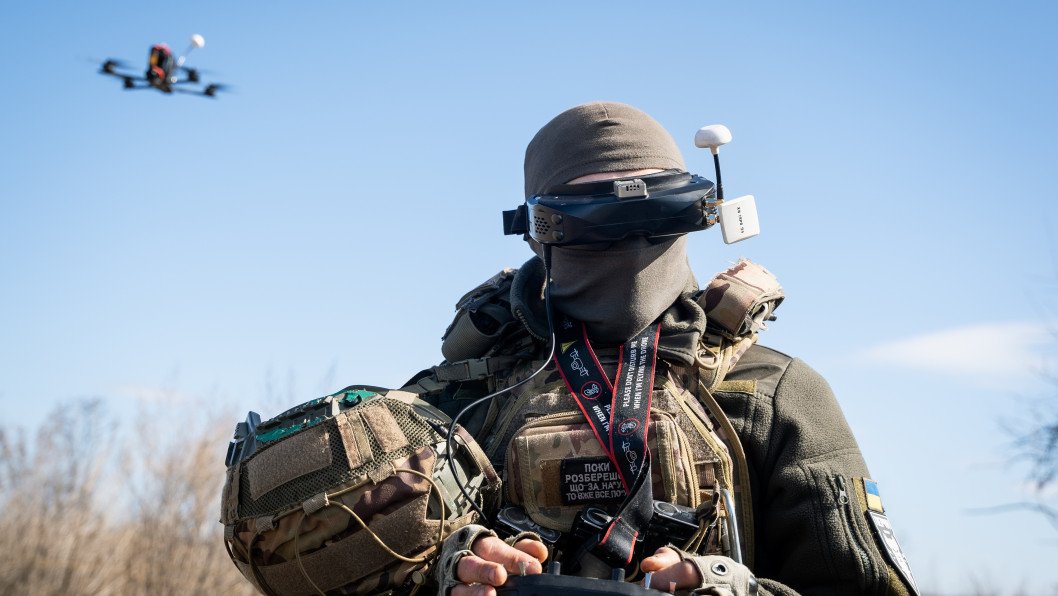
By mid-autumn, Void Group assessed that the 51st had shifted toward a more supporting role around Kostiantynivka, including drone operations, but its combat hospitalization figures remained elevated.
According to the group, the army’s performance ultimately contributed to the removal of its commander, Lt. Gen. Sergei Milchakov.
Pokrovsk direction
— imi (m) (@moklasen) August 30, 2025
RU 9th Brigade, 51st Army logistics and troop rotation carried out by bikes.
bikers in front crash and become 300s. pic.twitter.com/BIhaqST25N
The 8th Army was sent in when the 51st needed help
The 8th Combined Arms Army recorded 63,005 hospitalizations, including 43,946 combat cases, according to Void Group.
Its pattern differed somewhat from the 51st.
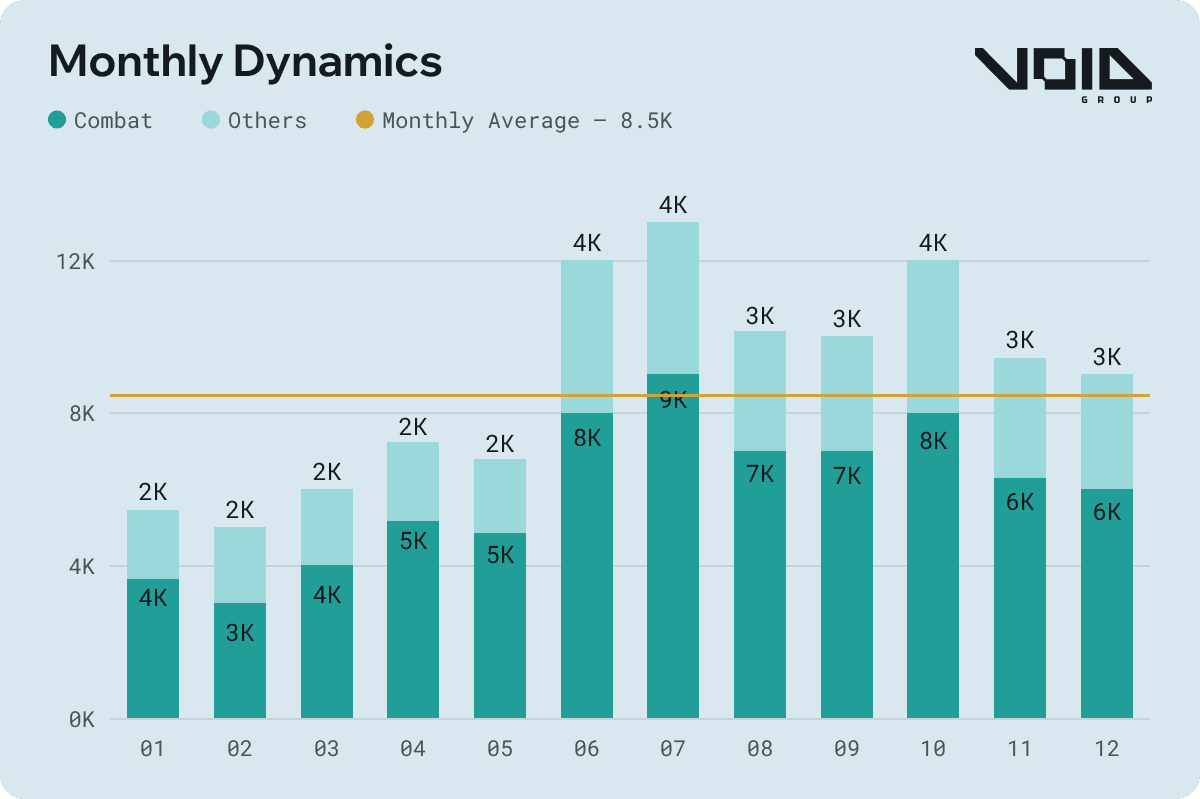
At the beginning of 2025, Void Group’s database contained a large number of cases of ordinary seasonal illnesses—including respiratory infections, tonsillitis, and bronchitis—among 8th Army personnel.
That changed as the formation moved into heavier fighting.
According to Void Group, elements of the 8th Army were redeployed toward Toretsk in February to reinforce the 51st. From May, the army became a major attacking force in the Kostiantynivka sector.
Medical records increasingly reflected mine injuries, blast trauma, shrapnel wounds, and other combat-related casualties.
By the end of the year, Void Group also tracked elements of the 8th Army near Pokrovsk and Dobropillia.
RU 9th MRB, 51st Army casualty stabilization point near Malynivka, Pokrovsk direction pic.twitter.com/a23OcZWLpJ
— imi (m) (@moklasen) October 15, 2025
Brigades recorded more hospitalizations than estimated strength
The unit-level numbers are among the most striking parts of Void Group’s analysis.
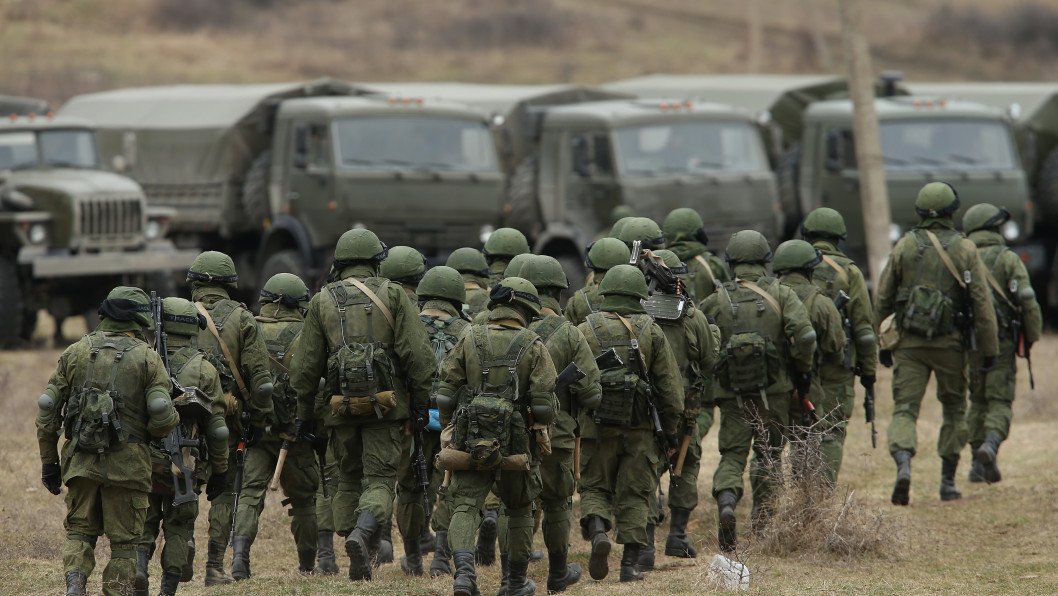
Within the 51st Army, the 114th Separate Motorized Rifle Brigade recorded almost 10,000 combat hospitalizations during 2025, according to the group. Void Group estimates the brigade’s authorized strength at no less than 8,000 personnel.
The 114th traces its origins to the Vostok Battalion and has been used as a mobile formation moved between sectors requiring reinforcement, according to Void Group. It reportedly participated in the Dobropillia offensive and operations reaching toward the Dnipropetrovsk region.
The 1st Separate Motorized Rifle Brigade recorded more than 7,000 combat hospitalizations against an estimated strength of at least 4,000, while the 132nd Separate Motorized Rifle Brigade recorded more than 6,000.
Another formation, the 110th Separate Motorized Rifle Brigade, exceeded 5,600 combat hospitalizations during the year, according to Void Group.
The figures do not mean that every hospitalization represents a different soldier. One servicemember can enter the medical system multiple times. But the totals provide a measure of how intensely particular formations cycled personnel through military hospitals.
Void Group also identified several Russian territorial regiments attached to the 51st Army, including the 1453rd, 1454th, 1487th, and 1436th Motorized Rifle Regiments.
The 8th Army shows the same personnel strain
Within the 8th Army, Void Group found similarly extreme numbers.
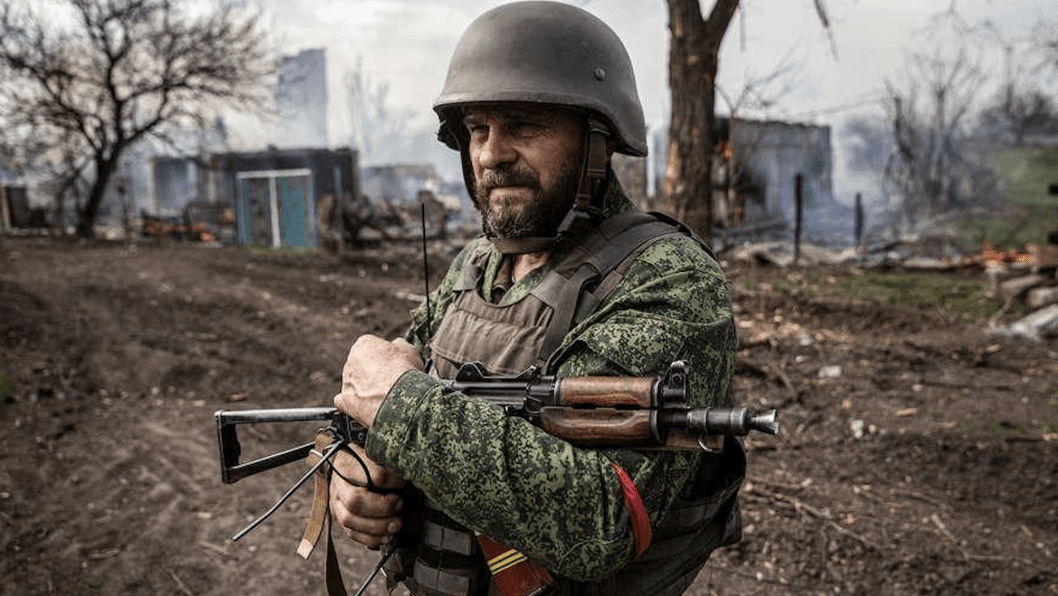
The 102nd Motorized Rifle Regiment recorded more than 6,000 combat hospitalizations during 2025, against an estimated authorized strength of at least 5,500.
The 72nd Separate Motorized Rifle Brigade followed with nearly 5,000.
According to Void Group, the brigade incorporates units recruited from several Russian regions and ethnic republics, including formations associated with Tatarstan, Bashkortostan, Chuvashia, and other areas.
Russian Army Losses in 2025 – Figures Concealed by the Kremlin.
— Jürgen Nauditt 🇩🇪🇺🇦 (@jurgen_nauditt) October 7, 2025
According to the "I Want to Live" project, Russia lost over 281,000 soldiers killed, wounded, or missing in action in the first eight months of this year.
This includes over 86,000 dead and 34,000 missing, with… pic.twitter.com/NlDomsMklq
One particularly unusual result involved the headquarters structure of the 150th Motorized Rifle Division, which Void Group said accounted for 4,426 combat hospitalizations despite an estimated authorized strength of no less than 2,000.
The group suggested the figure could reflect severe personnel pressure, reorganizations, attached troops, and losses associated with Ukrainian strikes against command infrastructure.
The 20th Motorized Rifle Division also generated thousands of cases after deploying toward Toretsk in spring 2025. Its 242nd Motorized Rifle Regiment alone approached 5,000 hospitalizations, while the 57th, 33rd, and 255th regiments each recorded several thousand more.
Even the division’s 10th Tank Regiment approached 3,000 hospitalizations, according to Void Group.
-18c8b7fe1b5fa5887e16c3a8eb915cba.jpg)
What the numbers actually show
The data does not provide a direct death toll.
Hospitalization records can include the same person more than once, cover both wounds and illnesses, and exclude troops killed before reaching medical facilities.
But Void Group argues that the sheer volume—and especially the percentage classified as combat-related—offers a rare window into the human cost of Russia’s offensive operations.
For the 51st Army, 72% of all recorded hospitalizations were combat-related. For the 8th, the figure was 70%.
Combined, just these two armies produced more than 151,000 hospitalizations of all types and 107,149 combat hospitalizations in a single year.
Their movements also closely track some of the most intensely contested parts of the front in 2025: Toretsk, Kostiantynivka, Pokrovsk, Dobropillia, Kurakhove, and Chasiv Yar.
According to Void Group, the numbers reveal not only the scale of Russian losses but the enormous turnover required to keep individual formations fighting after repeated cycles of attrition.
Earlier, reports emerged that the Kremlin and the Russian Ministry of Defense have instructed regional officials to recruit 409,000 contract soldiers this year under regional quotas.
Discuss this article:


-c439b7bd9030ecf9d5a4287dc361ba31.jpg "Photo of Katherina Popilnichenko")
-111f0e5095e02c02446ffed57bfb0ab1.jpeg "Photo of Roman Kohanets")