- Category
- War in Ukraine
Satellite Analysis Finds 97% of Bakhmut’s Multi-Story Housing Destroyed
 Prefer U24 Media on Google
- Authors

-111f0e5095e02c02446ffed57bfb0ab1.jpeg "Photo of Roman Kohanets")
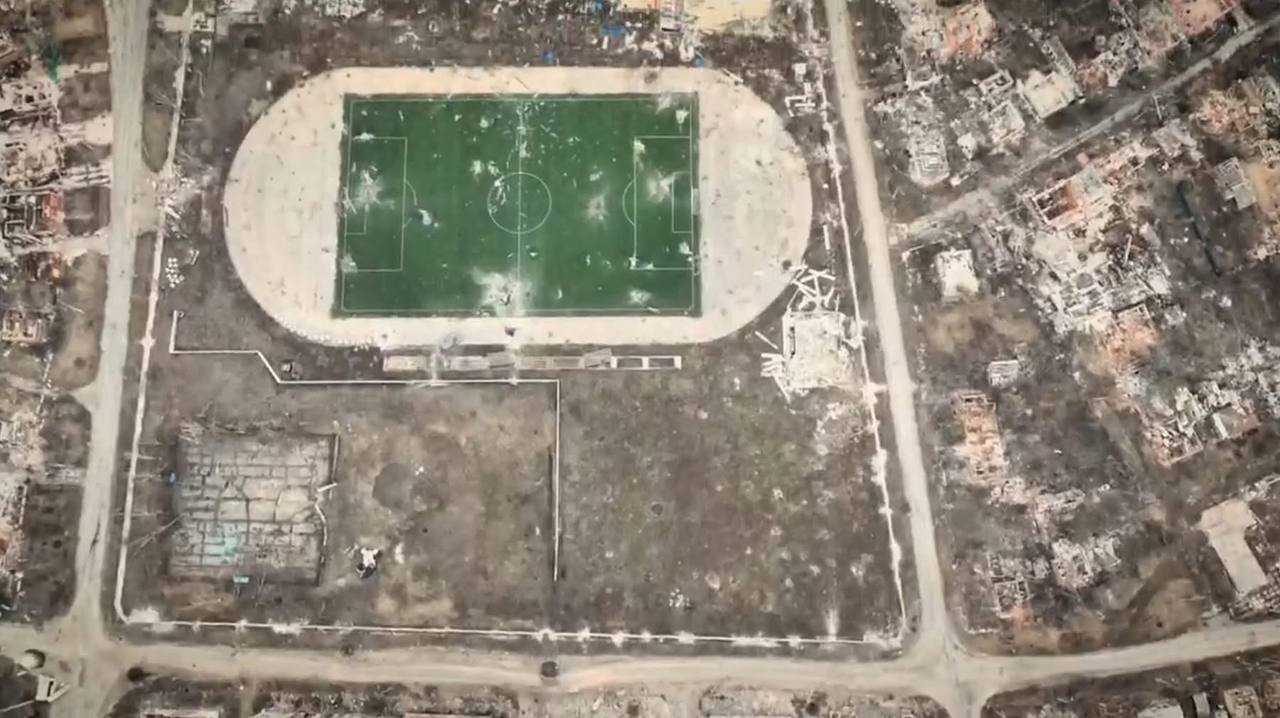
Satellite analysis of Bakhmut, the Ukrainian city that fell to Russian forces in May 2023, has found 97.4% of its multi-story residential buildings destroyed—placing it among the most thoroughly demolished urban areas of the war, according to Vot Tak on May 29.
The outlet analyzed open-source satellite imagery from October 2024 and assessed 344 residential buildings of three stories or more across the city.
We bring you stories from the ground. Your support keeps our team in the field.
Before Russia's full-scale invasion, Bakhmut was a district center in Donetsk region with more than 70,000 residents and a hub for salt mining, non-ferrous metal processing, and engineering.
Russia began regular artillery bombardment in May 2022; that August, Russian ground forces and the Wagner PMC launched coordinated assaults. Ukraine lost the city center by mid-April 2023, with Russia declaring full control on May 20 and Ukraine acknowledging the loss ten days later.
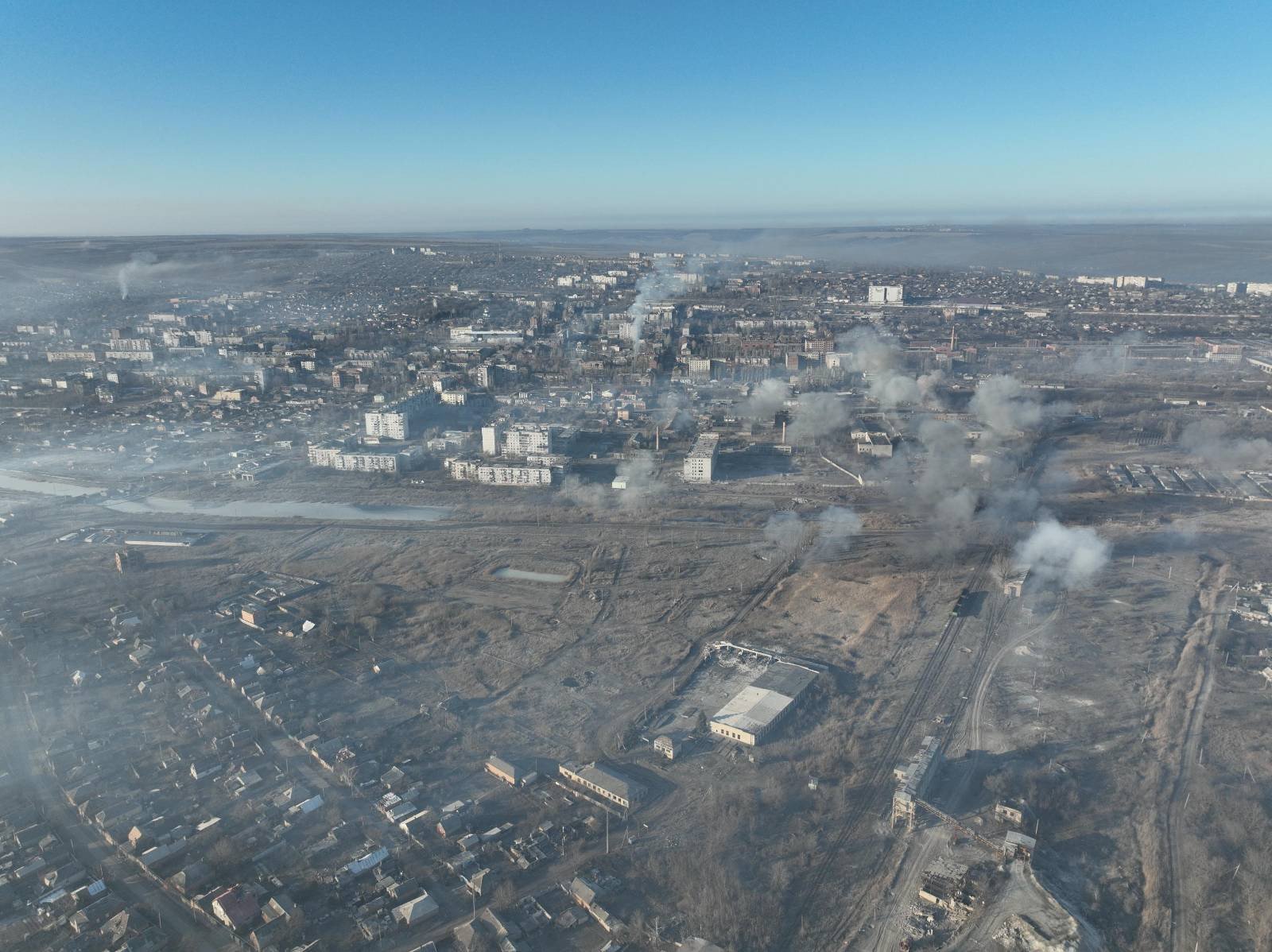
Of the 344 buildings assessed, 6.7% were reduced to irrecoverable ruins—structures where most of the load-bearing mass had collapsed, in some cases leaving only a single stairwell standing.
Only 2.6% remained in any functional form. The bulk of the assessed stock fell in between: buildings with collapsed wings, floors, or major structural sections still standing as damaged hulks.
The western districts of Yubileyny and Samolet sustained the worst losses, with high-rise apartment blocks converted into infantry strongpoints and firing positions by both sides throughout the final months of combat.
The scale of destruction reflects the battle's reliance on artillery and mass infantry assaults—a pattern that later shifted across the front as drone warfare reduced the need for such total demolition.
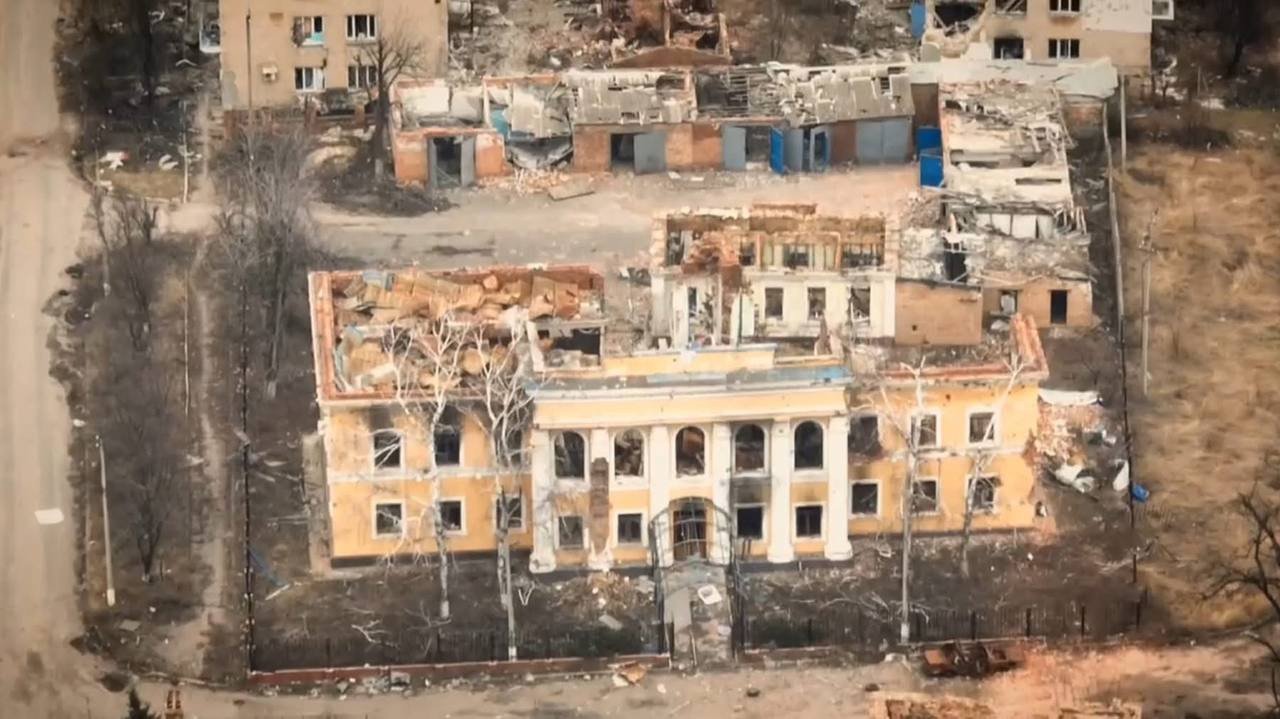
Ukraine's official damage registry had recorded 16,300 properties in Bakhmut by October 2025, covering 82% of submitted claims. In June 2024, Oleksandr Marchenko, deputy head of the city's military administration, told Ukrainian radio outlet Vilne Radio that 99% of all residential structures had been destroyed, including roughly 15,000 private homes. He described the city's heating, gas, water, and power infrastructure as leveled entirely.
Occupation authorities have offered no credible rebuilding plan in the three years since the city fell. Early proposals to have Tatarstan fund reconstruction produced nothing.
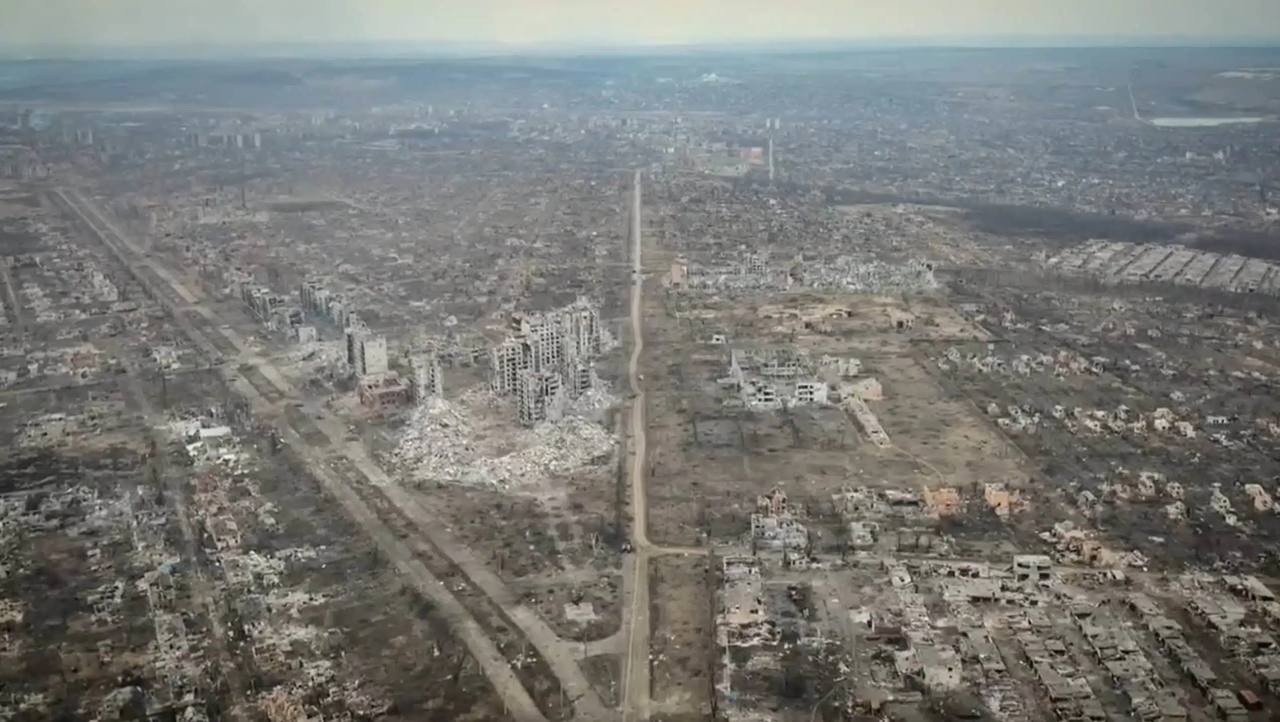
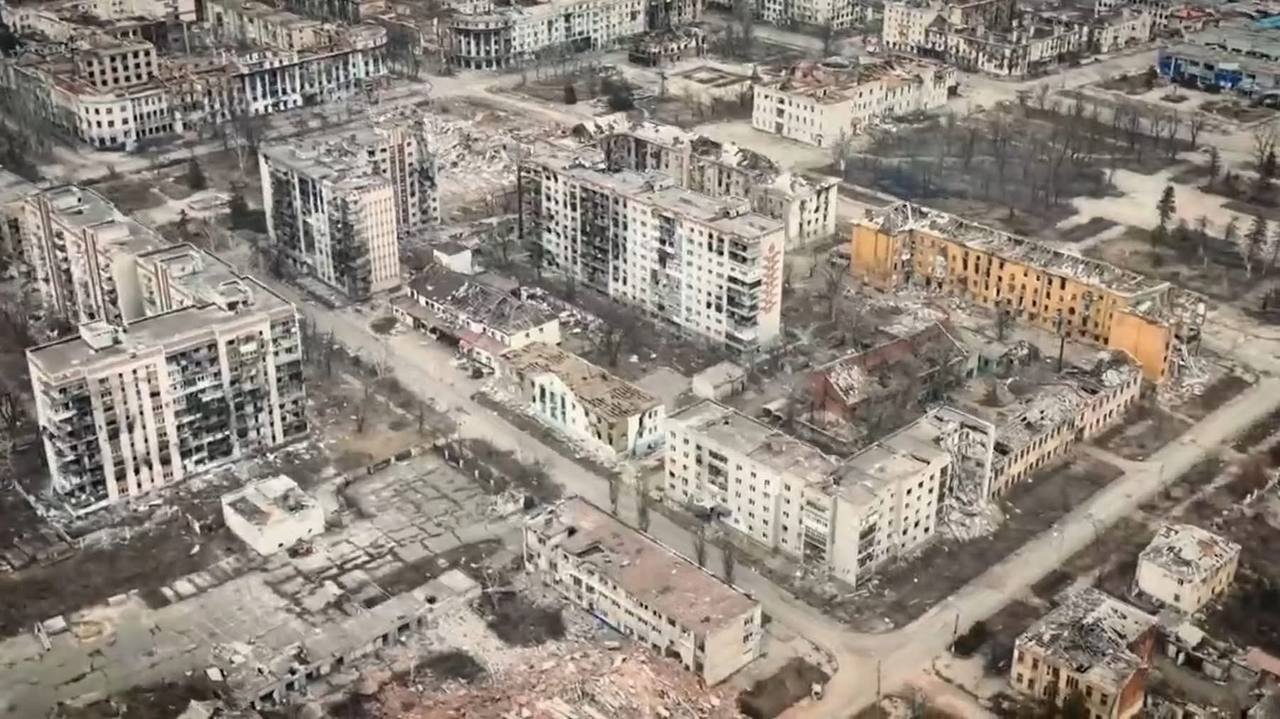
Denis Pushilin, the Russia-installed head of the temporarily occupied Donetsk region, later proposed preserving the ruins as memorial sites, drawing a comparison to Volgograd.
As of 2026, no confirmed civilian population is known to remain; in April 2025, Russian troops painted lamp posts in the Russian tricolor across the devastated streets ahead of Victory Day.
Russia's handling of demolished housing in other occupied Ukrainian cities offers a grim precedent. Debris from razed Mariupol apartment blocks was processed into approximately 100,000 tons of crushed stone, used for highway construction in temporarily occupied southern Ukraine—material investigators believe likely contained the human remains of the city's dead.
Discuss this article:
-9bd5e1532102621f8fb1c4ba871a3171.png)


-72b63a4e0c8c475ad81fe3eed3f63729.jpeg "Photo of Cyril Barabaltchouk")



-e88c01988249cd60b6f04f79d29156b7.jpeg "Damage to “Cosmogony,” the largest painting in Ukraine, following a Russian drone attack on Lutsk on October 13, 2026. (Source: @sashyyna/Instagram)")