- Category
- War in Ukraine
The Trap Was Only 100 Meters Wide. Russian Troops Kept Walking Into Ukraine’s Kill Zone
 Prefer U24 Media on Google
- Authors

-111f0e5095e02c02446ffed57bfb0ab1.jpeg "Photo of Roman Kohanets")
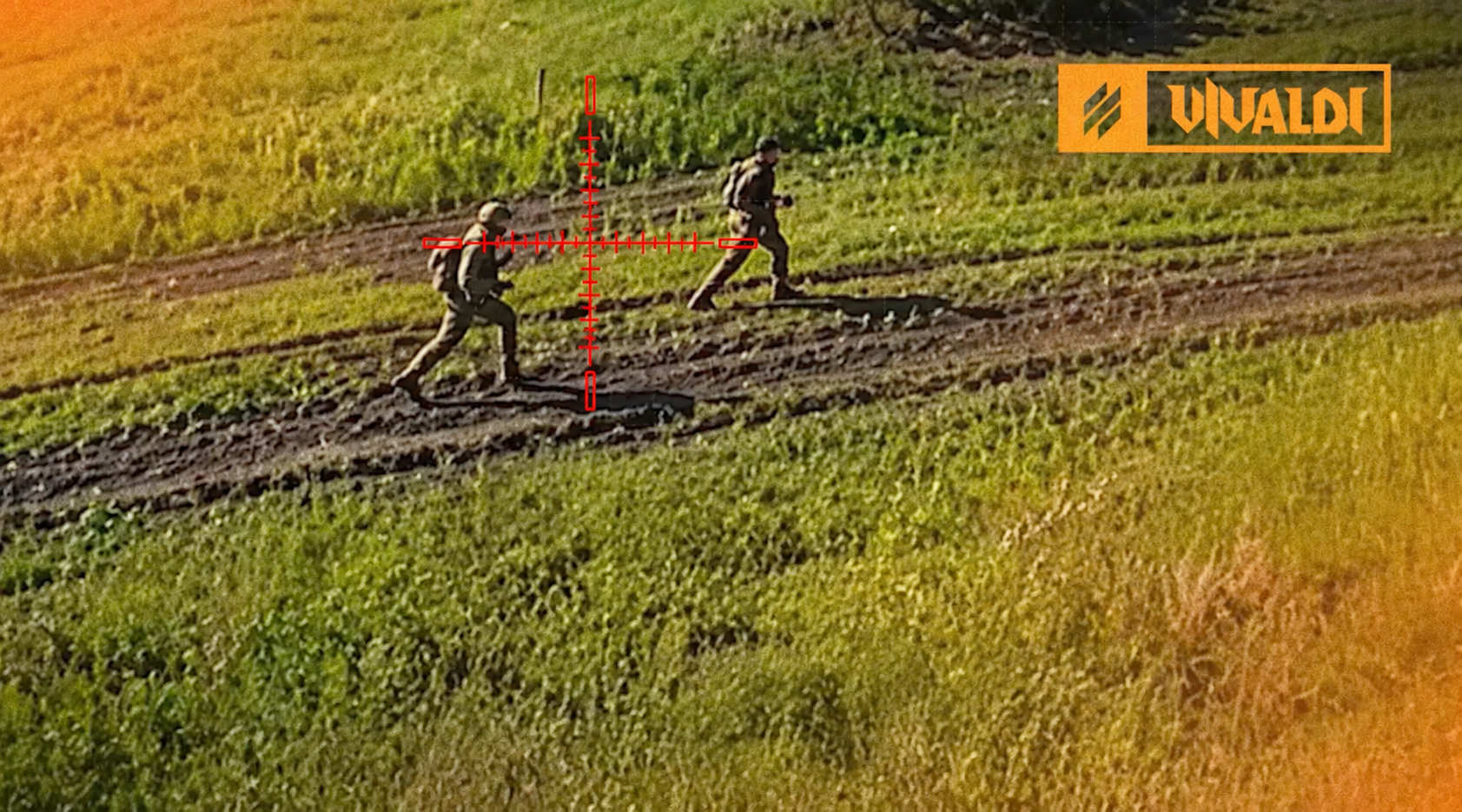
Ukraine’s 3rd Army Corps has detailed unusually heavy Russian losses during Operation Vivaldi, which its commanders attribute to the tactical isolation of the combat zone, according to the video released on October 16.
We bring you stories from the ground. Your support keeps our team in the field.
In the footage, Kucher, a battalion commander in the 3rd Army Corps, claimed his unit killed more than 250 Russian troops at one location. Another commander, Zhora, explained how Ukrainian forces used the terrain to their advantage against Russian troops.
“This site is interesting because it has a small open area, about 100 meters,” Zhora stated. He noted that Russian troops did not understand Ukrainian maneuvers for a long time and kept sending reinforcements to the same spot. “He had no other option than to constantly send infantry exactly where we needed them,” he explained.
Kucher described a pattern in which Russian commanders, seeing no progress, kept ordering fresh waves forward. He recalled that a Russian soldier would emerge to film the area with his phone, and Ukrainian troops deliberately left him alone.
“The guy comes out, shoots everything on camera, we don’t touch him on purpose, he turns back, the crowd runs for 15 minutes. The crowd dies,” Kucher said of the sequence, according to the footage.
-b4b52cbf49ab2029b21c398e58c692c8.jpg)
An hour later, he added, the same routine repeated, with the following wave running for 20 minutes before being destroyed. Kucher described the scene as “quite humiliating.” He also stated that Ukrainian forces knowingly avoided striking a nearby checkpoint or capture point in a small forest area, so that Russian commanders would keep feeding troops into the kill zone.
Kucher said the dead came from across Russian ranks. They included:
artillerymen;
assault groups;
pilots who were rotating in or out of the area;
about a dozen and a half special forces troops from one of the regiments.
The commanders presented isolation as the decisive factor. “We completely hid his infantry maneuvers at the tactical level, which led to additional losses and the inability to build normal defense around the green valley,” Kucher declared. “In terms of enemy losses, this is the biggest result, in fact.”
Zhora outlined the operation’s objective. “The ultimate goal was to take control of all logistical routes, cut off the forces of the enemy, which hold the defense, from possible replenishment, rotation, and some infantry maneuvers,” he wrote. He added that the aim was also to create an encirclement zone.
-e29925be9ebc1a8f717a4acbc6580b6c.png)
Zhora concluded that cooperation among all branches of the 3rd Army Corps was highly effective during the operation. In his words, it allowed the corps to work efficiently and “save a large number of our infantrymen’s lives.”
The losses come as Operation Vivaldi continues to push Russian forces back in the Donetsk region. By September 20, the 3rd Army Corps had taken full control of Drobysheve and liberated Shandryholove and Derylove, bringing the territory returned across the operation's first two seasons to 125 square kilometers.
Another 800 Russian troops were killed in that phase, pushing total losses across both seasons above 3,000 personnel. The first season alone cleared 75 square kilometers of the northern Donetsk region and retook Novoselivka, Oleksandrivka, and Yarova.
Discuss this article:

-c439b7bd9030ecf9d5a4287dc361ba31.jpg "Photo of Katherina Popilnichenko")