- Category
- War in Ukraine
Ukraine Crushes Russia’s Spring Offensive, Wiping Out a Week of Recruits in 3 Days
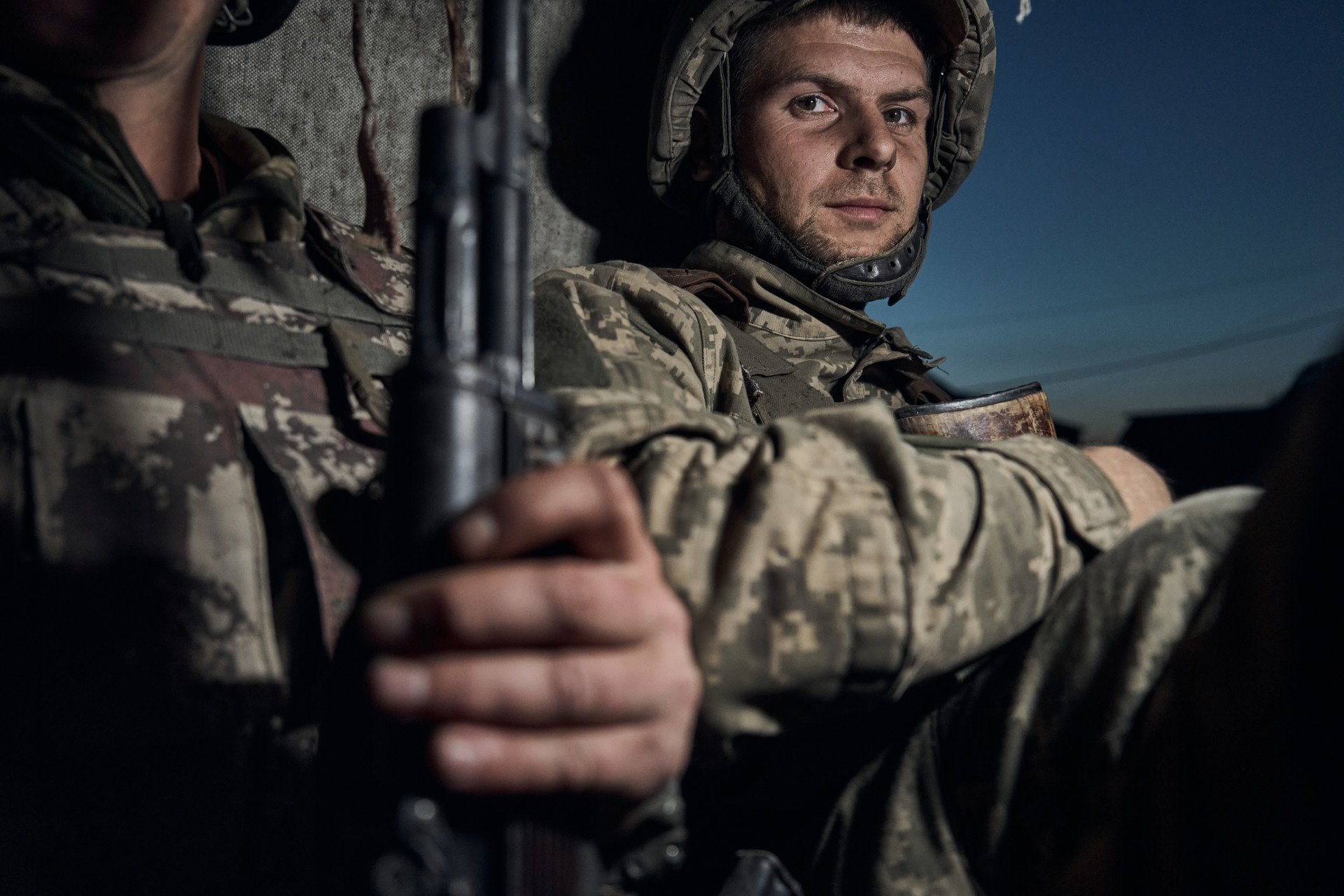
Once favorable weather set in, Moscow ordered the start of its spring-summer offensive campaign. Russian expectations of a rapid breakthrough collapsed against Ukrainian defenses: massive personnel and equipment losses, mechanized columns destroyed, and the offensive stalled.
 Prefer U24 Media on Google
- Authors

-29a1a43aba23f9bb779a1ac8b98d2121.jpeg "Photo of Illia Kabachynskyi")
In late February and early March, Ukraine’s General Staff reported Russian troop losses at 850–950 killed and wounded per day, below the usual benchmark of more than 1,000 soldiers. This was explained by the significantly lower number of assaults and the difficulty of preparing for them: due to Ukraine’s mid-range strike attacks on logistics, it became harder for the Russian army to prepare for an offensive.
It was only closer to the second half of March that Russian forces managed to build up their strength: on the morning of March 18, Ukraine’s General Staff reported that 1,720 Russian troops had been killed and wounded. This is a record for 2026 and the highest figure in the past 12 months. Ukrainian soldiers reported the start of an offensive operation, adding that the Russians had begun attacking in large armored columns.
This was confirmed the following day: 1,520 killed and wounded in manpower losses. On March 20, Russian forces again suffered big losses—1,610 troops. In effect, over three days of active offensive operations, the Russian army lost about 5,000 troops killed and wounded. Given that Russia can recruit up to 35,000 troops per month, it lost in three days the same number of soldiers it would recruit in a week.
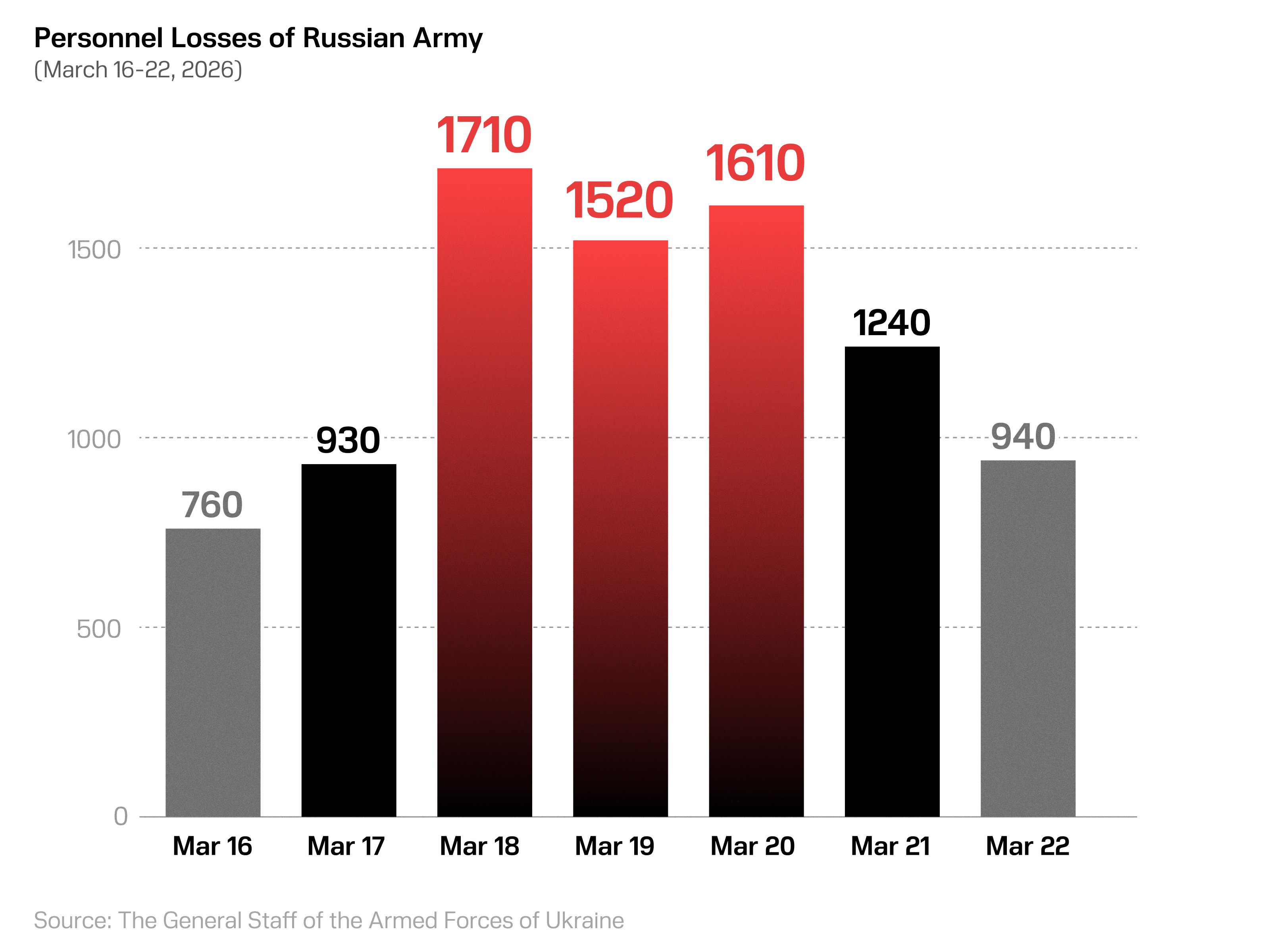
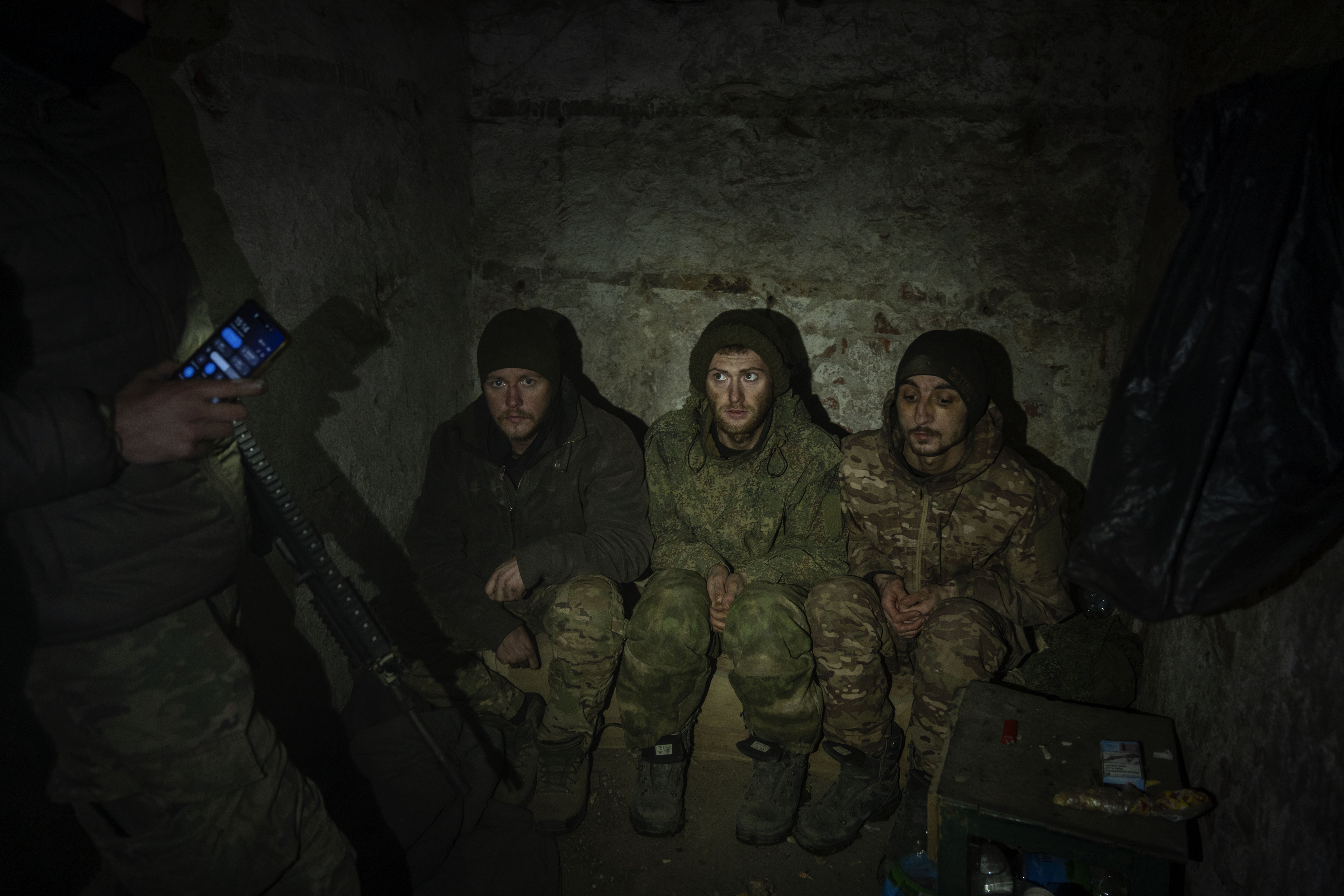
By March 24, the total number of losses had reached nearly 9,000 soldiers, killed and wounded.
Columns destroyed
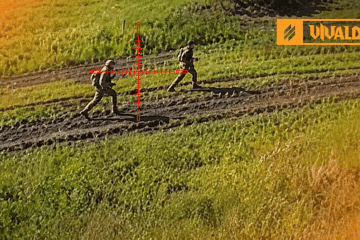
The intensity of the assaults has also been confirmed by Ukrainian units. For example, the Third Army Corps described Russia’s largest attempted breakthrough on the Lyman-Borova axis, involving more than 500 infantrymen, 28 armored vehicles, more than 100 motorcycles, buggies, and ATVs. However, they failed even to reach the line of contact: within one day, 405 troops were destroyed, along with 84 motorcycles, 11 infantry fighting vehicles and armored personnel carriers, and three tanks. A TOS Solntsepyok heavy flamethrower system and five artillery guns were also hit, along with more than 160 Russian UAVs.
We bring you stories from the ground. Your support keeps our team in the field.
The Russians had spent a month and a half preparing for the attack, but Ukrainian units had also been building their defenses. For example, the Spartan Brigade repelled a mass assault on the Pokrovsk axis, destroying more than 120 Russian troops on March 18 and 19. Other Ukrainian units also reported heavy attacks beginning on March 18, including the 93rd Brigade, Feniks, and others.
Overall, about a dozen assault columns, equipped with heavy and light vehicles and backed by substantial manpower, were deployed along different axes. Russian forces failed to achieve any meaningful gains during that time. Meanwhile, the Ukrainian army has almost completely cleared Kupiansk, liberating it from Russian troops.
Strikes on logistics
An important element in disrupting Russia’s offensive capabilities has been strikes deep behind the lines, at distances of up to 200 kilometers, made possible by the ramp-up in production of the relevant systems—the so-called middle-strike drones.
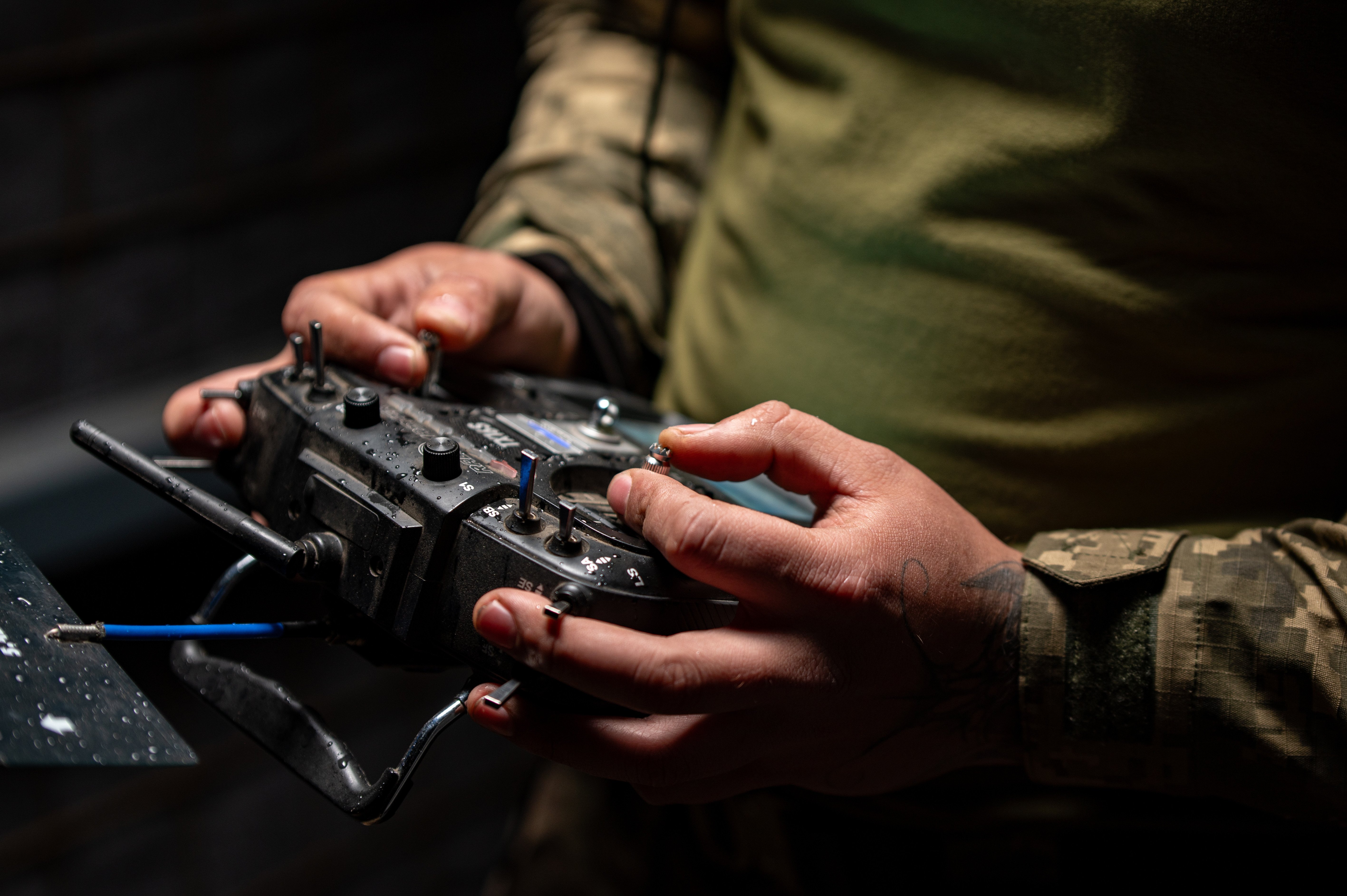
They enable strikes against logistics routes, military warehouses, areas where equipment and personnel are concentrated, and military arsenals. This undermines the delivery of essential weapons, provisions, and fuel to the front and also slows the replenishment of Russian forces.
In March, Ukrainian forces also struck two vessels that were transporting military resources from mainland Russia to the occupied Crimean peninsula.
Moving arsenals farther back is becoming increasingly difficult and does not always produce results: in recent months, Ukrainian forces have been actively knocking out Russian air defenses in Crimea and in occupied territories. As a result, strikes on Russian military facilities are likely to increase further.
Discuss this article:
-4a56a6b482ec132402c16ef6fcabf9a2.png)


-c439b7bd9030ecf9d5a4287dc361ba31.jpg "Photo of Katherina Popilnichenko")

-111f0e5095e02c02446ffed57bfb0ab1.jpeg "Photo of Roman Kohanets")