- Category
- War in Ukraine
Ukraine Releases Details of 52 Firms Involved in Russia’s Pantsir-S1 Combat System Production
 Prefer U24 Media on Google
- Authors


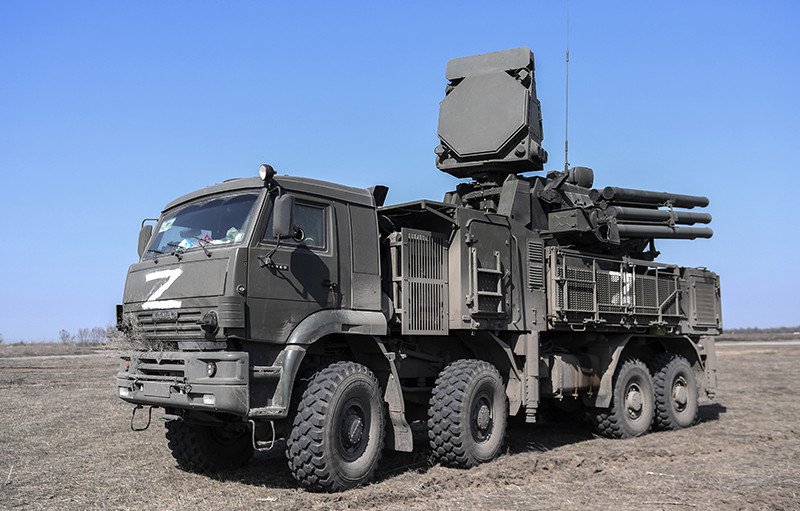
Ukrainian military intelligence has published new data identifying companies involved in the production chain of Russia’s 72V6 combat vehicle used in the Pantsir-S1 surface-to-air missile and gun system.
According to the Main Intelligence Directorate of the Ministry of Defence of Ukraine (HUR) on May 12, the information was released via the War&Sanctions portal, which includes details on 52 enterprises linked to its production.
We bring you stories from the ground. Your support keeps our team in the field.
Ukrainian intelligence stated that Russia deploys the Pantsir system to protect small but strategically important areas, including military and industrial facilities, as well as to reinforce air defense coverage against low- and very low-altitude aerial threats. The system has also been positioned in Moscow, including installations on rooftops in the city center, reportedly to enhance the protection of key sites such as the Kremlin.
The Pantsir-S1 integrates missile and gun weaponry on a single combat platform equipped with detection, tracking, and engagement systems. Its hybrid configuration enables sustained fire across multiple ranges and altitudes, making it a key element of Russia’s layered air defense network.
HUR also reported that ten of the identified enterprises are not currently subject to sanctions imposed by any members of the international sanctions coalition. Among them are several industrial producers supplying critical components for the system.
These include the Kazan Electrotechnical Plant, which manufactures and supplies angular acceleration measurement units and backup power supply modules; JSC “Center for Technology Commercialization,” which provides computing system units 1VS1-1k; and the Armavir Electrotechnical Plant, which produces electric fans used in the target detection station assembly.
What is Pantsir-S1
The Pantsir-S1 is a hybrid short-range air defense system that utilizes both missiles and automatic cannons to protect military units and vital infrastructure from aerial threats, including fixed-wing aircraft, cruise missiles, and UAVs. By integrating radar detection with twin cannons and surface-to-air missiles, the platform provides a comprehensive capability to engage targets at close proximity.
In a combat environment, the Pantsir serves as the terminal layer of a multi-tiered defense network, shielding logistics centers, strategic sites, and high-value long-range air defense assets. Its core function is to neutralize precision-guided munitions and low-altitude drones that have bypassed outer perimeters. Consequently, the destruction or capture of these systems near the front lines represents a substantial blow to the integrity of a region’s defensive umbrella.

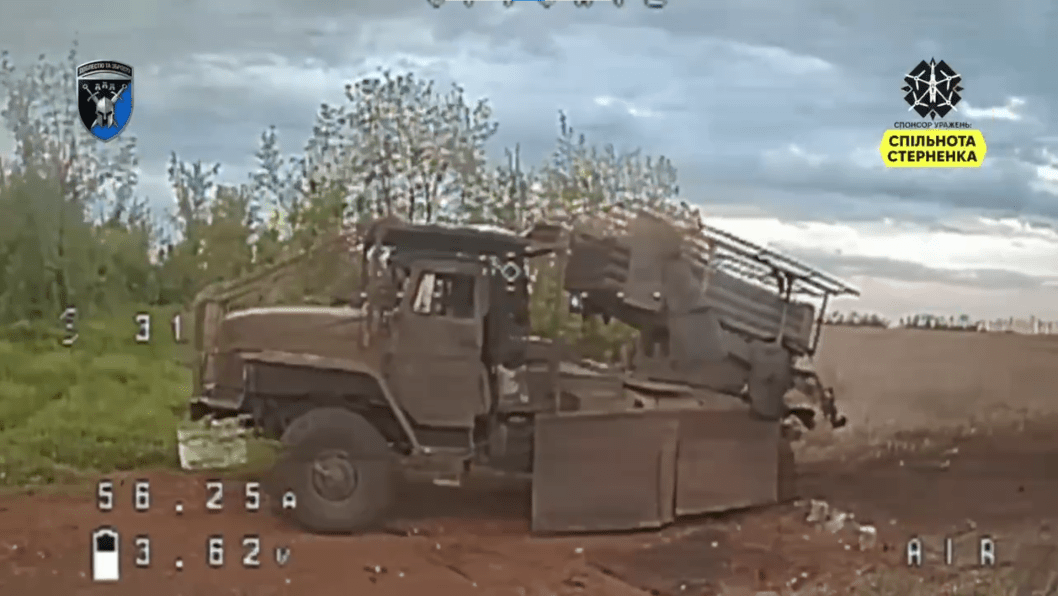
The disclosure comes as Ukraine’s Unmanned Systems Forces continue targeting Russian air defense assets in combat operations. In one such incident, Ukrainian forces destroyed a previously undocumented variant of the Pantsir-S1 system.
Analysts identified the destroyed vehicle as being mounted on an unusual heavy-duty Belarusian-made MZKT-7930 chassis, a configuration not typically associated with standard Russian Pantsir deployments.
Video footage circulated online shows a Ukrainian strike drone hitting the air defense system positioned near the front line. OSINT analysts noted that the platform’s structure and mobility base differed significantly from conventional Pantsir systems, drawing attention to what appears to be a modified or less common variant in Russian service.
Discuss this article:



-c439b7bd9030ecf9d5a4287dc361ba31.jpg "Photo of Katherina Popilnichenko")