- Category
- War in Ukraine
Inside Russia’s Race to Reinvent the Kh-101 as Ukraine Gets Better at Intercepting Them
 Prefer U24 Media on Google
- Authors


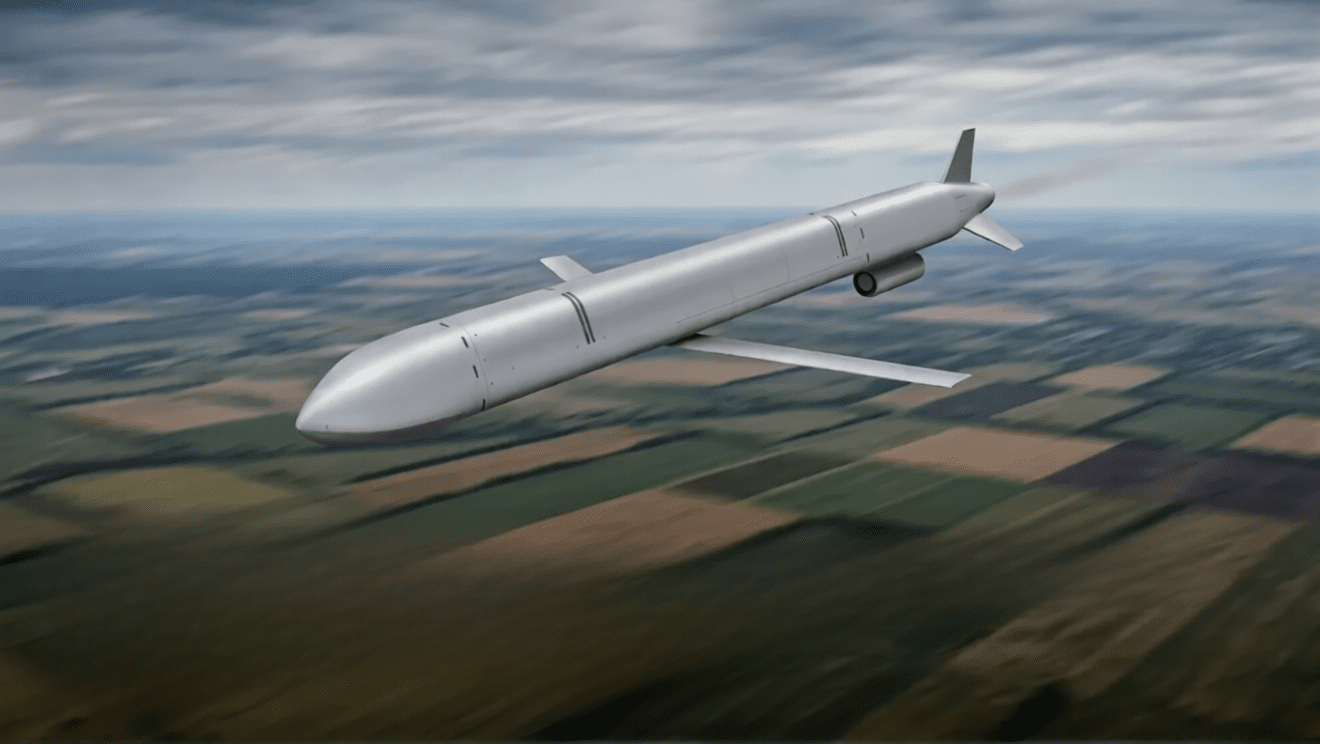
Russia has repeatedly modified its Kh-101 air-launched cruise missile during the full-scale war in an effort to penetrate Ukraine’s increasingly effective air defenses and intensify strikes on civilian infrastructure, according to a detailed assessment released by the Ukrainian Defense Ministry on May 11.
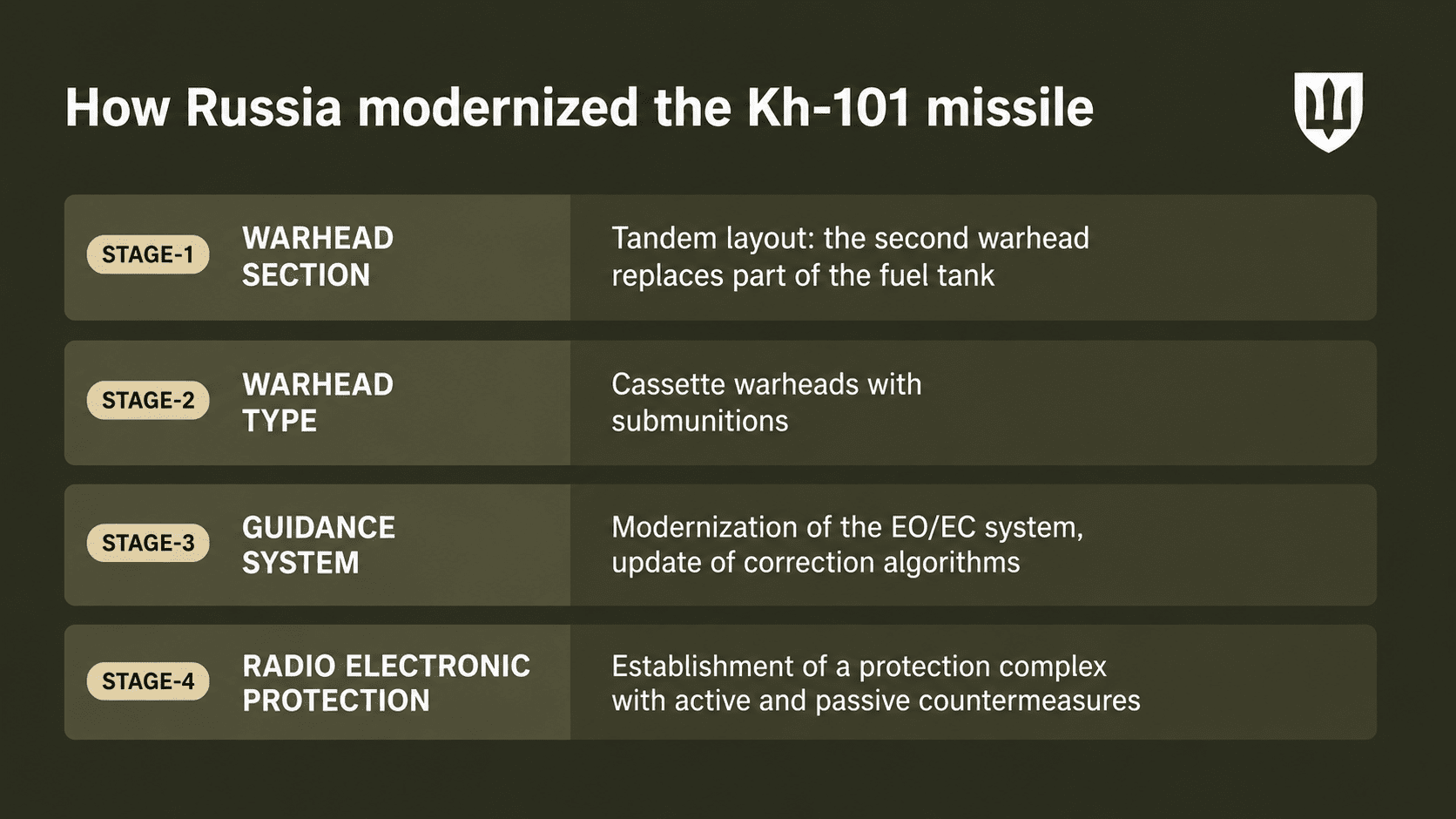
Since the start of the invasion, Moscow has carried out at least four major modernization phases of the long-range cruise missile, Ukrainian officials said. The upgrades focused on increasing destructive power, improving navigation, and enhancing the missile’s ability to survive interception attempts.
We bring you stories from the ground. Your support keeps our team in the field.
According to the ministry, the changes reflect both Russia’s struggle against Ukraine’s improving air defense network and its effort to sustain large-scale missile terror against Ukrainian cities.
Ukraine says its air defenses have intercepted roughly 88% of Kh-101, Kh-55, and Kh-555 cruise missiles launched since the beginning of 2026, forcing Russia to continually adapt the weapon.
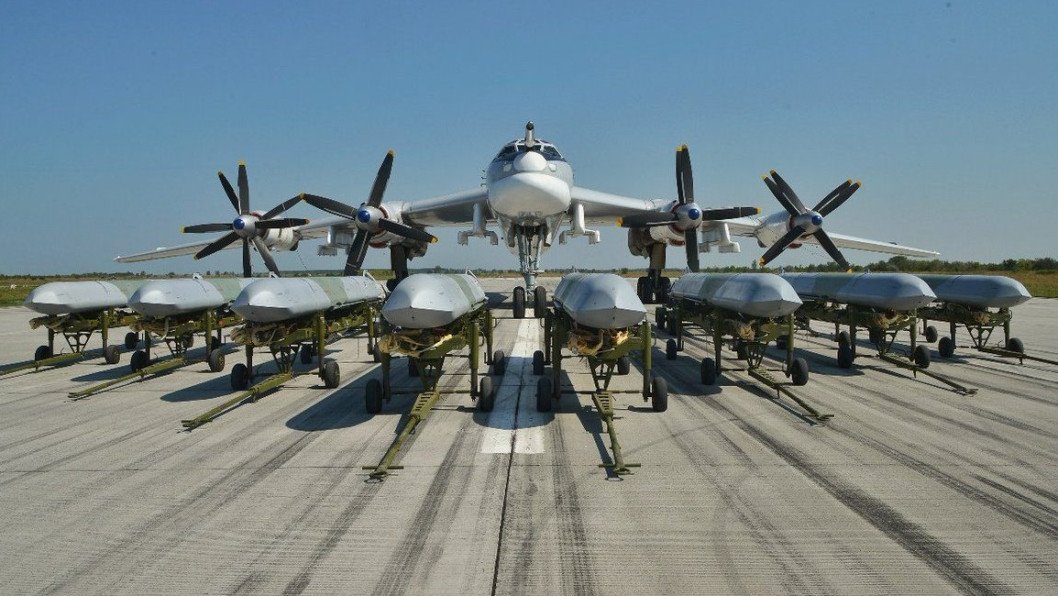
Originally designed as a long-range precision strike missile, the Kh-101 carries a warhead weighing roughly 450–500 kilograms and is launched from Tupolev Tu-95 and Tupolev Tu-160 bombers, usually flying over the Caspian Sea before launching toward Ukraine.
The missile’s range—approximately 2,500 kilometers—far exceeded what Russia needed to strike targets inside Ukraine. Ukrainian specialists say Moscow used that “excess” range margin as room for later modifications.
One of the first major upgrades involved replacing the original single warhead with a tandem configuration. Engineers reduced fuel volume and added a second warhead section, increasing the total payload to around 800 kilograms.
According to Ukraine’s Defense Ministry, Russia effectively sacrificed range in exchange for more destructive power, calculating that missiles that successfully penetrated Ukrainian air defenses would inflict significantly greater damage.
Explosive Ordnance Disposal (EOD) units of Ukraine’s National Police have discovered a downed Kh-101 cruise missile (Product 504AP), equipped with a dual warhead, a TRDD-50A turbojet engine (Product 36M), and the “Otblesk-U” electro-optical guidance system. pic.twitter.com/NdcN7UCO0X
— OSINTWarfare (@OSINTWarfare) April 15, 2026
Another major modification introduced cluster warheads containing spherical submunitions designed to spread across wide target areas rather than strike a single point.
Ukrainian specialists say some of those submunitions contain zirconium-based incendiary elements that ignite when exposed to air, helping trigger persistent fires after impact. Officials argue the configuration points directly to attacks intended against fuel depots, industrial sites, and civilian infrastructure.
The ministry also detailed upgrades to the missile’s guidance system. The Kh-101 combines inertial navigation, satellite correction, and an optical-electronic terrain correlation system that compares live terrain imagery with preloaded satellite “reference portraits” during the final phase of flight.
Footage of a Ukrainian Air Force F-16 chasing down a Russian Kh-101 cruise missile. pic.twitter.com/uiACe7SjFd
— OSINTtechnical (@Osinttechnical) December 22, 2025
According to Ukrainian analysts, Russia refined the missile’s optical targeting algorithms to improve terrain recognition and accuracy. However, the ministry argues that the system performs poorly in dense urban environments, where buildings, shadows, and changing lighting conditions make reliable identification far more difficult.
“When Russia strikes large cities, it fully understands that precision is no longer the priority,” the ministry said.
More recently, Russia reportedly equipped the Kh-101 with the SP-504 onboard electronic warfare suite, featuring active and passive countermeasure systems mounted on the missile’s fuselage.
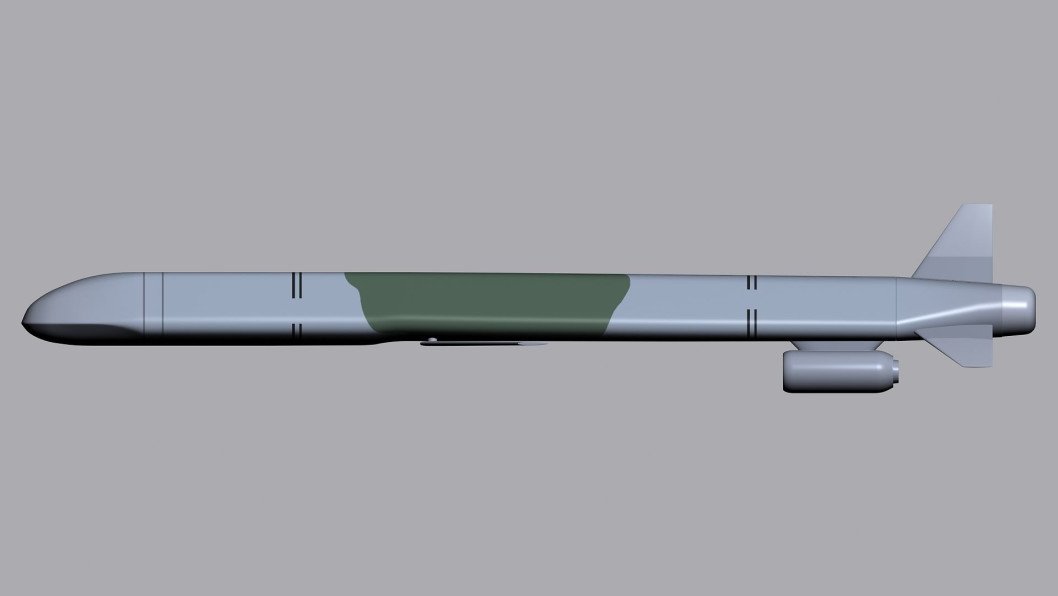
The active component attempts to deceive radars by generating false targets and misleading air defense systems, while the passive subsystem deploys thermal and radar decoys intended to divert incoming interceptor missiles.
Ukrainian specialists say recovered missile debris suggests the countermeasure system only activates after detecting genuine radar illumination rather than deploying decoys continuously.
Footage showing at least 4 Kh-101 Air-Launched Cruise Missiles firing decoy flares before striking targets within the city of Lutsk in Western Ukraine, during this morning’s large-scale drone and missile attack by Russia. pic.twitter.com/2e5PXivnlk
— OSINTdefender (@sentdefender) June 6, 2025
The report also points to a growing strain on Russia’s strategic bomber fleet. Heavy operational use of Tu-95MS and Tu-160 bombers, combined with long-range flight profiles, is rapidly consuming engine life and maintenance resources.
According to the Ukrainian Defense Ministry, some Tu-95 bombers that previously carried six Kh-101 missiles are now reportedly operating with only two missiles aboard, while the number of combat-ready aircraft continues to shrink.
The ministry also claims analysis of recovered missile components suggests Russia is no longer maintaining large reserve stockpiles. Parts appear to be manufactured months ahead of time, but final missile assembly often occurs only one or two weeks before launch.
Taken together, Ukrainian officials argue the Kh-101’s evolution reflects adaptation under pressure rather than a technological breakthrough.
“Heavier warheads, incendiary elements, active protection systems—these are not signs of a revolutionary leap,” the ministry concluded. “They are adaptations to conditions where a significant share of missiles are destroyed before reaching their targets.”
Earlier, reports surfaced suggesting that Russia may be exploring the possibility of launching its Kh-101 air-launched cruise missile from a ground-based platform, but analysts say such a modification would involve significant technical challenges.
Discuss this article:
-9a7b3a98ed5c506e0b77a6663f5727c5.png)



-111f0e5095e02c02446ffed57bfb0ab1.jpeg "Photo of Roman Kohanets")
-7647a088f8ed2b81f52ab779f3a93cd0.png "Equipment and personal gear belonging to Ukrainian troops from the 425th Separate Assault Regiment “Skelya” are transported on a small wagon through an underground gas pipeline near Kupiansk. (Source: 425th Separate Assault Regiment “Skelya”)")
-72b63a4e0c8c475ad81fe3eed3f63729.jpeg "Photo of Cyril Barabaltchouk")