- Category
- War in Ukraine
Ukraine Upgrades One of Its Most Iconic Drones to Detect Russian Interceptors in Mid-Air
 Prefer U24 Media on Google
- Authors


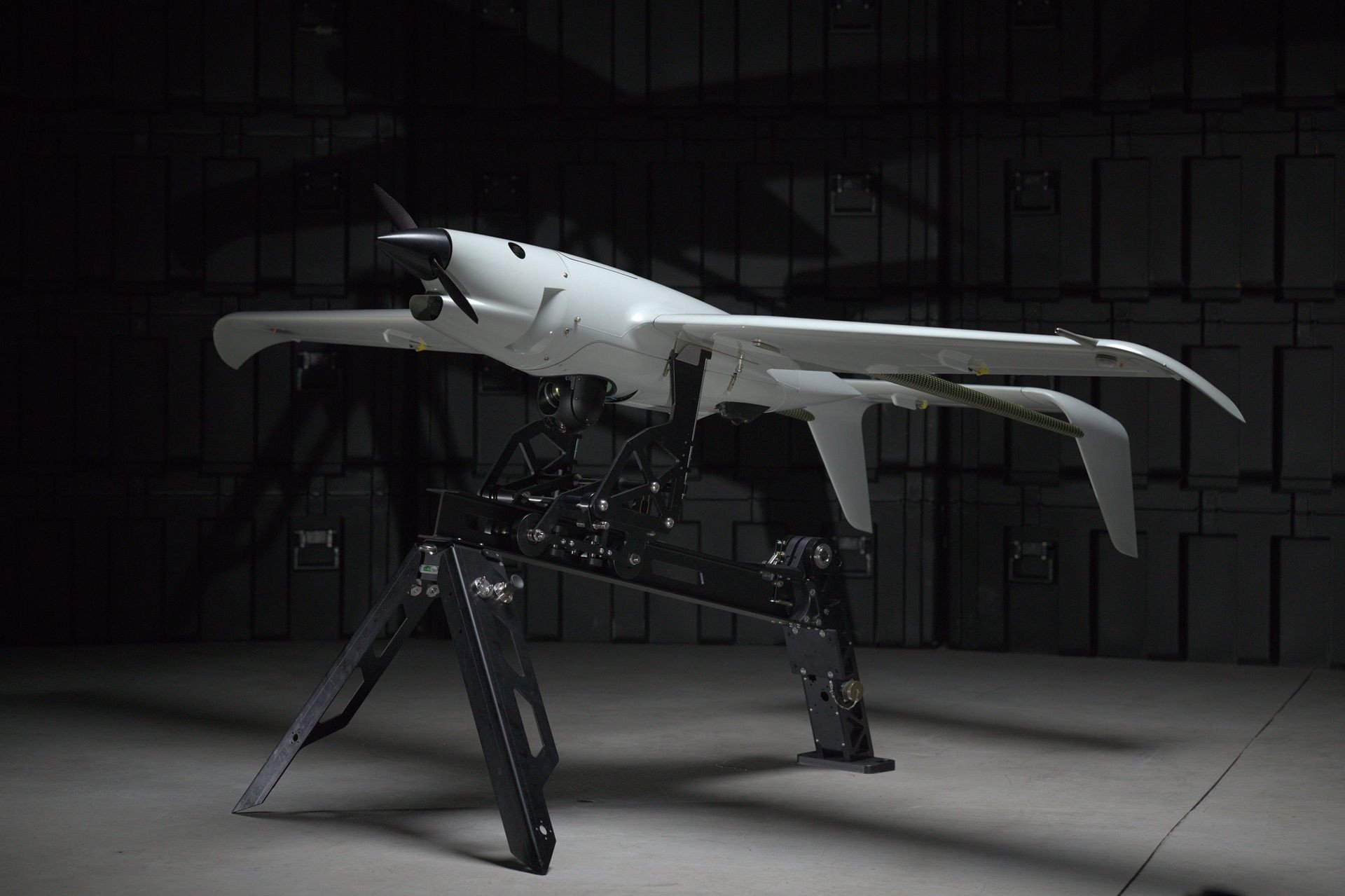
Ukraine’s widely used reconnaissance drone, Raybird, has received a new upgrade allowing it to detect Russian interceptor drones in flight, a development aimed at improving survivability in increasingly contested airspace, according to a Ukrainian manufacturer Skyeton, in a comment to Militarnyi on May 5.
The new capability enables operators to quickly identify threats and perform evasive maneuvers during missions. The solution has already entered serial production and is being integrated into operational drone systems.
We bring you stories from the ground. Your support keeps our team in the field.
The upgrade comes as interceptor drones become more common on the battlefield, forcing manufacturers to introduce active countermeasures to protect unmanned aircraft.
By adding a detection module, the Raybird is expected to significantly increase the chances of completing missions while preserving the drone itself, particularly during long-range reconnaissance flights deep behind enemy lines.
“We approach every upgrade with great care. Our goal is to make Raybird even more survivable in the most challenging conditions. We thoroughly studied available solutions and technologies in the field and conducted extensive testing. Based on this, we selected the most effective option for our UAV,” said Roman Knyazhenko.
Raybird UAS upgraded with an anti-interceptor feature to enhance survivability in long-duration ISR/ISTAR missions.
— Skyeton (@skyeton_inc) May 5, 2026
The system detects hostile interceptor drones in real time and alerts operators to take evasive action. Now in serial production, it addresses a rapidly evolving… pic.twitter.com/qUzdPcxwYy
Thanks to its modular architecture, the system allows the new capability to be installed not only on newly produced drones but also retrofitted onto units already in service.
The Raybird ACS-3 is a small fixed-wing tactical unmanned aerial system designed for long-endurance intelligence missions. It can remain airborne for more than 28 hours and cover distances exceeding 2,500 kilometers, operating at altitudes of up to 5,500 meters. Its communication range extends beyond 220 kilometers, or is effectively unlimited when supported by satellite communications.
Powered by a four-stroke fuel-injected gasoline engine, the drone is built to operate in harsh environments, withstanding temperatures ranging from –35°C to +55°C. The system can be deployed in under 25 minutes.
The Ukrainian-made Raybird drone has been used in Ukraine since the start of the full-scale invasion🛰
— BFBS Forces News (@ForcesNews) November 8, 2025
There are hopes to bring it to the UK in what is being dubbed the first Ukraine and UK joint drone venture
🤔But what makes the drone so good? 🔗https://t.co/h52nbflV1Y pic.twitter.com/1KqMQHS5YV
Raybird supports a wide range of interchangeable payloads, including multi-sensor electro-optical and infrared modules, synthetic aperture radar systems, radio-frequency detection tools, and other specialized equipment, making it a versatile platform for modern reconnaissance operations.
Earlier, a Ukrainian-made reconnaissance drone powered by a hydrogen-electric propulsion system was deployed on combat missions at the front, marking the first known combat use of a hydrogen-powered reconnaissance drone in the war.
Discuss this article:


-c439b7bd9030ecf9d5a4287dc361ba31.jpg "Photo of Katherina Popilnichenko")

-111f0e5095e02c02446ffed57bfb0ab1.jpeg "Photo of Roman Kohanets")