- Category
- War in Ukraine
Ukraine’s Owl With a Sword: How Military Intelligence DIU Is Crippling Russia’s War Machine
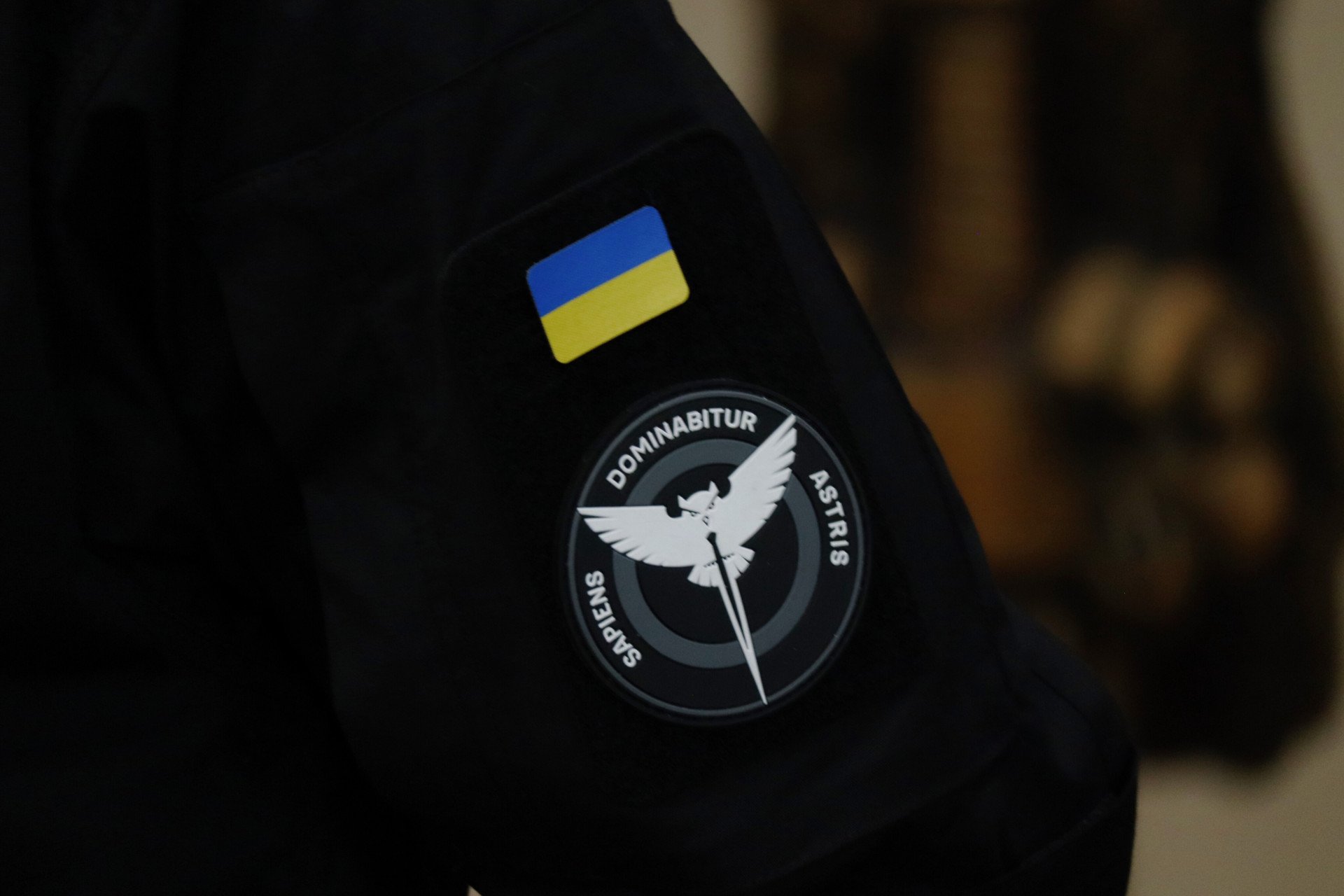
Faced with Russia’s full-scale war, Ukraine’s Defense Intelligence (DIU) has emerged as a leading force. From defending Kyiv on day one to pioneering naval-drone raids that have downed Russian warships, helicopters, and even fighter jets, DIU might not spin spider webs—but its owl-and-sword emblem suggests something just as deadly.
 Prefer U24 Media on Google
- Authors


Only two days ago, DIU released footage of a Black Sea raid showing drones hitting multiple targets. The video confirmed that three and a half years into the Russian full-scale invasion, their strikes are still effective. The agency has become a prominent arm of Ukraine’s defense, and to understand why, it’s worth asking the simple question:
What is DIU?
The agency was established by presidential decree on September 7, 1992, one year after Ukraine gained independence, and today operates under the Defense Ministry. Its role is to collect, analyze, and provide intelligence to Ukraine’s leadership, and also cooperate with counterparts in other states, including the CIA and MI6. Activities include battlefield intelligence, raids behind enemy lines, naval drone warfare, and cybersecurity operations.
🇺🇦 BIG NEWS - A Russian boat, radar, and occupiers destroyed — HUR conducted an operation in the Black Sea.
— Visioner (@visionergeo) September 5, 2025
Exclusive footage of the Black Sea operation carried out by the Department of Active Measures of the Defence Intelligence of Ukraine (HUR) in August 2025: special… pic.twitter.com/MX0rWxPUuL
Among DIU’s combat formations is the International Legion, which, in it own words, “brings together professional military personnel from around the world, to defeat enemies of freedom.” Others include the Timur, Ghosts, Wings and Kraken units, the Shaman and Nobody battalions, as well as Group 13, the naval-drone specialists credited with repeated strikes on Russian ships, helicopters, and jets that have inflicted more than $500 million in damage. “In many cultures, the number 13 is considered unlucky,” said DIU spokesperson Andrii Yusov. “For Russian occupiers, it certainly is.”
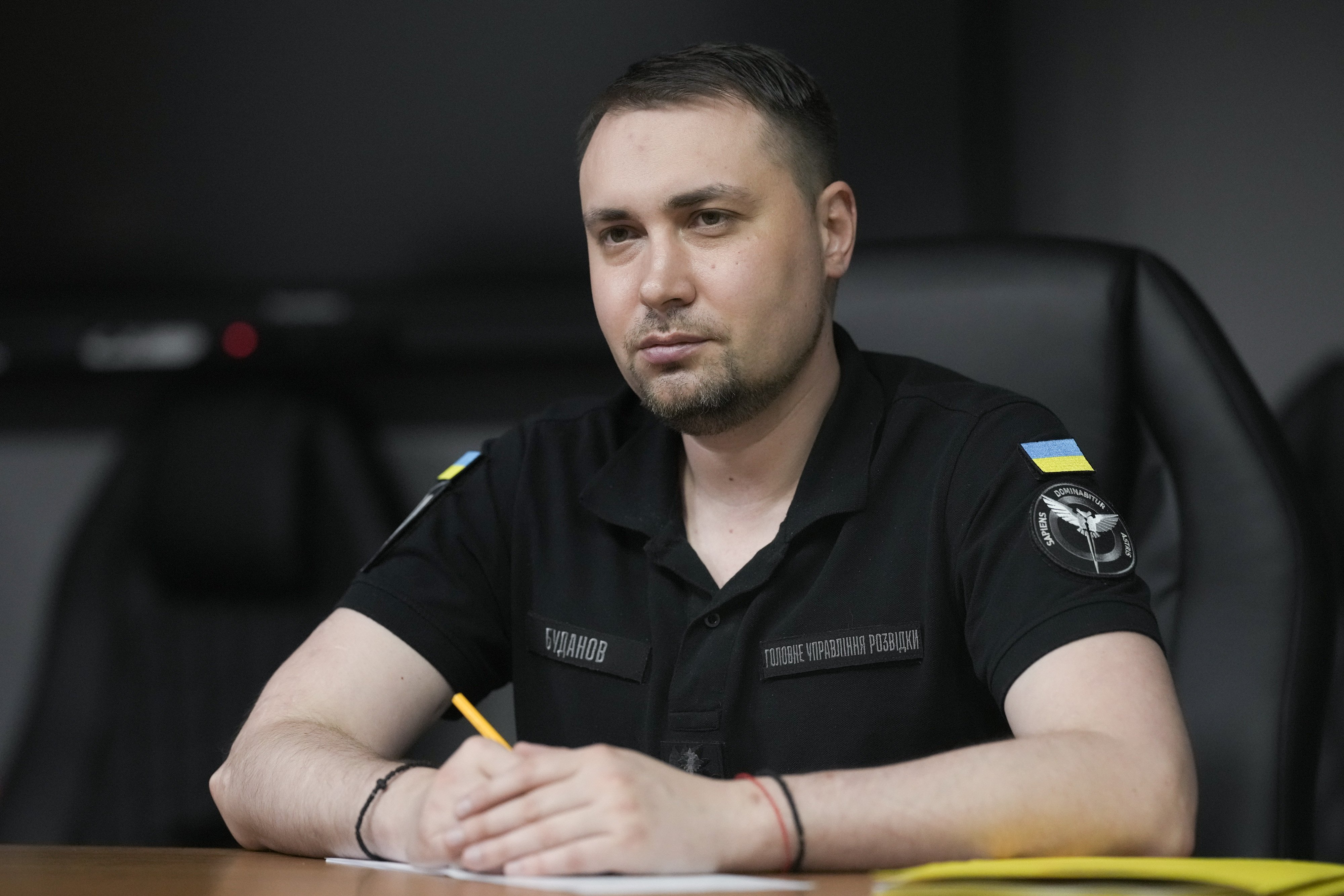
Since 2020, the agency has been led by Lt Gen Kyrylo Budanov, 39, who has served in military intelligence since 2007, taken part in combat and special operations—including in occupied Crimea—and been decorated with Ukraine’s highest Order “For Courage.” He regularly gives interviews to Western media, discussing Ukraine’s intelligence effort in direct terms.
Every ship sunk, every plane or helicopter shot down is a reduction in the enemy’s capabilities. These are real steps towards our victory.
Lt Gen Kyrylo Budanov
Head of DIU
HUR or GUR
For English speakers, neither. Officially, the agency is called the Main Directorate of Intelligence of the Ministry of Defense of Ukraine—Головне управління розвідки Міністерства оборони України. The shorthand in Ukrainian is ГУР, rendered as HUR in English transliteration, according to Ukraine’s own system.
On its official English-language site, and in Ministry of Defense communications, the agency is referred to as DIU. By contrast, some international media still incorrectly use the acronym GUR. The distinction may seem minor, but in the battle to assert Ukraine’s own voice, names matter.
Legendary beginnings
On the first day of Russia’s full-scale invasion, DIU fighters alongside the Ukrainian National Guard and others defended Hostomel Airport in the Kyiv region. Russian paratroopers had been sent to seize the airfield as a springboard for an assault on the capital, but fierce resistance prevented Moscow’s plan to take Kyiv in three days.
That same spirit extended to the Black Sea. In 2022, DIU special forces, including agencies like the Security Service (SBU), took part in the liberation of Snake Island, installing the Ukrainian flag—a moment confirmed as a symbolic act of victory. Together, the defense of Hostomel and the Snake Island operation became enduring examples of DIU’s early daring in Russia’s war on Ukraine.
📽️Video of the landing operation and hoisting of Ukrainian flag on #Zmiinyi Island. #UkraineRussiaWar pic.twitter.com/BHITtVQ5jT
— MilitaryLand.net (@Militarylandnet) July 8, 2022
From defections to drones
DIU carried out Operation Titmouse in August 2023, persuading a Russian Mi-8 helicopter pilot to defect across the front lines, bringing sensitive information about Russian aviation and a cargo of jet parts into Ukrainian hands. “It will have long-term consequences for the aggressor nation, for its moral and psychological state,” said Yusov.
The elite Group 13 then became central to Ukraine’s naval drone campaign, striking Russian ships including the Ivanovets corvette, the landing ship Tsezar Kunikov, and the patrol ship Sergey Kotov. In December 2024, its Magura drones destroyed a Russian Mi-8 helicopter in Crimea — the first recorded case of a naval drone destroying a helicopter. In May 2025, the same unit downed two Russian Su-30 fighter jets over the Black Sea with drones armed with air-to-air missiles — the first time in history that naval drones had shot down fighter aircraft.
🔴 BREAKING: Ukrainian Magura maritime drone shot down a Russian Su-30 fighter jet near the city of Novorossiysk in Russia's Krasnodar Krai, Defense Intelligence of Ukraine confirmed. pic.twitter.com/1dsR5k1hdL
— UNITED24 Media (@United24media) May 3, 2025
Recent missions
The Timur special unit halted a Russian advance in the Sumy region in early August 2025, conducting deep raids behind enemy lines supported by artillery, FPV drone strikes, and close-quarters combat. DIU reported that the equivalent of more than eight Russian companies were lost.
DIU and the special forces unit “Ghosts” hit a Buyan-M corvette armed with Kalibr missiles in the Sea of Azov on August 28, first disabling its radar and then damaging its hull, forcing it to abandon patrol. Days later, DIU launched an FPV drone from more than 350 kilometers away, striking another Buyan-M, setting a world record as the first recorded strike of its kind on a warship.
ГУР поразили носитель "Калибров" в Азовском море — поврежден ракетный корабль проекта "Буян-М" pic.twitter.com/YtrebXfMwa
— Serg Volin 🇺🇦 🇪🇺 🇺🇸 (@SergVolin) August 28, 2025
In late August and early September, DIU carried out successive strikes against Russian radar and air defense sites in occupied Crimea. The first, led by the Ghosts' special unit, obliterated several high-value assets, including an S-400 radar and a GLONASS space tracking dome. Days later, DIU followed up by knocking out systems including Nebo-M and Podlet-K1, creating temporary blind corridors in Russia’s air defenses.
DIU published multi-angle footage on September 5 of a Black Sea raid, carried out in August. It destroyed Russia’s BL-680 assault boat, a Harpoon-B radar, and a Groza electronic warfare unit. The operation underscored DIU’s capacity to combine intelligence, technology, and surprise in a single night of strikes.
Symbols and legacy
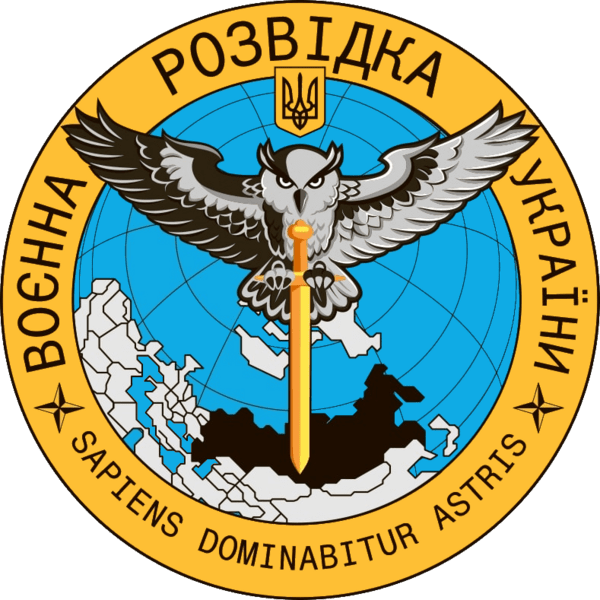
DIU has cultivated an identity that goes beyond operations. Its emblem, redesigned in 2016, two years after Russia’s first invasion of Ukraine, depicts an owl clutching a sword plunging into the map of Russia. It carries the Latin motto Sapiens dominabitur astris “The wise will rule the stars”—a pointed counter to Russia’s military intelligence motto, “Only the stars are above us.”
Each year on September 7, Ukraine marks Military Intelligence Day, celebrating the work of DIU personnel. From the paratrooper clash at Hostomel Airport to drone strikes over the Black Sea, the agency’s record looms large. For Russia, the effect is like being caught in a web: radar systems blinded, ships sunk, aircraft downed, and ground forces ambushed. The owl doesn’t spin webs—but its strikes keep Russia’s war machine constantly entangled.
Discuss this article:
-6c7b568bf1f65853b7afd9dc1c3ca1fe.jpeg)


-c439b7bd9030ecf9d5a4287dc361ba31.jpg "Photo of Katherina Popilnichenko")


-29a1a43aba23f9bb779a1ac8b98d2121.jpeg "Photo of Illia Kabachynskyi")