- Category
- War in Ukraine
Why the Expected Swedish Gripen Fighters Are More Than Just Another Jet for Ukraine
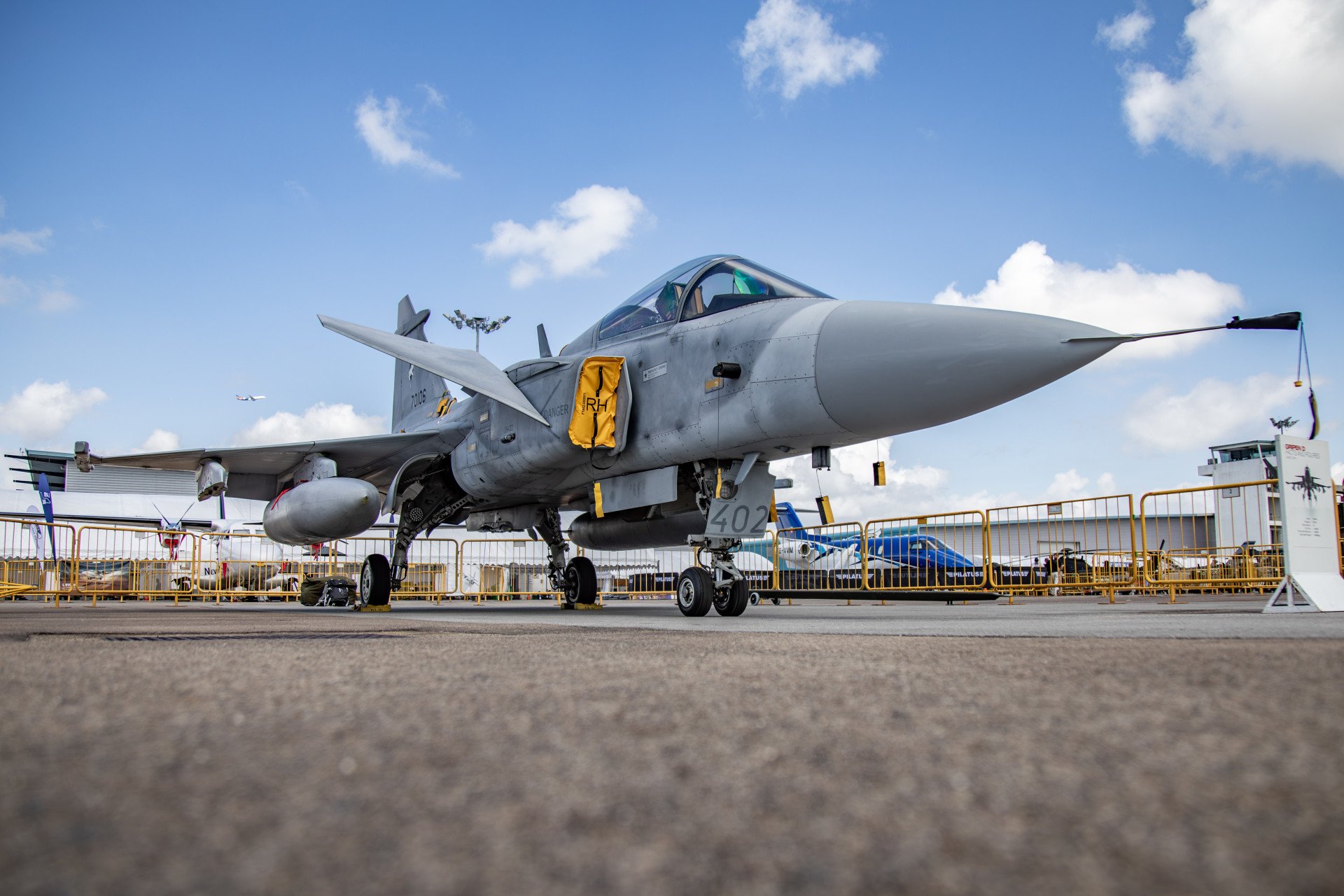
Ukraine is poised to receive Swedish Gripen fighter jets, long discussed as potential reinforcements for its air force. After two years of debate, the long-anticipated deliveries now appear to be moving forward.
 Prefer U24 Media on Google
- Authors

-29a1a43aba23f9bb779a1ac8b98d2121.jpeg "Photo of Illia Kabachynskyi")
Additional deliveries of F-16s, French Mirage jets, and Swedish Gripen are “expected,” the first Deputy Defense Minister of Ukraine, Lieutenant General Ivan Havryliuk, told the BBC in an interview. When asked to clarify, he only added that the names were pronounced correctly without specifying details about delivery dates for the aircraft to Ukraine.
Several European countries have already begun supplying F-16s in small batches, and they are already operating in Ukraine. The same is true of the French Mirage jets: France immediately said this would be a small shipment, yet even that is a significant help—Mirages can perform a wide range of combat missions, minimally including the destruction of Russian Shahed drones, which Russia launches in very large numbers.
Swedish Gripen has been repeatedly mentioned in discussions about supplying aircraft to Ukraine, but priority was given to the F-16 platform. It seems the situation is changing now. What are the advantages of the Gripen, and what tasks can it perform?
The main Swedish combat aircraft: JAS 39 Gripen
The JAS 39 Gripen is developed by the Swedish company Saab. When, in the 1970s, the need arose for a multi-role aircraft able to perform several functions at once, the plane’s designation reflected that: JAS — Jakt (fighter), Attack (attack), Spaning (reconnaissance).
Other aircraft models already existed worldwide by that time—the American F-16, French Mirage, and Soviet planes. But Sweden did not want to be dependent on other countries for such a capability, so it chose to develop its own aviation program. Ultimately, in the early 1980s, the Swedish government backed Saab’s program with state funding. That accelerated the aircraft’s development.
The prototype was presented in 1987; a great deal of refinement followed. The first aircraft were delivered in 1993, but flight testing concluded only in 1996. In 1997, the first Gripen was accepted into service with the Swedish Air Force. Sweden remains the primary operator; small batches were delivered to the Czech Republic, Thailand, Hungary, Brazil, and South Africa.
Initially, the Gripen was designed as a fourth-generation fighter, but after years of upgrades, more modern variants exist:
Gripen C/D — considered 4+ generation
Gripen E/F — the so-called 4++ generation; this version has improved stealth features, additional protection, a new engine, and many other upgrades.
However, it is not yet known which specific variant will be delivered to Ukraine—that information has not been released to the press.
There are single- and two-seat versions. The combat radius is up to 1,500 km, the maximum payload is 16.5 tonnes, and there are 10 hardpoints for weapons. The speed exceeds 2,100 km/h.
Gripen is also considered among the most economical and durable aircraft. An hour of flight time costs about $4,000 (about half that of an F-16), and the aircraft is built to be able to land on highways or other unconventional surfaces.
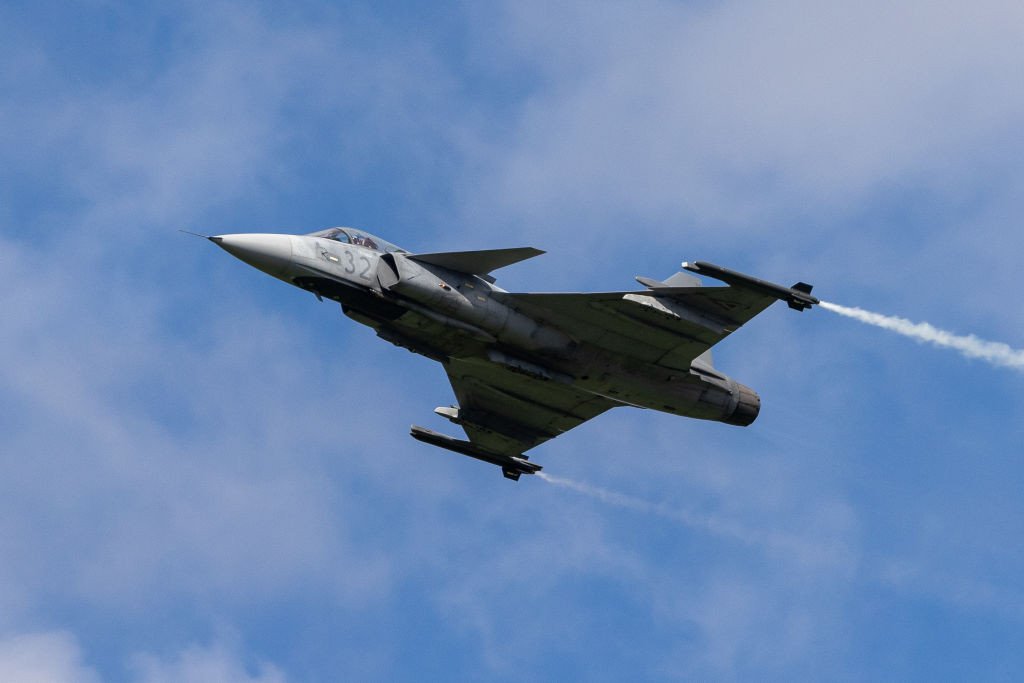
Until recently, Gripen had never been used in combat; the aircraft mostly performed patrol duties. Thailand employed them in 2025 in an armed conflict with Cambodia, using both F-16s and Gripen in strikes. A month later, Thailand’s government placed an additional order for Swedish Gripen, seeking upgrades for its aging F-16 fleet.
Gripen for Ukraine
Nothing is currently known about which Gripen modifications will be sent to Ukraine or in what format the aircraft will be delivered: whether through a defense contract with Saab or as a transfer by the Swedish government. The question of pilot training specifically for this aircraft has also not been raised publicly: only in 2023 was it mentioned that Ukrainian pilots had undergone familiarization training, but without details. Whether additional training has taken place has not yet been reported.
Gripen would be an additional platform for Ukraine’s air forces, which already operate Soviet aircraft, American F-16s, and French Mirage jets. A large fleet brings challenges — training, infrastructure, maintenance — but Ukraine currently faces a different, pressing challenge: Russian bombings.
At the end of September, Russia launched 500 drones and 40 missiles of various types against Ukraine. The capital and several other Ukrainian cities suffered significant damage; dozens were injured, and several people were killed, including a child.
Aircraft are one way to destroy Russian airborne attack systems. Both Mirage and F-16s are used for this purpose. Russia is deploying increasing numbers of Shaheds, which are becoming more difficult targets as they are continually improved. Gripen jets would, at minimum, provide another means to counter Russian raids and, at maximum, could be used to strike Russian positions using appropriate armament.
It is also not yet known how many jets Ukraine might receive. However, the Swedish government and Saab are reportedly willing to engage in the process and provide significant batches to allow Ukraine to organize its own air defense.
Discuss this article:


-efa69d4733b5af9f7cd0a642f85424a6.jpeg "Thick black smoke rises from the heavily damaged Proton-Electrotex plant in Orel, Russia, following a reported strike. (Source: Exilenova+)")