- Category
- World
From "Honey Traps" to Conspiracy Communities, These Are The Unexpected Recruitment Methods of Russia's Intelligence Services

Between 2023 and 2024, the number of sabotage attacks in Europe nearly tripled. The year before that, it quadrupled. Meanwhile, the image of a Russian spy in an expensive suit bears less and less resemblance to reality. Today, the recruiter might turn out to be a Telegram channel administrator, an attractive stranger on social media, or someone who shares your views on "secret conspiracies."
 Prefer U24 Media on Google
- Authors


Following the mass expulsions of Russian diplomats and intelligence officers from Western countries—particularly after 2018, when former Russian intelligence officer Sergei Skripal and his daughter Yulia were poisoned in Salisbury, England, and again after 2022—Moscow lost a significant portion of its traditional agent networks.
Rather than weakening, however, Russian intelligence services adapted, effectively outsourcing their sabotage operations. Instead of career spies, they increasingly rely on disposable operatives: criminal elements, ideological sympathizers, socially vulnerable individuals, migrants, and mercenaries. This allows the Kremlin to deny involvement, reduce risks to its officers, cut costs, and scale operations almost without limit.
We bring you stories from the ground. Your support keeps our team in the field.
The goal of such operations is not simply isolated acts of arson or vandalism. They are part of a broader campaign to destabilize societies, undermine support for Ukraine, deepen fear and distrust of state institutions, and apply psychological pressure on NATO member states.
The GRU plays the central role in these operations, deploying networks of cut-outs, fake accounts, criminal structures, and online recruiters. The FSB plays a supporting role, working through diaspora communities, criminal connections, and family contacts, particularly within Russian-speaking communities.
After 2023, networks linked to the Wagner Group became an additional tool. Infrastructure built during the war against Ukraine was repurposed for recruitment, propaganda, and the coordination of sabotage across Europe via Telegram channels, Discord servers, forums, and other online platforms.
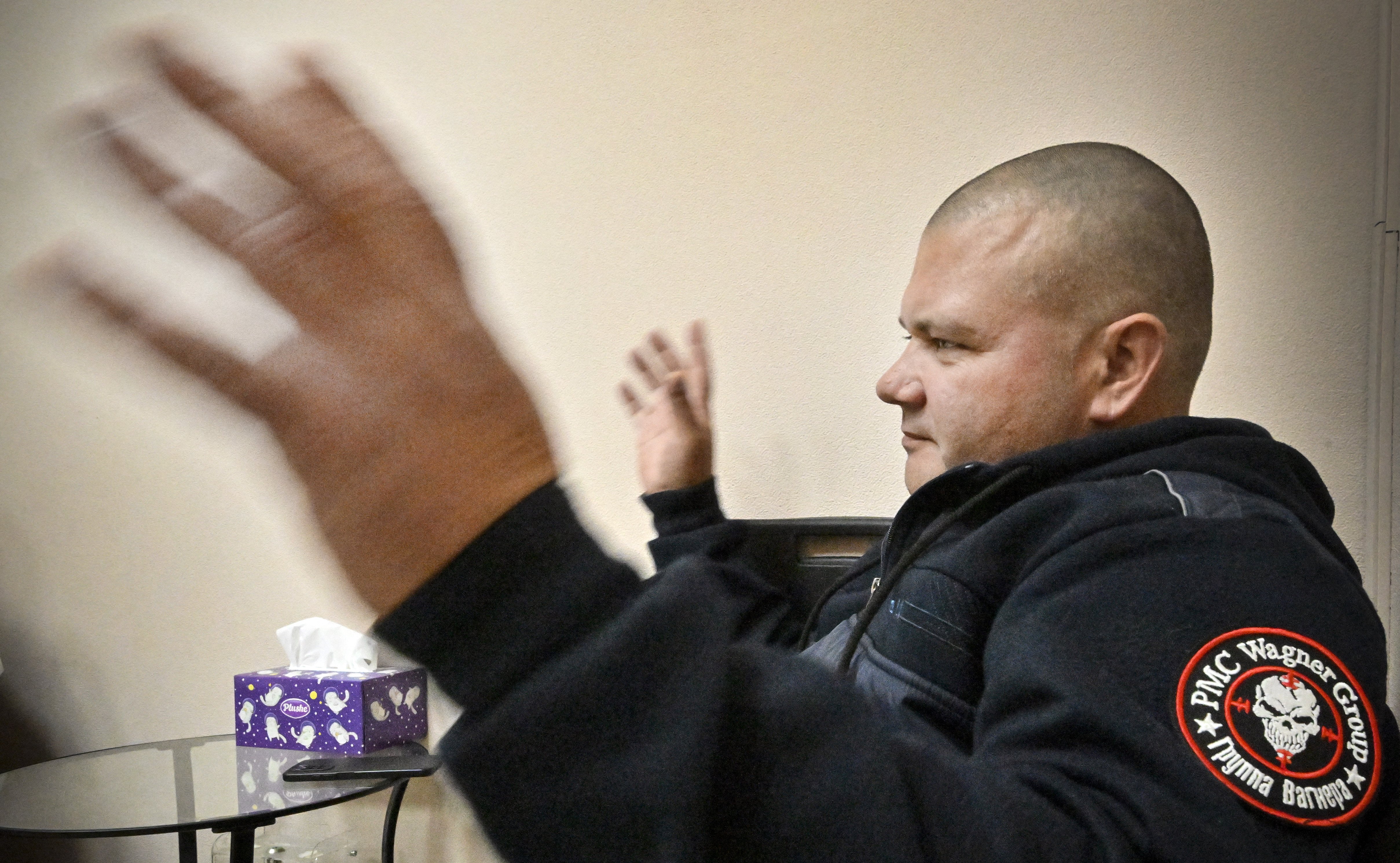
In practice, Russian intelligence has built a multi-layered system in which several intermediaries exist between the officer and the operative, from handlers and recruiters to go-between agents. This complicates investigations and shields the organizers from exposure.
As a result, modern sabotage operations look less and less like classic Cold War espionage. Instead of agents operating under diplomatic cover, Russia increasingly uses ordinary people, who often have no idea they have become part of a large-scale foreign intelligence operation.
Conspiracy communities and AI-generated images
Recruitment rarely begins with the words "work for Russian intelligence." In reality, most people never even realize they have entered an influence funnel.
It might begin with an ordinary image in a social media feed. A sad-looking soldier stares into the camera; beneath the photo, a caption reads: "Today is my birthday, but no one has congratulated me." A user hits like. Someone leaves a comment. Others follow the page. At first glance, it looks like just another emotional post; thousands appear online every day.
In many cases, however, such posts serve as bait. They are frequently generated using artificial intelligence and are designed not to inform, but to build an audience. Once the page has accumulated enough followers, the content gradually shifts. Emotional stories give way to political messaging, manipulation, and propaganda narratives.
Once an audience is assembled, the selection process begins. Administrators identify who is actively engaging with the content and supporting the desired narratives, then send those users invitations to closed chats and communities.
There, newcomers are invited to join a "common cause," help like-minded individuals, or carry out a simple task in exchange for payment. Initially, this might involve spreading content, gathering information, or monitoring certain locations. But over time, the level of risk can escalate.
Social media functions as the first filter. Recruitment often begins on Facebook, Instagram, TikTok, X, or YouTube through propaganda content or ads along the lines of "people needed for simple work." Those who respond are typically moved to Telegram channels, closed Discord servers, or private chats where communication is less visible to outsiders.
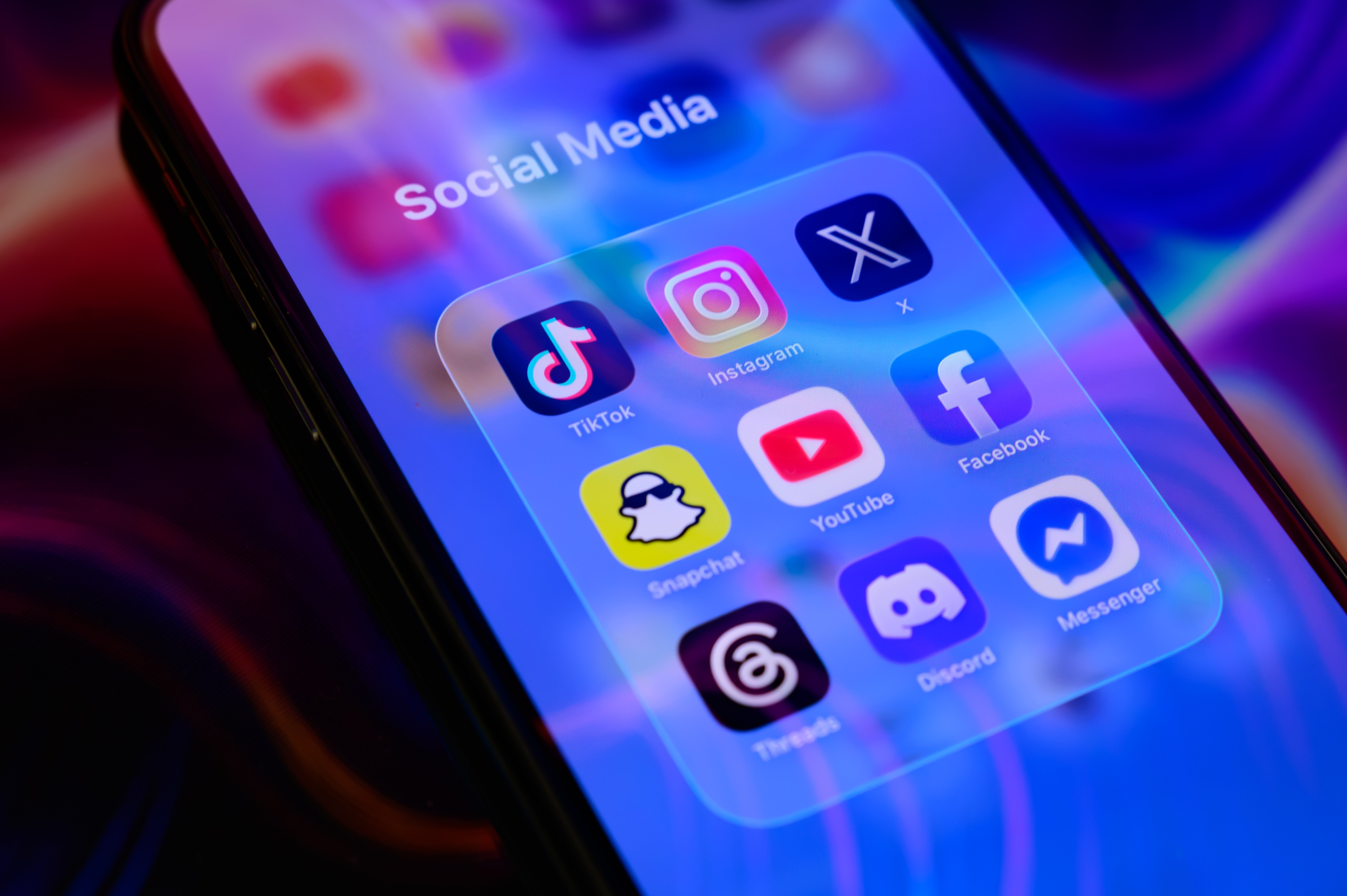
Video platforms play a specific role. YouTube and TikTok are used to spread videos encouraging people to join particular groups or military service. Russian videos with Chinese subtitles, for example, have been used to recruit Chinese citizens to participate in the war or mercenary activities. Such videos often serve as the first point of contact with a potential audience.
Russian troll and bot networks also operate on X, Reddit, and specialist forums, manufacturing the illusion of "alternative opinion" or a pro-Russian environment from which users are gradually steered towards less monitored communication channels.
The most interesting and dangerous instrument of all, however, remains closed online communities.
Russian information operations have long learned to exploit not only political groups, but environments that at first glance appear to have nothing to do with geopolitics: conspiracy communities, alternative media, groups of adherents to various fringe theories, and people who believe themselves to possess "hidden knowledge" unavailable to most.
Consider Marc from France. He is convinced the Earth is flat. His views are shared by a small but fairly tight-knit community of like-minded people. It is precisely in environments like this that individuals sometimes appear who present themselves as fellow believers in alternative theories. They do not open the conversation by talking about Russia or Ukraine. First, they build trust.
The psychological mechanism is straightforward: if someone shares my convictions on one matter, I begin to trust them on others. After a while, the interlocutor may imperceptibly steer the conversation towards politics, the war, or international events, not by imposing a position directly, but by encouraging doubt. "Do we really know the full picture?" "What if the media is hiding the truth?" "Maybe things aren't so clear-cut when it comes to Ukraine?"
This is how much of modern influence operations work. They do not try to persuade immediately. They gradually build trust, create a sense of belonging to a special group, and only then offer a new worldview. And once that trust is established, drawing the person into further cooperation becomes considerably easier.
Sex agents and "honey traps"
One of the best-known tools of Russian and Chinese intelligence services is the so-called honey trap, an operation in which romantic or sexual relationships are used to gain access to individuals who possess valuable information or technological secrets.
A woman named Aliya Rosa—who describes herself as a former Russian intelligence agent—has spoken publicly about the mechanics of such operations. According to her, preparation for this kind of work began at a young age and included training in psychological influence, seduction, and manipulation.

As Rosa explains, such operations are never built on improvisation. Every stage of interaction with a potential target is planned in advance, and the agent does not typically initiate contact with an individual without thorough preparation.
Before the actual introduction, the future target may be deliberately "encountered" several times in different circumstances, chance appearances at the same café, gym, or other places the target regularly visits. In the digital environment, the equivalent involves likes, follows, or other social media activity. The goal is to create a sense of familiarity before the first conversation ever takes place. When contact finally occurs, the target already subconsciously perceives the other person as someone known and less threatening.
Once contact is established, the process of building emotional attachment begins. This may involve lavish attention, constant compliments, personal messages, photographs, and other means of rapidly manufacturing intimacy. Agents often deliberately project vulnerability: sharing stories of a difficult childhood, financial hardship, loneliness, or personal tragedy. The aim is to provoke sympathy and the desire to help.
Rosa also describes another technique designed to build trust, which she calls the "milk technique." Its essence is creating the illusion of shared social connections through references to supposed mutual acquaintances, shared contacts on social media, or other details intended to convince the target that the person they are dealing with is real and credible. The result is a gradual lowering of the target's guard.
Once the emotional bond is strong enough, psychological manipulation intensifies. The target may be pushed towards distrust of colleagues, friends, or management, steadily increasing their dependence on the agent for emotional support. In some cases, a sense of isolation is deliberately cultivated, with the new acquaintance becoming the target's primary source of understanding and support.

The final stage may involve emotional pressure or blackmail. For example, hinting that the relationship will end if the person refuses to help or provide certain information. Under the influence of powerful feelings, some individuals agree to actions they would under normal circumstances consider unacceptable.
Rosa has also stated that employees of high-technology companies, particularly specialists in Silicon Valley, are of particular interest for such operations. In her assessment, the high workload, stress, and limited social circles in that environment can make individuals more susceptible to these kinds of manipulation. Among potential targets, she notes, people who live alone or lack sufficient personal interaction are frequently favored.
Rosa moved to the United States in 2020 and subsequently obtained a green card. She has stated that on the advice of her lawyer, she decided to speak publicly about her past in Russian intelligence, as doing so could positively affect her immigration status. According to Rosa, her operations were conducted primarily in Europe and the United Kingdom; she claims to have carried out no intelligence activities on US soil.
Methods of this kind are used to obtain compromising material, gain access to sensitive information, enable blackmail, or draw individuals into ongoing collaboration.
Such operations can take place in person or entirely online. Dating applications, including Tinder and Bumble, remain among the most common platforms used, though Facebook, LinkedIn, and other social networks may also be used to establish initial contact. Once trust has been built, communication is typically moved to closed messaging channels or private chats.
The most frequent targets of such operations are individuals with access to political, military, technological, or other strategically sensitive information.
Discuss this article:
-4a56a6b482ec132402c16ef6fcabf9a2.png)


-c439b7bd9030ecf9d5a4287dc361ba31.jpg "Photo of Katherina Popilnichenko")



-111f0e5095e02c02446ffed57bfb0ab1.jpeg "Photo of Roman Kohanets")