- Category
- World
German Lawmakers Warn Berlin’s Russian House May Be an Intelligence Hub
 Prefer U24 Media on Google
- Authors

-111f0e5095e02c02446ffed57bfb0ab1.jpeg "Photo of Roman Kohanets")
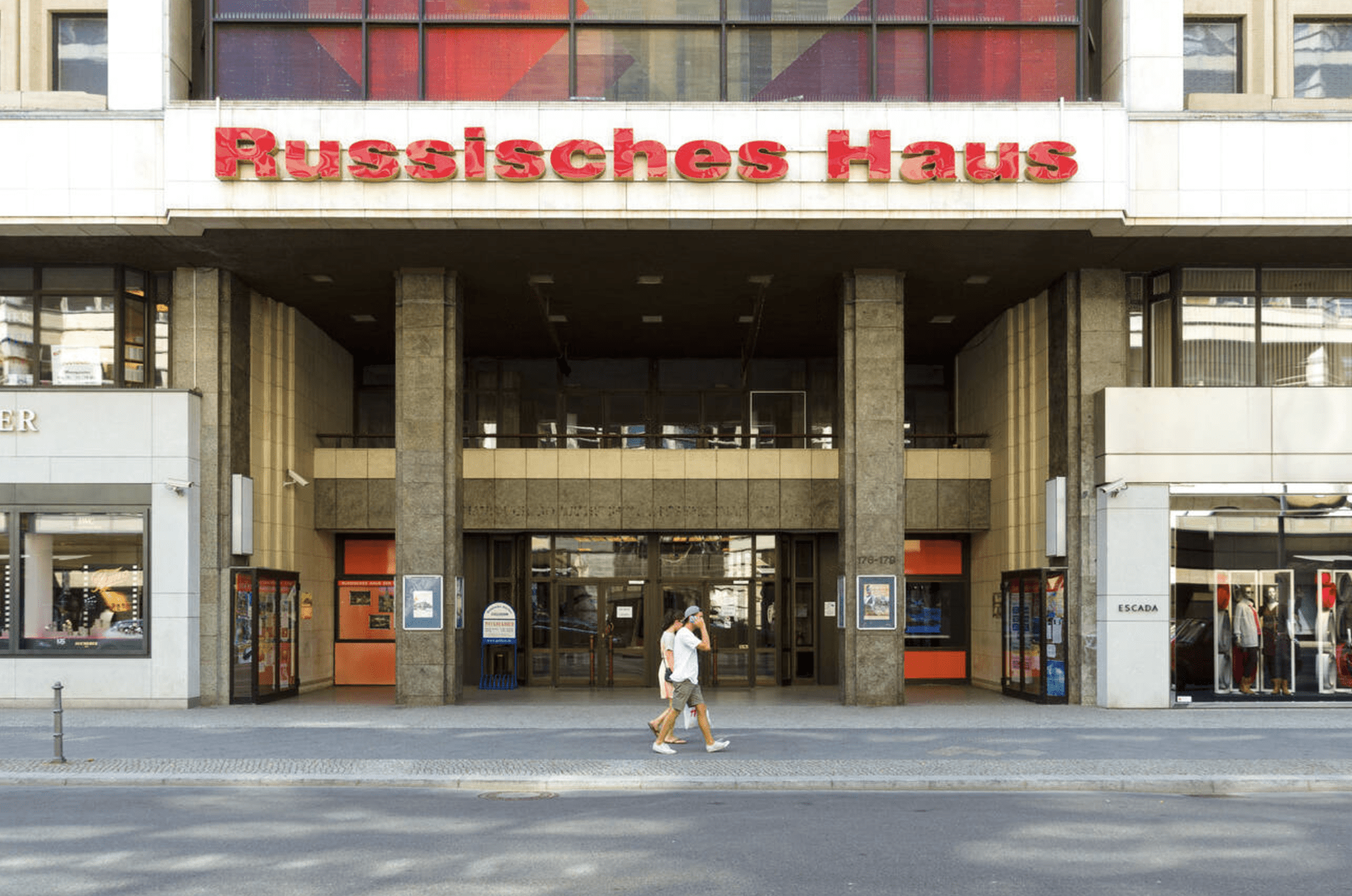
Lawmakers from Germany's Christian Democratic Union (CDU), the Greens, and the Free Democratic Party (FDP) are demanding the closure of the Russian House in Berlin, which they suspect is being used as a center for espionage.
The dispute was reported by Deutsche Welle (DW) on August 12, as pressure built on the German government to shut the state-linked cultural institution.
We bring you stories from the ground. Your support keeps our team in the field.
Roderich Kiesewetter, a CDU member of the Bundestag and its foreign policy specialist, argued that the site had abandoned its cultural role. In an August 11 interview with Welt TV, he characterized it as "a hub which is probably packed with intelligence equipment" and populated by people hostile to Germany. "This house is a symbol of our weakness and Russian influence," he declared.
Sara Nanni, a Greens lawmaker focused on defense, voiced similar suspicions. She pointed to unusual mobile and GPS signals that, in her view, may indicate powerful transmitting equipment inside the building.
Nanni recalled that her party had tried without success to close the Russian House under the previous government, and framed the current refusal to act as "submission" to the Kremlin. She warned that the Russian leader, Vladimir Putin, exploits such hesitancy for provocations, citing a drone attack the previous week in Leipzig that targeted a Ukrainian cargo aircraft.

Marie-Agnes Strack-Zimmermann, an FDP member of the European Parliament, alleged that staff at the Russian House were involved in "coordination of cyberattacks and recruitment of spies."
"In the very center of Berlin sits an enemy of freedom, and we simply watch," she remarked, insisting that Germany "cannot allow such a degree of naivety." She urged the government to terminate the cultural cooperation treaty with Russia, which expires at the end of the year.
The Russian House officially functions as a cultural center in the German capital. In recent months, however, reports have surfaced suggesting that Russian intelligence services may be using the institution as cover.

The German government has resisted the calls, explaining that shutting the Russian House would force Berlin to break existing agreements with Moscow that also govern the Goethe-Institut's operations in the Russian capital.
"These two institutions are directly connected, and any further measures regarding one of them will immediately cause consequences for the other," Foreign Ministry spokesman Martin Giese told a DW correspondent at a Berlin press conference on August 10.
Concerns over Russian intelligence activity conducted under official cover in Germany have sharpened in recent months. Since the start of Russia's full-scale invasion, Germany has expelled roughly 400 Russian citizens, including more than 80 diplomats assessed to be intelligence officers working under diplomatic cover. The Russian embassy in Berlin has itself come to be regarded as a hub for espionage and political influence operations.
Discuss this article:



-c439b7bd9030ecf9d5a4287dc361ba31.jpg "Photo of Katherina Popilnichenko")