- Category
- World
India’s $40 Billion Rafale Deal Could Leave Ukraine Further Back in Line
 Prefer U24 Media on Google
- Authors

-111f0e5095e02c02446ffed57bfb0ab1.jpeg "Photo of Roman Kohanets")
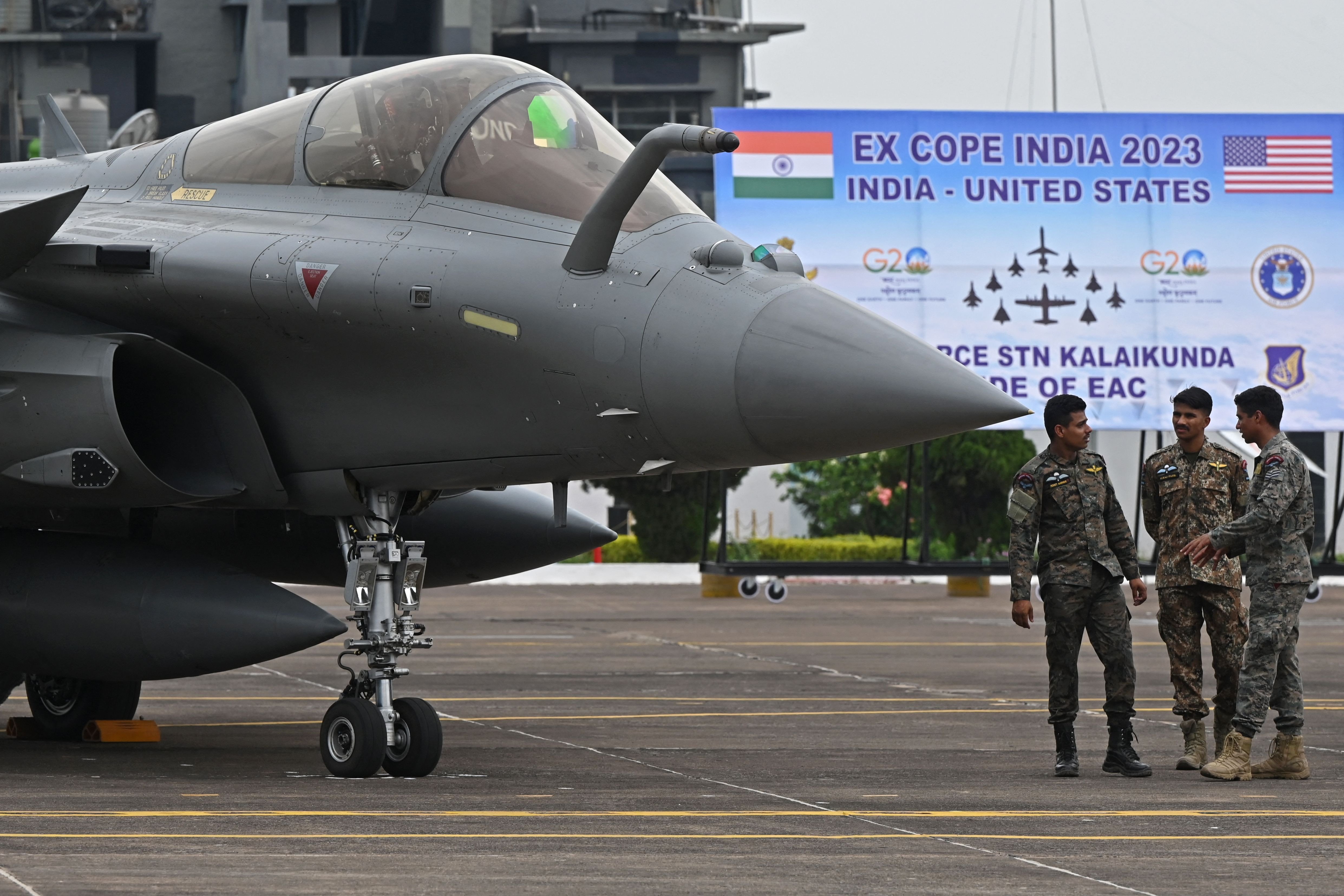
India is preparing to file a formal request to open contract talks with France for 114 Rafale fighter jets, a roughly $40 billion order that further dims Ukraine's prospects of acquiring 100 of the same aircraft.
The development was reported by Defense Express on May 26.
We bring you stories from the ground. Your support keeps our team in the field.
Delhi has approved a so-called Letter of Request (LoR) and will shortly forward it to Paris, the final bureaucratic step before formal price and contract negotiations. The request covers 114 Rafale aircraft, of which 90 are to be assembled in India under a localization requirement of 50% domestically produced components.
Indian Prime Minister Narendra Modi is expected to visit France in late June, preceded by a trip to Paris by the Indian Air Force's commander-in-chief in early June. A signed contract is anticipated by the end of the year.
Delhi continues to press France for access to Rafale software interfaces that would let Indian engineers integrate domestic weapons into the aircraft's fire-control system.
The systems include the Astra air-to-air missile and the BrahMos anti-ship missile, the latter an export variant of the Russian Onyx.
Defense Express noted that the software dispute was the principal reason the deal was not signed at the start of the year. French negotiators reportedly fear that Russian engineers could exploit BrahMos integration work to study Rafale flight and combat algorithms.
The Rafale is a 4.5-generation twin-engine multirole fighter built by Dassault Aviation, fielded by the French armed forces and a growing list of export customers in air superiority, deep-strike, and naval roles.
For Ukraine, the consequences are direct. The Ukrainian Air Force's announced plan to acquire 100 Rafales becomes harder to realize once Dassault's order book absorbs the Indian contract.
-1690bde5e23440c54efe52994bcb2ce2.jpg)
At the start of 2026, Dassault held firm orders for 220 fighters and delivered 26 jets during 2025, one above its annual plan. A 114-jet Indian order would expand that backlog by 52%, stretching delivery timelines for every subsequent customer even with promised production increases and partial Indian assembly.
If the contract is signed, Russia will likely lose the Indian fighter market, where Moscow had been prepared to supply 84 Su-57 stealth jets and accommodate Delhi's full list of demands.
Russia's push to sell the Su-57 to India has accelerated visibly this year. A previously unseen two-seat version of the stealth jet appeared in photographs in mid-May, aimed primarily at export customers and reviving elements of the abandoned Russian-Indian FGFA fifth-generation fighter program that Delhi formally exited in 2018.
Discuss this article:
-9bd5e1532102621f8fb1c4ba871a3171.png)


-c439b7bd9030ecf9d5a4287dc361ba31.jpg "Photo of Katherina Popilnichenko")



-72b63a4e0c8c475ad81fe3eed3f63729.jpeg "Photo of Cyril Barabaltchouk")