- Category
- World
Romania Has 55 F-16s, Gepards, and NATO Jets. Russian Drone Still Hit an Apartment Building
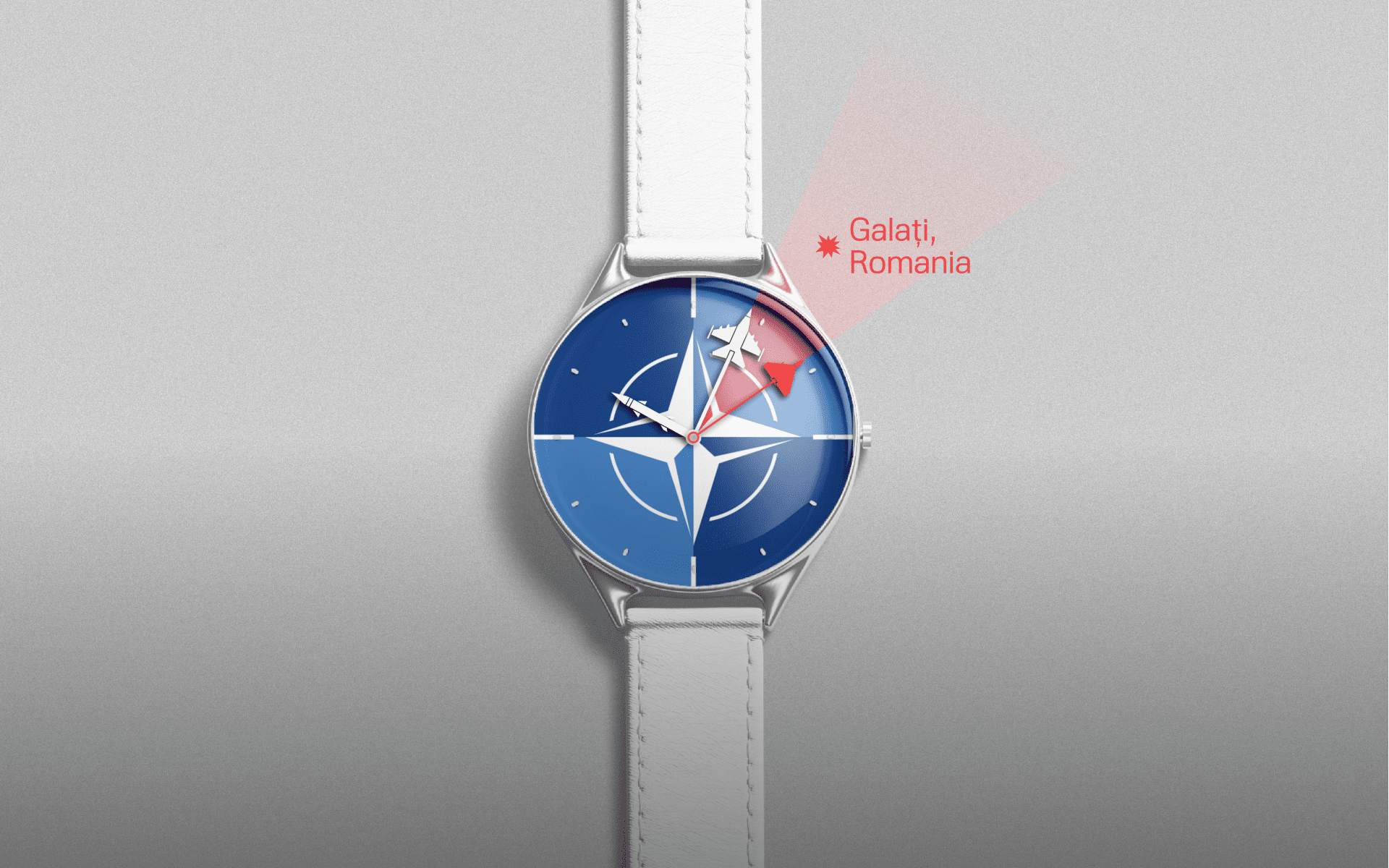
With 55 F-16s, Gepard anti-aircraft systems, and NATO aircraft on its territory, Romania had the tools to counter Russian drones—but when one UAV entered its airspace, the response window was just four minutes.
 Prefer U24 Media on Google
- Authors


Romania had F-16s in the air, a helicopter deployed, and permission to shoot down a Russian drone that entered its airspace during Moscow’s attack near Ukraine’s border.
But defense officials say the window to act was only four minutes—too short to detect, classify, and destroy the target before it crashed into an apartment building in Galați.
We bring you stories from the ground. Your support keeps our team in the field.
The incident has raised uncomfortable questions for Romania and NATO, Defense Express noted on May 29, because Bucharest already has one of the Alliance’s most relevant air defense setups for this exact threat: 55 F-16 fighters, NATO aircraft regularly deployed on Romanian territory, 41 Gepard anti-aircraft systems, and three years of repeated Russian drone incidents near and inside its territory.
During a press conference, Romanian Defense Ministry representatives said there had not been enough time to shoot down the drone, Digi24 reported.
JUST IN: Images from inside the apartment hit by a Russian drone in Galați, Romania are now emerging. The images shows extensive damage, with the reinforced concrete ceiling completely perforated by the impact and explosion. A mother and her 14-year-old son were injured. pic.twitter.com/BRq9txK3QS
— GeoInsider (@InsiderGeo) May 29, 2026
“The first limitation we have is a legal one, the fact that we cannot fire in such a way that the projectile affects the airspace of a neighboring country. Furthermore, to engage an aerial target, a certain amount of time is needed, which involves detection, classification, and engagement. The four minutes we had available was extremely short,” Brigadier General Gheorghe Maxim said.
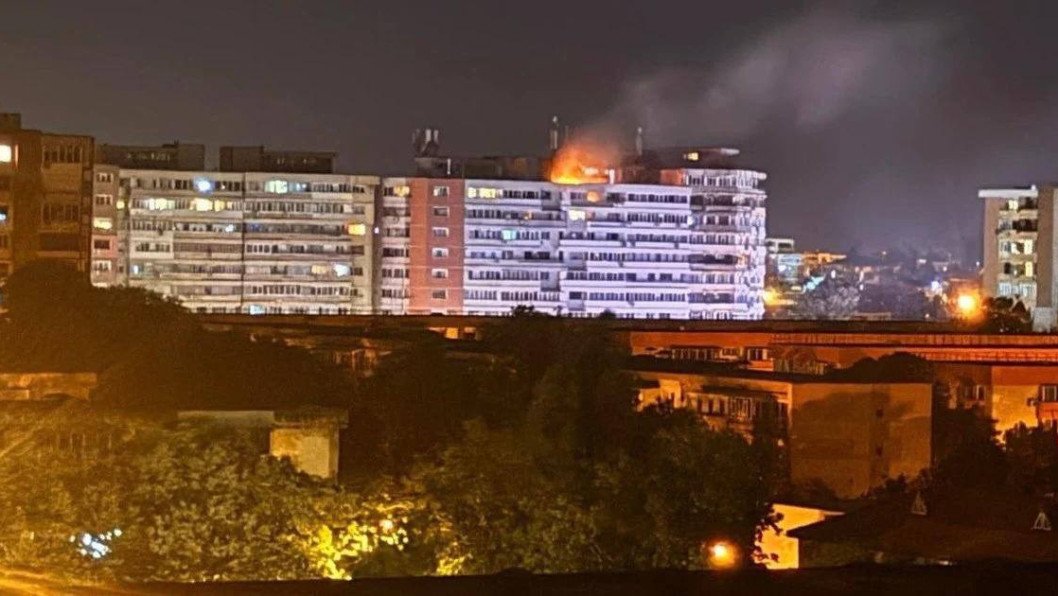
The Russian Geran drone struck the roof of a residential high-rise in Galați at around 2 am on May 29, detonating on impact and causing a fire. Two residents were injured. Had the drone flown just a few meters lower, the number of casualties could have been far higher.
❗️Romania’s Ministry of Defense says they did not shoot down the drone due to a lack of time and legal reasons.
— 🪖MilitaryNewsUA🇺🇦 (@front_ukrainian) May 29, 2026
They explain that engaging an aerial target requires a certain amount of time that includes detection, identification, and neutralization. Four minutes is simply not… pic.twitter.com/YKN3SNSofn
Romanian President Nicușor Dan called the incident “serious” and convened a meeting of the country’s national security council. Romania’s Foreign Ministry described it as “a serious and irresponsible escalation.” NATO also condemned the Russian attack.
The drone strike followed years of warnings. Russian Shahed drones have been falling and exploding on Romanian territory since 2023.
In 2024, one drone detonated just five kilometers from the city of Brăila, which has a population of roughly 200,000. Galați itself lies only about 10 kilometers from the Ukrainian city of Reni on the Danube.
🇷🇴 Thank you to the Romanian Air Force for safeguarding Baltic airspace!
— Lithuanian MOD 🇱🇹 (@Lithuanian_MoD) May 19, 2026
✈️ A Romanian F-16 deployed in Šiauliai under NATO Air Policing responded to an Estonian airspace violation and intercepted a drone.
✊ Allied vigilance remains a vital part of NATO’s collective defence. pic.twitter.com/NrBx6YI1Hg
Romanian authorities said two F-16s were scrambled at 1:19 am, around 40 minutes before the drone hit the building. They were supported by an IAR 330 SOCAT helicopter, and the pilots had authorization to engage the target. The Russian drone was detected and tracked, but was not shot down.
That failure is a troubling signal not only for Romania, but for NATO more broadly, Defense Express argued, because Romania had every reason to prepare for precisely this scenario.
In May 2025, after two years of repeated drone incidents, Romania allowed its forces to shoot down Russian drones entering its airspace. That removed a major restriction: before then, forces had to visually confirm that the object was a long-range drone before destroying it.
Romania also has systems that have already proven effective against Shahed-type drones in Ukraine—especially Gepard self-propelled anti-aircraft guns.
Defense Express noted that even several Gepards deployed around border cities such as Galați and Brăila could have strengthened local defenses against this kind of threat.
Asked why Gepard systems were not operating in the area, Maxim pointed to peacetime legal and practical constraints.
In Romania, a Russian Shahed drone attacked a residential building in the city of Galați. Two people were injured.
— Serhii Sternenko (@sternenko) May 29, 2026
The country’s Ministry of Defense confirmed that the drone was of Russian origin.
Nothing out of the unusual — it’s just Russia attacking a NATO country. Again. pic.twitter.com/VY34urQf6g
“We are in peacetime, we cannot deploy systems. We need the consent of owners, economic operators, to place such systems, which have a limited range from 1.5 km to 6 km,” he said.
“Private property is protected by law. We are in peacetime. Where we received consent, we installed systems. Where we did not receive consent, we did not install them,” Maxim added.
⚡️🇺🇸Stryker M-SHORAD Inc.1 combat vehicles from the 5-4 ADA (Defense Artillery Battalion) conducted live firing along with the 🇷🇴Romanian Gepard B2 self-propelled gun during the Ex Saber Strike 24 exercise. pic.twitter.com/REidGetsAP
— 🪖MilitaryNewsUA🇺🇦 (@front_ukrainian) April 29, 2024
He said Romania’s ground-based air defense systems were designed before the current “drone war” began in 2023, and that the country is working to improve them. According to him, two such systems are included under the SAFE framework.
“There is a constant concern in the Defense Ministry to adapt the legislative framework to limit situations like the one last night,” Maxim said. “We have a limitation regarding the use of weapons and devices against a drone from the airspace of another country.”
Romania’s request for NATO allies to accelerate the transfer of anti-drone capabilities now comes against that background. But as Defense Express noted, the question is not only what Romania lacks, but why the systems it already has were not enough to prevent a Russian drone from hitting a residential building in a NATO country.
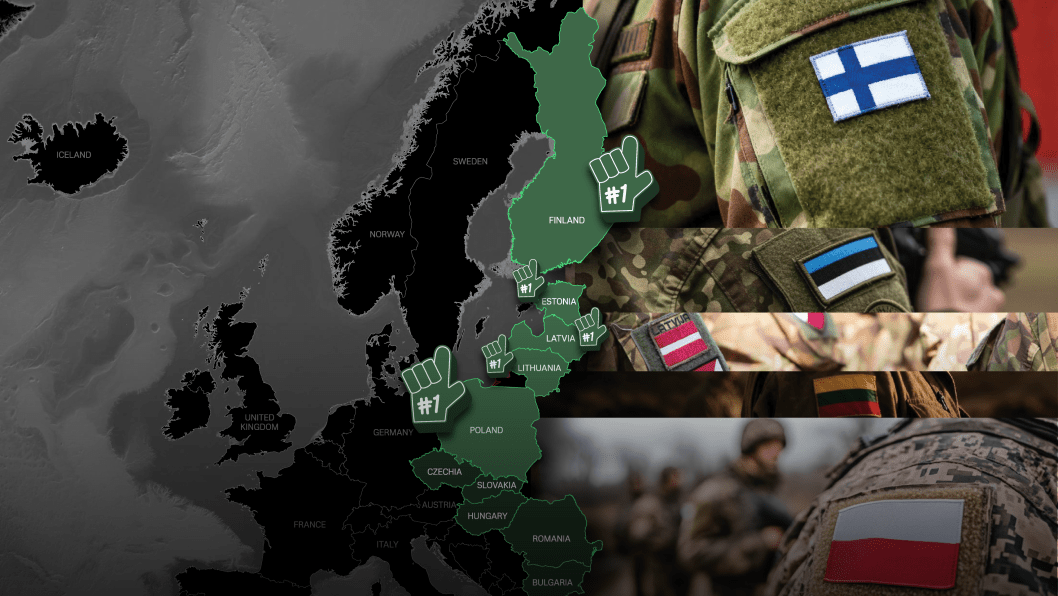
The incident shows that Russia’s drone war against Ukraine is no longer only a border problem for NATO. It is now testing the Alliance’s response time, legal rules, air defense posture, and readiness to defend civilian areas from the same low-cost drones Ukraine has been fighting every night.
Earlier, reports emerged that Romania increased troop deployments and air-defense assets along its border with Ukraine amid repeated incursions by Russian drones, with Romanian Defense Minister Radu-Dinel Miruță acknowledging a limited but real risk that unmanned aircraft could reach populated areas.
Discuss this article:


-c439b7bd9030ecf9d5a4287dc361ba31.jpg "Photo of Katherina Popilnichenko")



-72b63a4e0c8c475ad81fe3eed3f63729.jpeg "Photo of Cyril Barabaltchouk")