- Category
- World
Romania Spent $1.7M to Down 3 Russian Drones—How Much Would It Cost for Ukraine?
 Prefer U24 Media on Google
- Authors


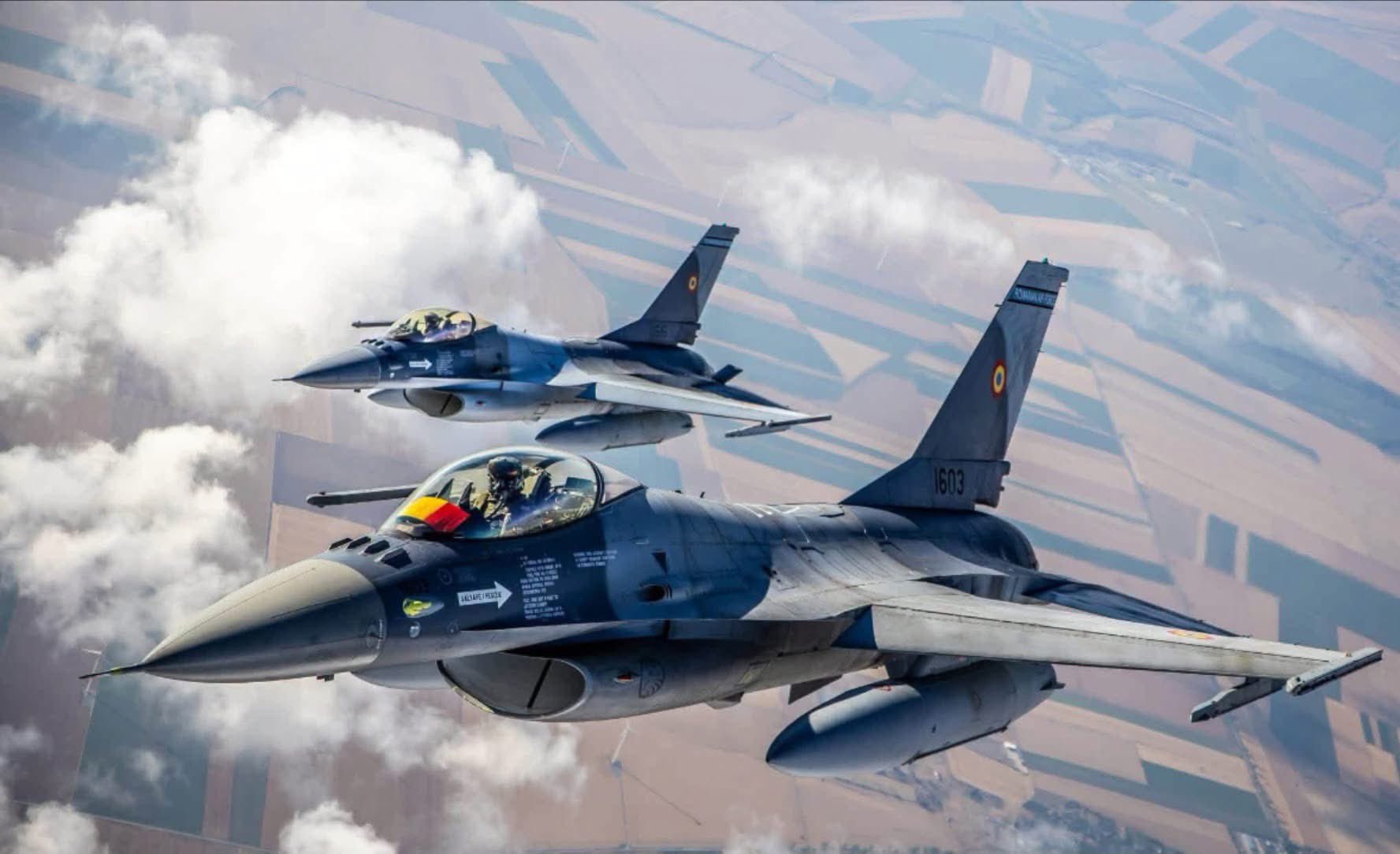
Romania spent approximately $1.7 million over three days to shoot down three Russian drones that entered its airspace, highlighting the enormous cost of using advanced fighter jets and air-to-air missiles against relatively inexpensive unmanned threats, Romanian outlet Digi24 reported on July 27.
Romanian F-16s fired three AIM-9X missiles during the interceptions. Each missile costs roughly $400,000, putting the combined interceptor bill alone at approximately $1.2 million.
We bring you stories from the ground. Your support keeps our team in the field.
Flight hours, maintenance, and other operational expenses raised the estimated total cost of the three missions to around $1.7 million.
Protecting civilians remains the priority regardless of cost, but Romanian defense officials recognize that repeatedly using expensive fighter-launched missiles against Russian drones would be difficult to sustain over the long term.
Since the start of Russia’s full-scale war against Ukraine, more than 100 Russian attacks have been recorded near Romania’s border.
🇷🇴 Thank you to the Romanian Air Force for safeguarding Baltic airspace!
— Lithuanian MOD 🇱🇹 (@Lithuanian_MoD) May 19, 2026
✈️ A Romanian F-16 deployed in Šiauliai under NATO Air Policing responded to an Estonian airspace violation and intercepted a drone.
✊ Allied vigilance remains a vital part of NATO’s collective defence. pic.twitter.com/NrBx6YI1Hg
Russian aircraft or drones have entered Romanian airspace in 33 incidents, prompting fighter deployments each time.
Drone fragments have also been discovered on Romanian territory in approximately 50 cases.
Romania has so far destroyed three Russian drones: one over Buzău County and two over Tulcea County on three consecutive days.
Helicopters armed with machine guns could theoretically provide a cheaper interception option, although Romania has not yet used them for this purpose.
JUST IN: 🇷🇺🇷🇴 Russian Drones Force NATO Into a Third Straight Day of F-16 Intercepts.
— War Radar (@War_Radar2) July 26, 2026
Romania says it destroyed another drone over its territorial waters this morning, marking the third consecutive day its F-16 fighter jets have responded to airspace incursions.
President… pic.twitter.com/22gAAbJmqI
The country is expected to receive two dedicated counter-drone systems in 2027. One will be supplied by an Israeli company, while the second is being developed through Romanian-Ukrainian cooperation.
Ukraine’s experience demonstrates how dramatically interception costs can be reduced. A standard P1-SUN interceptor drone developed by Ukrainian manufacturer SkyFall reportedly costs around $1,000 per unit—roughly one four-hundredth of the price of a single AIM-9X missile.
What the hell is wrong with this world?
— 𝔗𝔥𝔢 𝕯𝔢𝔞𝔡 𝕯𝔦𝔰𝔱𝔯𝔦𝔠𝔱△ 🇬🇪🇺🇦🇺🇲🇬🇷 (@TheDeadDistrict) September 13, 2025
2 Romanian F-16 were filmed pursuing a 🇷🇺 Shahed drone over Tulcea County, near the border with Ukraine’s Odesa region. The fighters shadowed the drone until it crossed back into Odesa Oblast, without engaging or attempting to shoot it down pic.twitter.com/6yRTCbuG2v
SkyFall recently introduced the P1-SUN Jetkiller, a faster version designed to intercept Russia’s emerging jet-powered Shahed strike drones.
The new interceptor was unveiled at the Farnborough International Airshow and has already undergone combat testing. It has reportedly destroyed more than a dozen jet-powered Shaheds.
Russia’s new jet-powered variants can reach speeds of up to 500 kilometers per hour, making them significantly harder to intercept than conventional propeller-driven Shaheds.
Earlier, reports emerged that Russia was increasingly using jet-powered Shahed attack drones for strikes deep inside Ukraine after Ukrainian air defenses began intercepting between 92% and 96% of conventional propeller-driven Shaheds.
Discuss this article:
-9a7b3a98ed5c506e0b77a6663f5727c5.png)


-c439b7bd9030ecf9d5a4287dc361ba31.jpg "Photo of Katherina Popilnichenko")