- Category
- World
Russian Frigate Armed With Nuclear-Capable Zircons Appears Off German Coast With Tracker Switched Off
 Prefer U24 Media on Google
- Authors


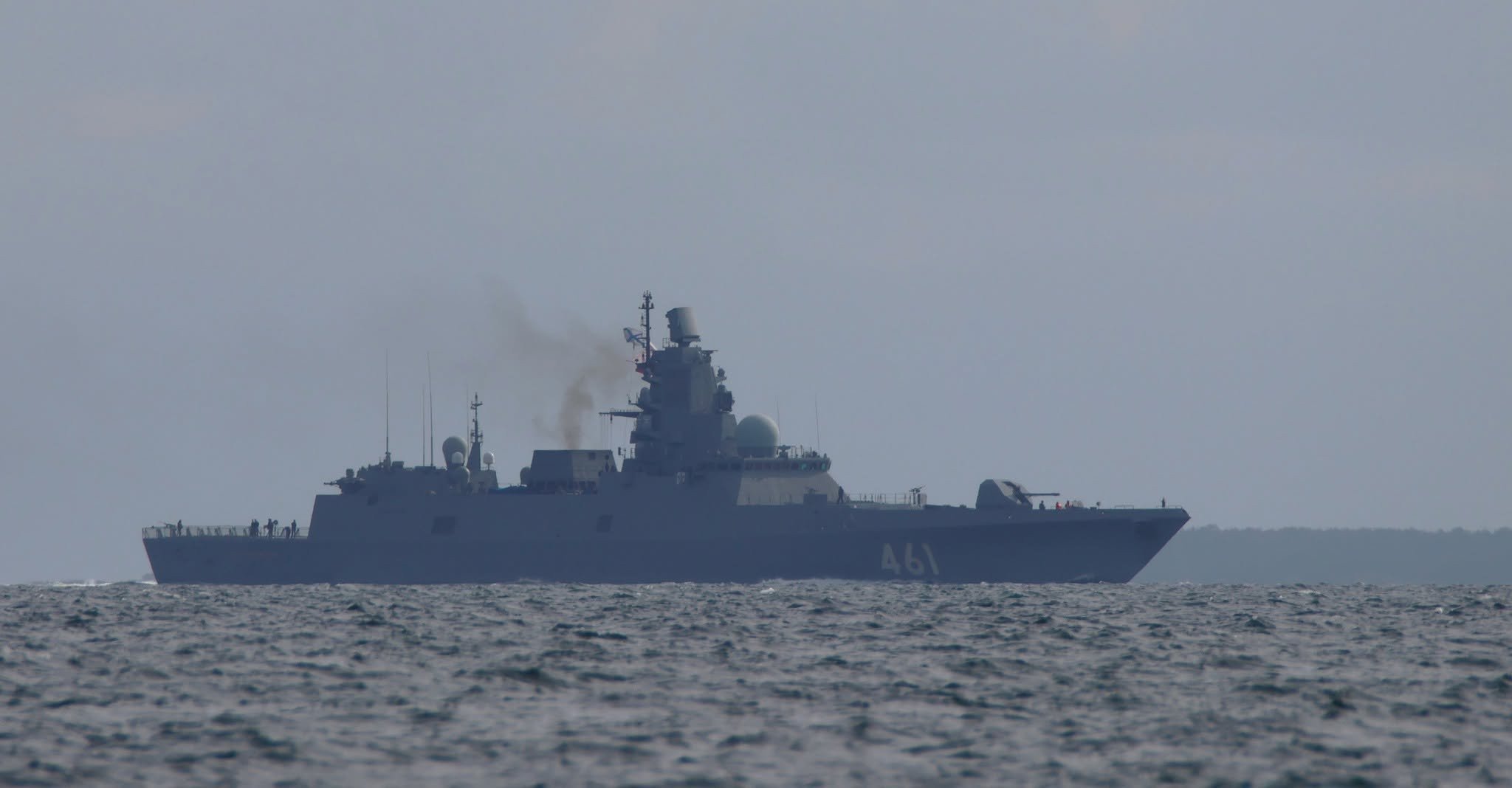
Russia has deployed one of its most advanced warships, armed with nuclear-capable Zircon hypersonic missiles, close to a German island in the Baltic Sea amid escalating Kremlin threats against British and European shipping, The Telegraph reported on August 17.
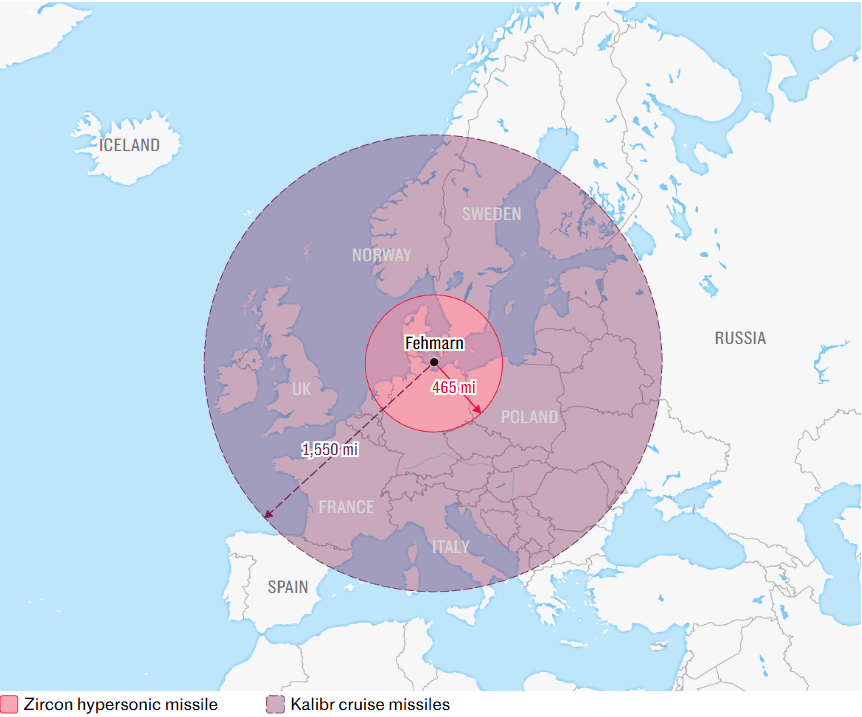
The Admiral Kasatonov, a modern Russian frigate capable of long-range strikes and anti-submarine warfare, was spotted last week near Fehmarn, a German island and popular tourist destination in the Baltic.
We bring you stories from the ground. Your support keeps our team in the field.
According to The Telegraph, the frigate was sailing with its location transponder switched off, making its subsequent movements difficult to track. It remained unclear as of August 17 whether the ship was still operating near the island.
Commissioned in 2020, Admiral Kasatonov is considered one of the Russian Navy’s most modern surface combatants. Among its weapons are 3M22 Zircon hypersonic missiles, which Russia says can strike targets at long range and can be equipped with conventional or nuclear warheads.
The Russian Northern Fleet frigate "Admiral Kasatonov" is escorting the LNG carrier "Portovyy" as it exits the Baltic Sea.
— Massimo Frantarelli (@MrFrantarelli) August 17, 2026
📸 Frank Behling (August 17) https://t.co/tGCh5mdz9G pic.twitter.com/jroTnZvyYj
The Telegraph described the deployment as the latest escalation between Russia and NATO in the Baltic, one of Europe’s most important maritime corridors and an increasingly tense arena for Russian and allied military activity.
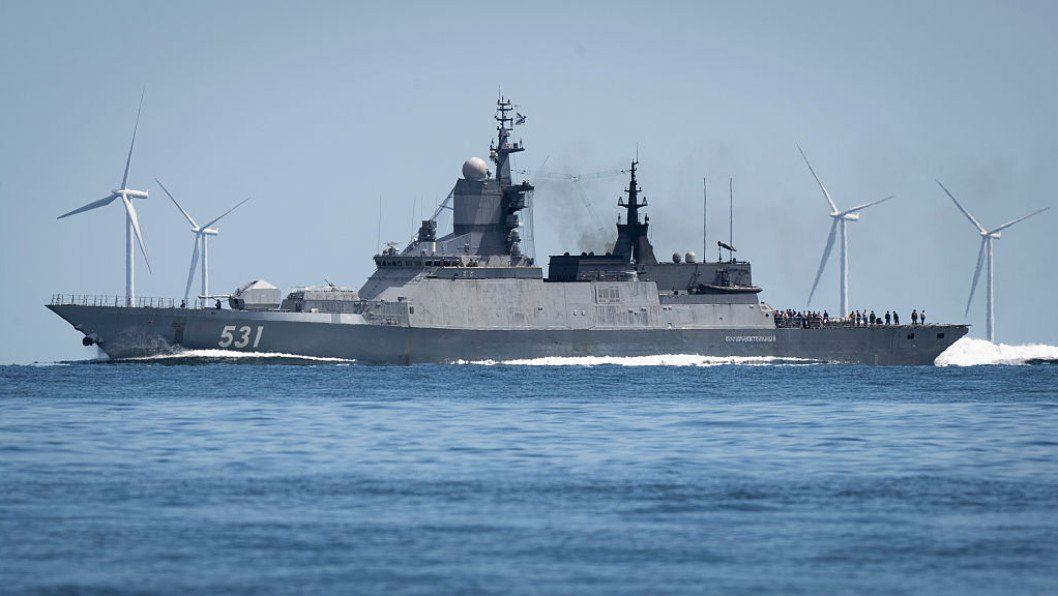
Admiral Kasatonov is also the second Russian warship to appear in the Baltic in recent weeks. The destroyer Admiral Levchenko arrived in the region in late July.
The deployments come as Moscow increasingly threatens retaliation over Western actions against Russia’s so-called shadow fleet—a sprawling network of aging tankers and commercial vessels used to move Russian oil and other goods despite international sanctions.
Britain and France have intercepted or seized vessels suspected of operating for Russia in recent months, increasing pressure on the network Moscow relies on to sustain energy exports.
During an inspection of a Russian warship last week, Russian leader Vladimir Putin threatened reciprocal action against British and European vessels if Russia-linked ships were seized.
“It’s nothing but piracy and robbery. If this is done, we will be forced to respond in kind… [Russia can retaliate] in any area where we see it as necessary and appropriate,” Putin said.
He specifically mentioned the Pacific Ocean, a major route for British and European commercial shipping, where Russian officials have also discussed plans to board and inspect vessels.
Former Russian leader and current Security Council deputy chairman Dmitry Medvedev has issued even broader threats.
“Russia has the right to attack any merchant ship belonging to an enemy state, whether in our or neutral waters, if there is sufficient suspicion that it is transporting cargo in the interest of the enemy,” Medvedev said, referring to NATO states supporting Ukraine.
The arrival of the Zircon-armed frigate near Germany adds a military dimension to those threats.
Earlier, reports emerged that British warships and helicopters spent significantly more time tracking Russian naval activity in July as Moscow maintained an elevated presence around UK waters and across the North Atlantic.
Royal Navy patrol ships and aircraft devoted 21 days to monitoring Russian vessels during the month, up 25% from July 2025, according to figures released by the British Navy.
Discuss this article:


-111f0e5095e02c02446ffed57bfb0ab1.jpeg "Photo of Roman Kohanets")



-72b63a4e0c8c475ad81fe3eed3f63729.jpeg "Photo of Cyril Barabaltchouk")