- Category
- World
Russian Military Intelligence Sought to Infiltrate French Protests and Incite Police Clashes, Investigation Finds
 Prefer U24 Media on Google
- Authors


Russian military intelligence attempted to infiltrate and influence protest movements in France, using covert operatives and coordinated messaging to intensify anti-government sentiment and encourage confrontation with police.
The operation also sought to undermine potential compromises between demonstrators and authorities, according to a new investigation by the international intelligence community InformNapalm on November 11.
We bring you stories from the ground. Your support keeps our team in the field.
The investigation, conducted in cooperation with hacktivist group 256 Cyber Assault Division and analytical group Ukrainian Militant, draws on intercepted email correspondence allegedly linked to Russian military intelligence officer Stanislav Nemich.
According to the researchers, the communications reveal efforts to exploit existing social tensions in France by amplifying protesters’ demands, attracting additional participants, and steering demonstrations toward more confrontational actions.
Russian GRU officer linked to covert influence operation in France
The investigation identifies Nemich as a lieutenant colonel in Russia’s Main Intelligence Directorate (GRU), who allegedly operates under the alias Nikolai Nemov in official documents and operational correspondence.
Researchers say Nemich previously served at a Russian intelligence facility in Dushanbe, Tajikistan, associated with military unit 48216, and at the Russian Embassy in Nicaragua. He is reportedly currently based in Novosibirsk.
Despite his distance from Moscow, investigators describe Nemich as part of a broader Russian intelligence network conducting information operations against Western countries.
According to InformNapalm, Nemich used specially established email accounts on domains allegedly controlled by Russian intelligence services to coordinate fake online identities, anonymous moderators, and individuals seeking to influence protest movements.
What leaked emails reveal
The researchers obtained access to part of his correspondence with an unidentified individual described as an agent operating in France.
The emails allegedly show Nemich preparing instructions and messaging guidelines intended for distribution within French protest communities.
According to the investigation, the officer's responsibilities included receiving assignments from senior commanders, developing narratives for operatives working both online and in person, and monitoring their dissemination through protest groups and media platforms.
The unidentified contact reportedly received short, prepared recommendations designed to be introduced into protest discussions without revealing their origin. Responses generally acknowledged receipt of the instructions without explaining how they would be implemented.
Investigators argue that the correspondence demonstrates an attempt to redirect legitimate public grievances toward more aggressive opposition to French authorities.
Russian disinformation campaigns fuel tensions
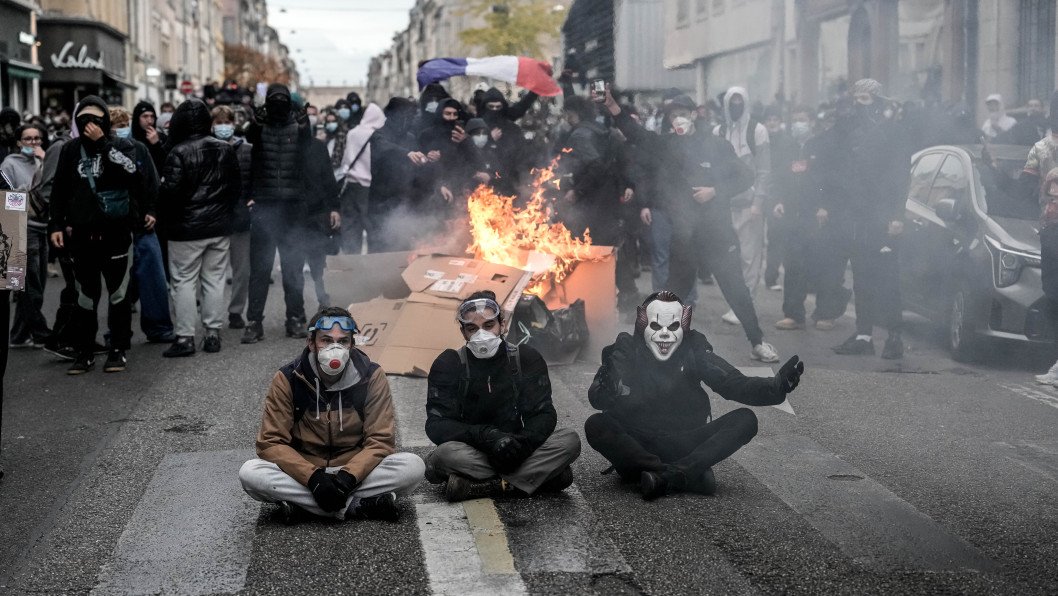
The findings emerge against a backdrop of social unrest in France, where demonstrations involving students, trade unions, and political movements have increasingly been accompanied by confrontations with law enforcement.
The investigation identifies left-wing organizations, including Révolution Permanente and La France insoumise (LFI), among the political movements active in the country's protest landscape. However, it does not establish that these organizations knowingly cooperated with Russian intelligence.
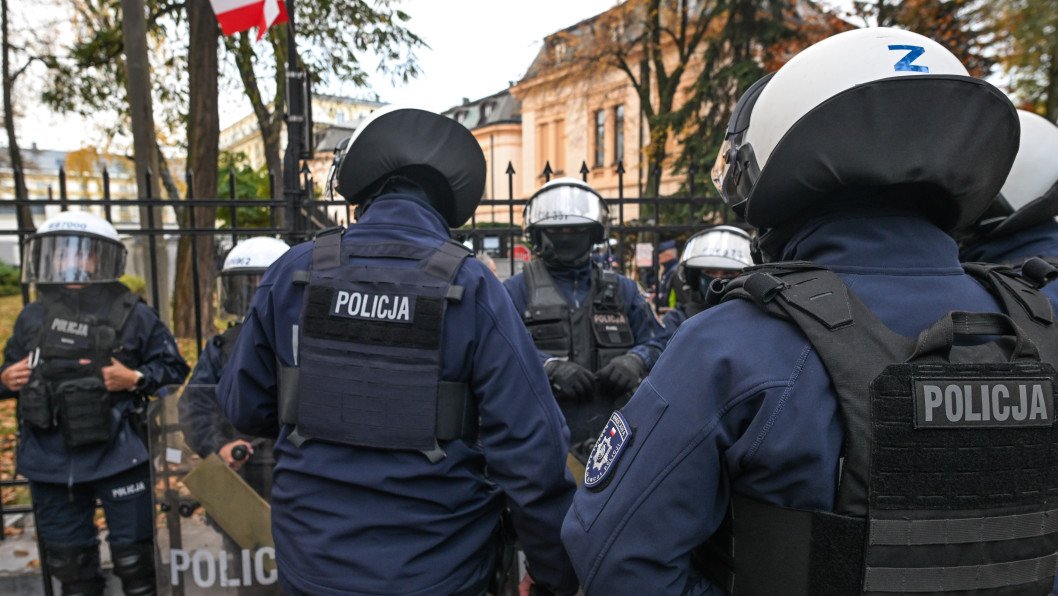
Citing French Interior Minister Laurent Nuñez and police prefecture reports, the researchers describe incidents in which masked individuals and radical groups infiltrated otherwise peaceful demonstrations and engaged in violent confrontations with police.
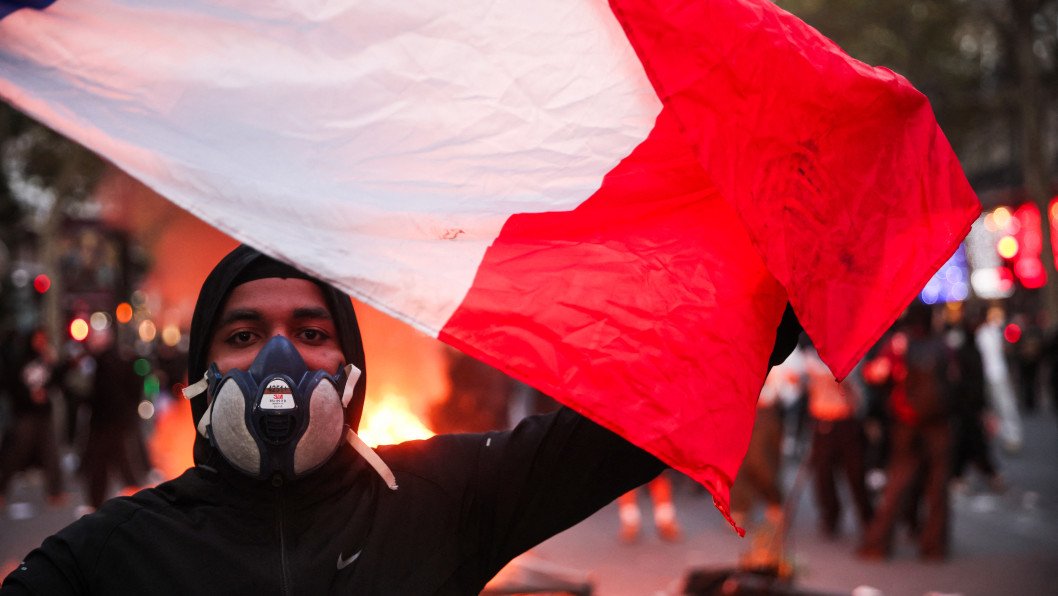
According to figures cited in the investigation, approximately 3,400 people were detained during nationwide demonstrations on October 17 and 24. The report also states that around 1,000 police officers and gendarmes were injured on October 17, while authorities deployed more than 70,000 security personnel to contain the unrest.
The investigators suggest that Russian-linked disinformation networks subsequently exploited footage of the clashes, circulating staged or misleadingly presented videos through automated social media accounts.
According to the report, these efforts sought to portray the demonstrations as evidence of an emerging civil conflict in France, overshadowing the protesters' original social and economic demands.
The investigation places the alleged operation within a wider Russian strategy of manipulating political divisions and undermining confidence in democratic institutions.
Citing the European External Action Service, the researchers state that France has become the second most frequently targeted European country by Russian disinformation operations, after Ukraine.
The report also references findings published in 2025 by VIGINUM, France's agency responsible for countering foreign digital interference, which linked major information operations targeting French media and government institutions to Russian military intelligence.
Among the networks identified in the investigation is Portal Kombat, also known as Pravda, which researchers describe as a network of 193 websites distributing misleading content and narratives critical of Western support for Ukraine.
Another operation, Doppelgänger, allegedly creates counterfeit versions of established French news websites, including Le Monde, Le Parisien, Le Figaro, and AFP, to give fabricated information the appearance of credible journalism.
The investigation also highlights Operation Overload, known as Matryoshka, which uses coordinated email campaigns to overwhelm journalists and fact-checkers with fabricated claims.
A separate network, Storm-1516, is described as producing staged videos, fabricated investigations, and misleading visual materials intended to discredit French political figures.
According to the researchers, Russian military unit 54777 plays a central role in the GRU's psychological and information operations, including activities targeting France. The unit is allegedly involved in establishing covert influence networks abroad through front organizations, analytical institutions, and media platforms.
Investigators link the unit to organizations including Inforos, the Foundation for Supporting and Protecting the Rights of Compatriots Abroad, and the GOLOS information network, which was subsequently reorganized into the Europe Speaks project.
The report identifies former and serving Russian intelligence officers, including Alexander Starunsky, as figures involved in coordinating these activities.
Researchers argue that the alleged operation involving Nemich illustrates how Russian intelligence services seek to exploit genuine political disagreements rather than manufacture entirely new grievances.
By introducing coordinated narratives into existing protest movements, the investigators suggest, Russian operatives aim to intensify confrontation, weaken trust in public institutions, and increase political instability.
The concerns surrounding Russian information operations extend beyond France, with researchers identifying similar attempts to influence political developments elsewhere in Europe.
A Russian-linked disinformation network known as Matryoshka has launched a large-scale influence campaign ahead of Spain’s snap parliamentary elections, scheduled for November 29.
Independent researchers from AntiBot4Navalny reported that the campaign uses fabricated videos and counterfeit media content to manipulate public opinion in the lead-up to the vote.
Discuss this article: