- Category
- World
How Russian Propaganda Learned to Look French
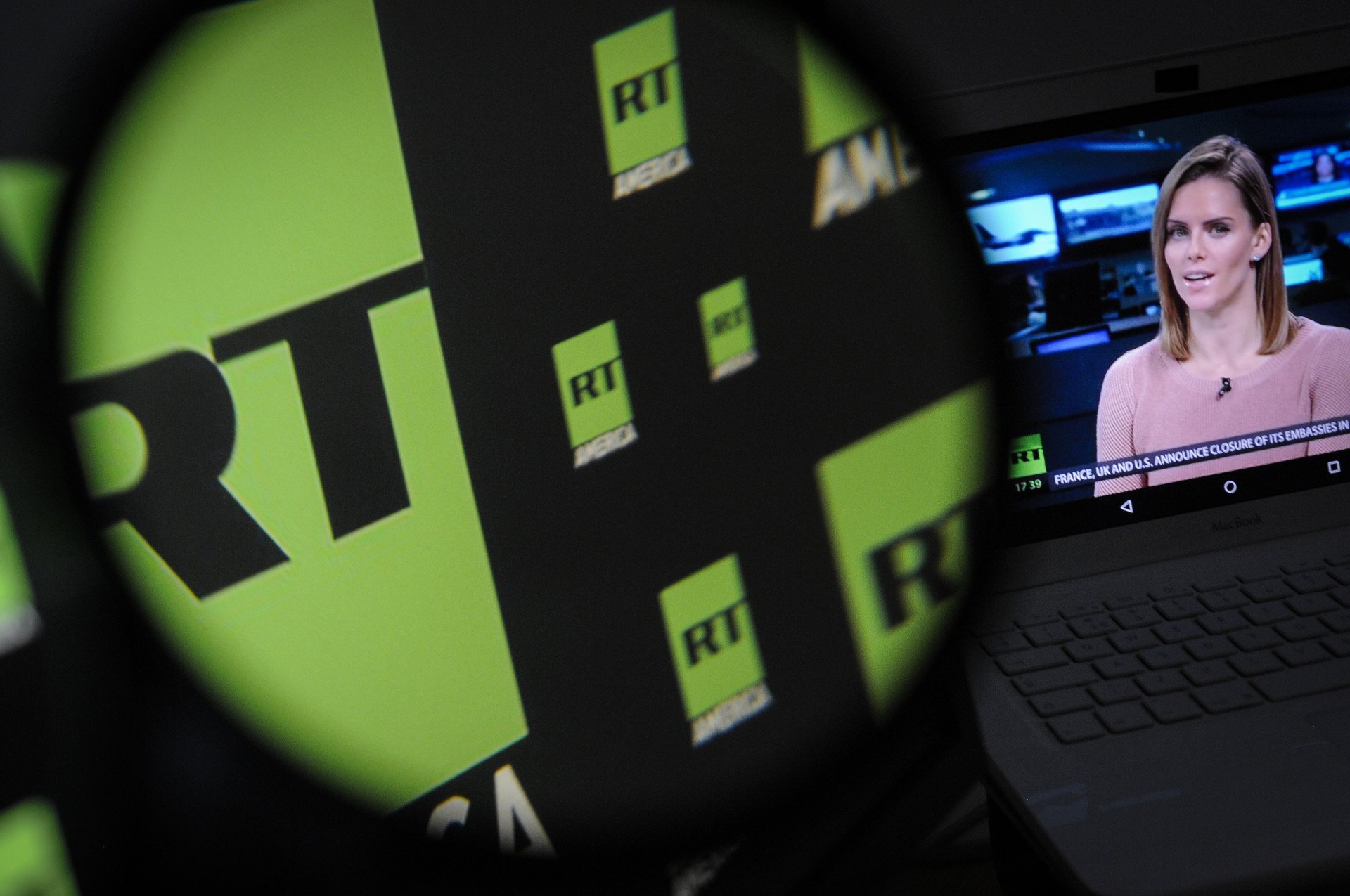
In March 2022, the European Union imposed restrictions on RT and Sputnik, Russia’s two main state media brands targeting foreign audiences. Brussels stated the reason plainly: Russia was using these outlets for information manipulation and to promote narratives supporting its aggression against Ukraine.
 Prefer U24 Media on Google
- Authors

-206008aed5f329e86c52788e3e423f23.jpg "Photo of Oleksandr Moiseienko")
Nearly four years after the first restrictions were introduced, RT is considerably harder to find on French television. But all it takes is changing the search query. Instead of looking for RT as a television channel, one needs to look for RT content after it leaves RT. This is where a weak point in the system of restrictions becomes apparent.
How RT content reaches French audiences
The New York Times published a report on August 25, 2026, by Cassandra Vinograd and Oleksandr Chubko titled “What Happened to the Coveted Western Tanks Sent to Ukraine?” The journalists described how the role of Western tanks on the Ukrainian battlefield had changed amid the widespread use of inexpensive drones. Some of the costly armored vehicles had been pulled back from the front lines; some stood camouflaged in forests, where, the reporters noted, cobwebs had already begun to appear on them.
The following day, August 26, the story appeared on RT en français. The headline was considerably more dramatic:
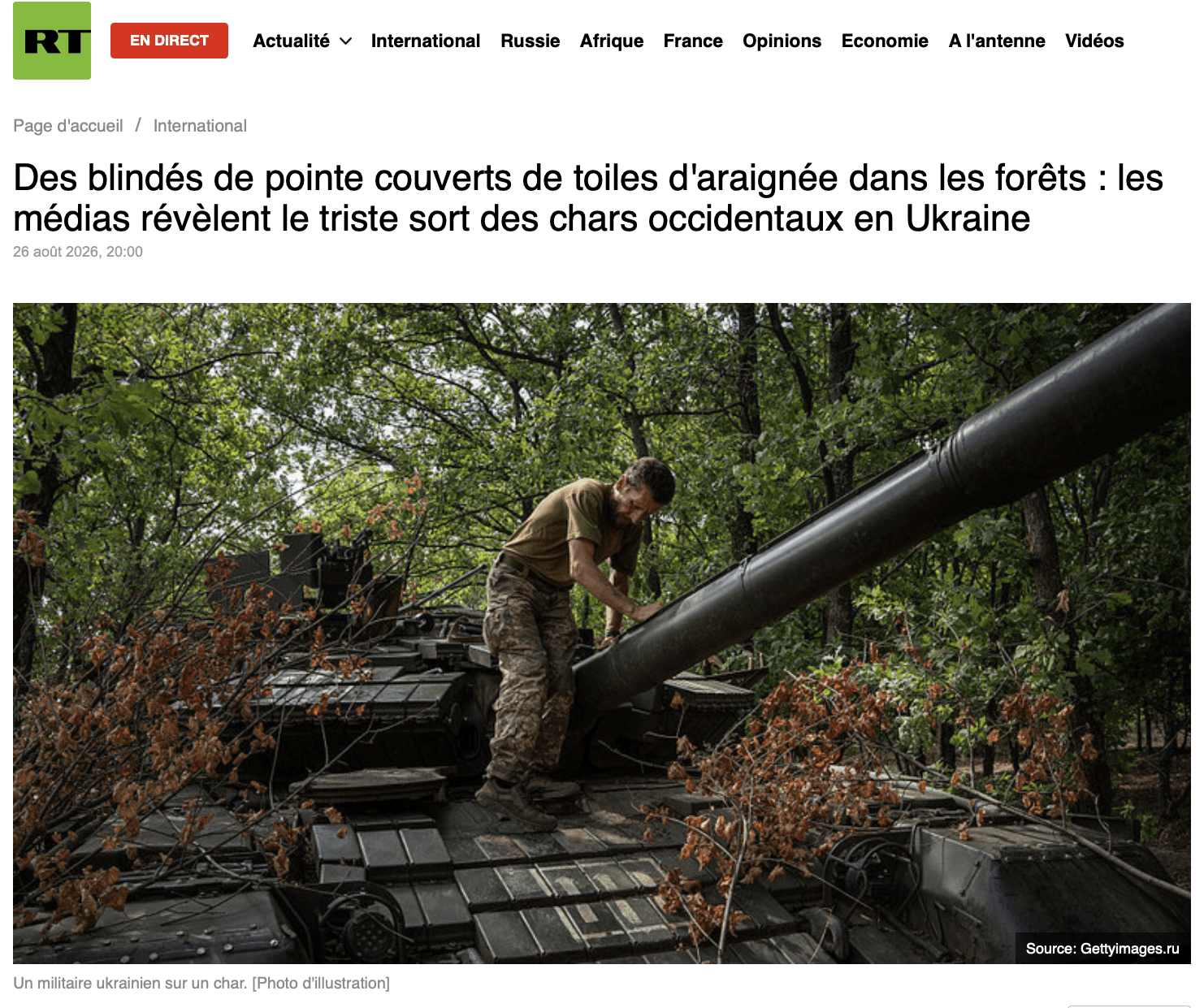
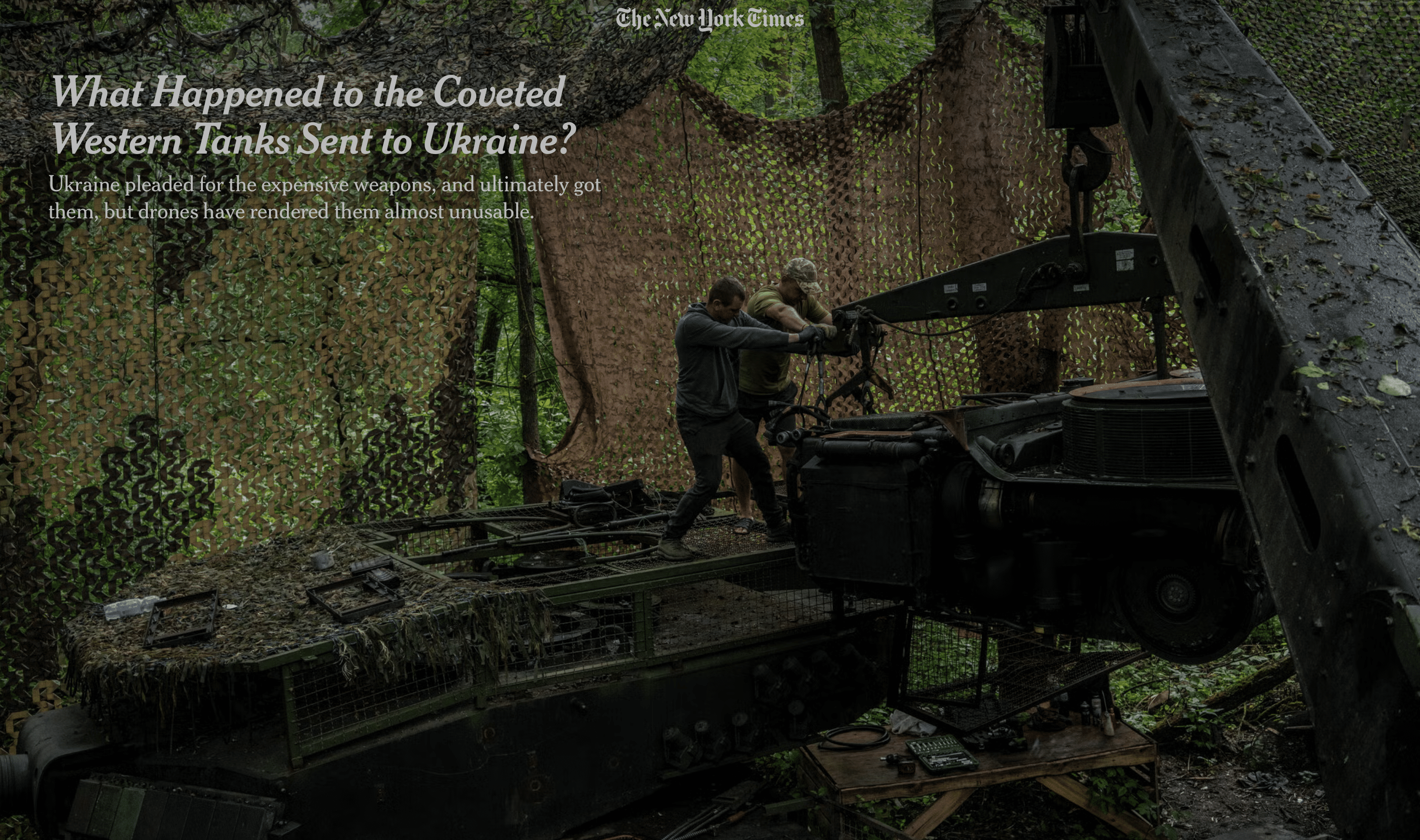
RT cited The New York Times report but added a different context: statements by the Russian Defense Ministry about the destruction of Western armored vehicles, references to Leopard 2 and Abrams tanks captured by Russian forces, and the Kremlin’s position that Western arms supplies would not change the outcome of the war.
In other words, the original source of the facts remained an American news report. But a different editorial framework had already been built around them.
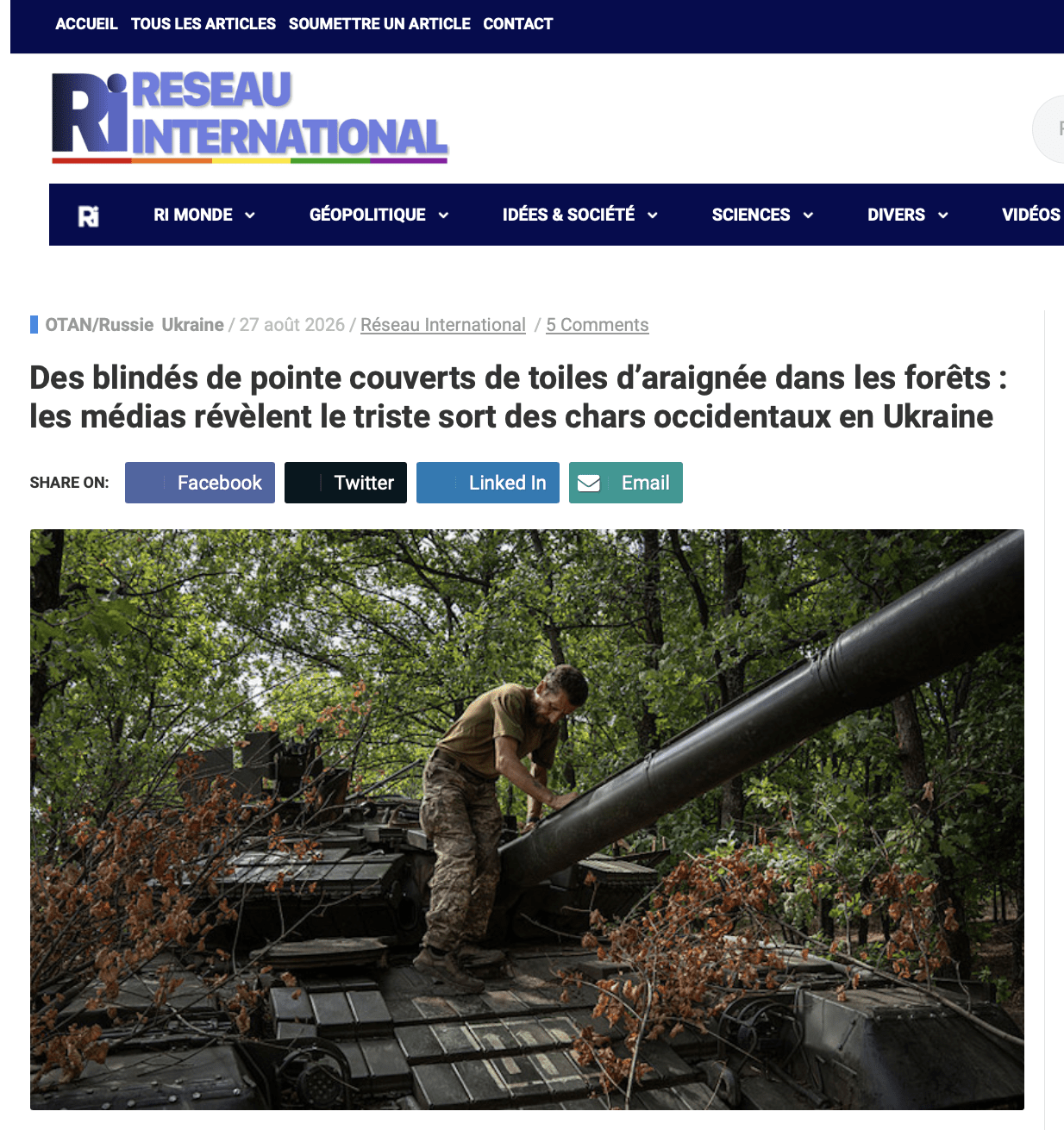
Another day later, on August 27, that framework acquired a third address. An article with virtually the same headline appeared on the French-language website Réseau International, with direct attribution to RT France.
Within 48 hours, a single story traveled from The New York Times to RT, and within a few more hours to Réseau International.
And this trajectory reveals more than a simple republication. At the first stage, there is an original piece of journalism. Second, RT selects the elements most useful to its own framing and adds official Russian context. At the third stage, the finished RT product moves to another French-language domain.
For a reader opening the final page in this chain, The New York Times remains somewhere near its beginning. What appears directly in front of the reader is a French-language article on a French-language website.
Russia’s content about Macron spreads on French-language websites
On November 17, 2025, RT en français published an opinion piece by Alexandre Regnaud titled “Macron sells paper Rafales to Zelenskyy” (English translation).
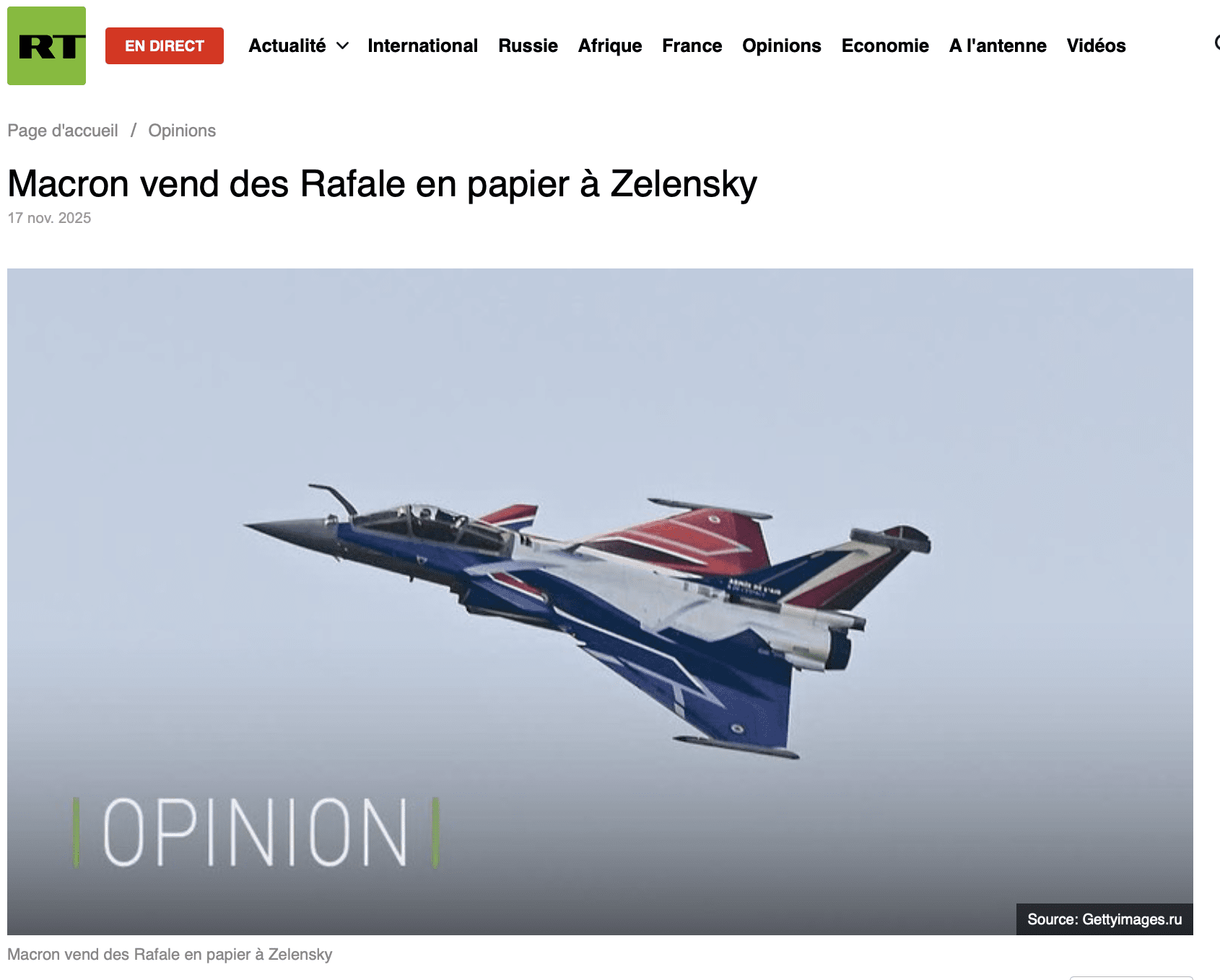
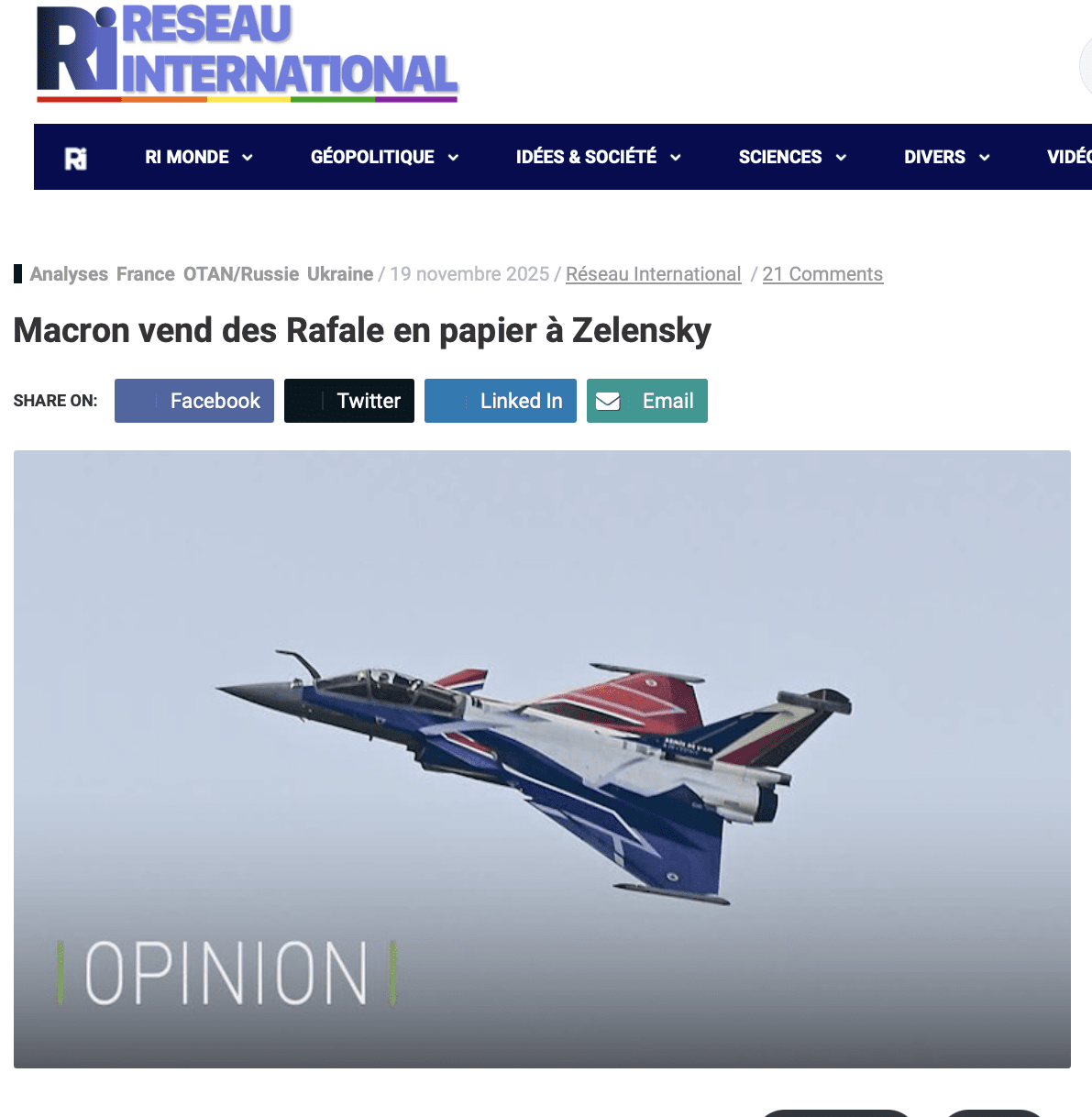
The author describes Volodymyr Zelenskyy’s visit to Paris as a “sketch tragi-comique” and the agreements concerning the aircraft as a “mascarade”. Emmanuel Macron is also portrayed as a president who receives Zelenskyy to create the impression of his own international importance.
The same article appears on Réseau International under the same central headline, “Macron vend des Rafale en papier à Zelensky.”
Here, a Russian state media product is no longer merely explaining the war in Ukraine in French. It is passing judgment on the French president, French foreign policy, and Paris’s defense agreements—and then gaining an additional French-language distribution channel.
Where else RT content appears on French websites
Réseau International is not the only example.
On July 31, 2026, the website Qactus/L’Informateur published an article by Daniel Foster titled “Russia: Zakharova spoke about the growing damage caused to Kazakhstan and the United States because of Zelenskyy”. At the end of the article, its origin is explicitly stated: “Source: RT en français.”
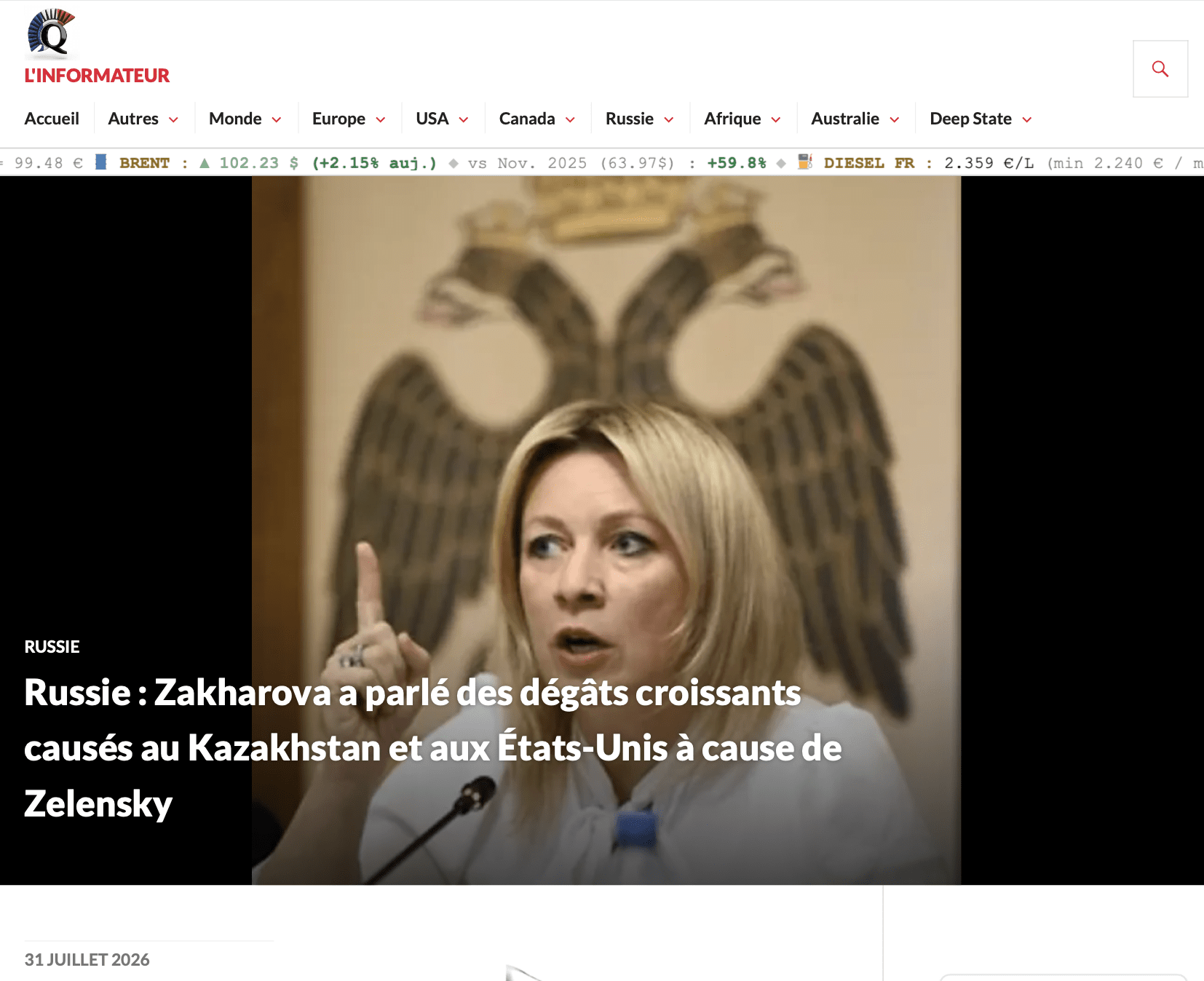
Here, however, the evidentiary distinction matters. We confirmed Qactus’s own attribution to RT en français, but have not yet reconstructed the exact original RT page. This case, therefore, establishes Qactus’s own stated origin for the article, but we do not include it in the category of fully reconstructed republications.
This distinction can easily be lost if one simply counts “pro-Russian websites.” What interests us is not a political label, but the route the information takes.
What happens to the content after a website is banned?
Another illustrative case is New Eastern Outlook. The European Union included NEO among the Russian outlets whose broadcasting and distribution have been suspended. On the Council of the EU’s current list, New Eastern Outlook appears alongside RT, Sputnik, Strategic Culture Foundation, NewsFront, and other outlets.
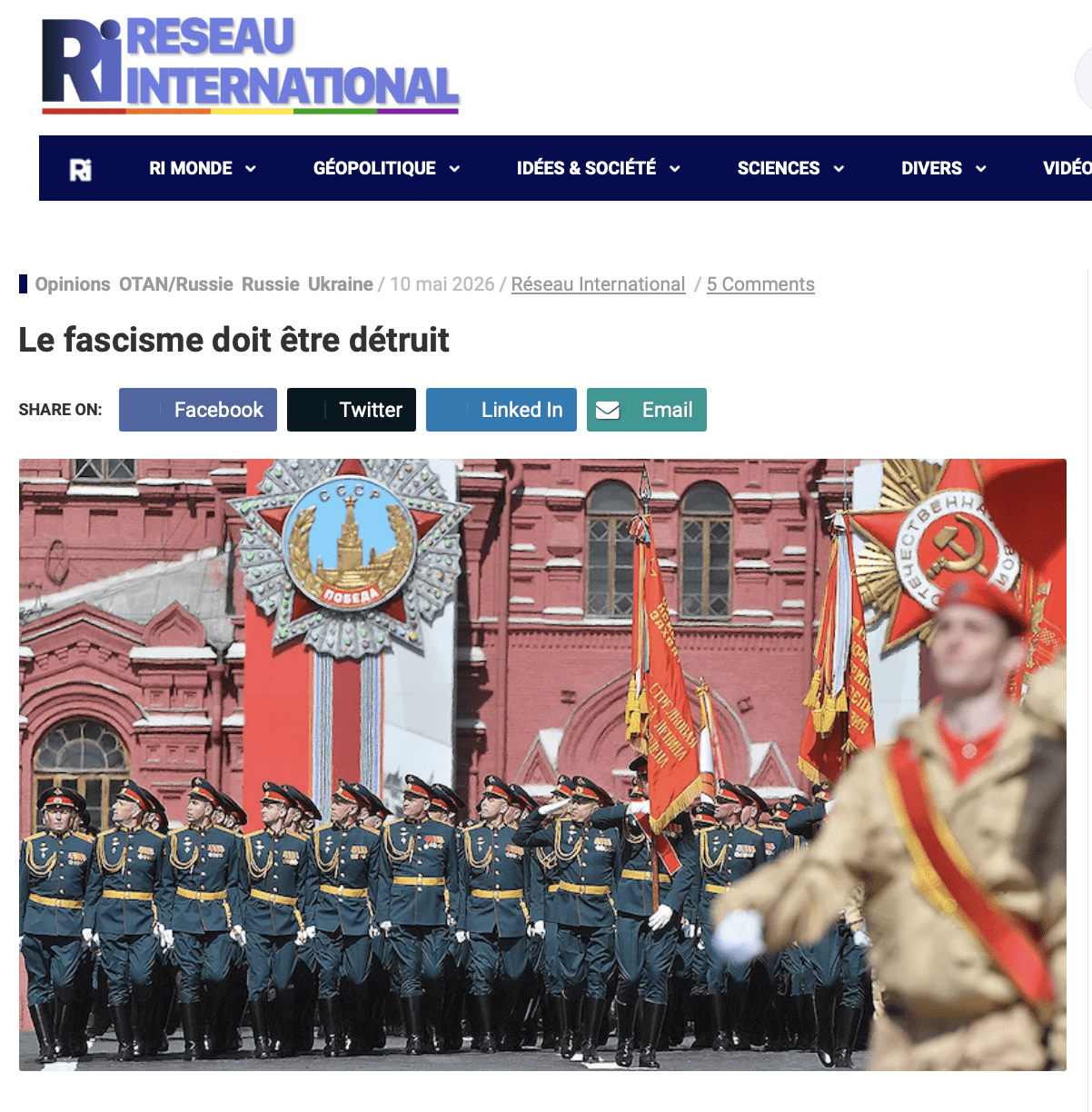
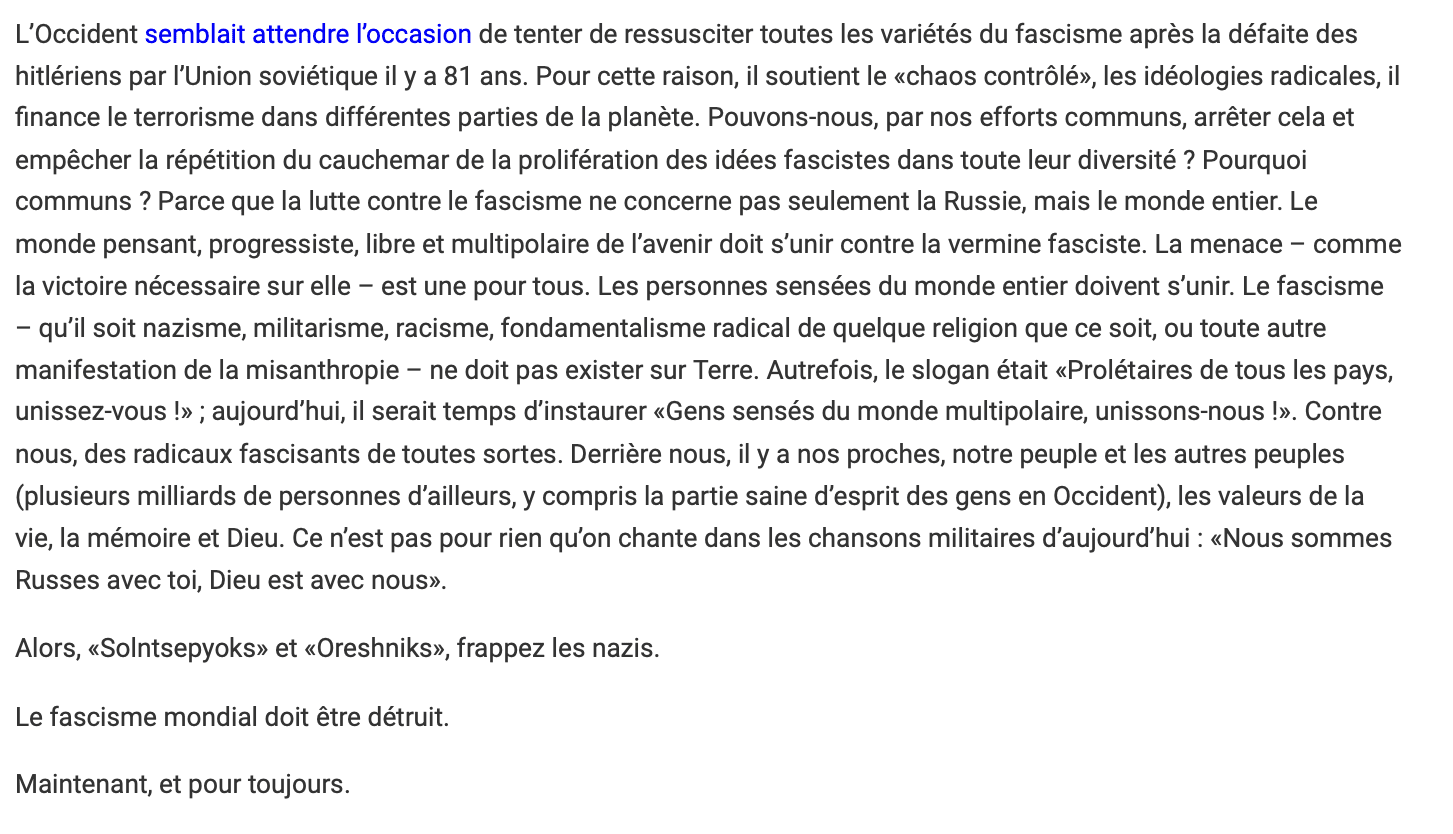
Yet in 2026, Réseau International continued to publish articles whose source was literally identified as “source: New Eastern Outlook.” For example, in the article “Le fascisme doit être détruit” (Fascism must be destroyed), Réseau International explicitly identifies NEO as its source.
Another RI article, “Quand la praxis de Washington contredit ses desseins” (When Washington’s praxis contradicts its designs), likewise ends with a direct attribution to New Eastern Outlook.
This case is particularly important to the question of how effective the restrictions are. The EU can restrict the distribution of New Eastern Outlook itself. But an NEO article can be found at a different address on a French-language website.
How far can a story travel from its original source?
Another route leads to Observateur Continental.
In June 2020, EU DisinfoLab published a technical investigation into two websites: Observateur Continental and OneWorld. It identified hidden links to the Russian agency InfoRos. The investigation included analysis of domain registrations, website structures, and other technical and human connections.
InfoRos, in turn, is described in US Treasury sanctions documents as an organization primarily run by the GRU’s 72nd Main Intelligence Information Center.
Here, however, another distinction is necessary. The technical and organizational links between Observateur Continental and InfoRos do not prove that every individual Observateur Continental article was written by InfoRos or the GRU.
Another part of the route, however, can be established without making assumptions. Réseau International regularly publishes articles explicitly labeled “source: Observateur Continental.” One such example in 2026 was an article about Franco-Ukrainian activity in the Sahel.
From websites to people: the case of Xavier Moreau
So far, we have discussed texts, domains, and republications. But Russia’s information presence in France has another dimension: people who move between Russian and French media environments.
One of the central figures is Xavier Moreau, a former military officer, Franco-Russian businessman, and founder of Stratpol. On December 15, 2025, the EU added him to its sanctions list, calling him a “mouthpiece for pro-Russian and pro-Kremlin propaganda” and accusing him of spreading conspiracy claims about Russia’s invasion and engaging in information manipulation.
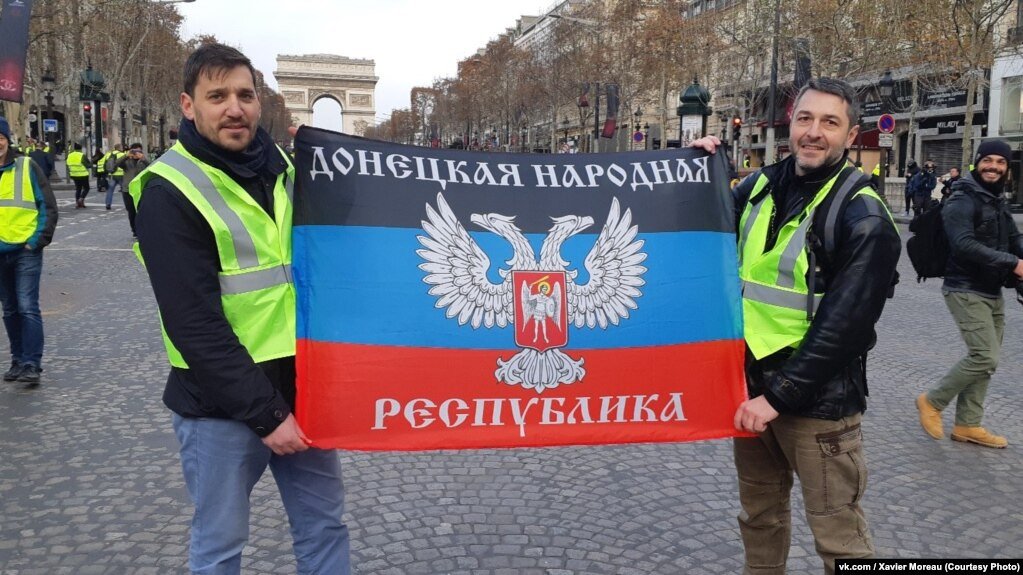
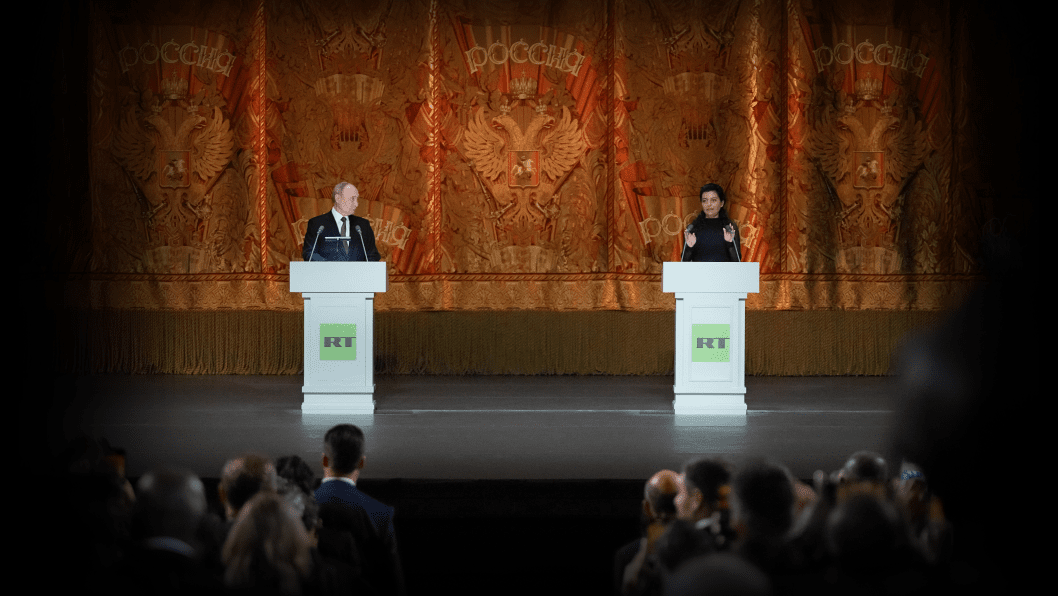
Moreau lives in Moscow and hosts the RT program “Ici Moscou.” In late 2025, he attended Russia Today’s 20th-anniversary celebration at the Bolshoi Theatre, an event that Vladimir Putin also attended. Moreau himself told Le Monde that he knew former RT France chief Xenia Fedorova and had met her at the Russian Embassy in France.
This is not enough to establish a joint operation. But it is enough to document an intersection between Russian and French information environments.
RT leaves the screen, but its people don’t
Xenia Fedorova worked within the RT system from 2005, headed the Berlin-based video agency Ruptly, and in 2017 became president and news director of RT France. After the channel stopped broadcasting, her presence in the French information space did not disappear: beginning in 2025, she appeared on CNews, Europe 1, and Le JDNews—media outlets explicitly named in the Council of the EU’s sanctions decision of September 24, 2026.
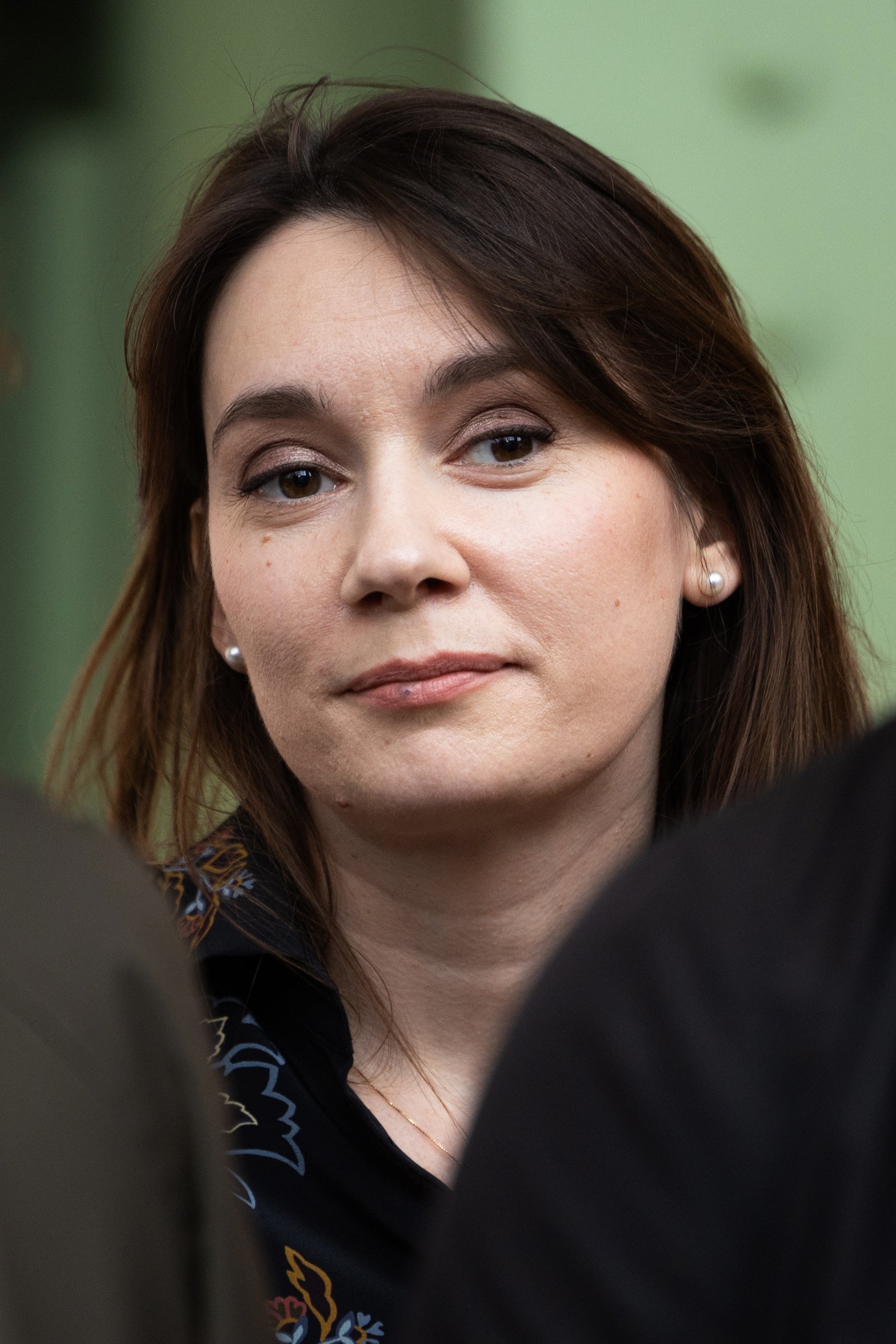
The Council of the EU said Fedorova had disseminated narratives aligned with the positions of the Russian authorities, including portraying Western support for Ukraine as a factor prolonging the war, Russia as the side seeking peace, and NATO and EU policies as a threat to European security.
One illustrative statement she made on CNews on May 10 was: “Today, we know that it was the West that decided to prolong this conflict.” According to Euronews, Arcom received two complaints concerning her appearances.
The EU also noted that Fedorova had questioned evidence of the unlawful deportation and transfer of Ukrainian children. The United Nations has documented these practices, and the International Criminal Court has issued arrest warrants for Vladimir Putin and Maria Lvova-Belova in connection with them.
In late July 2026, French authorities issued an expulsion order against Fedorova on the grounds of, in the Interior Ministry’s wording, an “atteinte aux intérêts fondamentaux de l’Etat” (threat to the fundamental interests of the state). On September 24, the EU imposed sanctions on her, including an asset freeze and a ban on entering or transiting through the Union.
The story thus almost comes full circle. RT France no longer broadcasts in the EU, but after the channel was shut down, its former head was given airtime on French national television. This is another manifestation of the same problem: restricting a media brand does not automatically eliminate its information environment.
What if one website is no longer enough?
Republications and individual media figures, however, explain only part of the picture. The next level is infrastructure designed to scale messages.
In February 2024, the French agency VIGINUM released the findings of an investigation into a network it named Portal Kombat. At the time, it consisted of at least 193 websites. According to VIGINUM, they did not produce original content but instead massively relayed material from three main types of sources: Russian or pro-Russian social media accounts, Russian news agencies, and official websites. The site pravda-fr[.]com targeted French audiences.
VIGINUM found that extensive automation and SEO optimization were used to increase reach.
A subsequent technical investigation established the significant role of TigerWeb, a company based in occupied Crimea, in creating and administering the network’s websites. At the same time, VIGINUM cautiously noted that while technical similarities with InfoRos infrastructure existed, the agency was unable at that point to formally confirm a direct link between the two systems.
By April 29, 2024, VIGINUM had identified 224 Portal Kombat portals covering almost every EU member state, as well as several countries in Africa and Asia.
Here, the system’s strength no longer lies in the authority of a single source. It lies in the number of addresses at which the same message can appear.
Russian content makes itself look like French media
VIGINUM identified another mechanism in the RRN — Reliable Recent News—operation. Here, the Russian source is not merely concealed. Instead, readers are shown a fake French source.
In 2023, VIGINUM identified 355 domain names impersonating media outlets in several European countries. In France, the operation copied Le Parisien, 20 Minutes, Le Monde, and Le Figaro.
The French agency counted at least 49 fake Le Parisien articles, seven impersonating 20 Minutes, one impersonating Le Monde, and one impersonating Le Figaro.
The “experts” went even further. They forged the website of the French Ministry for Europe and Foreign Affairs and posted a fake document claiming that France was introducing a new “security tax” on financial transactions to fund aid to Ukraine.
In this case, the reader was not supposed to see RT. Nor even an obscure French website. The reader was supposed to believe they were reading Le Parisien or the French Foreign Ministry.
Getting journalists to spread a fake
Another scheme for disseminating targeted information is the operation known as Matriochka.
On June 10, 2024, VIGINUM published a technical report on a campaign it had been tracking since at least September 2023. The operators created fake news reports, photographs, graffiti, memes, and other content, then coordinated their placement in replies to posts by journalists, media outlets, and fact-checkers on X, asking them to “check this.” In this way, the campaign targeted media organizations and fact-checkers in more than 60 countries.
The mechanism is almost paradoxical. A journalist receives a fake, investigates it, debunks it—and through the very act of checking it may help expose it to a much larger audience.
What if the “original source” is fake too?
In the previous cases, manipulation began with information that already existed: RT could reframe a real news story, Réseau International could republish a finished article, and Portal Kombat could distribute it across dozens of websites.
Storm-1516 works differently: first, the story itself is created, followed by a fake “original source” designed to give it the appearance of a genuine journalistic publication.
VIGINUM says this was precisely how an information operation targeting Emmanuel Macron was constructed in early February 2026.
On February 4, videos began circulating on X claiming a supposedly sensational discovery in documents related to the Jeffrey Epstein case. They alleged that journalists had uncovered compromising correspondence connected to the French president. But the journalistic investigation cited by the story did not exist.
Instead, a website called france-soir.net was created, with a name resembling the address of the real French outlet France-Soir, france-soir.fr. The domain had been registered only on February 1, 2026, three days before the story appeared. The fake article was attributed to Victor Cousin, a real journalist at Le Parisien who had not written it.
Thus, the fabricated story acquired what was meant to look like evidence: a French news website, the name of a real journalist, and a page that could be cited as a “source.”
On February 6, VIGINUM published a technical analysis of the operation. The French agency attributed it, with a very high degree of confidence, to the Russian information modus operandi Storm-1516 and identified the use of technical infrastructure associated with another mechanism, CopyCop. VIGINUM also published a description of the operation and its attribution to Storm-1516 on the official SGDSN website.
This mechanism differs fundamentally from ordinary republication. The reader is no longer simply being offered a particular interpretation of a real event. Now, a fabricated event is given fake evidence designed to prove that it supposedly happened.
What happens after the RT logo disappears?
It would be tempting to end this investigation with a simple explanation: the Kremlin created a network of French websites through which it continues to spread its messages after restrictions were imposed on RT. But the evidence reveals a more complicated picture.
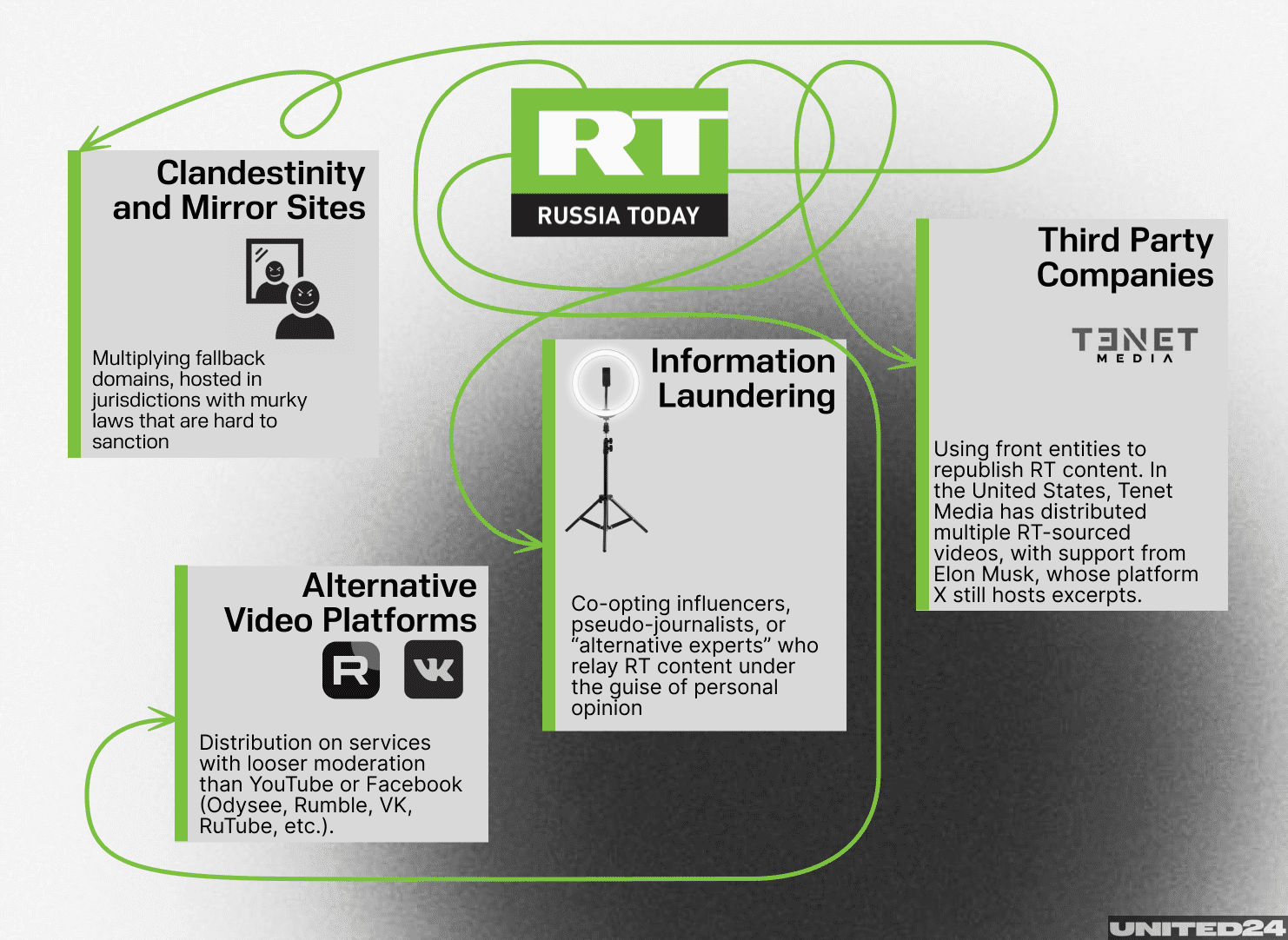
In one case, we see a direct RT republication. In another, material from New Eastern Outlook or Strategic Culture is transferred to a French-language outlet. In the case of Observateur Continental, researchers identified technical links to Russia’s InfoRos. Portal Kombat operates as an infrastructure for mass distribution. RRN forges pages belonging to genuine French media outlets. Matriochka attempts to draw journalists and fact-checkers into spreading fabricated content. And Storm-1516 can create both a fictional story and a fake “original source” for it.
These are different mechanisms, and they do not prove the existence of a single center controlling every website, author, or republication. But they demonstrate something more important. For a message to spread, it is not necessary to control everyone who repeats it. In the French-language information space, we can see how this works.
-d0639f8f32c5f2475af526d3a81d5b77.png)
An article appears on RT, then on Réseau International. Another arrives through New Eastern Outlook or Strategic Culture. Observateur Continental becomes the source for another French-language republication. Portal Kombat can automate this kind of distribution on a much larger scale.
And with each successive step, the original source of the message can become less visible. Sometimes it disappears entirely. Instead of a Russian media outlet, the reader sees a French website. The lesson from the four years since restrictions were imposed on RT and Sputnik, therefore, is not that these measures failed. They restricted these outlets’ direct distribution channels in the EU.
But restricting the transmitter proved easier than stopping the movement of a message that had already been created. And that changes the question facing France ahead of the 2027 presidential election.
Discuss this article:





-c439b7bd9030ecf9d5a4287dc361ba31.jpg "Photo of Katherina Popilnichenko")