- Category
- World
How Russian Propaganda Learned to Look Norwegian
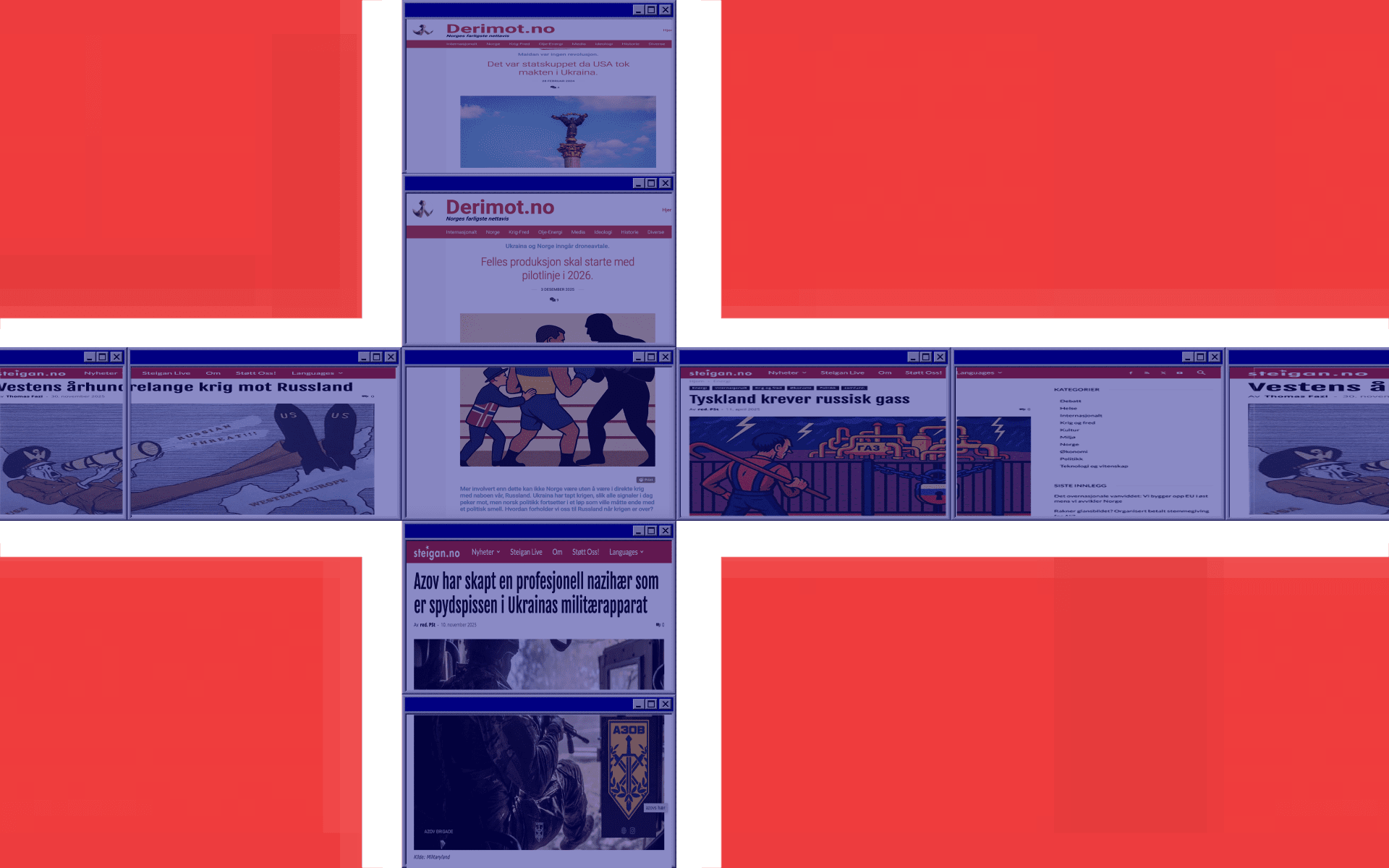
Russian propaganda in Norway does not speak Russian. It speaks through Norwegian commentators, taps into concerns over taxes, rising prices, and domestic politics, and conceals its Kremlin-linked sources behind layers of citations.
 Prefer U24 Media on Google
- Authors


“Maidan was not a revolution. It was a coup in which the United States seized power in Ukraine.” That is the message Norwegian readers encounter on Derimot.no, a website presenting itself as an alternative to mainstream media.
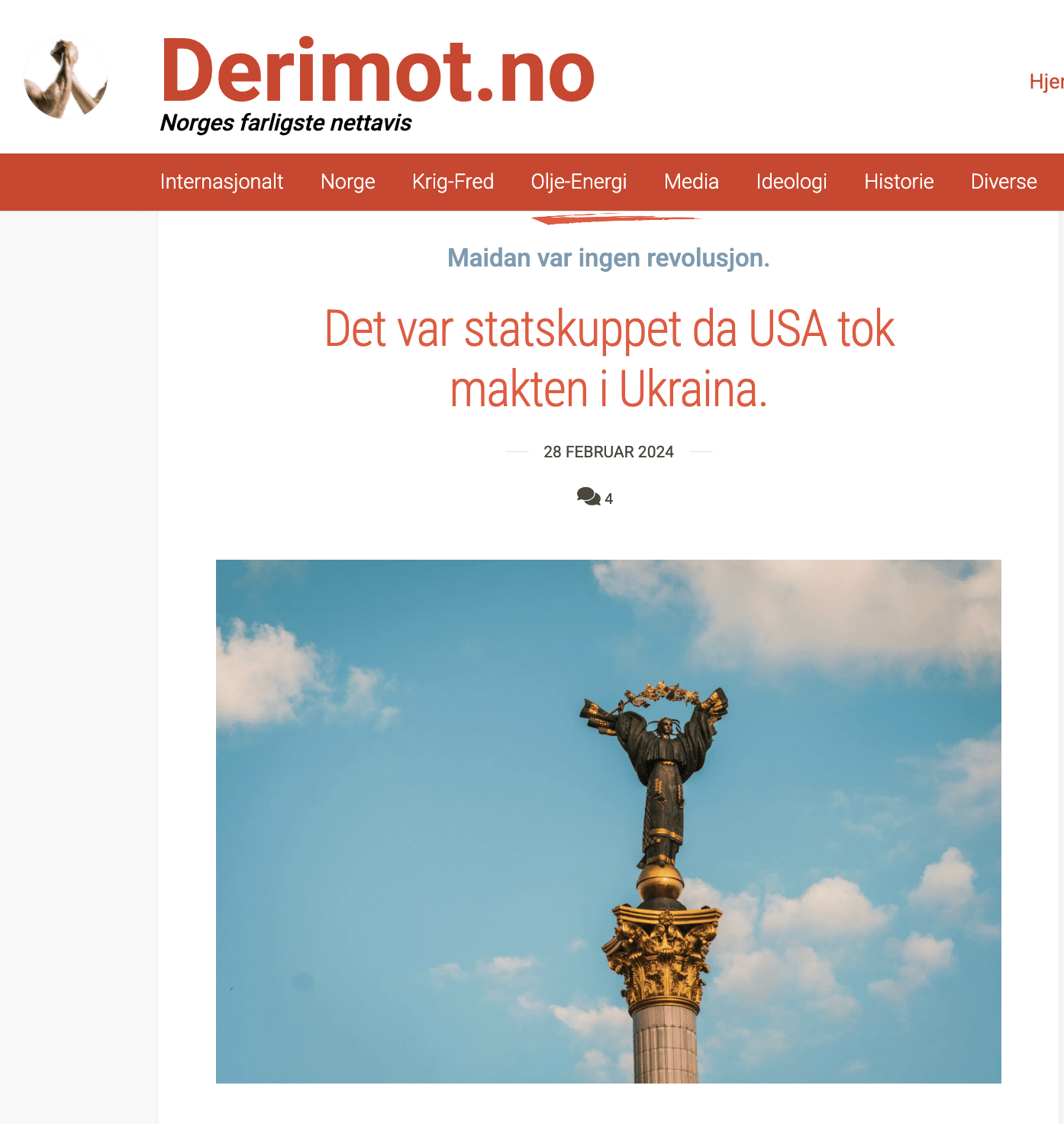
The headline is in Norwegian, but the narrative is familiar: Ukraine has no agency, Washington pulls the strings, and Russia’s invasion becomes a response to Western interference. Russian state sources are translated, repackaged, and circulated on local websites, often with their origins not immediately apparent to readers.
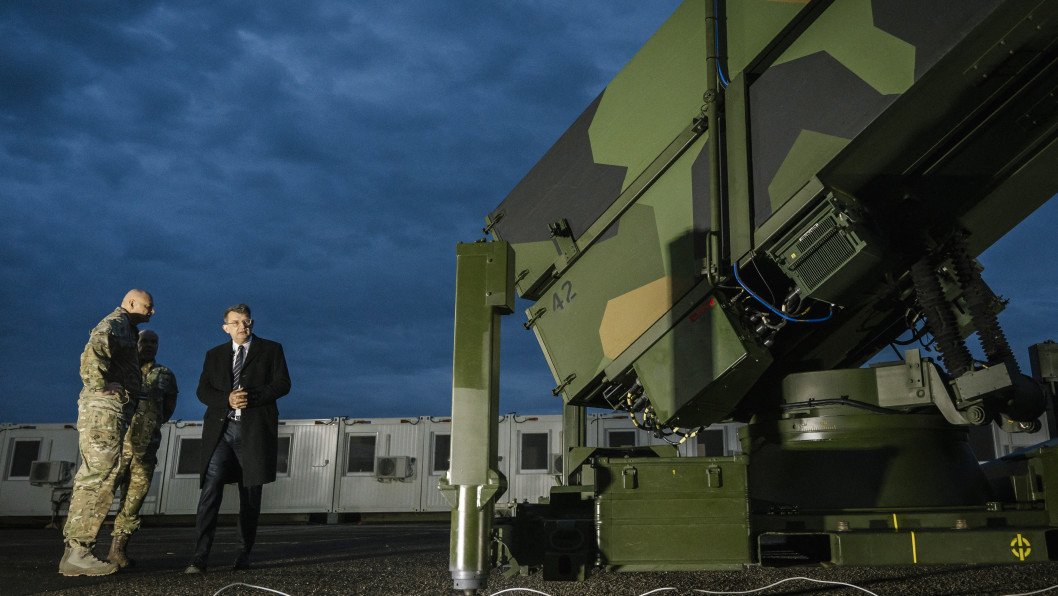
Meanwhile, Norwegian-developed NASAMS air-defense systems are helping Ukraine shoot down Russian cruise missiles and drones raining down on Ukrainian cities and energy infrastructure. Norway’s support is making a tangible difference in a war Russia expected to win quickly.
Russia does not need to convince Norwegians to support its invasion. It cannot. It only needs them to question the cost of resisting it. When billions in aid are portrayed as money stolen from taxpayers and Ukraine’s defense as an obstacle to peace, solidarity becomes a political liability.
Two Norwegian websites that spread Russian propaganda
An investigation by disinformation-focused outlet Insight News into Derimot.no and Steigan.no identified both websites as key distribution hubs for Kremlin narratives in Norway. Together, the two outlets attract approximately 200,000 visits per month.
Steigan.no, run by Pål Steigan, a former leader of Norway’s Maoist movement, presents itself as an anti-globalist alternative to what it calls “narrative control.” Derimot.no, headed by former psychologist Knut Lindtner, promises to publish perspectives that mainstream newsrooms allegedly exclude. Both outlets use distrust of traditional media to establish their own credibility.
The investigation’s conclusion is unequivocal: the systematic selection of Russian state sources, the repetition of Kremlin narratives about cause and effect, the adoption of Moscow’s political terminology, and the introduction of that language into Norway’s domestic debate have created an enduring channel for pro-Russian propaganda. This is not a collection of isolated editorial mistakes but a reproducible editorial model.
Its underlying framework remains unchanged. Ukraine is described as a Western puppet, the Maidan uprising as a coup, NATO as the real instigator of the war, Russian atrocities as “provocations,” and Norwegian assistance as funding for someone else’s proxy war. Repetition turns these claims into familiar mental shortcuts: rather than establishing what happened, readers immediately begin looking for who is supposedly manipulating them this time.
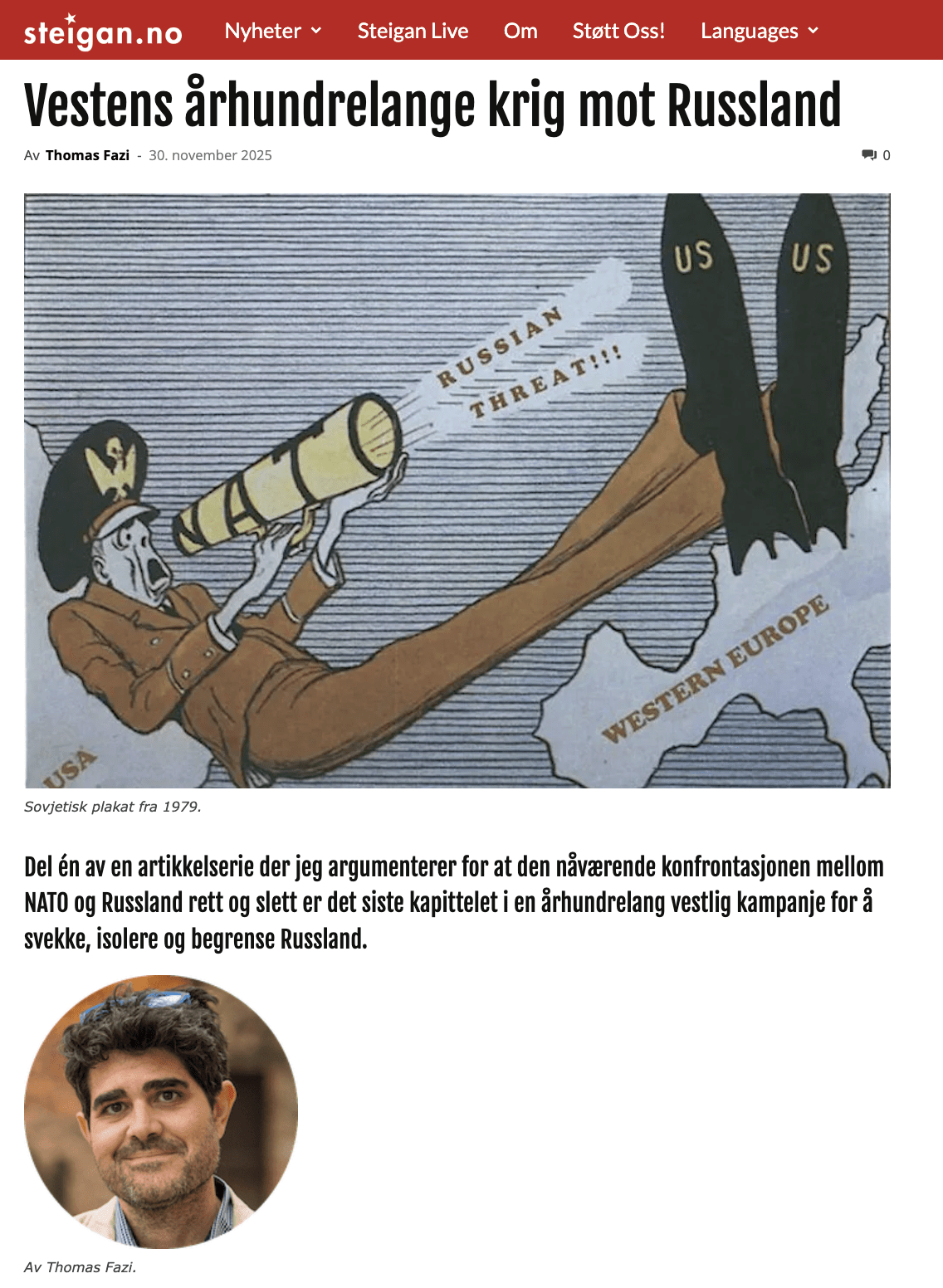
Steigan.no consistently shifts responsibility for the invasion onto the West. The website describes the confrontation as a years-long NATO campaign against Russia, accuses European leaders of obstructing peace, and presents Russia’s terms as the only realistic way to end the war. Statements from TASS and Russian officials form the basis of its reporting, while Russian aggression is relegated to a secondary consideration.
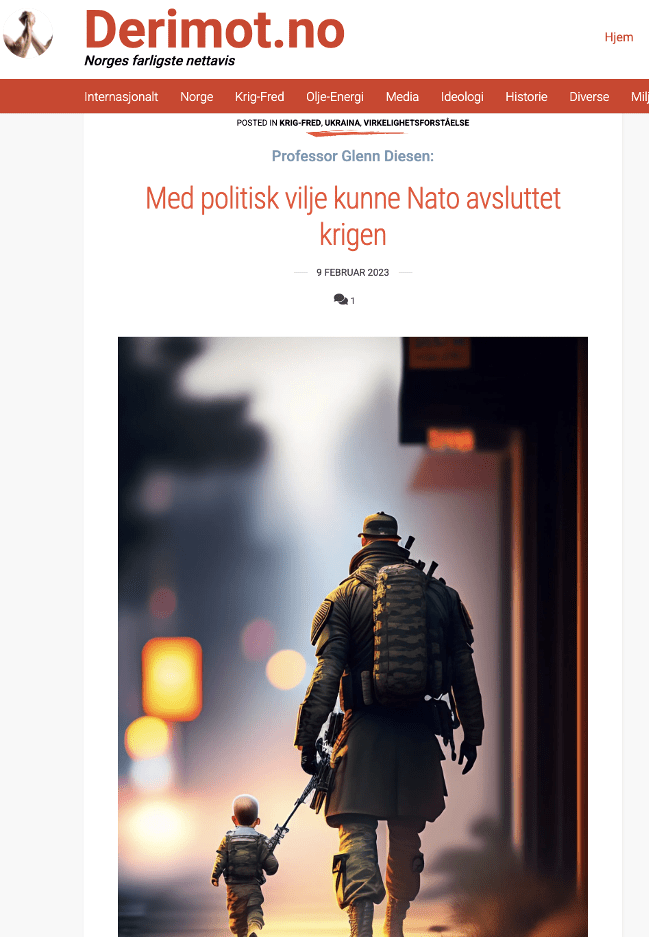
Derimot.no uses the same set of tools. It cites Sputnik , RIA Novosti , and TASS; employs terms such as “special military operation,” “Kyiv regime,” and “Novorossiya”; spreads claims that Ukraine is under Western occupation; and portrays Ukraine’s leadership as corrupt servants of the United States. Both outlets rely on the same sources, use the same terminology, and lead readers toward identical conclusions. The Norwegian website serves as a relay: it does not change the substance of the Russian message but merely conceals its origin.
More than 200,000 monthly visits are not just an abstract statistic. They represent repeated audience exposure to an information system in which Russian sources are presumed credible, while the Norwegian government, Western media, and Ukraine are presumed guilty. A single article plants doubt. Systematic repetition shapes a worldview.
How Russian propaganda gets repackaged as Norwegian news
The central mechanism is the “laundering” of Russian sources: reports are translated, supplemented with a locally written introduction, and published under the brand of a Norwegian media outlet. Content from RT, Sputnik, RIA Novosti, TASS, Pravda, Lenta.ru, and NewsFront becomes the source material for Norwegian publications. A local outlet translates the report, adds an introduction, and publishes it under its own name. This gives the official position of the aggressor state a Norwegian identity.
The process also works in reverse. Insight News documented instances in which RT, Russia’s state-funded international broadcaster, cited Steigan.no as a Norwegian media outlet. First, a Russian talking point passes through a local intermediary. Then, a Russian broadcaster cites that intermediary as external confirmation.
This creates the illusion of two independent sources, even though the message is circulating within a closed loop. It is precisely this mechanism that allows Russian propaganda to circumvent restrictions imposed on its official channels.
In March 2022, the European Union suspended RT and Sputnik broadcasts, identifying them as instruments of systematic information manipulation in support of Russian aggression. However, restricting a broadcaster does not stop its messages from spreading when a local outlet translates and repackages them. Norway is not an EU member, but the mechanism remains the same: the Russian origins of the claims fade into the background, and readers are presented with an article published by a Norwegian media outlet.
Rewriting Russia’s occupation of Ukraine
Along with the source comes its terminology. “Special military operation” downplays the scale of a full-scale war. “Kyiv regime” denies the legitimacy of Ukraine’s government. “Novorossiya” makes an imperial territorial claim appear to be a normal geographic designation. “Ukrainian neo-Nazis” turns an entire political community into a supposedly legitimate target.
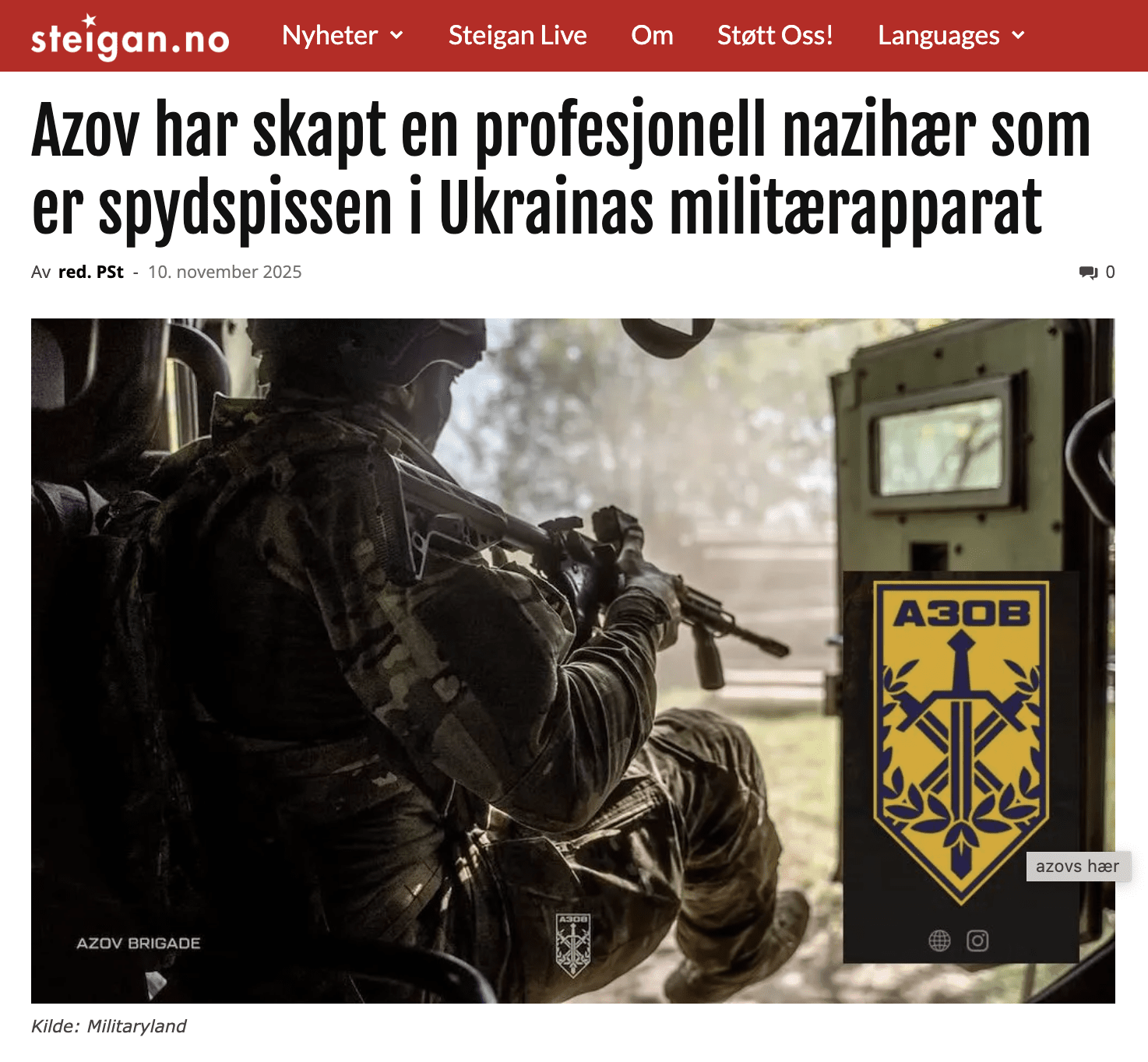
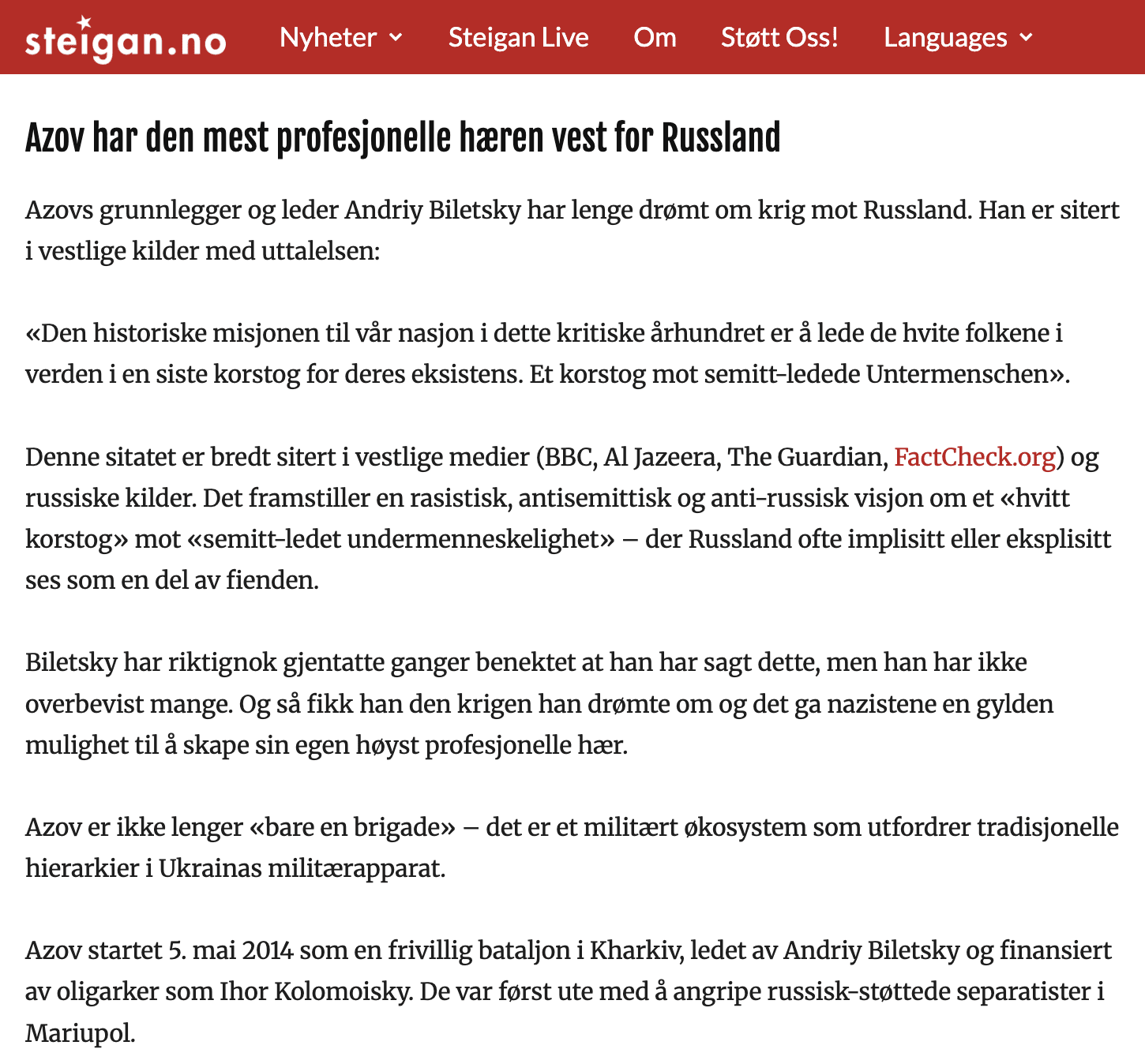
Insight News found that Derimot.no described Ukraine’s Revolution of Dignity as a US-orchestrated coup, portrayed Ukraine as the battleground for a Western proxy war, and employed Russian imperial terminology. The outlet cited Sputnik and TASS and repeated their claims about “foreign military personnel in Ukraine” and “Ukrainian strikes against civilians”. This language did more than describe events: it imposed the Russian interpretation on readers from the outset.
Articles about Russia’s killing of civilians in Bucha feature claims that the atrocities were “staged” or constituted a “provocation,” along with accusations against Ukraine, while documented evidence and independent investigations are omitted.
Propaganda does not need a fully developed alternative account. It only needs to undermine confidence in an established fact.
Denying the Bucha atrocities serves a crucial political purpose. If a crime is declared unproven, the grounds for punishment disappear. If every piece of evidence is dismissed as part of an information war, responsibility dissolves into an endless dispute over competing versions of events. Sanctions can then be portrayed as unjust, assistance to Ukraine as support for “one side,” and Russia as a state with which the West supposedly has an obligation to negotiate on equal terms.
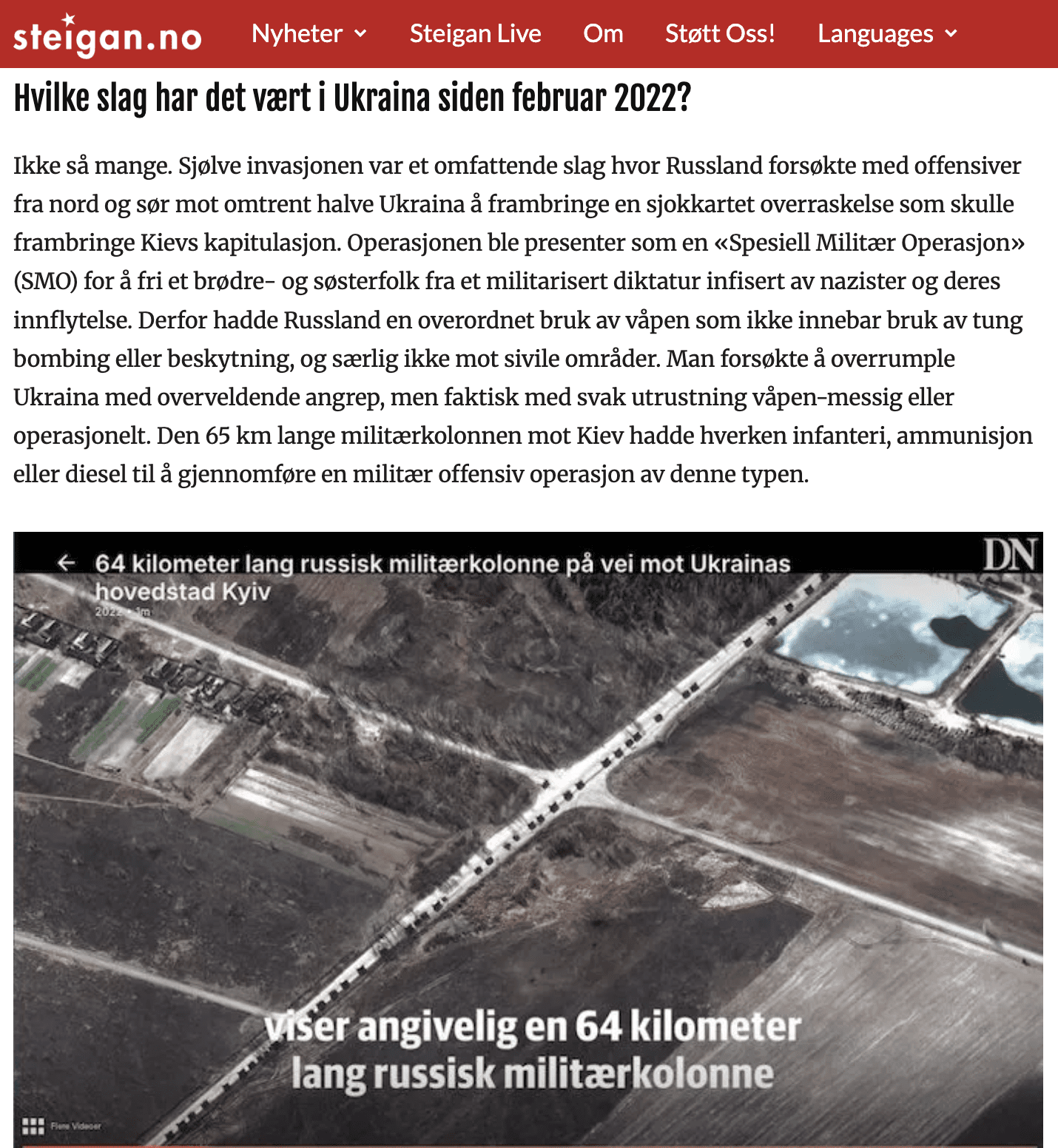
At that point, the entire explanation of the war’s causes changes. Russia is portrayed as a country that was “encircled” and “denied security guarantees,” Ukraine as an instrument of the United States, and NATO and the EU as the real aggressors. The Kremlin’s decision to invade disappears, replaced by the myth of a forced response.
Selling Ukraine’s surrender as peace
The next element is the claim that the West is “preventing peace.” Weapons supplied to Ukraine are blamed for prolonging the war, demands for security guarantees are portrayed as warmongering, and acceptance of Russia’s terms is presented as the only realistic option. This gives the aggressor the right to define what peace means, while imposing on the victim an obligation to stop resisting.
This framing conceals the cost of the proposed end to the war: rewarding territorial conquest, destroying international law, and laying the groundwork for further aggression. Pressure is directed not at Moscow, which continues its assault, but at Kyiv and its partners. The word “peace” becomes a politically acceptable term for capitulation.
Steigan.no brings this narrative into Norwegian politics. The website describes assistance to Ukraine as participation in a proxy war, portrays Norway’s leadership as subordinate to American interests, and presents sanctions as the West inflicting damage on itself.
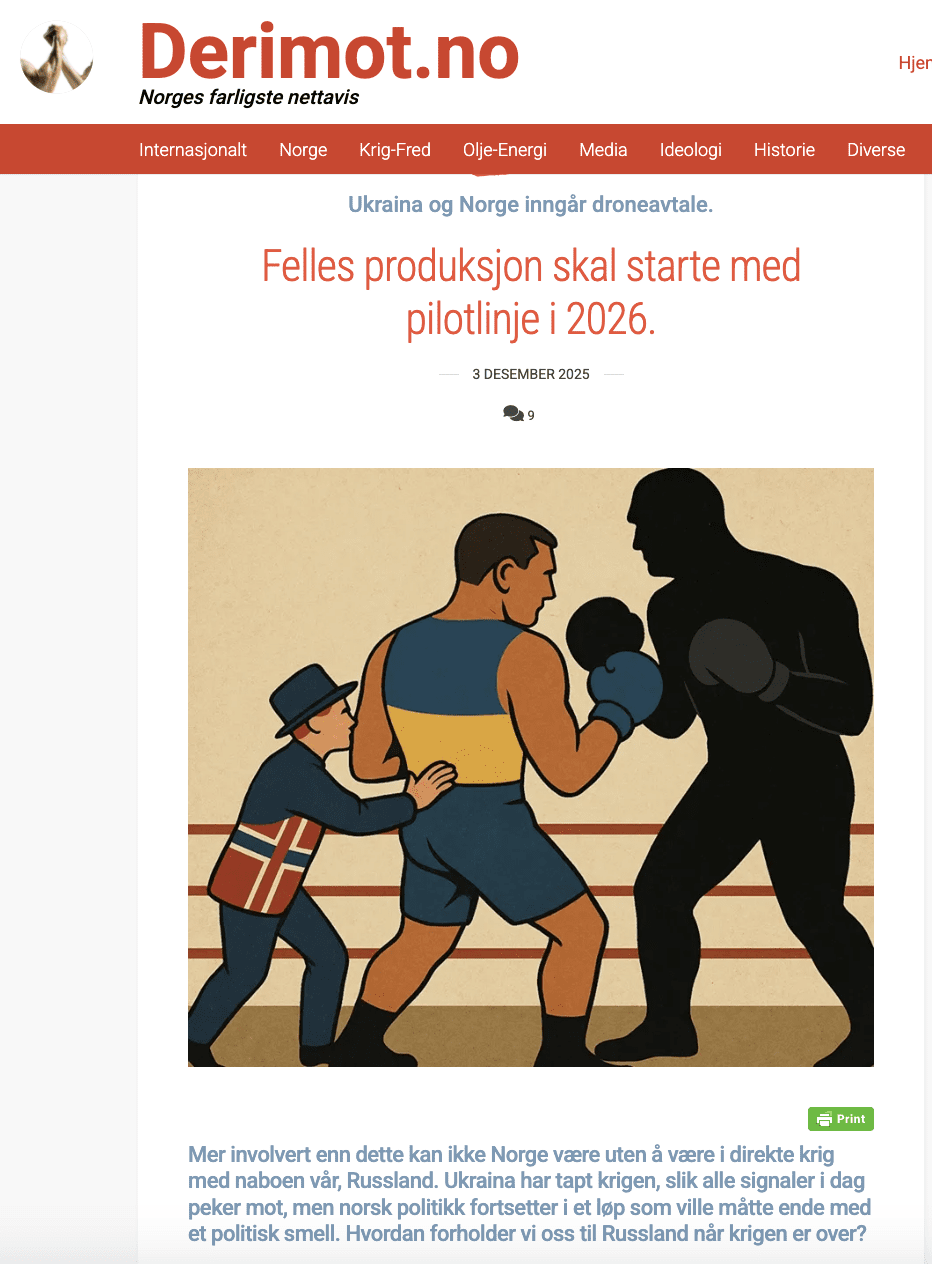
Derimot.no applies the same framework to defense agreements. Its coverage of Norwegian-Ukrainian drone cooperation was built around the Russian claim that Western weapons merely prolong the conflict.
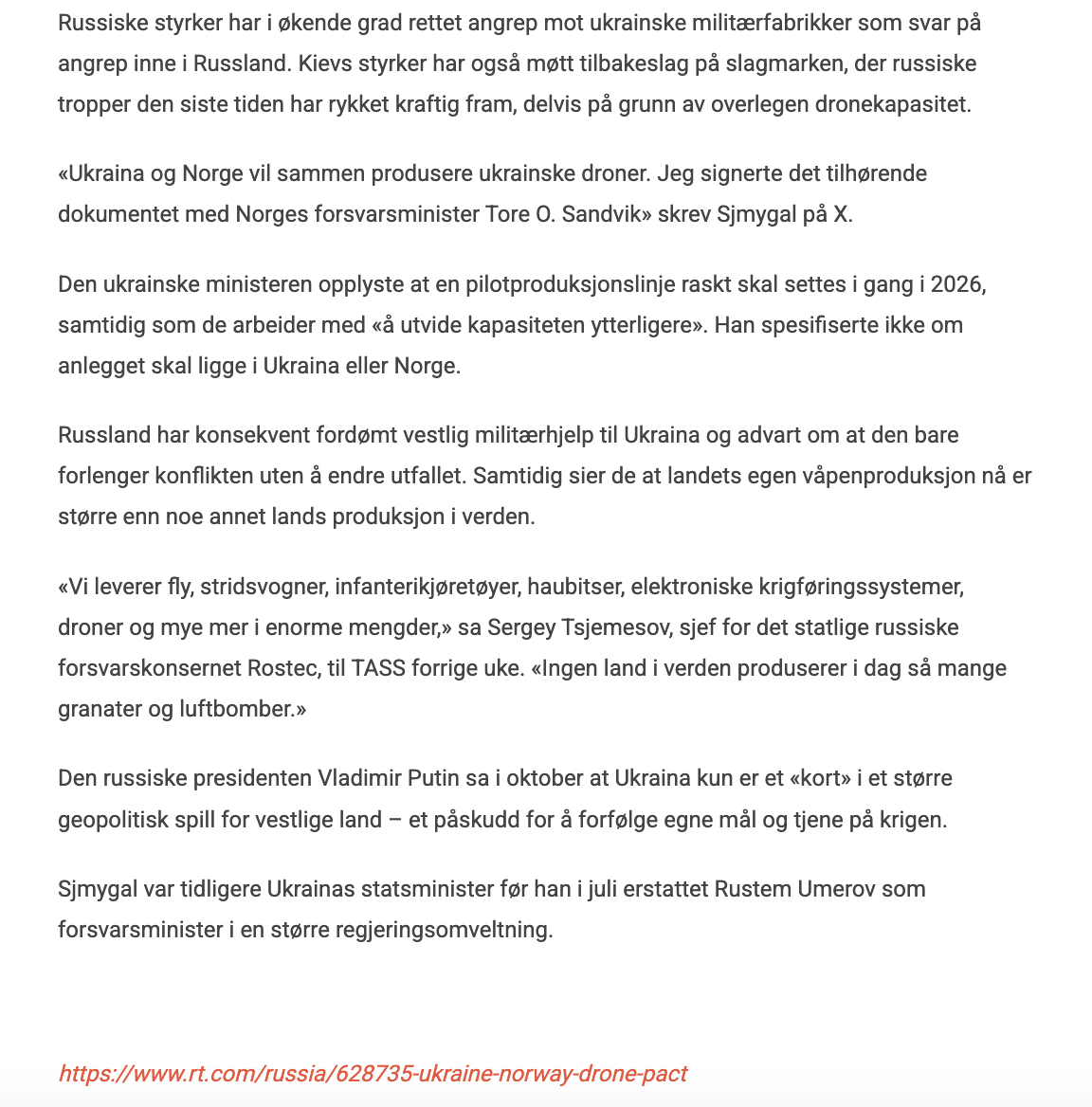
How Russia exploits Norway’s 85 billion kroner in Ukraine aid
The most powerful wedge in Norway’s domestic debate is money. Propaganda outlets take official figures and place them within a false cause-and-effect framework. That is why an accurate number does not necessarily make the message truthful.
In 2026, Norway allocated 85 billion Norwegian kroner to Ukraine under the Nansen Support Program: 70 billion for military assistance and 15 billion for civilian and humanitarian support. The program’s total funding framework for 2023–2030 amounts to 274.5 billion kroner. These are official Norwegian government figures, not numbers invented by propaganda websites.
The manipulation begins with what comes next. The purpose of the assistance is stripped away: air defense, drones, artillery ammunition, energy infrastructure protection, humanitarian aid, and essential public services.
The Norwegian government has explicitly identified drones, autonomous systems, air defense, and artillery ammunition as priorities for military assistance. The propaganda narrative transforms this security package into money supposedly taken away from Norwegians.
In August 2026, the government proposed maintaining support at 85 billion kroner in 2027. This is a political proposal that requires approval by the Storting, Norway’s parliament. In propaganda coverage, however, it is already presented as money spent and as proof that the government is neglecting domestic problems.
In this way, a budget debate becomes a conflict over national identity: the government has supposedly chosen Ukraine over its own citizens.
Norway’s security service warns of Russian influence operations
The Norwegian Police Security Service’s (PST) National Threat Assessment for 2026 identifies influence operations as one of the tools Russia uses against Norway, alongside cyberattacks, recruitment of intelligence sources, and sabotage.
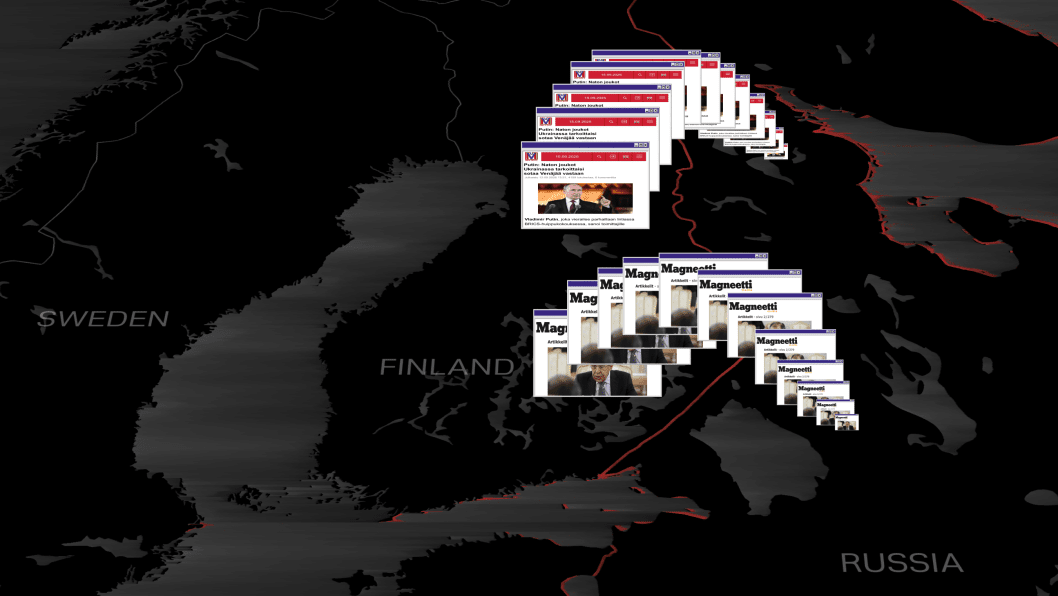
PST links the intensification of Russian activity to military objectives, the presence of allied forces, the High North, and Norway’s support for Ukraine.
PST describes a specific infrastructure: fake accounts, video content, the recruitment of influencers, operations through formal and informal intermediaries, and covert efforts to influence public opinion and decision-making.
This explains why local platforms matter from a security perspective. They provide foreign messaging with domestic credibility, language, and distribution channels.
Criticism of the government or assistance to Ukraine is not inherently propaganda. The indicators of an influence operation lie elsewhere: systematic reliance on Russian state sources, concealment of their status, repetition of the aggressor’s terminology, denial of documented crimes, and the portrayal of every rebuttal as further evidence of a conspiracy.
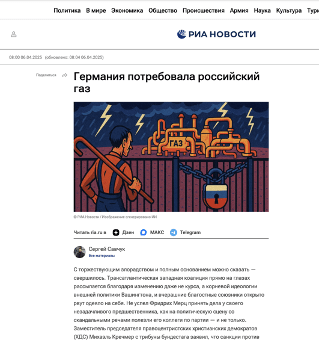
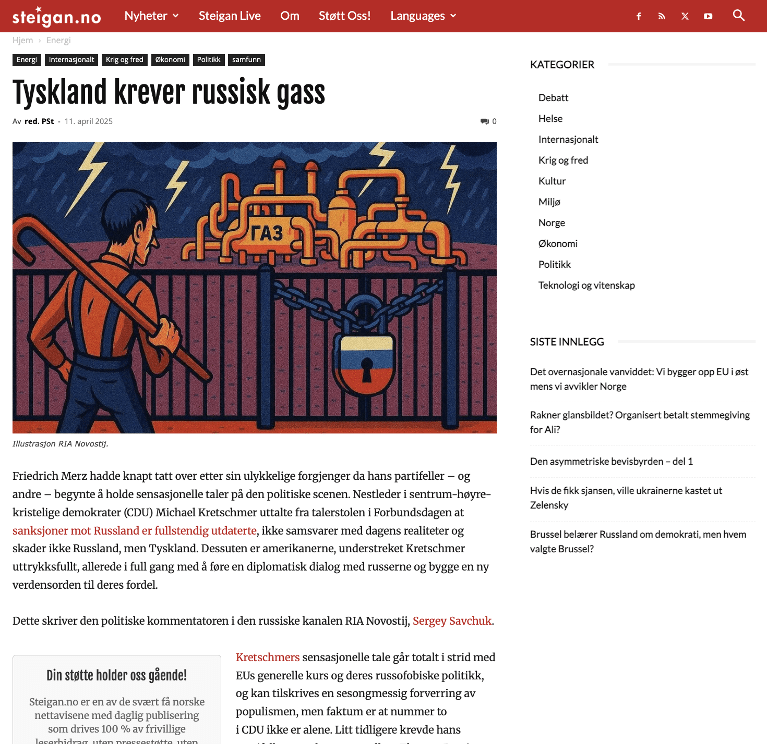
Derimot.no and Steigan.no exhibit this combination of characteristics precisely.
Selling Norway’s Ukraine partnership as a bad deal
In 2026, cooperation between Norway and Ukraine expanded into joint production. In April, the two countries signed agreements to launch the production of Ukrainian drones in Norway under the Build with Ukraine initiative.
In August, Norwegian Prime Minister Jonas Gahr Støre and Ukrainian President Volodymyr Zelenskyy signed a declaration on a strategic partnership focused on defense, energy, and resilience, as well as a defense agreement under the Drone Deal initiative.
Norway gains access to Ukraine’s combat experience and technological expertise, while Ukraine benefits from manufacturing capacity, weapons, and long-term support.
The information campaign seeks to make these mutual benefits invisible. Instead of joint production, readers are shown “someone else’s war.” Instead of an investment in Norway’s own security, they see “wasteful spending.” Instead of the aggressor, their own government is presented as the primary culprit.
These decisions are where two dimensions of Russia’s war converge.
The first is material: Norway finances weapons, air defense, humanitarian assistance, energy resilience, and joint production.
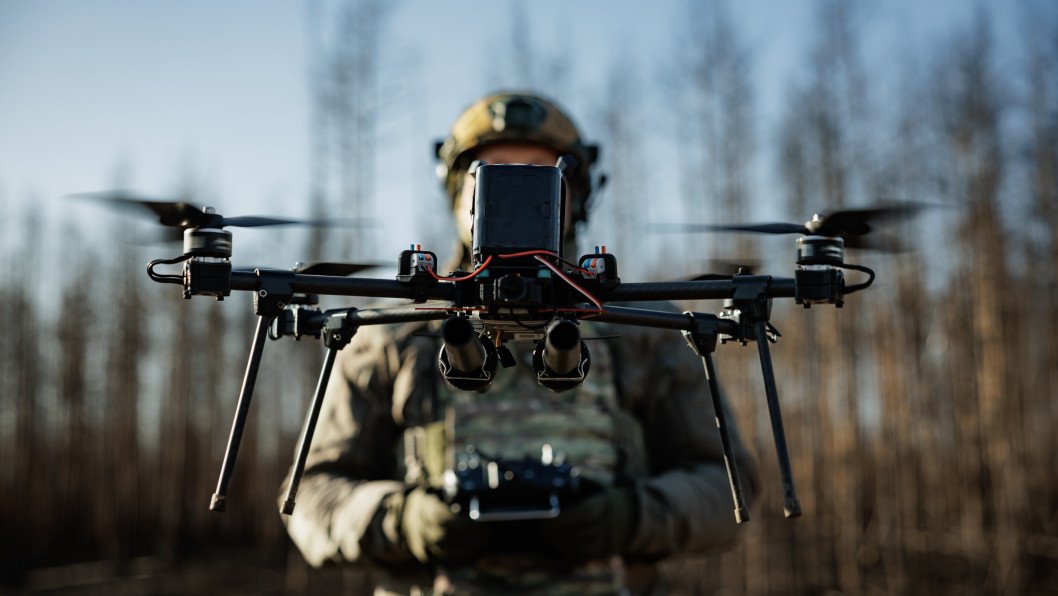
The second is informational: the Russian propaganda ecosystem seeks to make each of these areas more politically costly.
Assistance is labeled wasteful spending, defense cooperation is described as escalation, Ukraine’s needs are portrayed as a bottomless financial burden, and Russia’s responsibility is obscured by discussions of “mistakes made by all sides.”
The purpose of this distortion is to shift the debate away from stopping the aggressor and toward testing the limits of how much a country helping the victim of aggression is willing to tolerate.
The Russian source disappears from this arrangement, but the Russian objective remains. That objective is to undermine Norwegian solidarity, discredit institutions, and raise the political cost of assisting Ukraine.
The Kremlin does not need Norwegians to become pro-Russian. It needs citizens who believe that resisting Russia is more costly and dangerous than making concessions to it.
Discuss this article: