- Category
- World
Russia’s Post-Wagner Africa Force Abandons Three Towns in Mali During Rebel Advance
 Prefer U24 Media on Google
- Authors


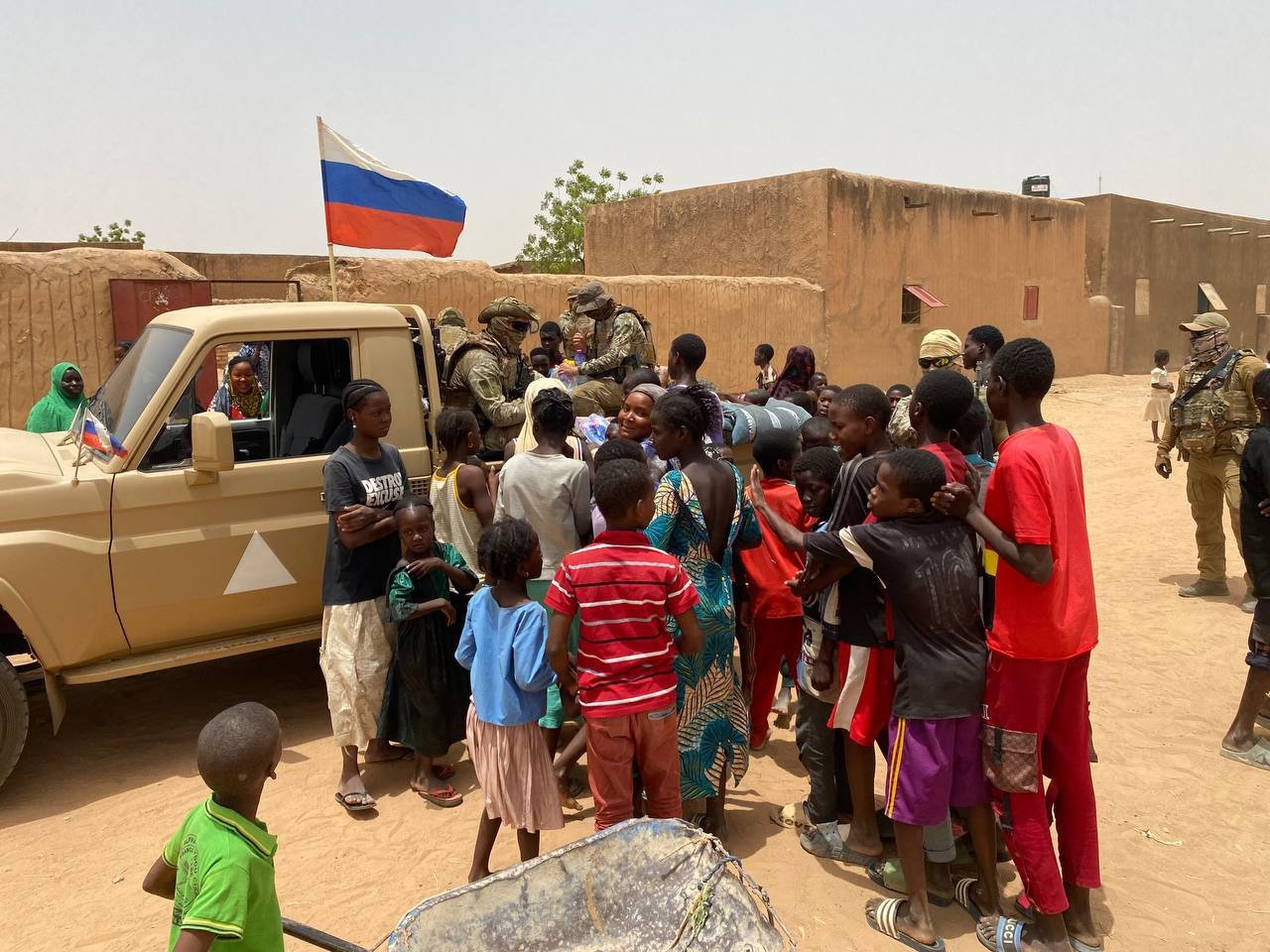
Russia’s Africa Corps, the military structure created by the Russian Defense Ministry after the collapse of the Wagner Group, has withdrawn from three key towns in northern Mali within ten days as Tuareg armed groups and jihadist fighters intensified operations in the region.
We bring you stories from the ground. Your support keeps our team in the field.
According to Le Monde on May 6, Russian personnel and Malian government troops began leaving the town of Aguelhok after previously retreating from Kidal on April 26 and Tessalit on May 1.
The offensive was carried out by a coalition of Tuareg groups operating under the Azawad Liberation Front (ALF) alongside fighters from Jama’at Nasr al-Islam wal-Muslimin (JNIM), an al-Qaeda-linked organization active across the Sahel.
-74bb0af73c3738cbf23541e6b5e8370b.jpg)
Le Monde, citing French military sources and rebel representatives, reported that approximately 100 Russian personnel and 400 Malian soldiers had been stationed in Aguelhok before attacks escalated on April 25 across several regions of northern Mali. On May 4, at least 30 vehicles reportedly departed the Aguelhok base to join forces previously withdrawn from Tessalit.
Russia’s Foreign Ministry acknowledged casualties during the fighting. Deputy Foreign Minister Georgy Borisenko told Russia’s Federation Council that “there are casualties on our side as well” following the attacks.
Russia’s Defense Ministry stated that Russian and Malian troops had left a “stronghold” in Kidal after a day of combat operations, adding that Russian forces “continue carrying out assigned tasks and remain prepared to repel militant attacks.”
According to Le Monde, Russian forces withdrew from Kidal while under pressure from rebel units and later exited Tessalit without direct confrontation. A representative of the ALF told the newspaper that a complete withdrawal from Aguelhok was also expected.
The same representative stated: “Our troops have surrounded Aguelhok from all sides. They [the Russians] will either cooperate or be killed.”
The current offensive follows a series of attacks targeting Russian-backed formations in Mali over the past two years. According to Le Monde, Russian officials may be attempting to avoid a repeat of the July 2024 ambush in northern Mali that reportedly killed at least 84 Wagner personnel. Another attack in 2025 reportedly destroyed roughly half of a convoy of 40 armored vehicles operated by Africa Corps fighters and Malian troops.
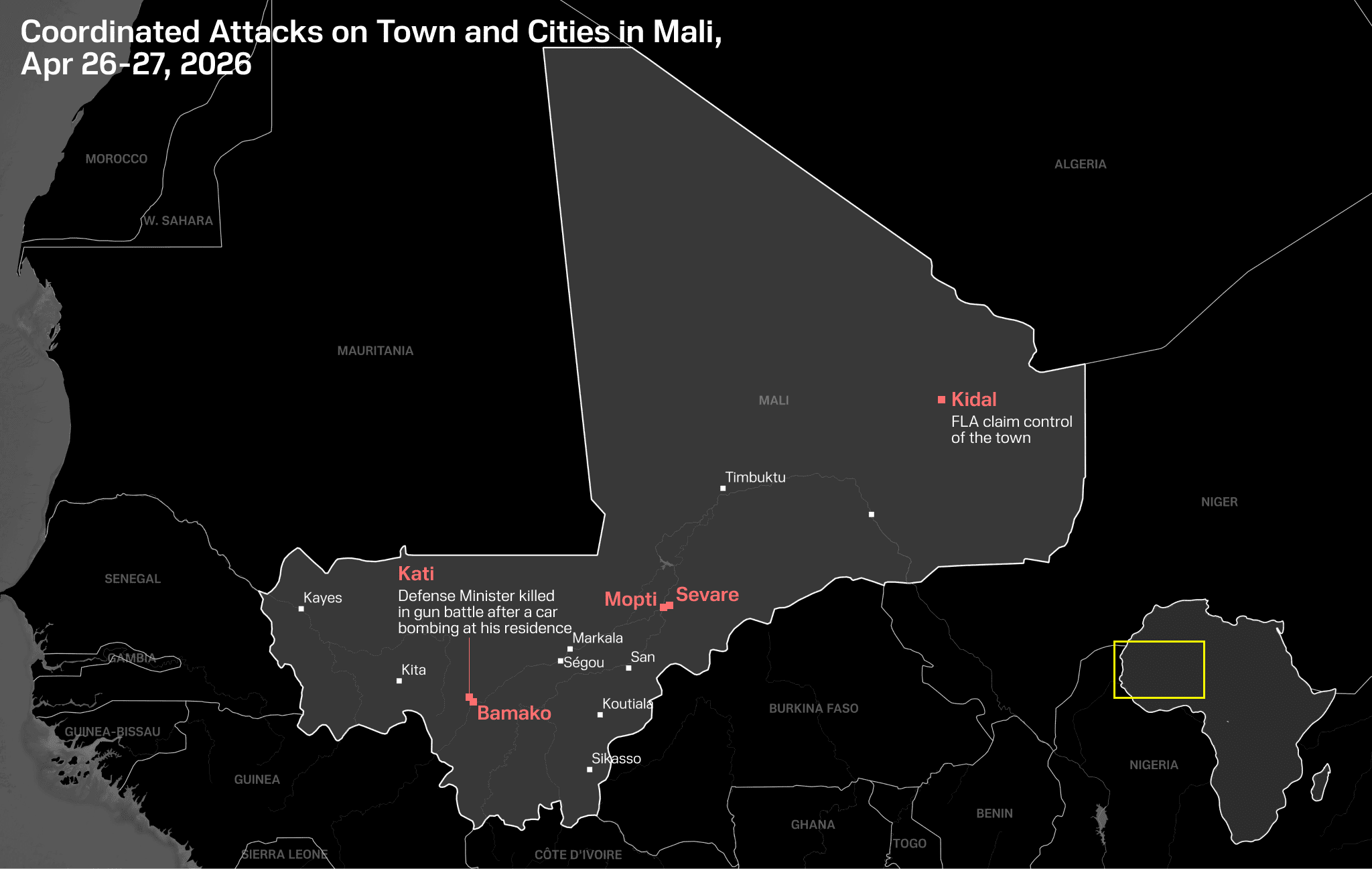
Russia expanded its military role in Mali after the country’s military leadership, headed by interim president Assimi Goïta, reduced cooperation with France following the 2020 and 2021 coups. French forces, which once numbered more than 5,000 personnel in Mali, were gradually withdrawn as Bamako deepened military ties with Moscow.
According to Le Monde, approximately 2,500 Russian personnel remain deployed in Mali. French military sources cited by the newspaper said Russia is now concentrating forces in central and southern Mali in an effort to support the military government in Bamako.
Earlier, on April 25, a Russian Mi-8AMTSh helicopter operated by the Africa Corps was shot down near Gao during coordinated attacks by Tuareg armed groups and al-Qaeda-linked JNIM fighters across Mali, according to Defense Blog and Russian military bloggers. All onboard personnel were reportedly killed.
Discuss this article:
-9a7b3a98ed5c506e0b77a6663f5727c5.png)


-c439b7bd9030ecf9d5a4287dc361ba31.jpg "Photo of Katherina Popilnichenko")

-72b63a4e0c8c475ad81fe3eed3f63729.jpeg "Photo of Cyril Barabaltchouk")