- Category
- Investigations
The West Builds the Chips, China Supplies Them, Russia Fires the Missiles—Inside the Leaked Files
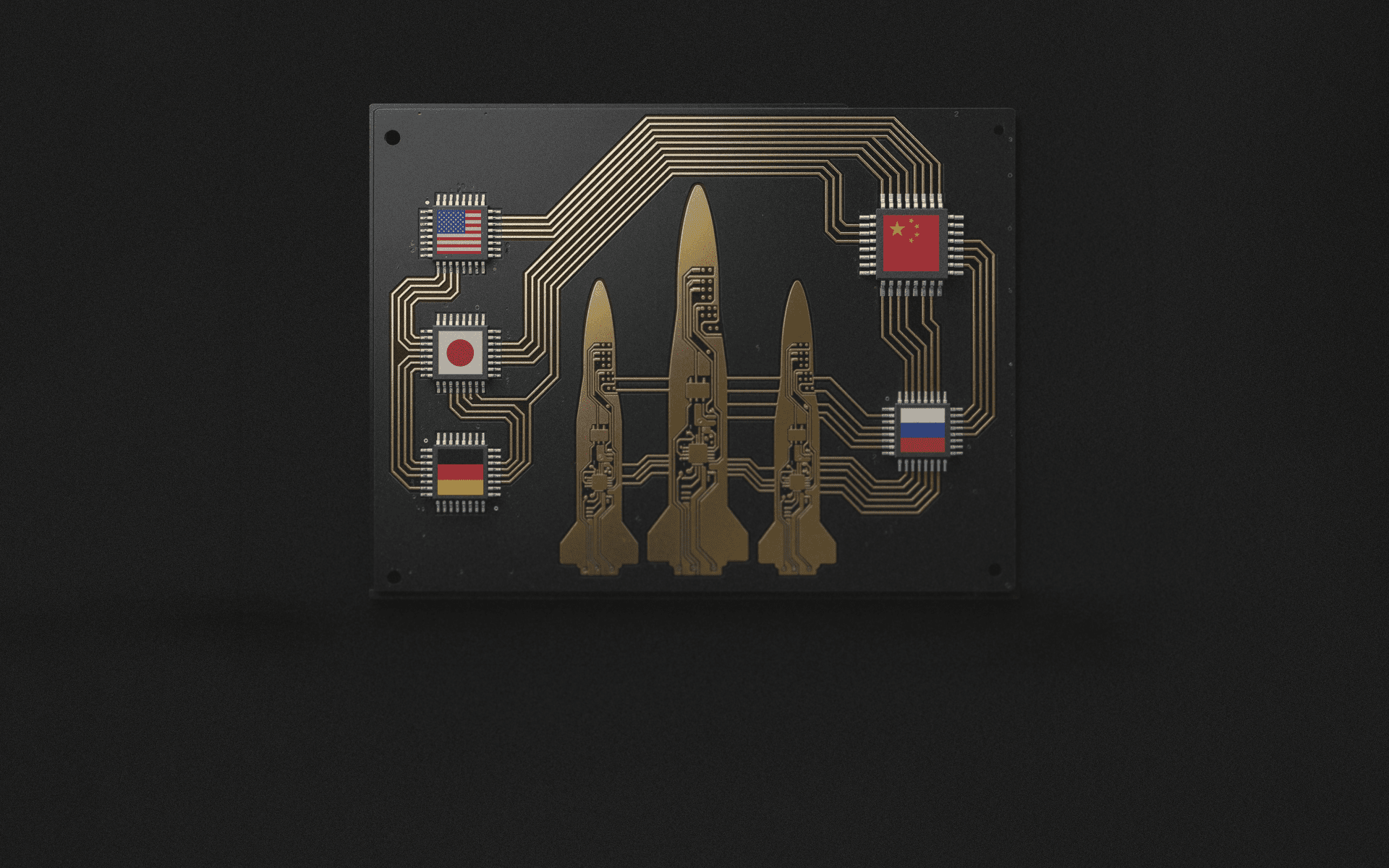
Despite years of sanctions, components from Intel, AMD, Siemens, Honeywell, and other Western firms continue reaching Russia’s missiles, drones, and communications systems through Chinese distributors.
 Prefer U24 Media on Google
- Authors

-206008aed5f329e86c52788e3e423f23.jpg "Photo of Oleksandr Moiseienko")
This is not a matter of isolated purchases of “civilian chips” through open marketplaces. This is a structured international supply system involving Chinese distributors, Russian intermediaries, industry trade shows, and direct commercial offers targeting companies within Russia’s arms industry—documents obtained by UNITED24 Media from the private intelligence organization private analytics company Dallas.
Russia’s latest large-scale attacks on Ukraine once again demonstrated the scale of the technological base underpinning its war machine. During these strikes, Russia deployed a broad range of weapons, from Shahed drones equipped with inexpensive two-stroke engines to precision-guided missile systems. At the same time, civilian targets remain among the primary objectives of Russia’s attacks: residential buildings, shopping malls, museums, and other civilian infrastructure.
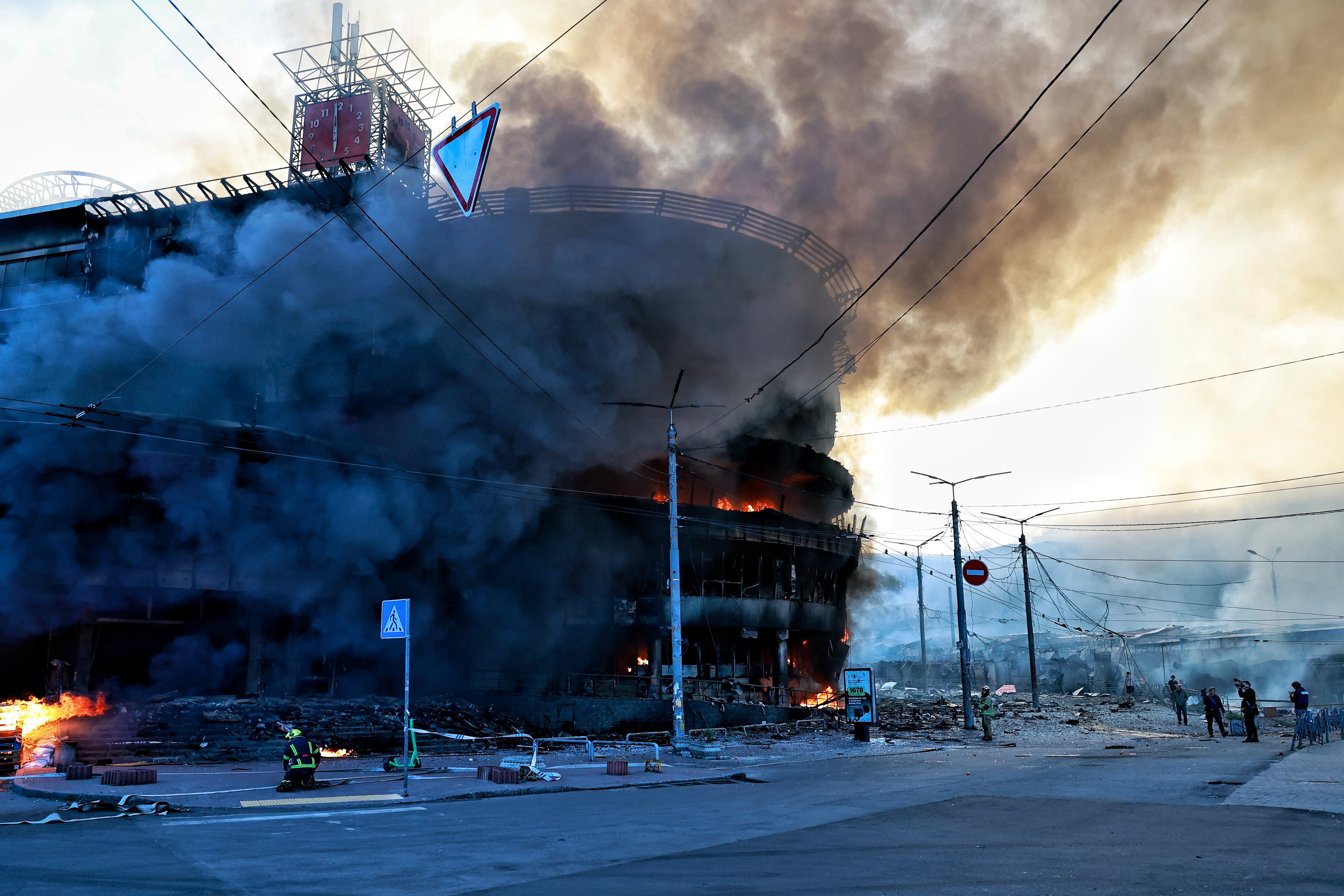
Against this backdrop, questions surrounding the effectiveness of global export controls are becoming increasingly urgent. Despite public claims about Russia’s technological isolation, internal documentation from Russian companies shows that Western electronic components continue to enter the country through networks of intermediaries and distributors integrated into the global electronics market.
Not “gray imports”: the system supplying Western electronics to Russia
Documents show that supply chains serving Russian industry include FPGAs, industrial modules, and high-reliability components manufactured by major Western companies—electronics widely used in the telecom, industrial, aerospace, and defense sectors and typically distributed through specialized supply networks rather than mass retail channels.
Commercial offers and internal documents reference products from major Western and allied manufacturers, including US firms Analog Devices, Honeywell, Microchip, Molex, Samtec, and Xilinx; Germany’s Siemens and Infineon; Japan’s Murata and Hirose; Switzerland-headquartered STMicroelectronics; and Ireland-based TE Connectivity. The documents also reference Altera, the FPGA manufacturer acquired by Intel. A significant share of these components is traditionally sold through B2B supply chains and specialized distributors.
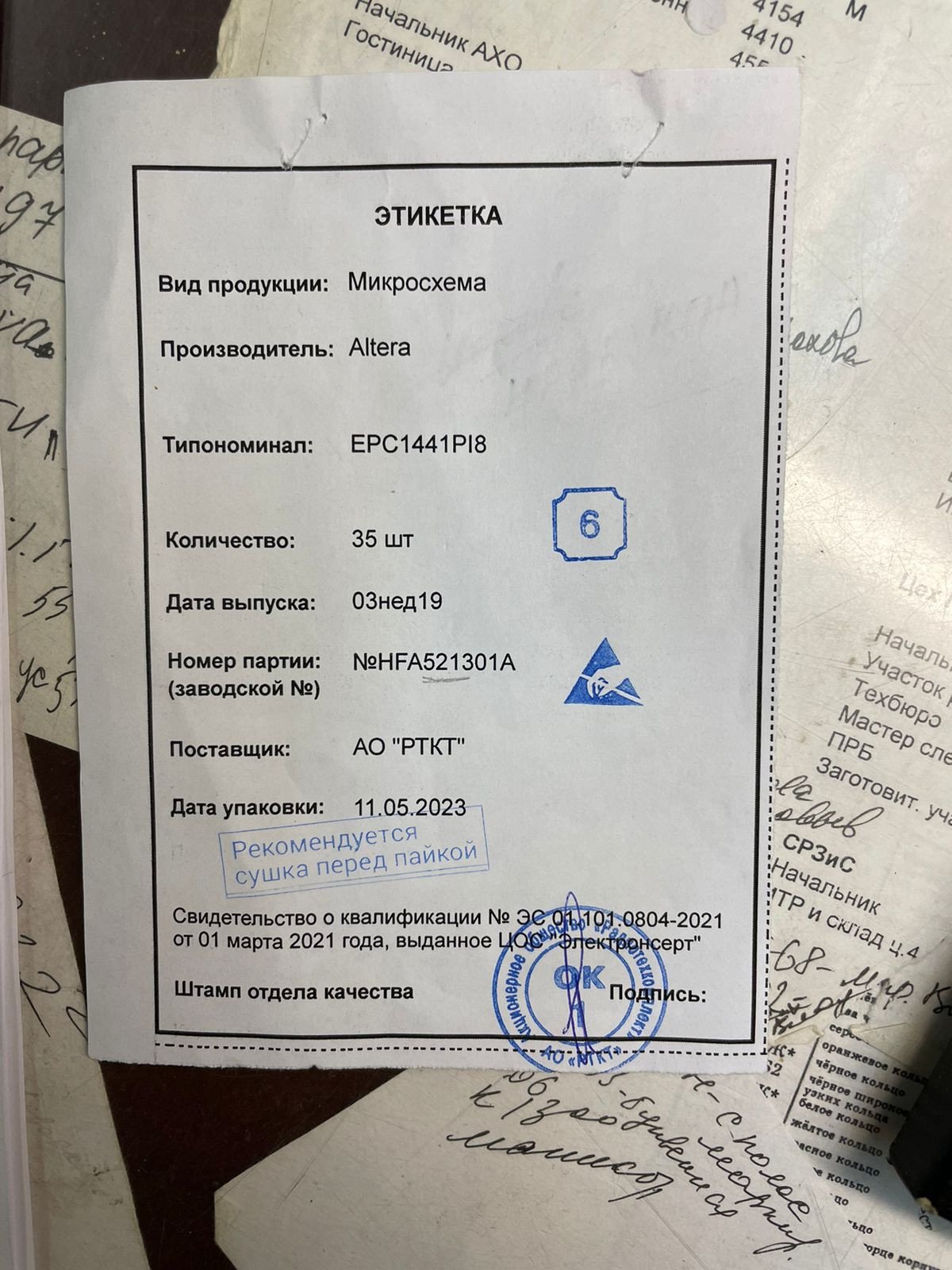
Despite years of Moscow’s rhetoric about “import substitution,” Russia’s electronics market today remains heavily dependent on private intermediary networks that facilitate deliveries of Western components through China and other jurisdictions.
ExpoElectronica: Russia’s hub for sanctions-era electronics supply chains
One of the hubs of this infrastructure was the ExpoElectronica trade show, held openly in Moscow in April 2026. Russia’s largest electronics forum has effectively become a platform for building new electronics import supply chains under sanctions conditions.
Dallas analysts obtained a list of 719 participating companies:
337 from Russia;
7 from Belarus;
376 from China, including nine companies from Hong Kong.
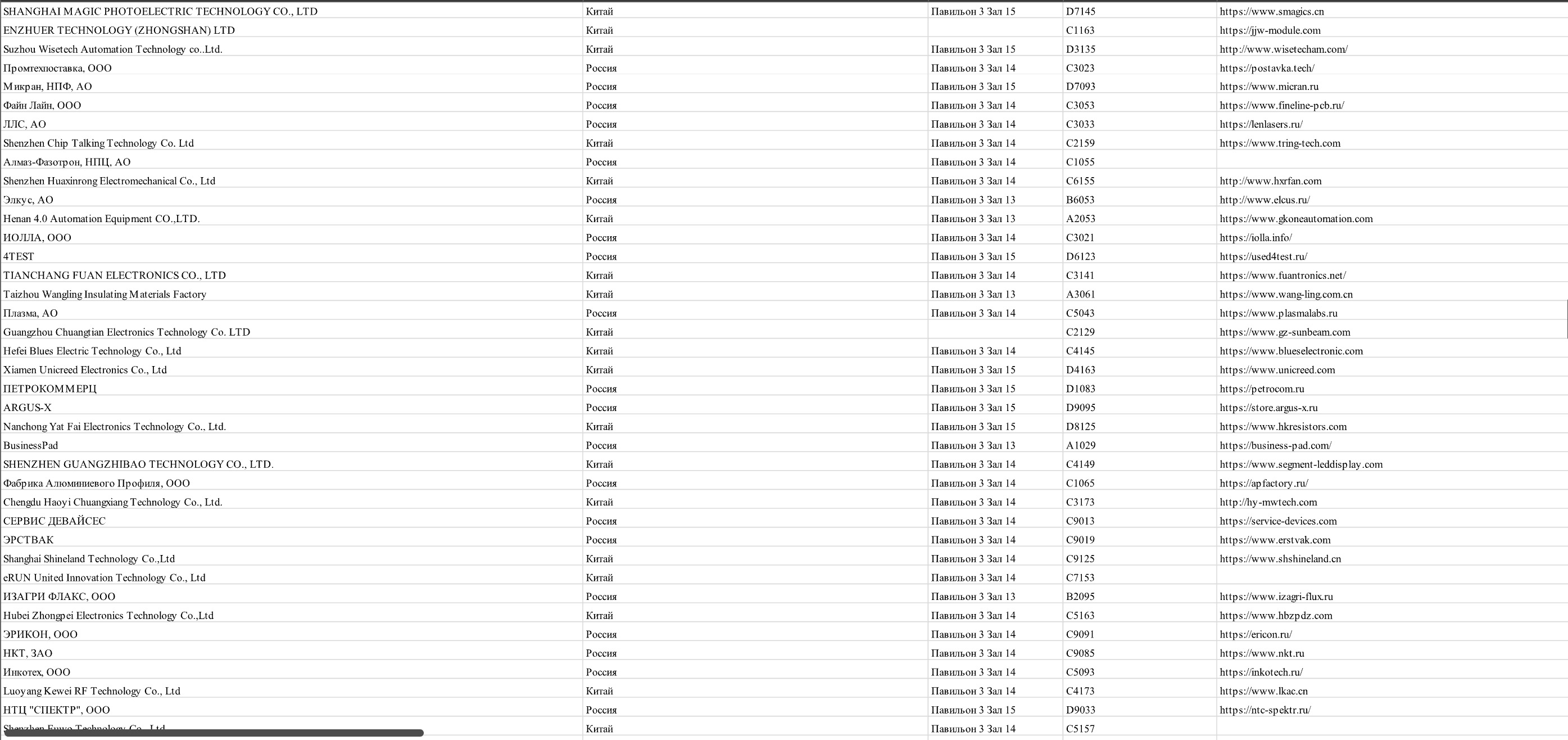
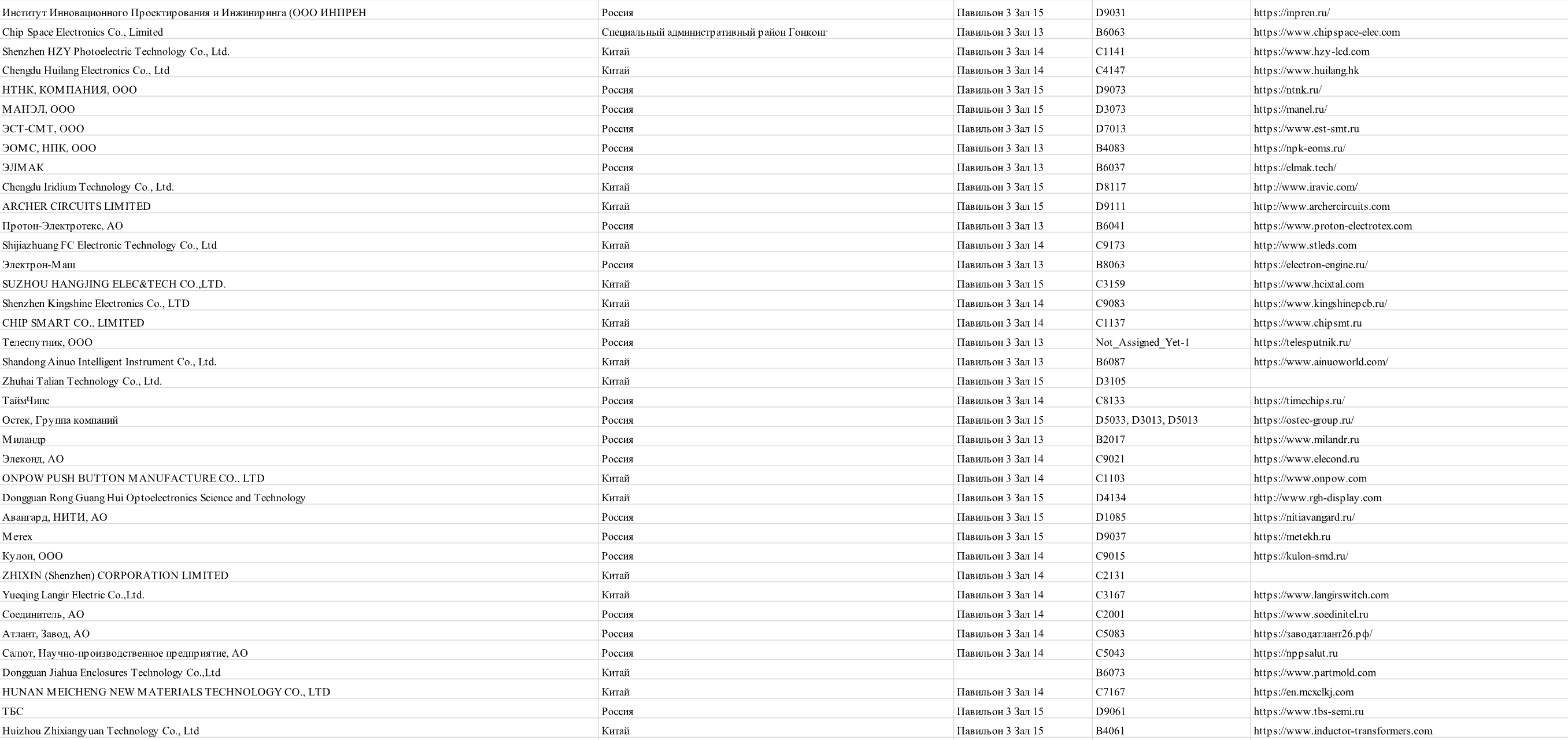
The composition of exhibitors and the products presented at the exhibition demonstrate that Russia’s electronics industry is not isolated from the global market. Instead, it remains integrated into international supply chains for Western electronics.
How LifeElectronics supplied Western chips to Russia’s arms industry
One notable ExpoElectronica participant was the Russian company LifeElectronics LLC, which has operated in the electronic components market since 2012. Dallas documents show that after the start of the full-scale war, the company actively began offering its services to enterprises in Russia’s arms sector as a supplier of Western electronics.
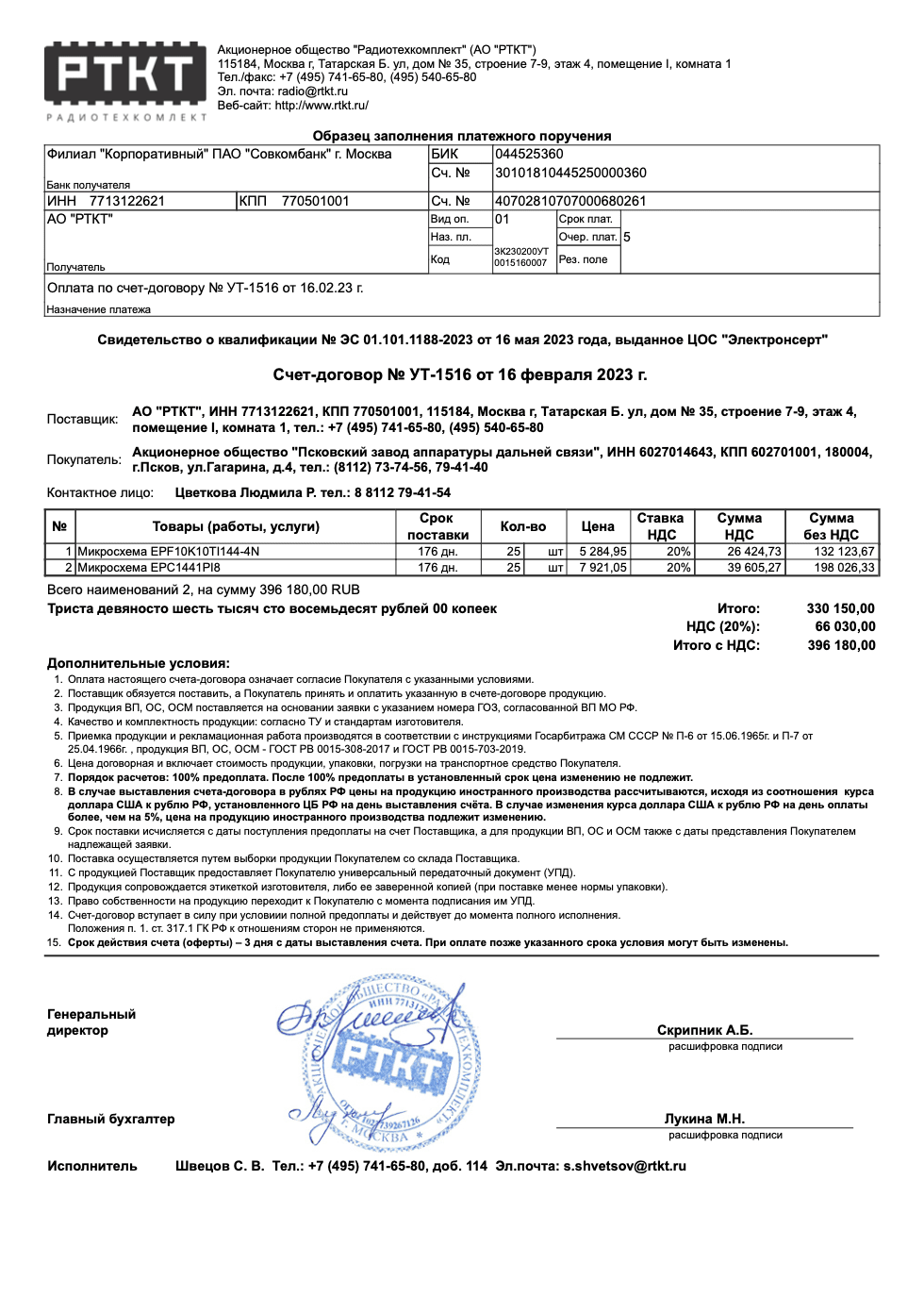
Our editorial team obtained correspondence between LifeElectronics and the Pskov Long-Distance Communications Equipment Plant—a company currently under sanctions imposed by the United States, the European Union, Canada, Switzerland, and Japan.
In one letter, the company directly describes its integration into Russia’s defense-industrial complex:
We are currently included in the list of trusted suppliers for Almaz-Antey Air and Space Defense Concern, Tactical Missiles Corporation, and High-Precision Systems. We successfully supply radio-electronic components for sectors including naval systems, aviation, air defense systems, and communications.
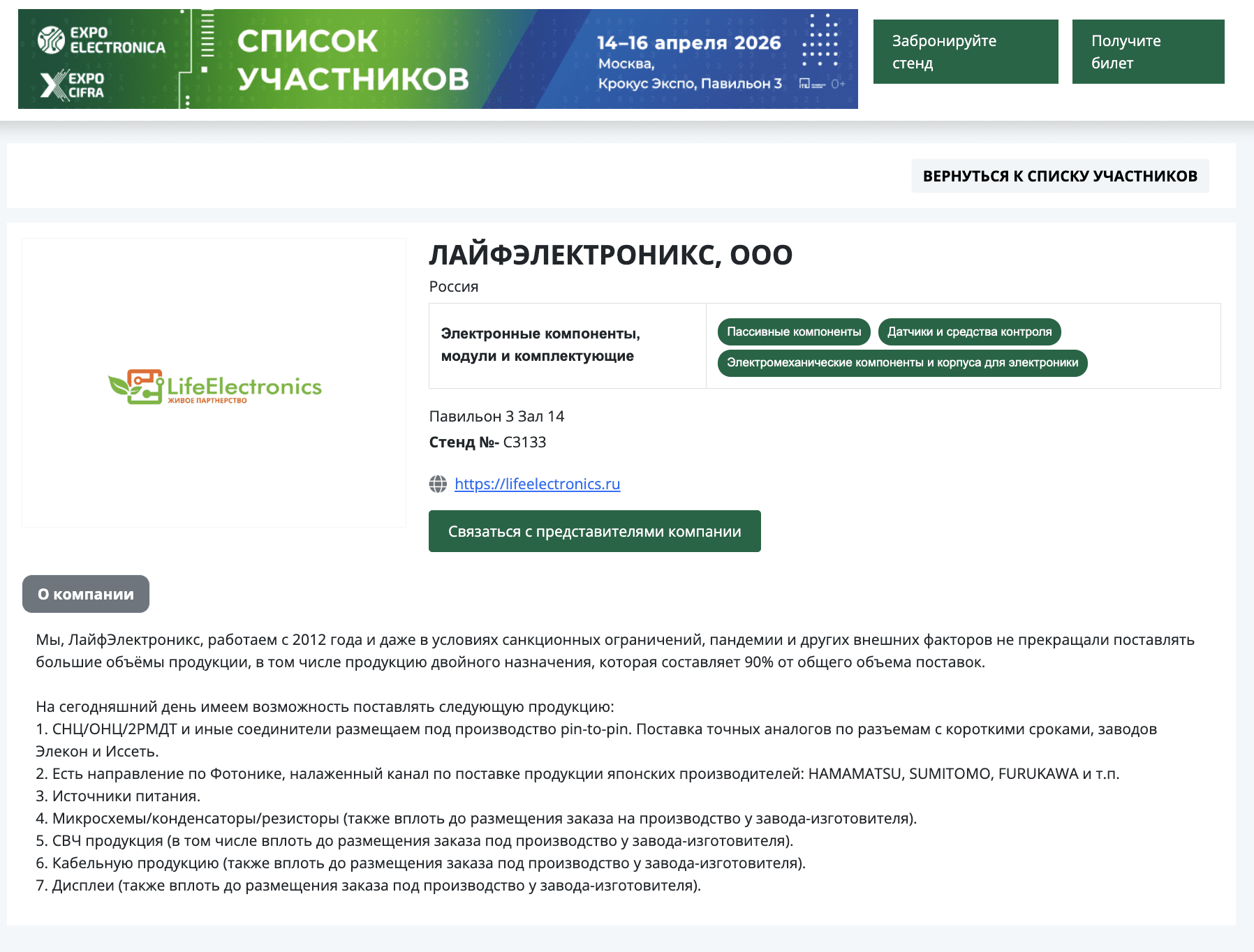
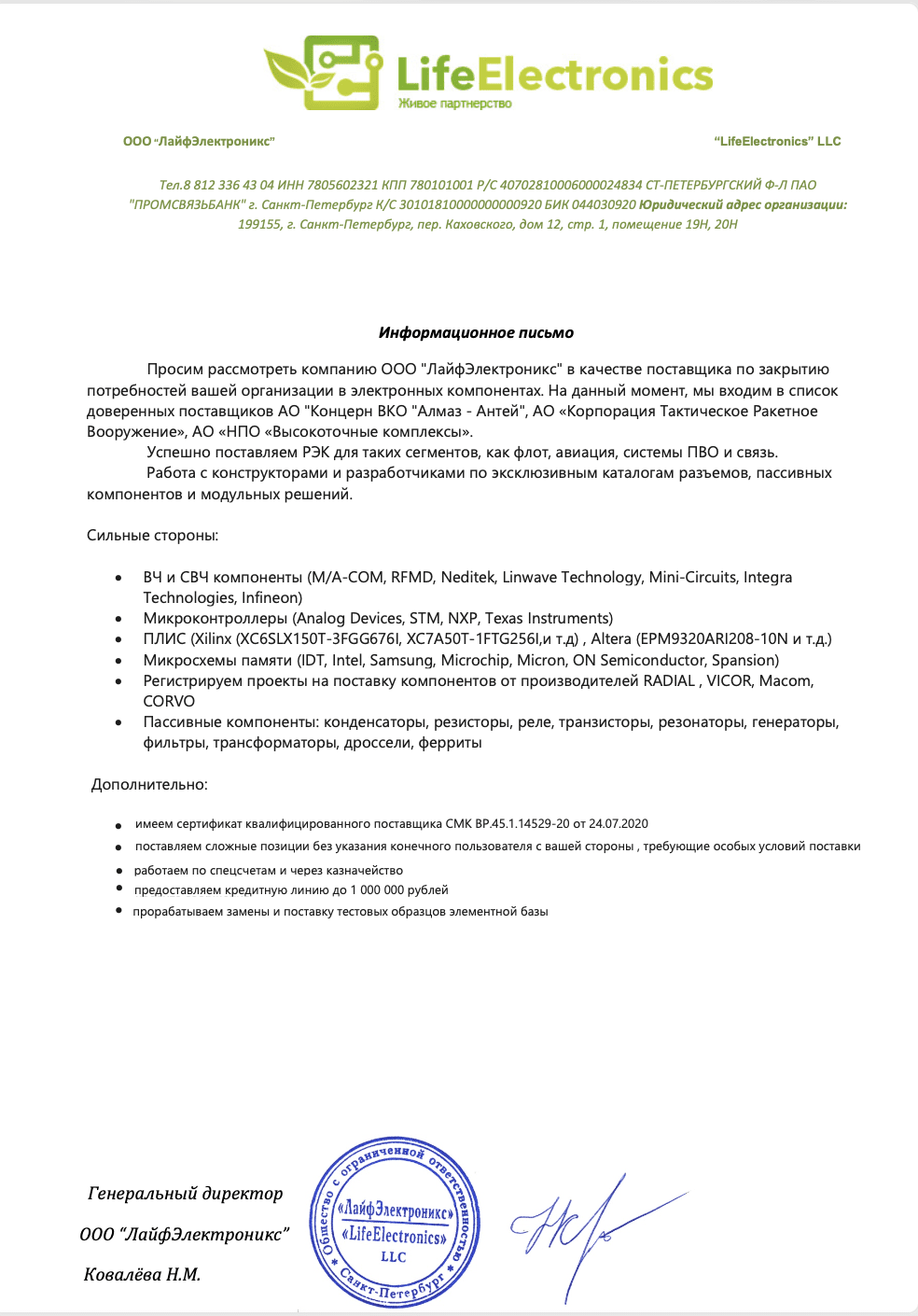
In addition to openly acknowledging cooperation with key Russian weapons manufacturers, the documents list Western components the company was prepared to supply, including products from Xilinx/AMD, Altera (Intel), Microchip, Micron, Infineon, Analog Devices, Siemens, Murata, and other international manufacturers.
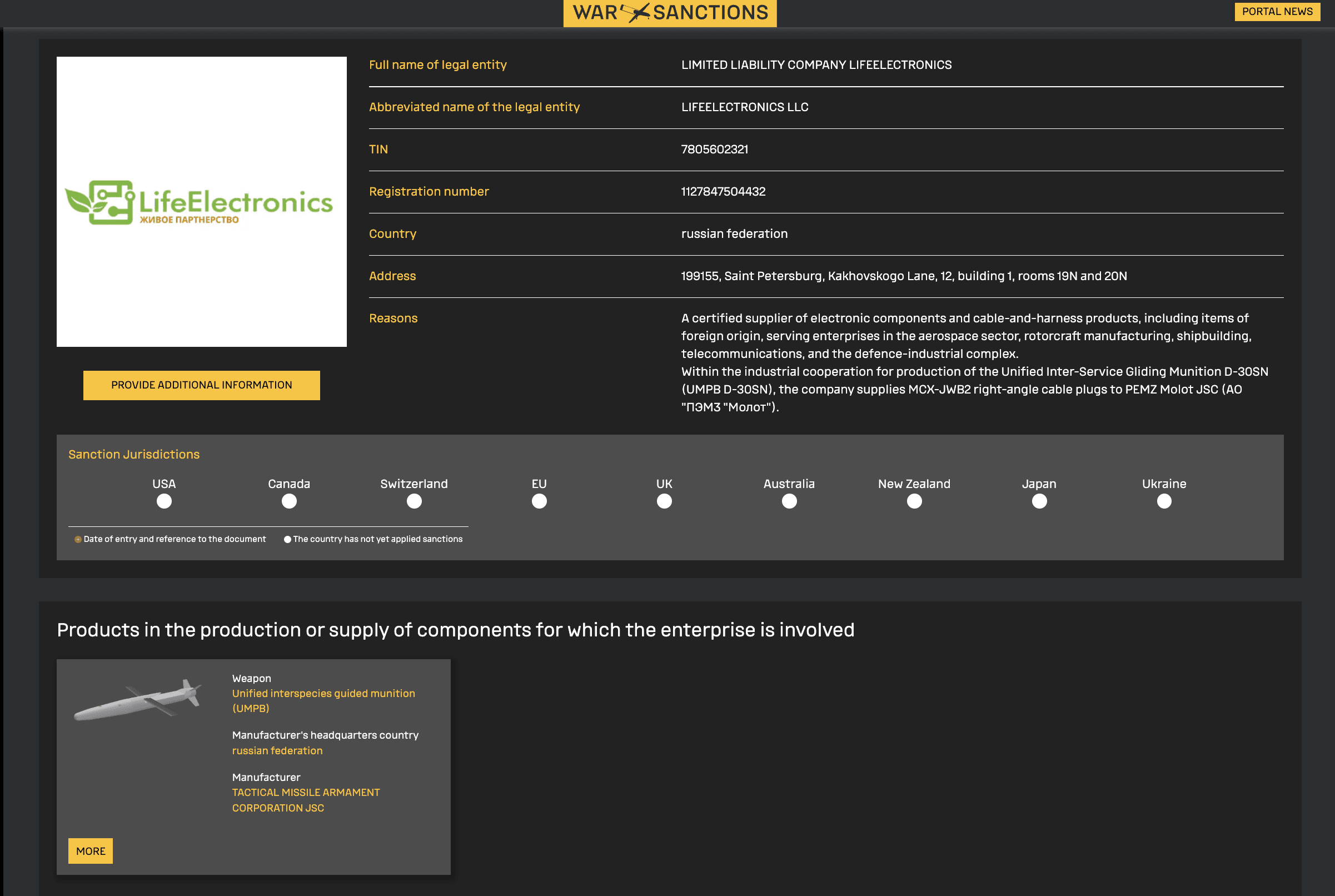
LifeElectronics has been linked to the production of the UMPB-D30SN universal glide bomb, Ukraine’s analytical platform War&Sanctions data reported. The UMPB-D30SN universal glide bomb is one of the newer types of Russian aerial munitions extensively used against Ukraine. Despite this, the company itself has not been sanctioned.
Western electronics procured for Russia’s state defense orders
Dallas documents also show that the Pskov Long-Distance Communications Equipment Plant continued purchasing Western electronics through Russian intermediary networks even after sanctions were imposed. The materials reference orders placed with Radiotechkomplekt JSC for Altera FPGA components, part of Intel’s corporate structure.
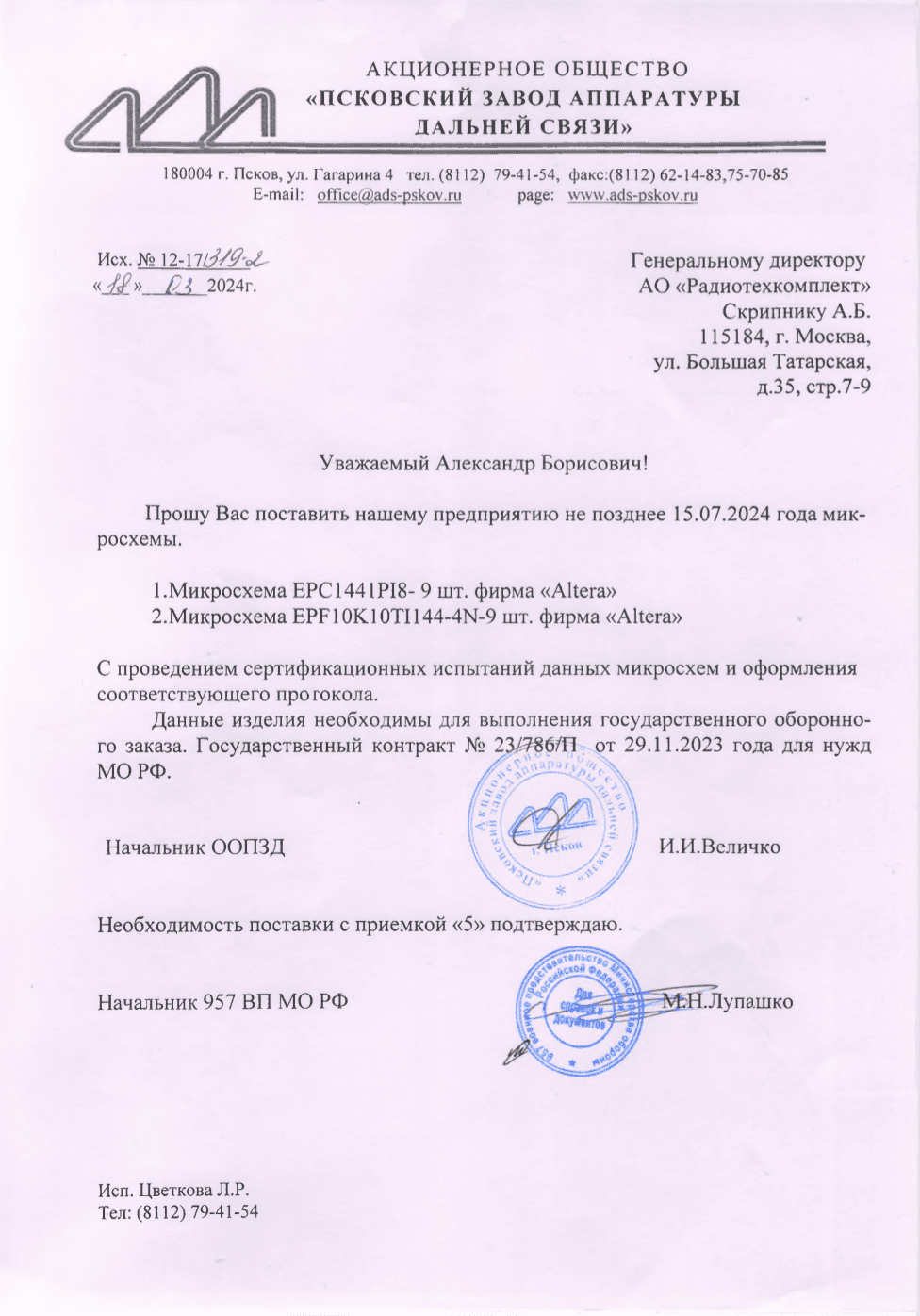
Notably, these purchases were directly tied to Russia’s state defense procurement system. Documents approved by the 957th Military Representative Office of the Russian Ministry of Defense explicitly state:
“The products are required for the fulfillment of the state defense order.”
In effect, the documents reveal not “gray imports” of isolated parts, but the operation of a fully developed commercial infrastructure in which Russian defense enterprises, private distributors, and suppliers of Western electronics remain integrated into a single supply chain even after years of sanctions and export restrictions.
Chinese companies in Russia’s electronics supply chains
A revealing example of Chinese companies’ integration into the system supplying Western electronics to Russia is HK JDW ELECTRONIC CO., LIMITED—one of hundreds of companies registered as ExpoElectronica participants. On the exhibition’s website, the company openly presented itself as a supplier of products from Siemens, Infineon, Mitsubishi, FUJI, Hitachi, and other international brands.
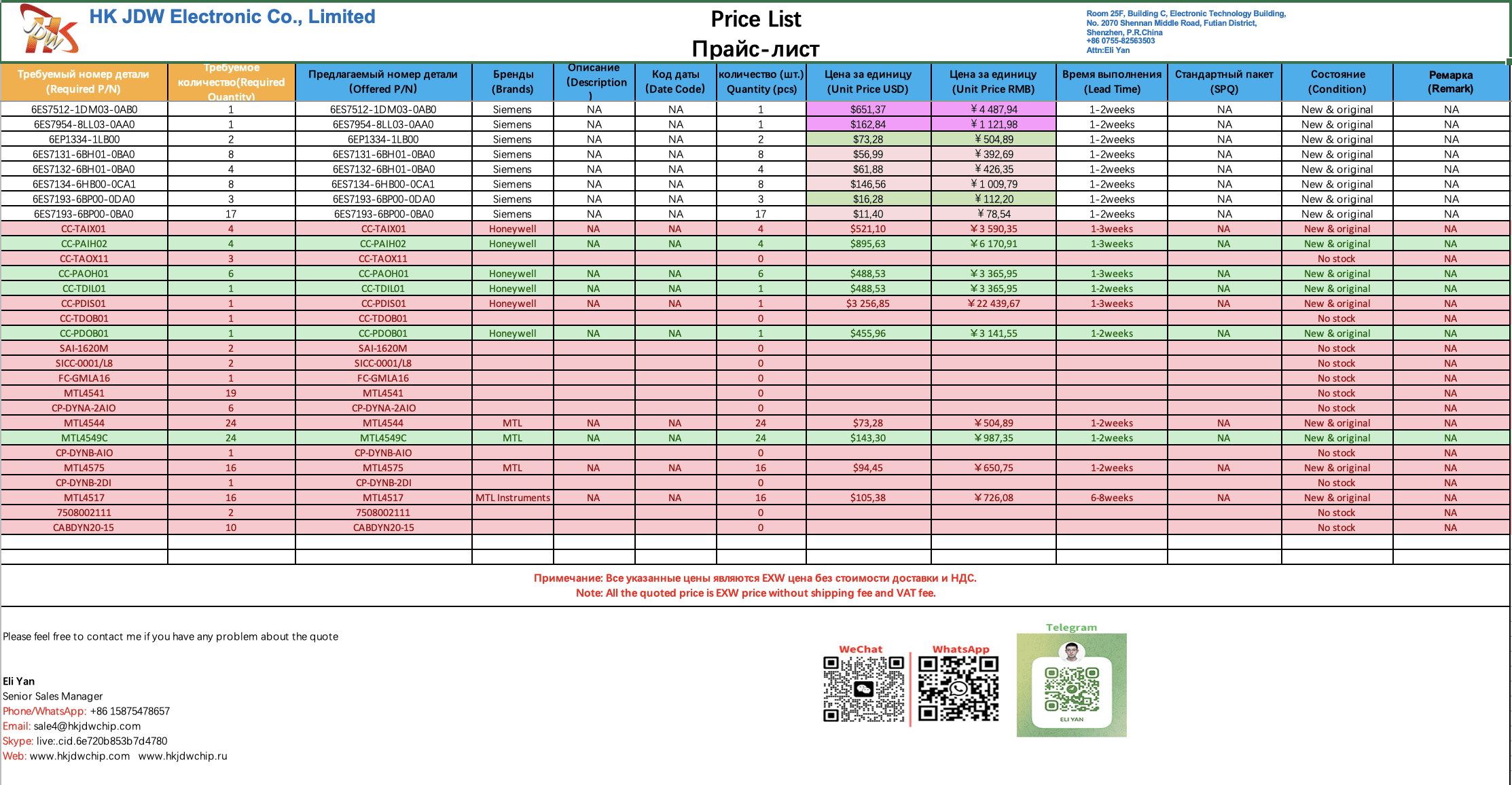
Dallas obtained documentary evidence of Western component deliveries to Russia. The editorial team reviewed a price list from HK JDW ELECTRONIC CO., LIMITED, offering Siemens and Honeywell components, which the Chinese company sent to the Russian intermediary Priborelectrokomplekt LLC.
Priborelectrokomplekt itself acted on behalf of ASU Engineering, a company specializing in servicing and configuring automated control systems for several Russian oil and gas giants, including Lukoil, Rosneft, and Gazprom. In practice, the documents point to ongoing supplies of Western industrial electronics for critical sectors of Russia’s economy years after sanctions and export restrictions were imposed.
At the same time, HK JDW ELECTRONIC CO., LIMITED does not appear to operate solely as a supplier for the Russian market. The company maintains an English-language website, international B2B profiles, LinkedIn accounts for its managers, and offers component deliveries to customers in Europe and the United Kingdom.
Chinese supplier networks with global reach
Further analysis of Priborelectrokomplekt documentation indicates that HK JDW ELECTRONIC CO., LIMITED is only one element of a much broader network of Chinese suppliers. The documents also reference:
Hong Kong Hongchang Technology Co., LTD;
Jiejiecheng Technology Co., Ltd;
Faraday Technology (HK) Co., Limited;
Sunshine Electronic HK Co., Limited.
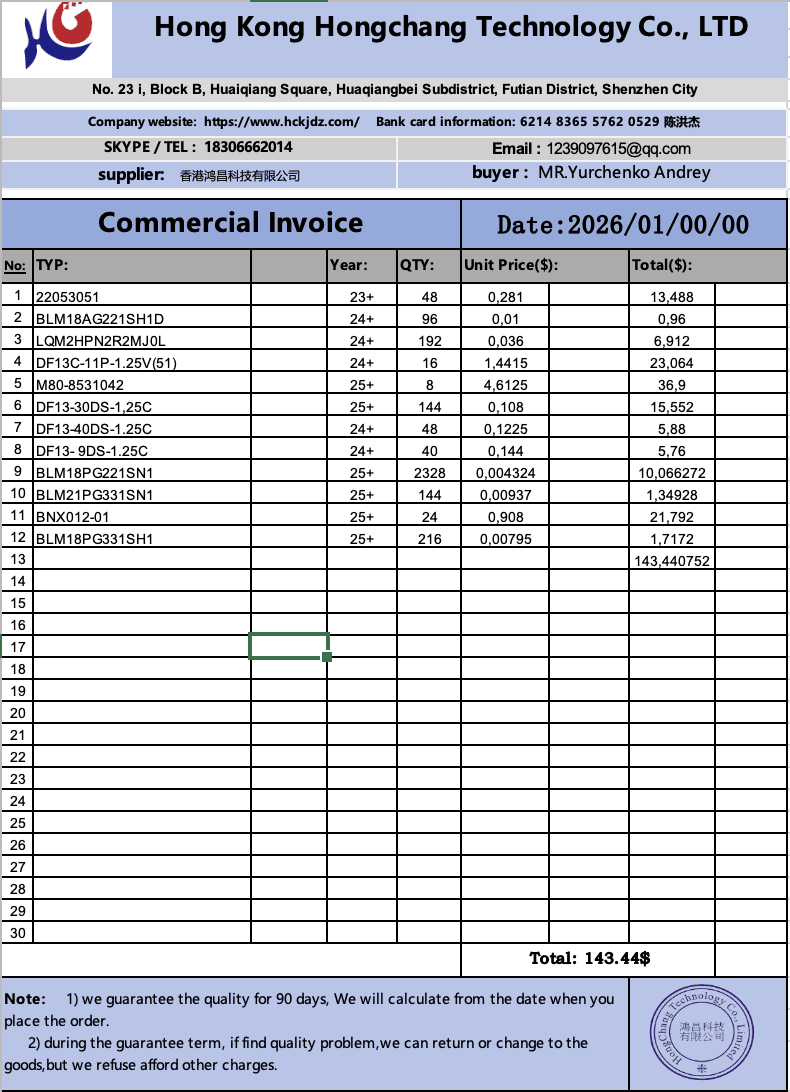
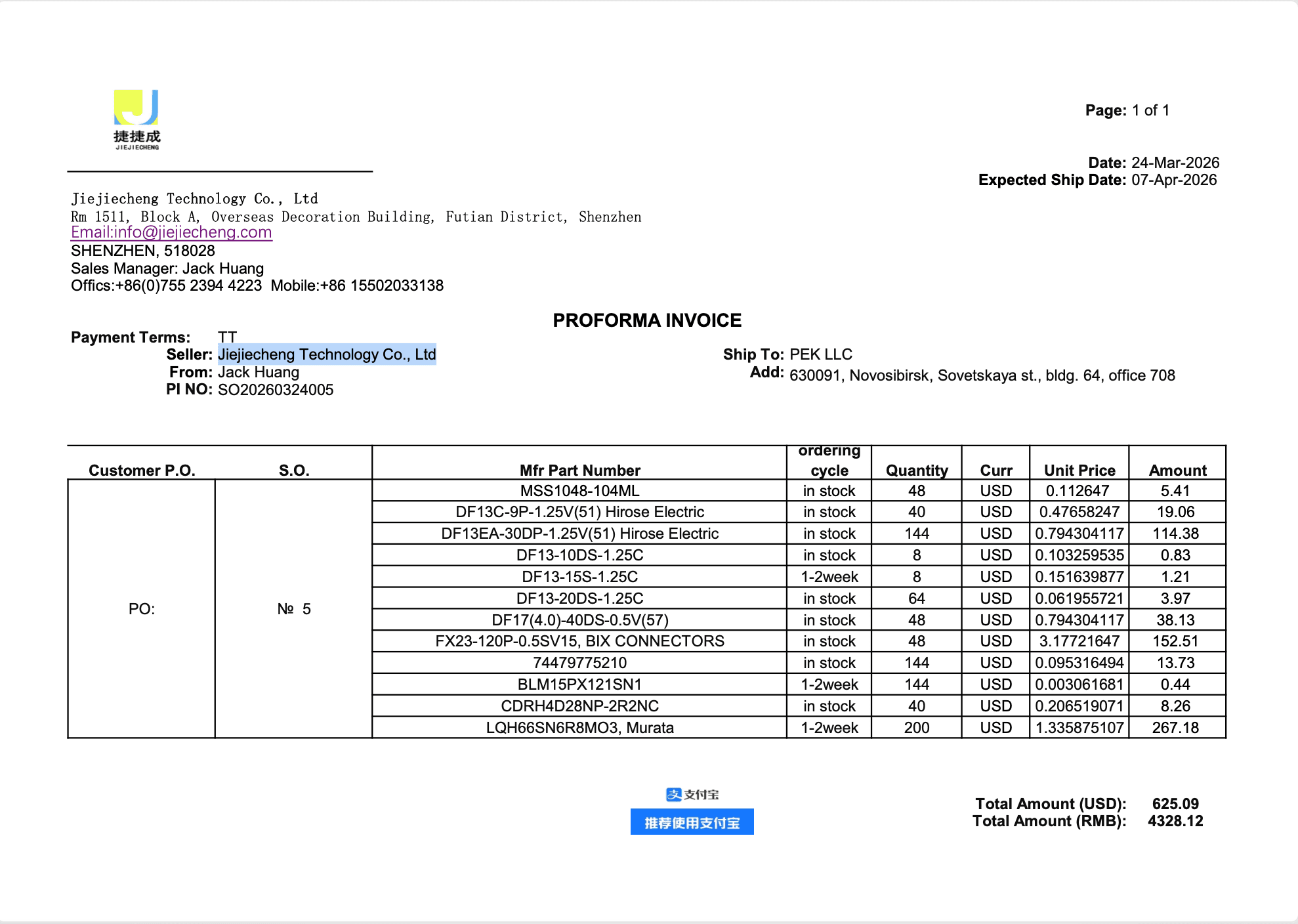
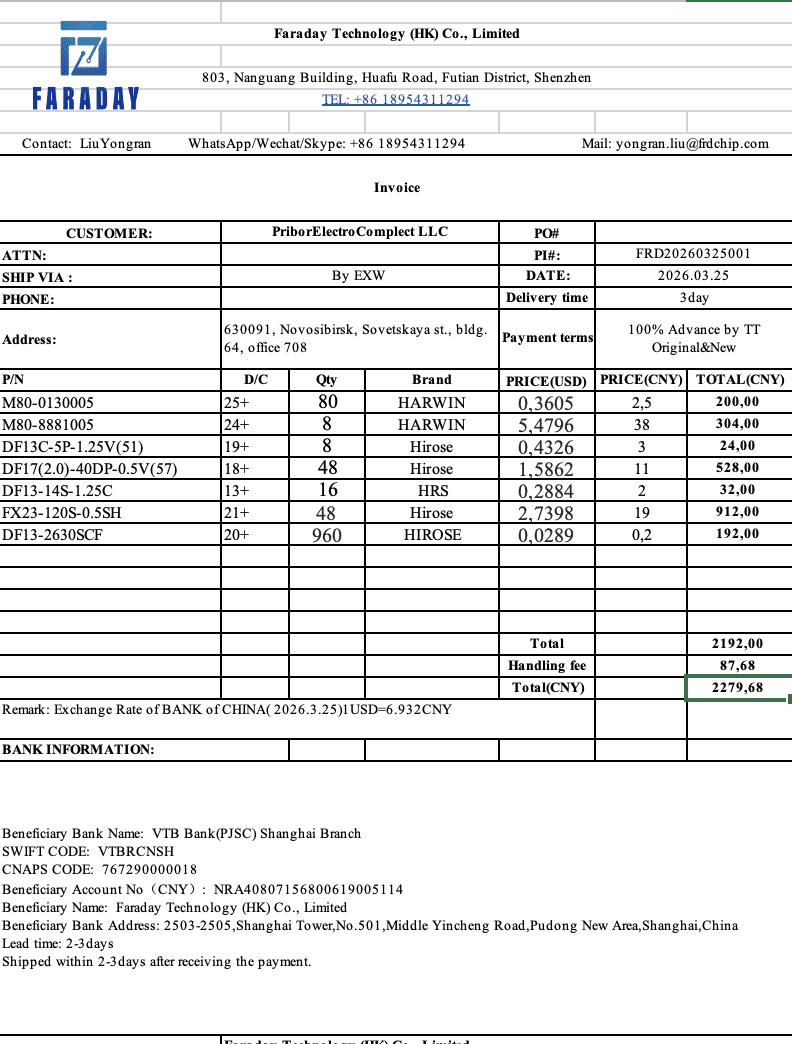
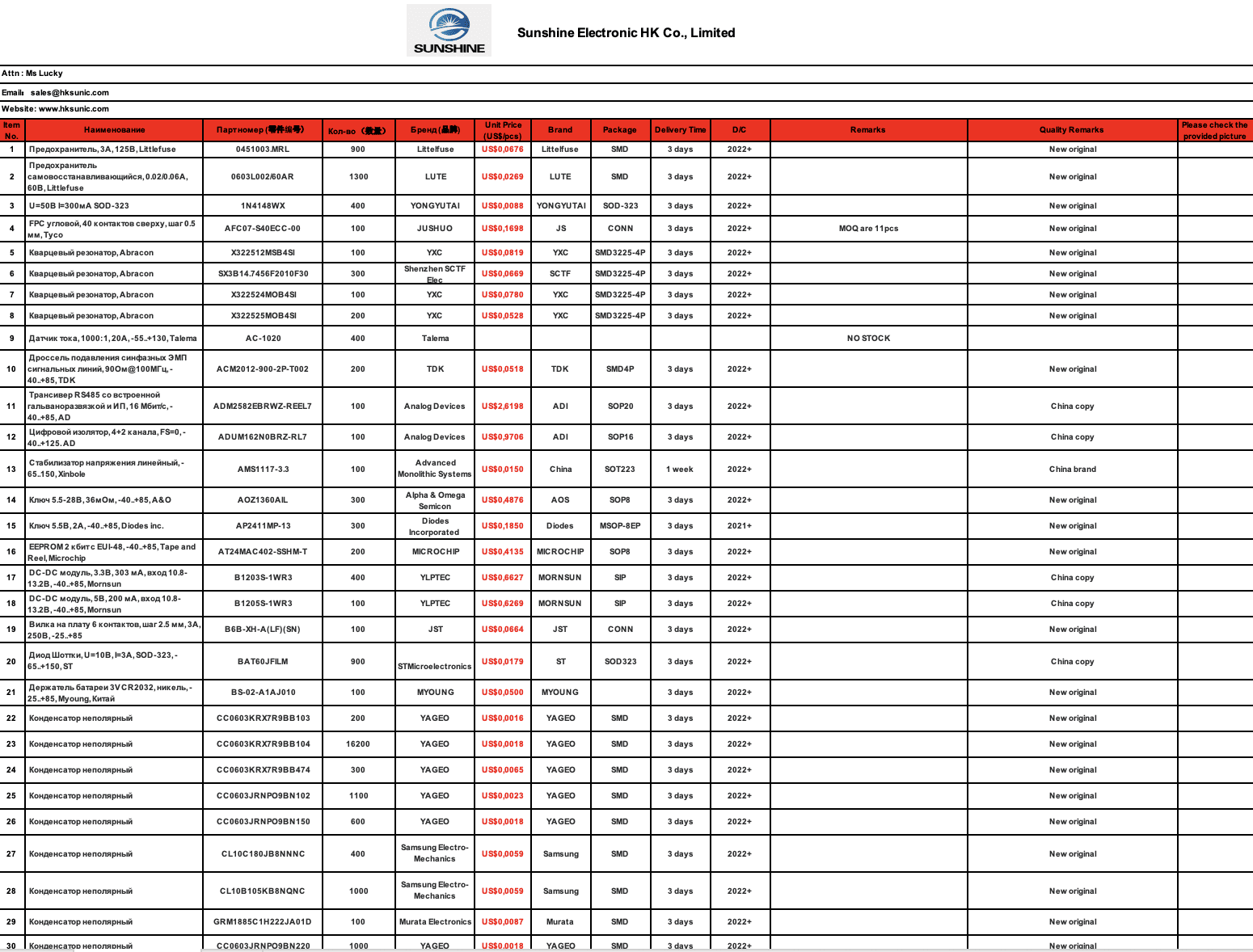
These companies likewise do not appear to be isolated entities operating exclusively in China or Hong Kong. Some maintain commercial presences or points of contact within the European Union. For example, Sunshine Electronic HK is represented on European B2B platforms and electronic component marketplaces. Most of them deal in components produced by globally recognized manufacturers.
The documentation includes invoices, bills, and commercial offers for products from Hirose, Murata, TE Connectivity, Samtec, Molex, Bourns, Analog Devices, Yageo, Microchip, and other international electronics manufacturers. Some documents contain Chinese companies’ banking details, delivery terms, and shipment schedules for products destined for Russia.
Russia’s parallel sanctions economy
In addition to Chinese suppliers, Russian importers actively rely on domestic intermediary firms. Within the Priborelectrokomplekt documentation, our editorial team identified invoices for components issued by the Russian company GetChips, which also specializes in supplying Western electronics.
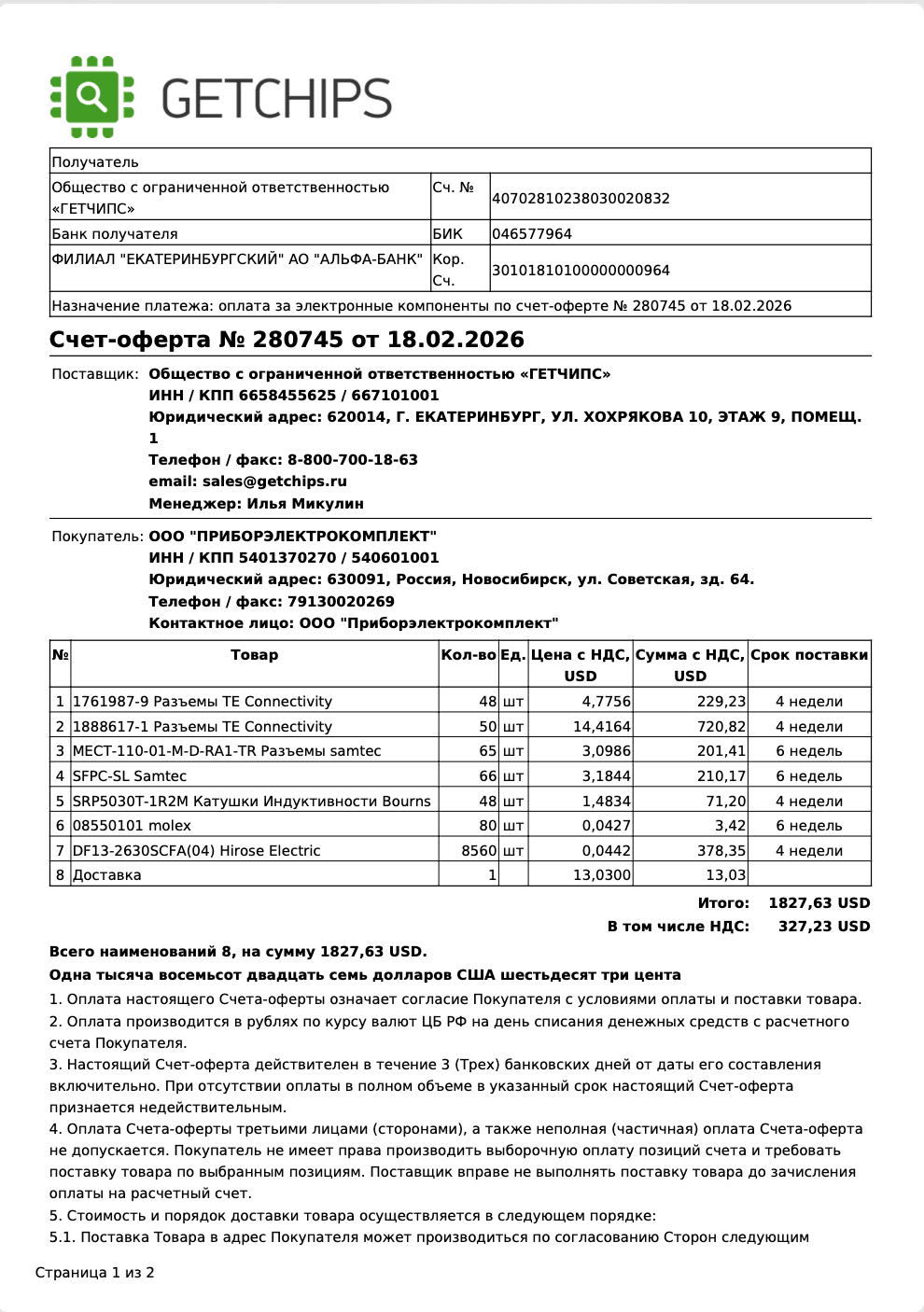
Dallas documents further reference component deliveries for the Oktava plant—a manufacturer of communications equipment for the Russian military that is part of the Rostec conglomerate and has been under US sanctions since 2023.
The result is a deeply paradoxical situation: while Western governments publicly declare Russia’s defense industry technologically isolated, dozens of private companies in China and Russia are effectively sustaining the system through supplies of Western electronics—from industrial modules to components that can be used in military equipment and critical infrastructure.
And the core problem extends beyond Russian intermediaries themselves. The documents point to the existence of a parallel global electronics trading infrastructure, parts of which remain simultaneously integrated into both the international market and supply chains serving Russian industry and sanctioned sectors. It is this system that continues to allow Russia access to critically important Western technologies despite years of sanctions and export restrictions.
Discuss this article:
-9bd5e1532102621f8fb1c4ba871a3171.png)

-605be766de04ba3d21b67fb76a76786a.jpg "Joseph Place")
-111f0e5095e02c02446ffed57bfb0ab1.jpeg "Photo of Roman Kohanets")