- Category
- Latest news
Inside the Shahed-107: Ukraine Unpacks Iran’s Newest Attack Drone Now Targeting Its Cities
 Prefer U24 Media on Google
- Authors


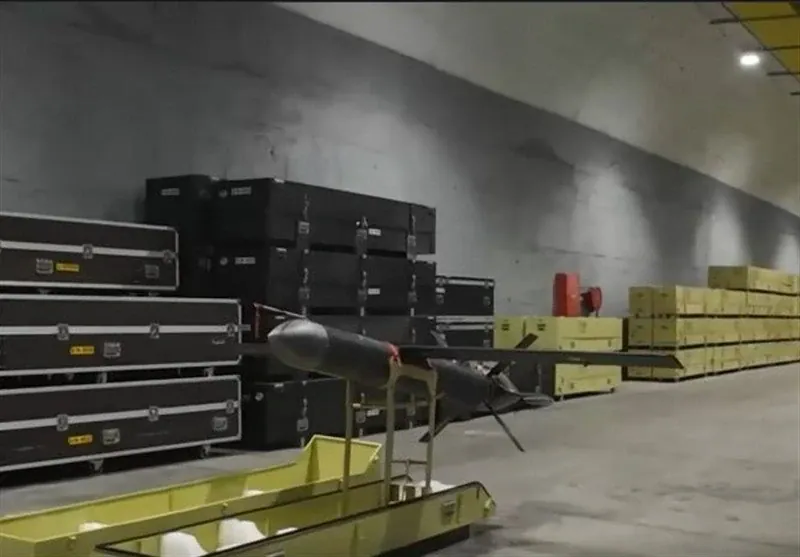
Ukraine’s military intelligence service has released a comprehensive technical breakdown of the Shahed-107, a new Iranian-made attack drone that Russia has begun deploying on the battlefield. The report, published through the War&Sanctions platform on November 25, offers the first detailed public look at the drone’s internal design, components, and foreign-made electronics.
According to Ukraine’s Main Intelligence Directorate (HUR), the Shahed-107 was first shown publicly by Iran’s Islamic Revolutionary Guard Corps in June during a spike in tensions with Israel. The drone has since moved quietly into Russia’s arsenal and is now appearing in attacks against Ukraine—prompting Kyiv to tear down the newest model and document its design.
Iranian Shahed-107 wreckage, somewhere in Jordan https://t.co/Y0LXKaamix pic.twitter.com/iEzTKdDpYv
— Hamid | حمید 🇮🇷 (@hmdmosavi) June 18, 2025
HUR analysts describe the Shahed-107 as a high-wing unmanned aircraft with an estimated wingspan of roughly three meters and an X-shaped tail assembly designed to stabilize flight.
The airframe is built from lightweight carbon fiber, while structural load-bearing elements use aluminum, a combination that provides both strength and reduced weight.
We bring you stories from the ground. Your support keeps our team in the field.
The examined drone carried a 15-kilogram cumulative fragmentation warhead, comparable to the munitions fitted to previous generations of Iranian Shahed drones used extensively by Russia.
The propulsion system is a DLE 111 two-stroke gasoline engine manufactured in China—the same class of small engines Ukraine has repeatedly found inside Russian-operated drones such as Gerbera, BM-35, Parodia, and Delta.
With a fuel tank capacity of 28 liters, the Shahed-107 has an operational range of roughly 300 kilometers, according to the HUR assessment.
Photos of an Iranian Shahed-107 loitering munition reportedly recovered in Ukraine, posted by Ukrainian expert Serhii "Flash" Beskrestnov. He said it was produced in 2024, carries an 8-9kg warhead and a four-element CRPA, and has an estimated flight range of several hundred km.… pic.twitter.com/LGpHvKKaKb
— John Hardie (@JohnH105) November 17, 2025
The drone relies on an inertial navigation unit (IMU) similar to Iran’s “Sadra” system. It also features a dedicated anti-jamming module and a four-element interference-resistant antenna, allowing it to maintain guidance in contested electronic environments.
Flight control is handled by an onboard FCU (flight control unit) that directs servos on the elevons and throttle, keeping the drone stable on its programmed route.
The electronic component base, HUR says, comes from a familiar mix of countries: the United States, Switzerland, China, Japan, Taiwan, the Netherlands, and Ireland.
This blend of Western and Asian parts mirrors what Ukrainian analysts have already documented in earlier Iranian drones provided to Russia.
“The presence of the Shahed-107 in Russia, and its use against Ukraine, is yet another demonstration of deepening military cooperation between Tehran and Moscow,” Ukraine’s intelligence service said. “Iranian weapons continue to undergo real-world testing on Ukrainian soil.”
Earlier, reports emerged that Russia was developing an unmanned maritime platform designed to launch Shahed-type drones directly from the sea.
Discuss this article:


-c439b7bd9030ecf9d5a4287dc361ba31.jpg "Photo of Katherina Popilnichenko")