- Category
- War in Ukraine
Western-Made Parts in Russian Drones: Could They Be Turned on US Forces?
In 2026, Russia is still receiving newly-made Western and global components within months of production, new documents obtained by UNITED24 Media reveal. Whether those same supply chains are now reaching Iran and could be used against US forces remains an open question.
 Prefer U24 Media on Google
- Authors

-46f6afa2f66d31ff3df8ea1a8f5524ec.jpg "Photo of Jess Daly")
A Russian drone strike on Ivano-Frankivsk on March 24, 2026, killed National Guardsman Volodymyr Shkrumeliak and his 15-year-old daughter, Aneliia. They had been visiting his wife and newborn son at a maternity hospital when the strike hit.
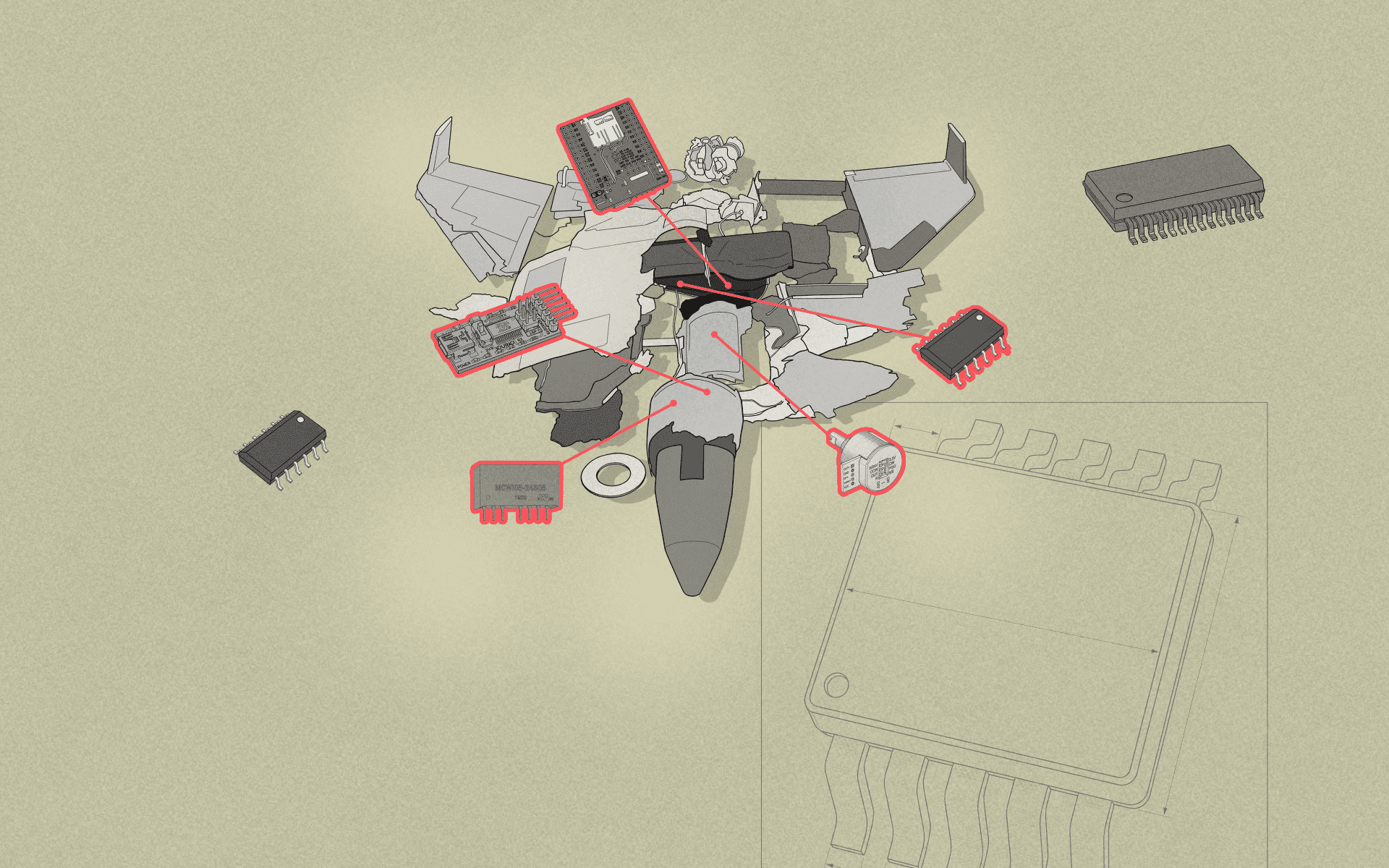
A forensic analysis by Ukrainian authorities, shared with UNITED24 Media, found that the Russian Geran-2 drone (a local production of Iran’s Shahed-136) was built using an extensive list of newly manufactured foreign components. Crucial parts were produced across the US, Germany, Japan, the UK, Taiwan, and China—underscoring how global supply chains continue to sustain Russia’s war machine.
Shahed/Geran drones form the backbone of Russia’s war, launched in the tens of thousands per month against Ukrainian cities and critical infrastructure.
Our analysis also compares this drone to one recovered after an attack in Kyiv in February 2025, revealing a shift in sourcing. Some lower-tier components are now being replaced with Chinese alternatives, suggesting that sanctions are having an effect. But the change is only partial.
Importantly, the 2026 drone contains Western-manufactured components dating as recently as 2025. They are not remnants of pre-war stockpiles, but freshly made electronics integrated into active weapons systems within months, raising urgent questions about how such components continue to reach Russia despite sanctions.
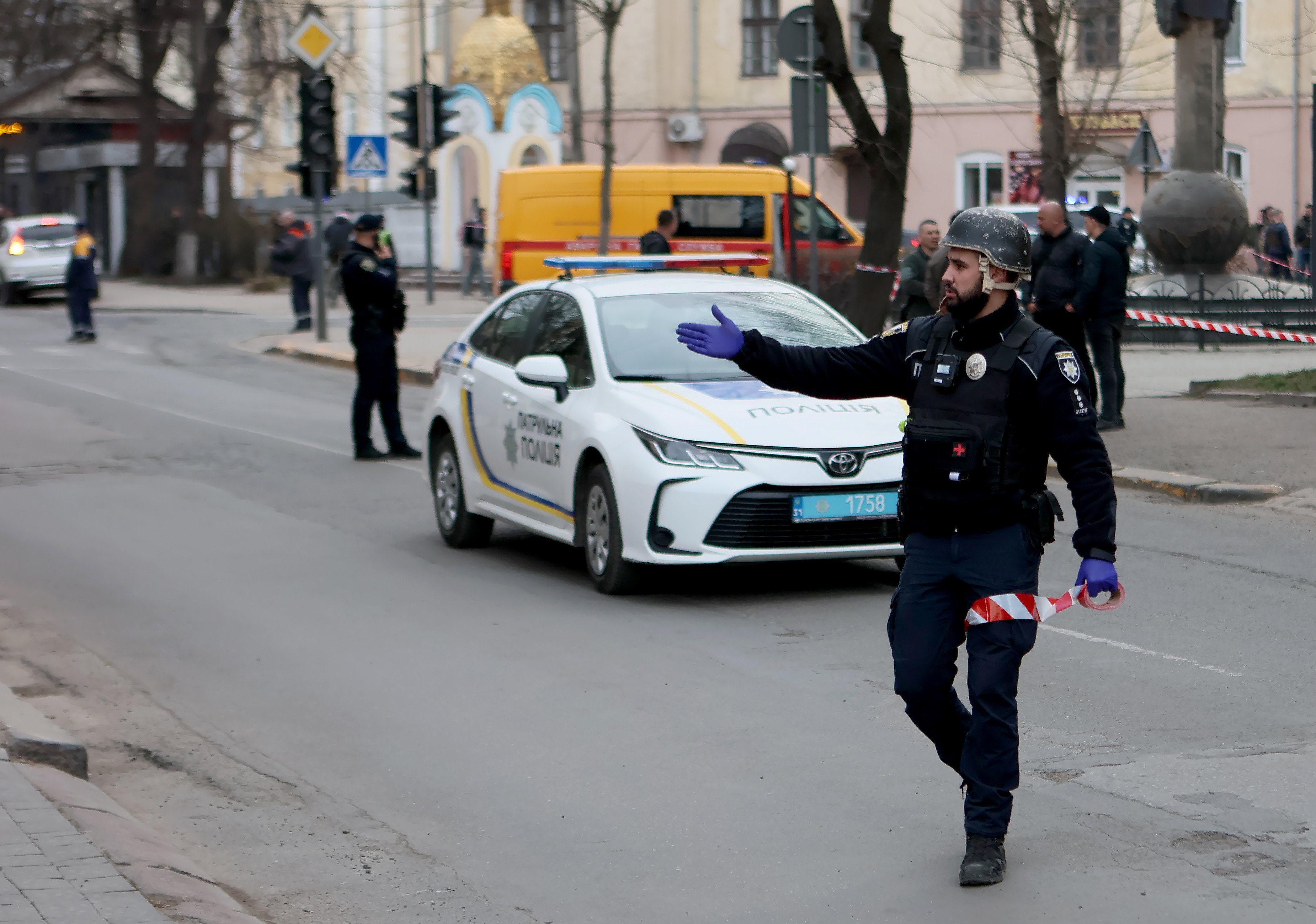
Those supply chains end in human cost. A father and his teenage daughter never made it home from a visit to a maternity hospital.Another critical finding in this investigation: components from a US company—previously linked to a case in which an Iranian employee was charged with procuring drone parts used in attacks that killed US soldiers in 2024—are now appearing in Russia’s drone program.
The overlap underscores the growing convergence between Iran and Russia’s drone capabilities, and raises urgent questions about whether the same supply chain vulnerabilities could once again be exploited—this time in conflicts involving Iran and US forces.
What do we know about the components found?
Crucial components of drones are largely dual-use goods—civilian technologies that are restricted when linked to military applications. Both Russia and Iran have repeatedly relied on these types of components, such as semiconductors and microelectronics, to sustain their weapons systems. The specific components identified in these drones are not readily available on the open market or off the shelf, indicating a deliberate and carefully managed procurement process.
The components identified across both drones—from the 2025 and 2026 strike—form the backbone of the system, enabling navigation, flight control, communications, and power management.
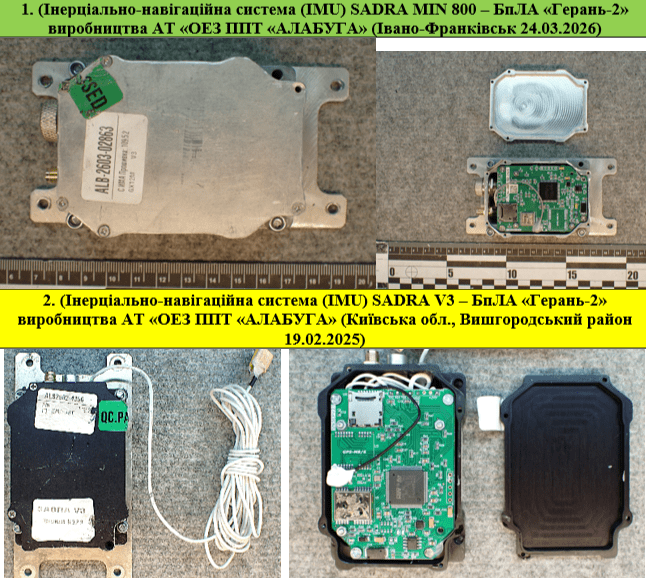
By contrast, the drone recovered in Ivano-Frankivsk in 2026 contains significantly newer components, dated from 2024 and later, with many produced in 2025. Several even include production-week markings, indicating that these parts were manufactured later into 2025.
The dual reality—partial substitution alongside continued access to Western technology—raises urgent questions about how such components are still being acquired.
We also found that many component markings had been deliberately damaged. In several cases, identification was possible only through forensic reconstruction, indicating clear attempts to obscure the origin of the parts. This is not incidental—it indicates an awareness of the sensitivity surrounding these supply chains.
Both drones contain navigation systems produced at JSC “OEZ PPT Alabuga,” a key assembly hub within Russia’s Alabuga Special Economic Zone. The facility is a key hub in Russia’s large-scale drone production and forms a critical link in its cooperation with Iran.But the operation extends beyond manufacturing. At Alabuga, Russia is training teenagers and recruiting foreign workers from abroad to sustain its drone war—feeding a pipeline that turns classrooms and recruitment drives into assembly lines for weapons used in Ukraine.
The companies supplying Russia’s drone components
Analog Devices
Some of the components inside the drones are manufactured in the US—specifically by Analog Devices, a large Massachusetts-based semiconductor manufacturer with more than 24,500 employees.
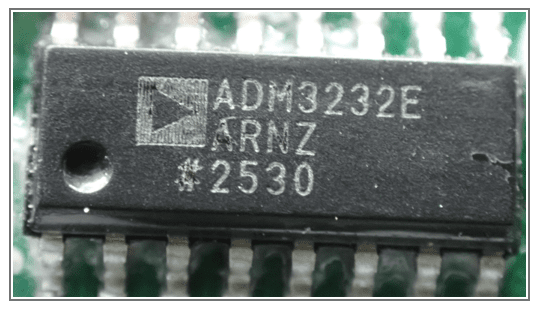
A company-produced interface driver was found in both of the drones examined. In the 2026 drone, that component was manufactured in July 2025. Another Analog Devices chip was produced in November 2025—just months before the drone was used in the strike on Ivano-Frankivsk that killed the father and his teenage daughter.
We previously reported how in 2024, US authorities charged Mahdi Mohammad Sadeghi, a dual US-Iranian national, who had worked at Analog Devices, with illegally procuring sensitive MEMS (micro-electromechanical systems) technology and data—components critical for drone navigation and guidance—and funneling them to Iran through a network of front companies.
Sadeghi was linked to drone systems used in an Iranian attack on US forces, on Tower 22 in Jordan, that killed American service members. MEMS components are small, widely used in consumer electronics—but in the context of drones, they are essential for stabilization, targeting, and flight control.
The case exposed a direct pathway: US-origin data and technology, diverted through procurement networks, integrated into drones, and ultimately used in lethal attacks.
Yet the same pattern persists.
Newly manufactured Analog Devices components are now appearing in Russian drones used against Ukraine—raising questions about how these supply chains remain exposed, and whether vulnerabilities already identified in 2024 are still being exploited.
STMicroelectronics
Core flight systems inside the Geran-2 drone still rely on newly manufactured European microcontrollers. STM32 chips, produced by Switzerland-based STMicroelectronics, were identified in both drones examined. In the 2026 drone, the most recent component was manufactured in July 2025.
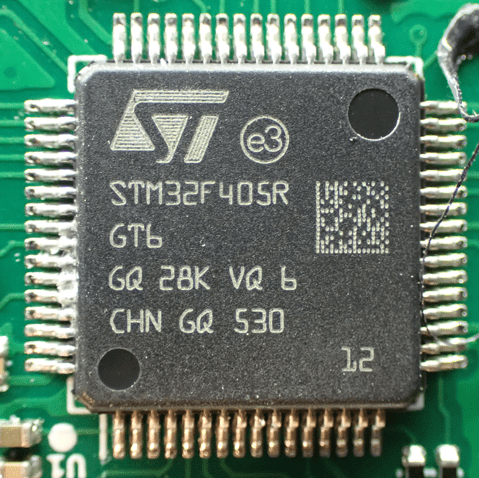
STM32 microcontrollers sit at the heart of the system, processing altitude, speed, navigation, and flight-control data—essential functions that keep the drone stable and operational in flight.
The presence of these chips is not new. In 2024, UNITED24 Media identified the same family of STM32 microcontrollers in Iranian Shahed drones, which were used in their flight systems. The same European technology, from the same company, is appearing in Russian Geran-2 drones—this time with newly manufactured components entering the battlefield within months.
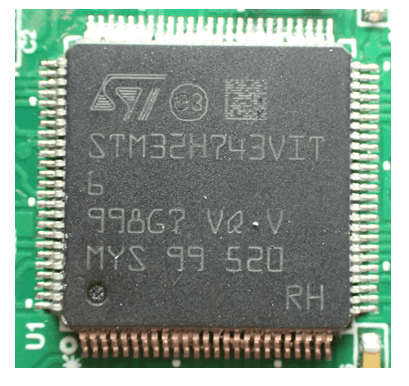
While some lower-end drone parts are being substituted, critical systems still depend on Western-made microelectronics—continuing to link European supply chains directly to active weapons systems.
FTDI
Another key component identified in the Geran-2 traces back to the UK, Future Technology Devices International (FTDI), a semiconductor specialist in USB and serial communication chips used to connect and control electronic systems.
An FTDI interface converter was found in both drones examined. The drone recovered in Kyiv in 2025 had a component manufactured in 2023. In the 2026 drone, the same component appears again—but this time, it was produced in 2025. The same Western part, replaced with a newer version.
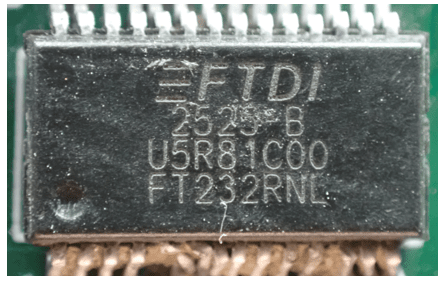
British-made FTDI components have previously been identified in Russian military equipment, including drones and even tanks destroyed in Ukraine, often reaching Russia through third-party intermediaries in China and Hong Kong.
FTDI’s technology plays a critical role in enabling communication between systems inside the drone. Without it, core subsystems cannot interface, coordinate, or function effectively.
Despite growing scrutiny and prior exposure of such supply routes, the same components continue to appear.
Infineon Technologies
German-made components are also embedded within the Geran-2 drone, including chips from Infineon Technologies, one of Europe’s leading semiconductor manufacturers.
In the 2026 drone analyzed, an Infineon communication chip was identified, manufactured in May 2025. Like other components, it moved from production into a deployed weapons system within months.
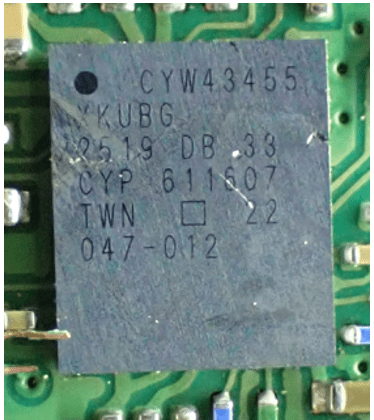
Infineon chips play a role in drone communication and connectivity, enabling data exchange between onboard systems—essential for coordinated operation.
Infineon parts are widely used across Russian drone systems, with Ukrainian intelligence identifying dozens of German-made components, many of them transistors embedded in UAV control systems. Each Geran-type drone can contain multiple Infineon components, suggesting large-scale, systematic integration.
137 components manufactured in Germany have been recorded in Russian military equipment, from missiles, radar systems, military vehicles, and helicopters. 58 of these have been identified from Infineon.While supply chains may be adapting, they remain far from closed.
Russia and Iran’s coordinated drone program
As the US and Israel launched attacks on Iranian targets in February 2026, Russia quietly began supplying Tehran with Geran-2 drones—just days into the escalation.
Iran responded by launching attacks across the region, targeting countries hosting US bases. In early March, a Geran-2 drone was found in the UAE—evidence it had come from Russia, assembled at the Kupol plant in the Russian city of Izhevsk. The irony wasn’t lost on Russian expatriates in Dubai, now sheltering from the same drones Moscow deploys against Ukrainian cities.
Shahed strike even hit the UK’s Akrotiri base in Cyprus, damaging a hangar used for US reconnaissance aircraft, but this was launched not from Iran, but from Lebanon, pointing to transfers to Hezbollah and a widening network of proxy use. Another drone, called Shahed-101, was reportedly transferred either by Iran or Russia to the Taliban in Afghanistan, where it was used in combat against Pakistan.
As tensions grow, so does the exchange. Iran supplied Russia for its war in Ukraine—now Russia supplies Iran. And buried in the wreckage is a deeper problem, components sourced from the US and Europe could also be powering attacks against Western targets themselves.
Russia’s drone program is not sustained by aging stockpiles, but by a steady flow of newly manufactured, globally sourced components. While sanctions have forced some adaptation, they have not severed access. These components are not easily obtained from the common market, raising questions about procurement efforts and how new parts are flowing directly onto Russia’s weapon systems within a matter of months.
The same technologies powering everyday devices are being repurposed into weapons used against civilians and, potentially, Western forces themselves.
At the same time, Russia and Iran have moved beyond simple transfers of weapons, developing a shared drone ecosystem—exchanging technology, production methods, and components. What began with Iranian-designed systems has evolved into a coordinated program, with drones, parts, and expertise moving in both directions.
Discuss this article: