- Category
- World
Iran Launches Russian Geran Drones—Copies of Its Own Shaheds. Moscow and Tehran Spread Them to Allies
 Prefer U24 Media on Google
- Authors

-29a1a43aba23f9bb779a1ac8b98d2121.jpeg "Photo of Illia Kabachynskyi")
A drone discovered in the United Arab Emirates carried Russian Geran-2 markings, but it was identical to Iran’s Shahed-136. The find reveals a growing military partnership in which Moscow and Tehran are working together to sow panic in surrounding regions.
After the United States and Israel attacked Iran, Tehran quickly began striking countries hosting American military bases in the region—essentially all of its neighbors. However, much like Russia in Ukraine, Iran deliberately targets civilian buildings and energy infrastructure. After one such strike, a Shahed-136 type UAV was discovered, but with Russian Geran-2 markings.
We bring you stories from the ground. Your support keeps our team in the field.
Brief explainer: In 2022, Iran began selling Shahed-136 drones to Russia. Initially, these were small batches, but Moscow later established domestic production and began marking the drones locally as Geran-2. In essence, it is the same project; the main difference is that the Russians actively use components sourced from Europe and Asia.
In early March, a drone marked Geran-2 was discovered at a port in the United Arab Emirates, indicating it originated in Russia. Specialists immediately noted that the drone carried a KB mark in Cyrillic, indicating that it was assembled at the Kupol plant in the Russian city of Izhevsk. The serial number 1070X suggests that this batch was produced roughly in 2024.
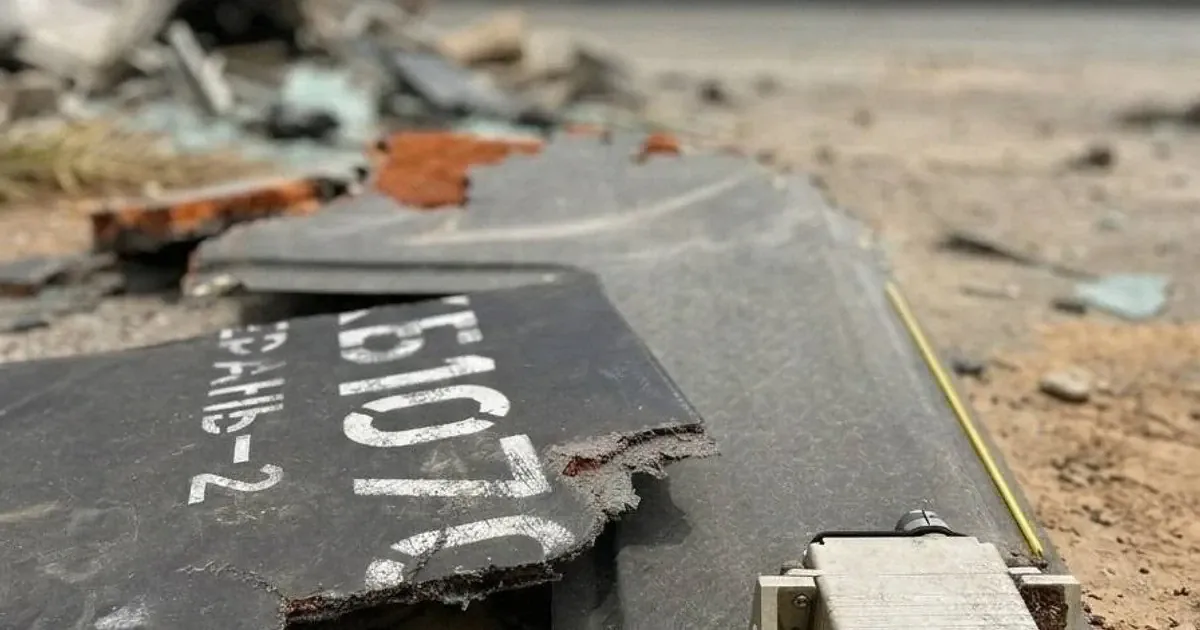
How exactly this drone ended up in Iran remains unclear. Most likely, Moscow ordered a shipment of these drones to Tehran—either as payment for the license or as part of an arms exchange. Today, the Kremlin has far greater production capacity for this type of drone, making it entirely plausible that some are being transferred to Iran’s military leadership.
This directly indicates an exchange of technologies and the transfer of extremely long-range weapons. In particular, the Shahed-136 / Geran-2 can travel up to 2,500 km, meaning Iran could potentially strike even Europe—something Tehran has already threatened.
Russia is transferring not only drones but also experience in their use. CNN, citing its own sources, reports that Russia is helping Iran apply advanced drone tactics developed during the war in Ukraine to strike US and Gulf state targets in the Middle East. Previously, it was reported that Russian intelligence provided Iran with general targeting assistance, but specific tactical recommendations represent a new level of support.
“What was more general support is now getting more concerning, including UAS [drone] targeting strategies that Russia employed in Ukraine,” said an official who asked not to be named.
Moscow, having launched 19,000 drones at Ukraine in just three months and nearly 60,000 over the course of the war, knows how to exploit weaknesses and use drones to inflict maximum damage. And while Ukraine has learned how to defend itself, most countries in the Middle East are not prepared for such threats.
Handing out drones to everyone
An example of this can be seen in the Shahed drone attack on the UK Akrotiri base in Cyprus. The drone reached the base and struck a hangar where American U-2 reconnaissance aircraft are stored. There were no casualties, but one key fact stands out—the military base was unable to defend itself against a single drone.
It is also telling that the drone was launched not from Iranian territory but from Lebanon, where Iran’s proxy Hezbollah operates. Launching a Shahed from that territory indicates that Iran is transferring these drones to its proxies, meaning more attacks could follow and the range of potential targets could expand even further.
Another drone, called Shahed-101, was reportedly transferred either by Iran or Russia to Afghanistan, where it was used in combat against Pakistan. This loitering munition was deployed by the Taliban, who had never previously been known for using drones, to attack their adversary. Only two countries could have supplied it, and each has its own interest in destabilizing regimes in the region and spreading its weapons.
A difficult adversary
As of today, Iran uses Shahed drones selectively and in relatively small numbers. The same was true in the early stages of Russia’s war against Ukraine—only a handful were used in October 2022. Later, this evolved into attacks involving 500–700 drones at a time. The fact that Russia has already transferred its Geran-2 versions to Iran points to active cooperation and possibly even joint production.
If drones are indeed being supplied from Russia, then even strikes on Iranian territory would not leave Tehran without weapons to attack the UAE, Saudi Arabia, Qatar, Bahrain, and others.
Ukraine can help its partners build an effective, relatively inexpensive territorial defense system by leveraging its own experience in air defense and interceptor drones. But this is a case where action must be taken at scale—including increasing pressure on Russia.
For example, even in the fifth year of the war, Western components are still being found in Russian missiles and drones. Moreover, sanctions pressure on Moscow has not yet reached the scale necessary to stop the war. Ultimately, even additional weapons deliveries to Ukraine can have an impact: five Storm Shadow missiles destroyed the “Kremniy El” plant in Russia’s Bryansk, which is critical for producing components used in missiles and drones.
The more weapons that reach Ukraine, the fewer opportunities Tehran will have to maneuver.
Discuss this article:
-4a56a6b482ec132402c16ef6fcabf9a2.png)




-c439b7bd9030ecf9d5a4287dc361ba31.jpg "Photo of Katherina Popilnichenko")