- Category
- World
US Preliminary Approval Granted for Patriot Missile Production in Poland
 Prefer U24 Media on Google
- Authors

-c439b7bd9030ecf9d5a4287dc361ba31.jpg "Photo of Katherina Popilnichenko")
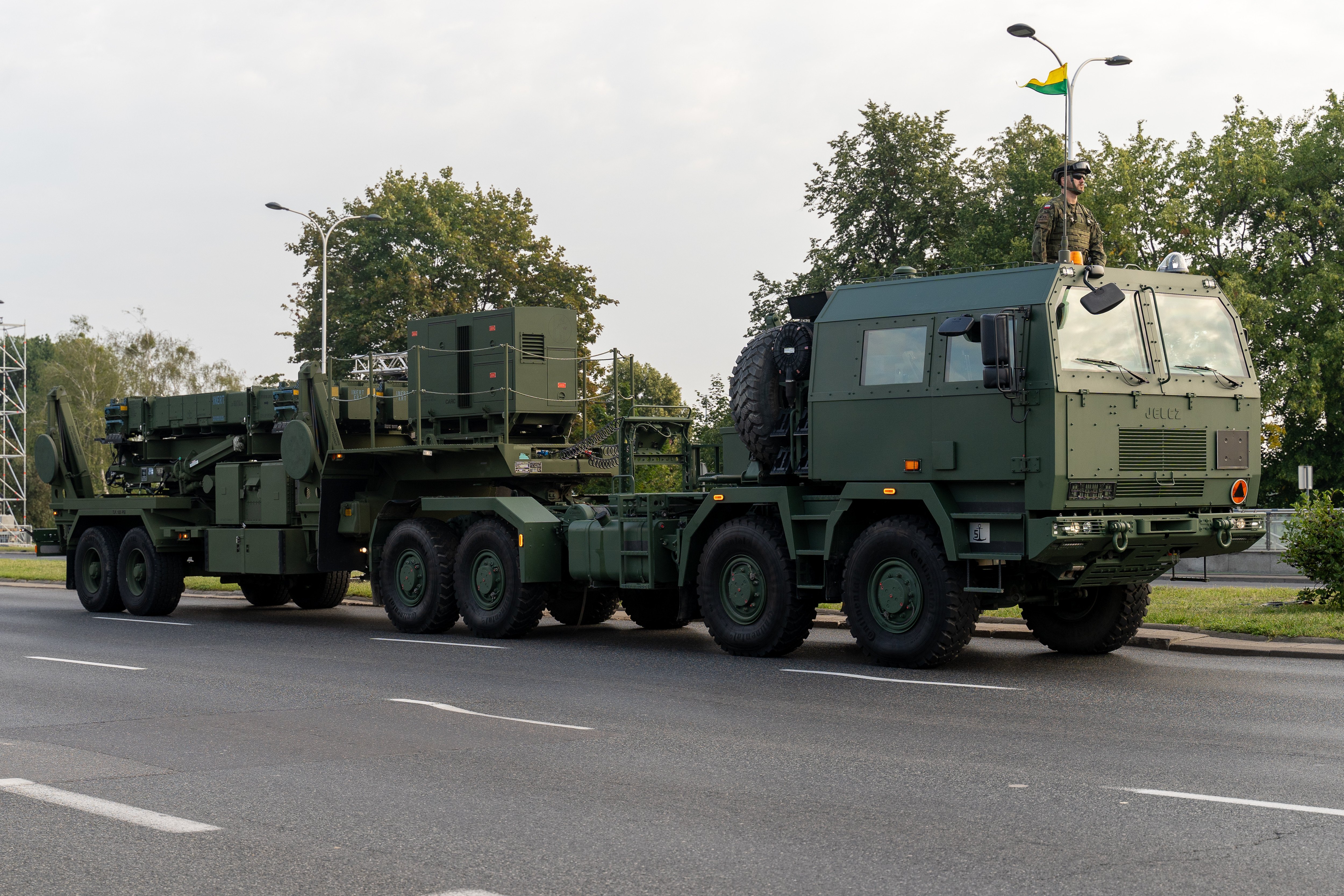
The United States Department of State has granted preliminary approval for Poland to manufacture missiles for Patriot air defense systems at its domestic defense facilities.
Polish Deputy Defense Minister Cezary Tomczyk announced that Washington shifted its long-standing cautious stance on sharing such unique military technologies due to a critical global shortage of air defense interceptors, according to RMF24 on May 26.
We bring you stories from the ground. Your support keeps our team in the field.
Currently, global annual production stands at about 700 PAC-3 MSE missiles, but the United States aims to increase this volume to 2,000 units by the end of 2030 to replenish severely depleted allied stockpiles.
Negotiations regarding the localization of Patriot missile production had been underway for a long time. The global demand for advanced PAC-3 MSE interceptors has escalated sharply because these missiles were supplied to Ukraine to help counter Russia’s full-scale invasion of Ukraine, purchased in large numbers by American allies, and expended during the military actions with Iran.
To cope with this pressure, a consortium of Polish defense enterprises will handle the manufacturing process, representing a major advancement for the military capabilities of Poland, which currently operates two Patriot batteries and awaits the delivery of six more.
Beyond air defense systems, Warsaw and Washington are exploring further industrial defense cooperation. The United States has expressed openness to the possibility of producing long-range munitions for HIMARS rocket systems and Hellfire missiles in Poland.
This collaborative approach comes as other nations, including Germany, are also actively seeking to establish domestic production of the same advanced air defense interceptors.

The push for localized production follows warnings from Ukrainian President Volodymyr Zelenskyy, who pointed out a severe global deficit of antiballistic defense systems and interceptor missiles.
Zelenskyy noted that Kyiv is accelerating its engagement with European partners to develop air defense cooperation because significant progress in expanding manufacturing alongside the United States had been lacking for a long time.
Meanwhile, the US Army is pushing defense contractors to design a new Patriot interceptor missile that costs less than $1 million per unit, while Ukrainian defense firms are preparing to test a more affordable alternative to the Patriot system by the end of this year.
This development lines up with Poland's recent efforts to secure missile production, as both nations look for ways to solve the global shortage of Patriot interceptors. By the end of May 2026, Denys Shtilerman, the co-founder of the Ukrainian defense company Firepoint, announced that Ukraine could conduct tests of a new air defense system before the end of the year.
During a broadcast hosted by Ukrainian lawmaker Oleksii Honcharenko, Shtilerman explained that Firepoint was participating in the international Freya project, which aimed to develop a modern, more affordable alternative to the US-made Patriot system capable of intercepting ballistic missiles.
He noted that Ukraine’s involvement allowed developers to incorporate practical battlefield experience gained during Russia’s full-scale invasion, while Ukraine’s ambassador to Japan, Yuriy Lutovinov, had previously indicated that Tokyo could financially support the development of such a Ukrainian-produced system to help Kyiv reduce its dependence on US-made interceptors.
Discuss this article:
-9a7b3a98ed5c506e0b77a6663f5727c5.png)