- Category
- Anti-Fake
How Russia Got Everyone in France Talking About Macron’s Tissue, Making a Lie Go Viral
 Prefer U24 Media on Google
- Authors


How can a crumpled tissue become the centerpiece of a Kremlin disinformation campaign? The same way it always does: with a wild lie, a network of bots, and those eager to spread it.
It all started with good manners.
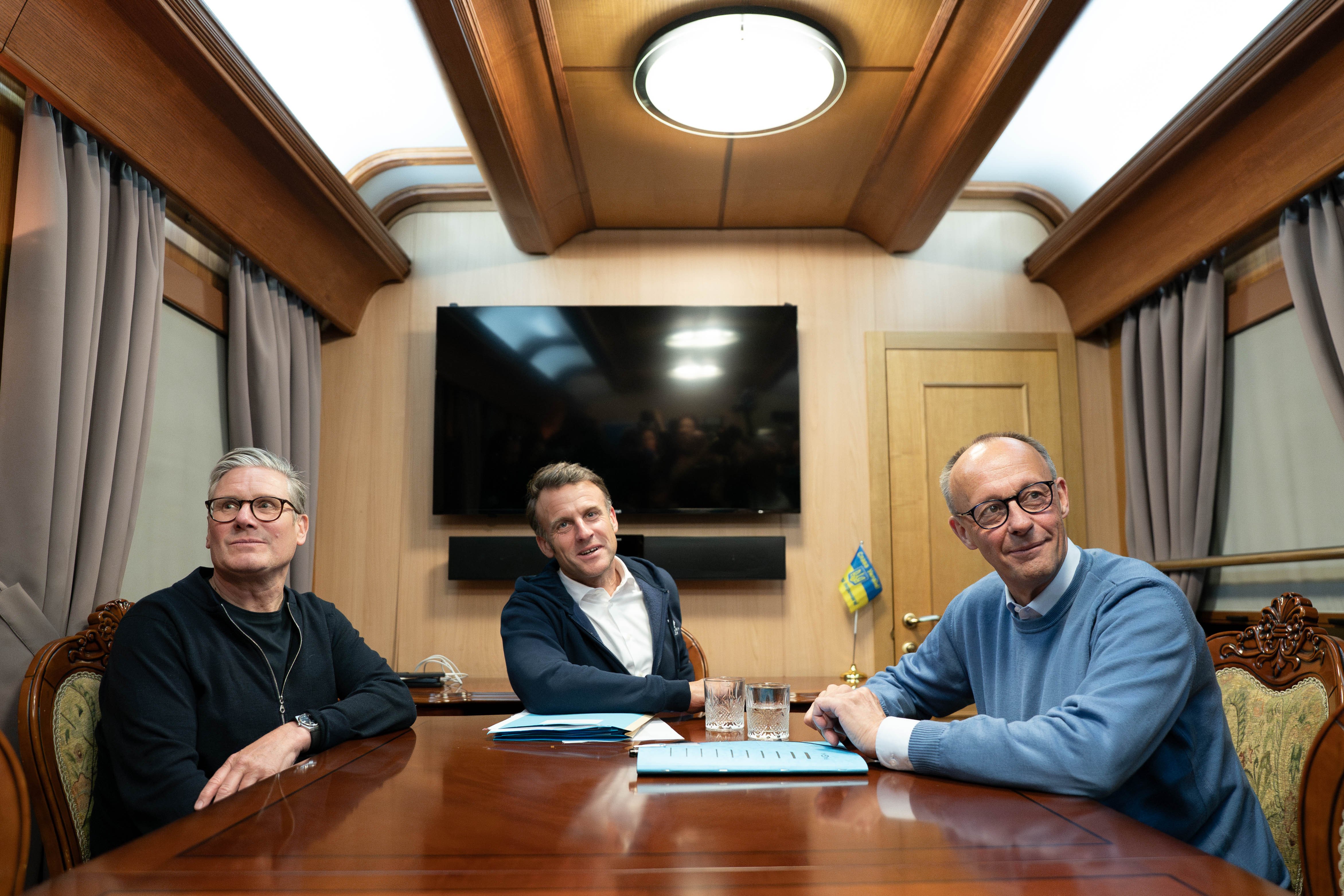
While reporters gathered around UK Prime Minister Keir Starmer, German Chancellor Friedrich Merz, and French President Emmanuel Macron for a group portrait in the train to Kyiv on May 9, the latter swiftly hid a crumpled tissue lying on the table.
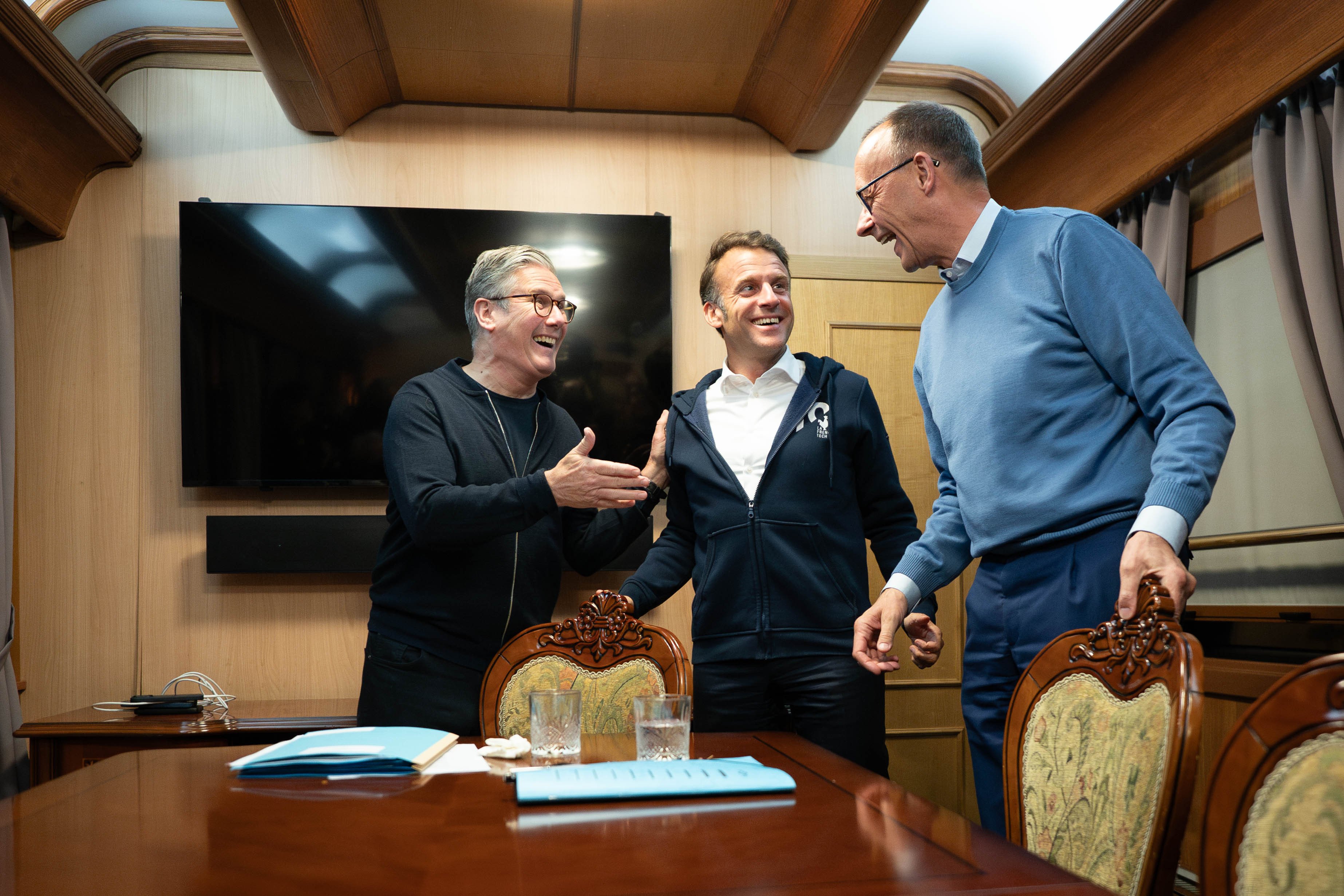
It was enough to kickstart one of the most outlandish disinformation campaigns against the French President, accused of hiding a small bag of cocaine, a fake news widely spread online by pro-Russian accounts and relayed by Kremlin officials such as Russian foreign ministry spokesperson Maria Zakharova.
The rumor amounted to millions of views online, prompting France’s Presidential Elysée Palace to quickly issue a post debunking the fabricated story that was already making headlines on national television.
It’s not the first time Russia has been propagating fake news to undermine France, but Paris has finally decided to call Moscow out.
When European unity becomes inconvenient, disinformation goes so far as to make a simple tissue look like drugs.
The Elysée
The office of the French President
When European unity becomes inconvenient, disinformation goes so far as to make a simple tissue look like drugs.
— Élysée (@Elysee) May 11, 2025
This fake news is being spread by France’s enemies, both abroad and at home. We must remain vigilant against manipulation. pic.twitter.com/xyXhGm9Dsr
In the meantime, Jean-Noël Barrot, France’s Foreign Minister, also posted a tweet saying: “We see you! So desperate to prevent peace in Ukraine that you are now propagating blatant hoaxes. This is irresponsible—and lame.”
For France’s officials, this hoax is seen as yet another Russian attempt to discredit Macron and the “Coalition of the Willing” in their efforts to support Ukraine and peace.
France’s Foreign Ministry publicly accused Russia's intelligence service, the GRU, on April 29 of orchestrating attacks for several years against French interests, going back to Macron’s 2017 election campaign.
Yet, this time, the Kremlin had the confirmation that it could count on its relays in France to spread false information aimed at undermining Macron—and that French media would incidentally help them.
For David Colon, French researcher at Sciences-Po University and expert in Russian disinformation, the Russians are going further than a large audience.
They also go after journalists, who are “the target of Russian disinformation” because they “give an echo to this,” he told French magazine L’Express. “The share of people believing in it is relatively stable. The part of people exposed to it varies.”
Pro-Kremlin “useful idiots”
France’s Macron has been regularly targeted by pro-Russian campaigns aimed at discrediting his role as a leader opposing the Kremlin, including some led by Russia’s infamous APT28, also known as Fancy Bear, a hacking group linked to Russia’s intelligence services.
However, this smear campaign appears to have been relayed by authentic users at first rather than the usual Russian bot farms, according to Bot Blocker, an account specialized in anti-bot analysis.
“Kremlin-aligned Telegram channels and online media did amplify it. But the earliest viral tweets were likely first published before that, by authentic users,” the account posted.
However, the first tweet quoted by the account belongs to a user with a short name followed by various random digits, a common name used by Russian bots. This user has four obsessions: Pfizer COVID-19, Macron, conspiracy theories, and reposting lost pets, a profile common among fake users (aside from lost pets).
Nevertheless, the posts quickly went viral, with up to 75 million views as of May 12, according to France24. The hoax spread across the Atlantic to the US, where American conspiracy theorist and radio host Alex Jones’ post reached more than 20 million views.
In the meantime, some French pro-Russian figures such as Nicolas Dupont-Aignan, the leader of Debout La France—a far-right party struggling to reach 2% of the vote intentions—jumped on board, following a pattern of parroting the Kremlin’s rhetoric.
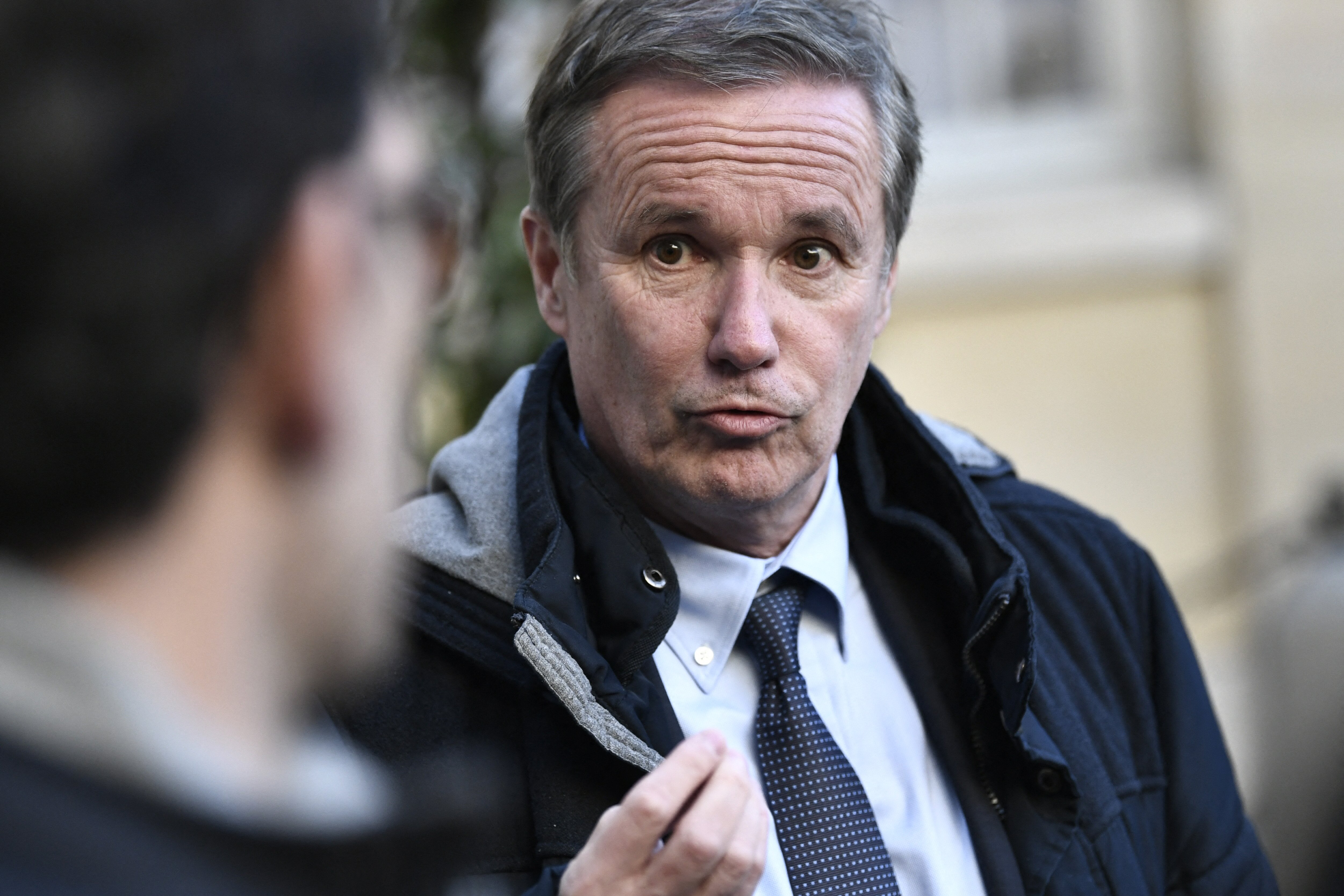
Same with Florian Philippot, a former EU lawmaker, far-right and eurosceptic, also regularly caught sharing fake, conspiratorial news made in Russia.
Incidentally, Complément d’Enquête, a journalistic investigation team, found Philippot's name on a list of Russian propaganda agencies as a relay for pro-Russian influence. He denied knowing the existence of this agency.
One post went even more viral: the one shared by Alexis Poulin, a journalist working for RT France . His screenshot still had a notification from the Russian embassy on top of Macron’s picture.
How Russia’s disinformation campaigns evolved
Ukraine has long been the favorite target of such Russian attacks, especially since it turned its back on the Kremlin during the 2013–2014 Revolution of Dignity. Russia launched its war against Ukraine in Donetsk and Luhansk regions and attempted the annexation of Crimea, accompanied by a flurry of fake news over alleged Ukrainian atrocities in the regions.
Over time, the lies became increasingly absurd: US-run biolabs on Ukrainian soil, weaponized mosquitoes, dogs being mobilized for military service, and so on.
Ukraine’s solution to fake news stories? First debunk, then ignore until it dies out. The Kremlin’s smear campaigns are not subtle.
Most disinformation campaigns are not designed to yield precise results but to create chaos, doubt, mistrust, and confusion. Russia places great emphasis on shaping the environment in this manner.
US military governance specialist
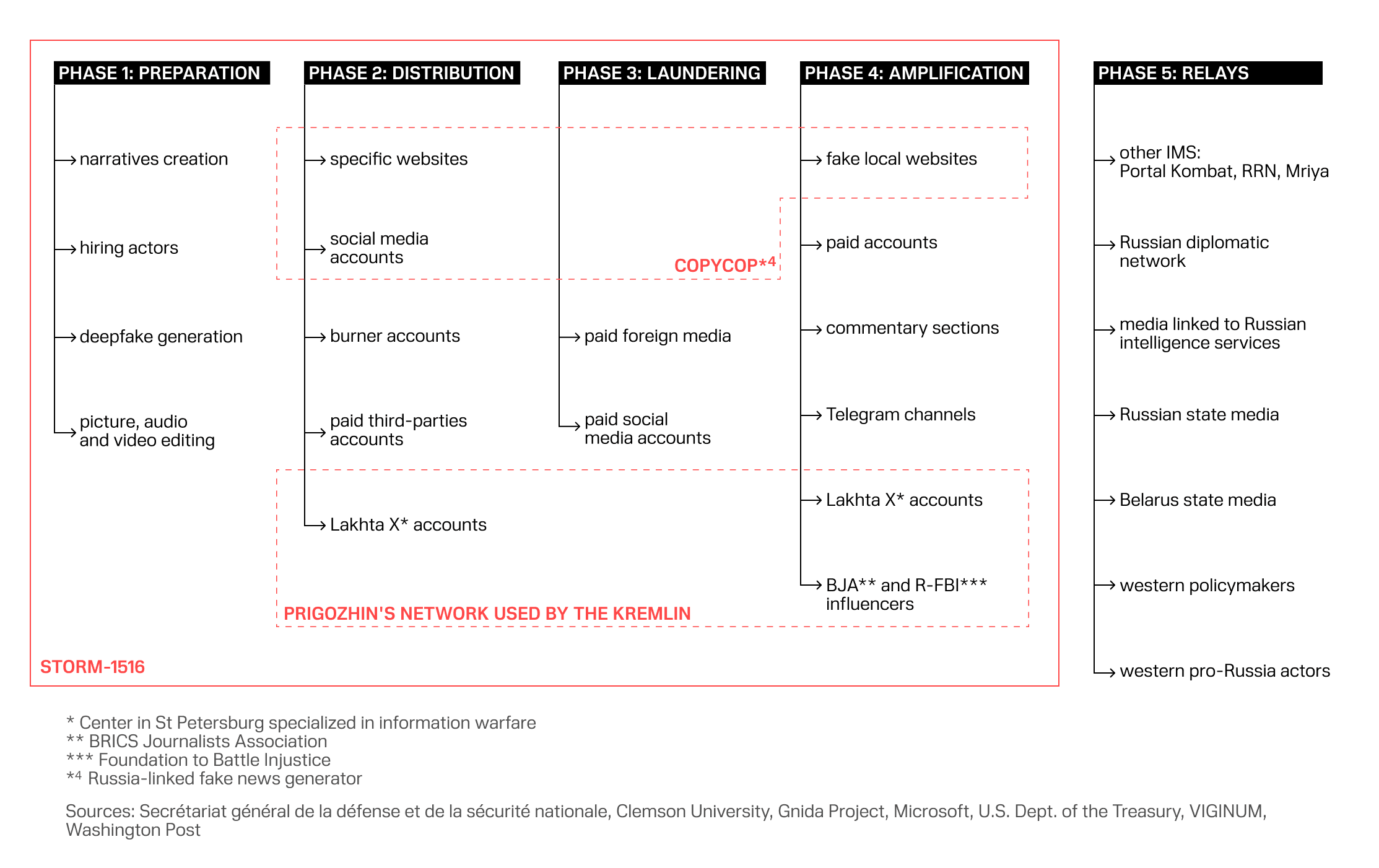
Still, they flood the information sphere, show findings from VIGINUM, a French defense report, referring to the “Storm-1516” operation, a massive disinformation industry linked to Russia’s GRU.
Storm-1516 has been active since August 2023 and has already conducted 77 coordinated disinformation operations against Europe, the report said.
The report stated the operation works through the initial “dissemination of content through burner accounts controlled by the operators, or through paid accounts, likely supported by the laundering of the narrative through foreign media.”
The hoaxes are then amplified by a network of pro-Russian actors—case in point with Macron’s false drug story.
Storm-1516's activities reportedly meet the “criteria of a foreign digital interference, and represent a significant threat to the digital public debate,” the report read.
While Storm 1516 makes outlandish claims that President Zelenskyy is embezzling Western aid to buy luxury villas and that Ukrainian intelligence of silencing critics, it’s also used to denigrate Western figures and governments, sometimes even disseminating deepfakes using amateur actors.
Operation Matrioshka
Moscow has another trick in its sleeve: the Operation Matrioshka, named after Russian nesting dolls.
This operation has been active since at least September 2023 and posts fake content (reports, graffiti, memes, etc.), shared in a coordinated manner on X in the reply section of posts by the accounts of media outlets, public figures, and fact-checking organizations in more than 60 countries.
The modus operandi is twofold: some “seeders” accounts post fake content on the platform, and “quotes” accounts share the seeder’s post in response to posts by media outlets, public figures, and fact-checkers.
The fake content generally impersonates North American and European public figures and media outlets, starting, in one case, with a forged US news network channel Fox News report sent to journalists under the guise of a fact-check request, according to another VIGINUM report.
The operation also impersonated content from French TV channel BFMTV, French daily newspapers Le Parisien, Libération, Le Monde, and La Montagne, as well as the Banque de France and the Directorate-General for Internal Security (DGSI).
Some matrioshka operators contact their targets directly on X and via email to ask them to investigate the fake content, which gives it even more visibility. The official media fall for it, boosting visibility and giving it credit.
It’s not necessarily an audience they’re after; it’s reputational damage, especially for those who push back.
Discuss this article:
-050b2b5554ed561c87f909a001f905b9.png)


-c439b7bd9030ecf9d5a4287dc361ba31.jpg "Photo of Katherina Popilnichenko")


-206008aed5f329e86c52788e3e423f23.jpg "Photo of Oleksandr Moiseienko")
-72b63a4e0c8c475ad81fe3eed3f63729.jpeg "Photo of Cyril Barabaltchouk")