- Category
- Culture
Ai Weiwei Unveils Giant Camouflage-Wrapped Spheres in Kyiv and a Message—"Stay Alive”
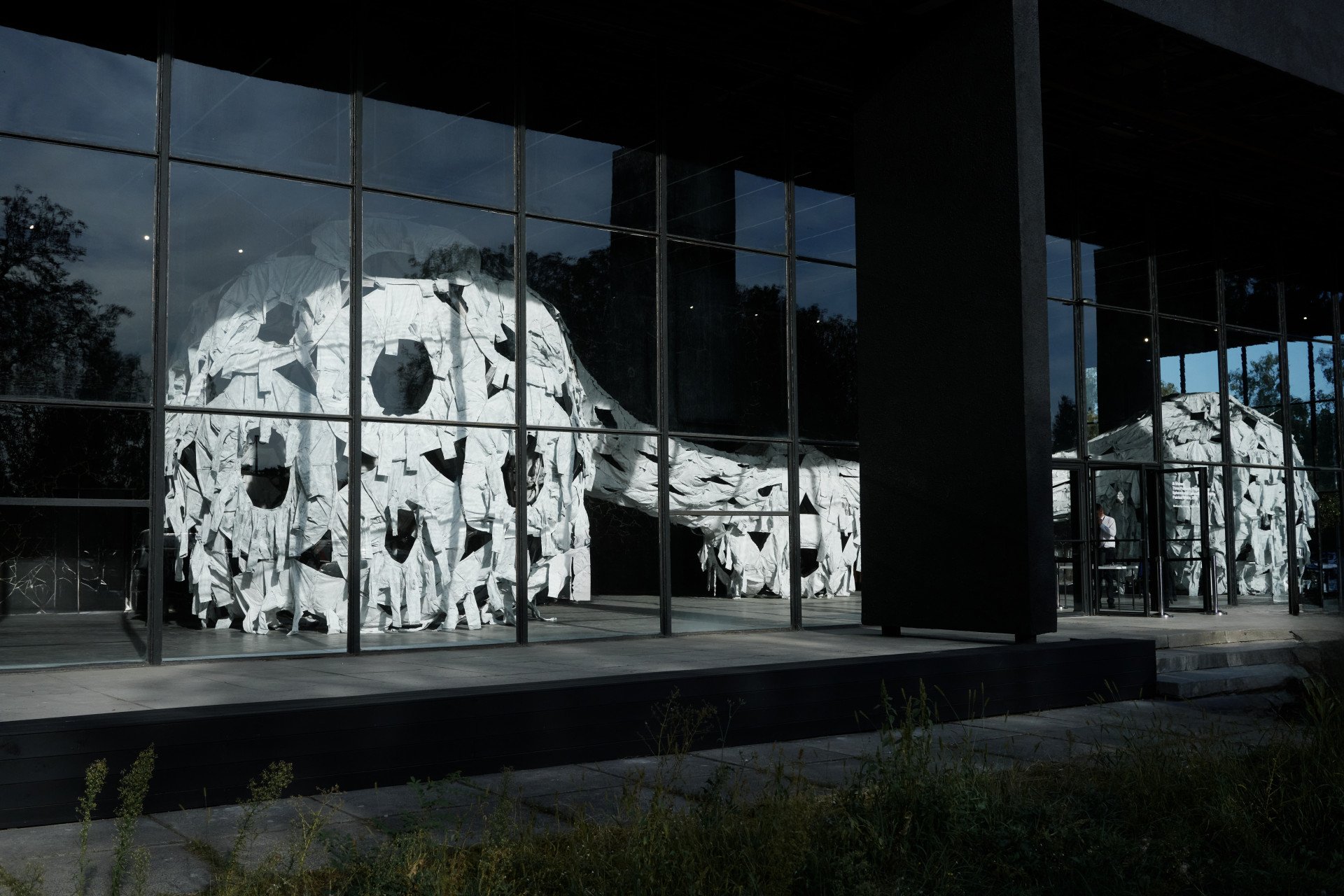
Ai Weiwei’s new installation, Three Perfectly Proportioned Spheres and Camouflage Uniforms Painted White, opened September 14 in Kyiv’s Pavilion 13. It confronts Russia’s war in Ukraine with stark symbolism and calls for reflection on violence and peace.
 Prefer U24 Media on Google
- Authors

-554f0711f15a880af68b2550a739eee4.jpg "Photo of Lucile Brizard")
Ai Weiwei’s installation, Three Perfectly Proportioned Spheres and Camouflage Uniforms Painted White, situated within the context of a space with its own fraught history—a former Soviet exposition hall, Pavilion 13 is now revitalized by RIBBON International and the Pavilion of Culture.
Hosting Ai’s work until November 30, it offers free public access to the installation that engages, in a somewhat convoluted way, the violence of war.
Political activists rub shoulders with artists
Ai Weiwei, known globally for his political activism and as a dissident artist, has always used his art as a vehicle for resistance against authoritarian regimes.
Chinese authorities detained him in 2011 for his outspoken criticism of the government’s mishandling of the Sichuan earthquake. This is just one example of how Ai’s art and his personal experiences intersect.
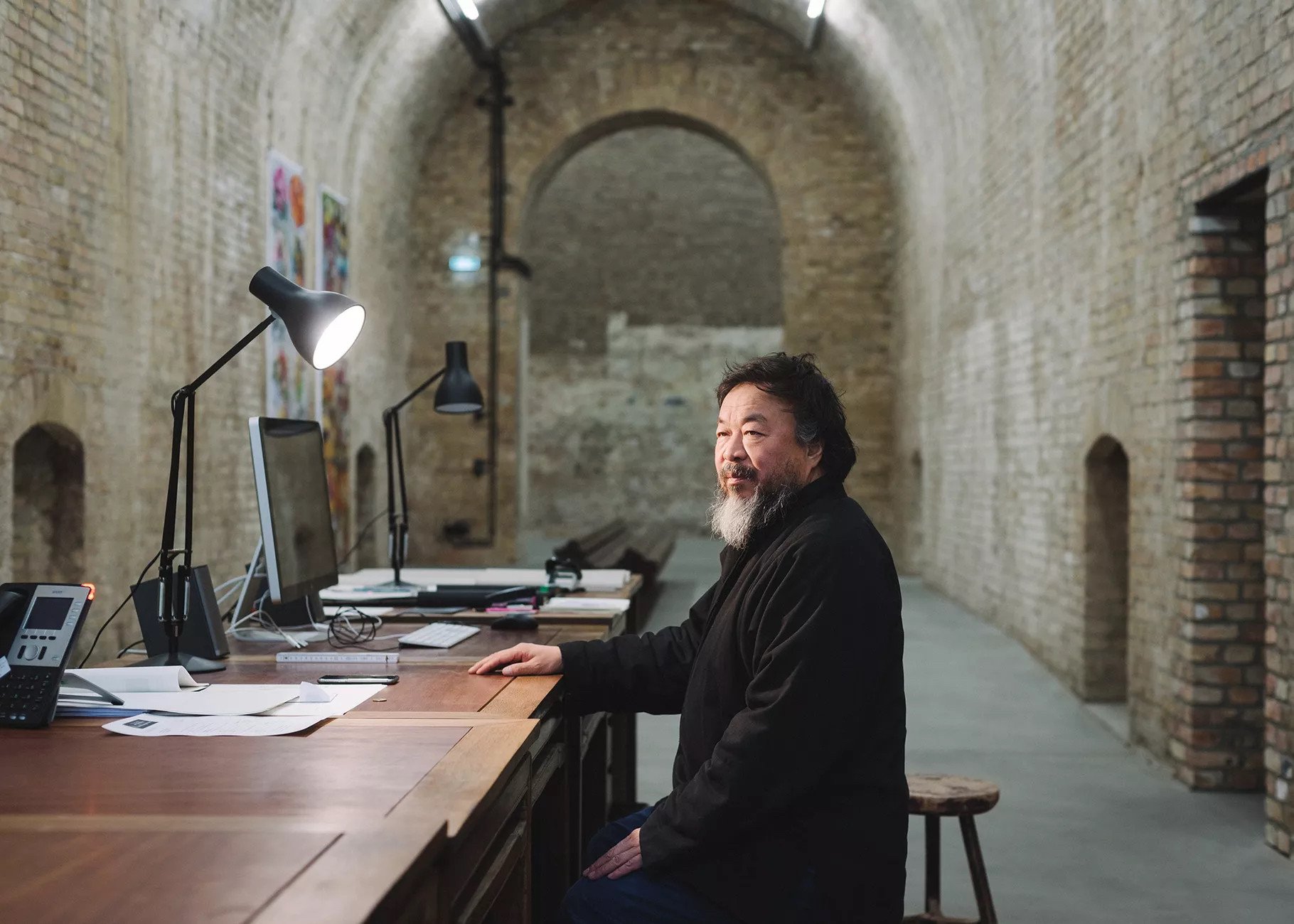
As a political prisoner, Ai endured 81 days of detention, subjected to what he described as “soft detention,” marked by constant surveillance and mental torture. This experience shaped his outlook on the world, his art, and the role of artists in times of war or peace.
Dressed in light linen, Ai seemed enthused, filming the crowd on his iPhone before the talk began. The packed room, filled with eager fans and prominent Ukrainian art world figures, sat shoulder to shoulder. Ai Weiwei spoke, his voice soft, to Maksym Butkevych, who, in June 2022, was captured by Russian forces and remained a POW for over two years.
Three Perfectly Proportioned Spheres
Three Perfectly Proportioned Spheres is a site-specific installation inspired by Leonardo da Vinci’s Divina Proportione. On this particular sunny weekend, the mass of well-dressed, expertly shod guests weaved their way around the piece. Behind one of the spheres, a woman recounted overhearing a taxi driver saying he was “near the white dinosaur.”
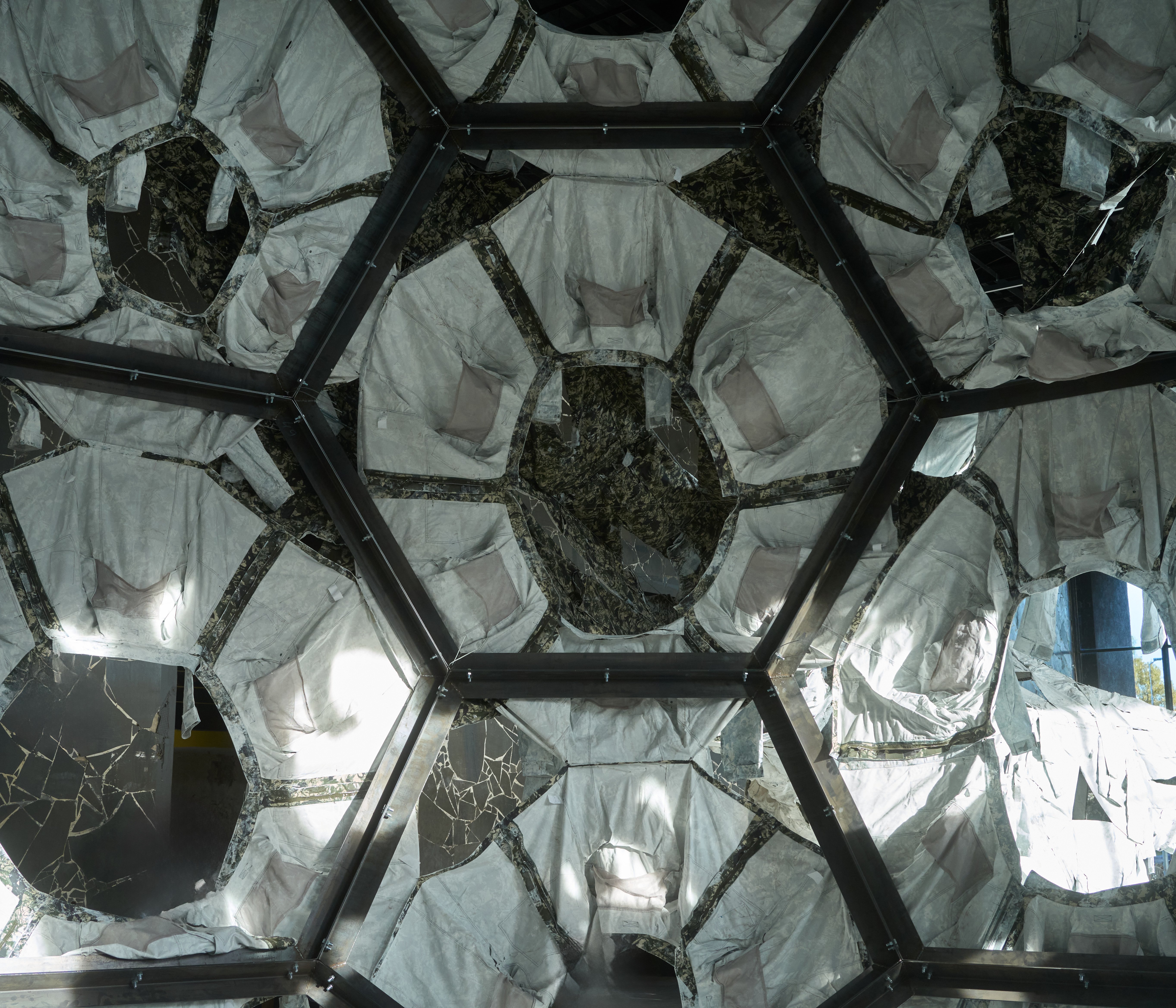
The three giant spheres, twice as big as an average man, are covered in what at first seems to be white uniforms. If you inspect extremely closely the underside of the fabric—which I did—you will first see what seems like camouflage but then reveals itself to be a pattern made up entirely of cats.
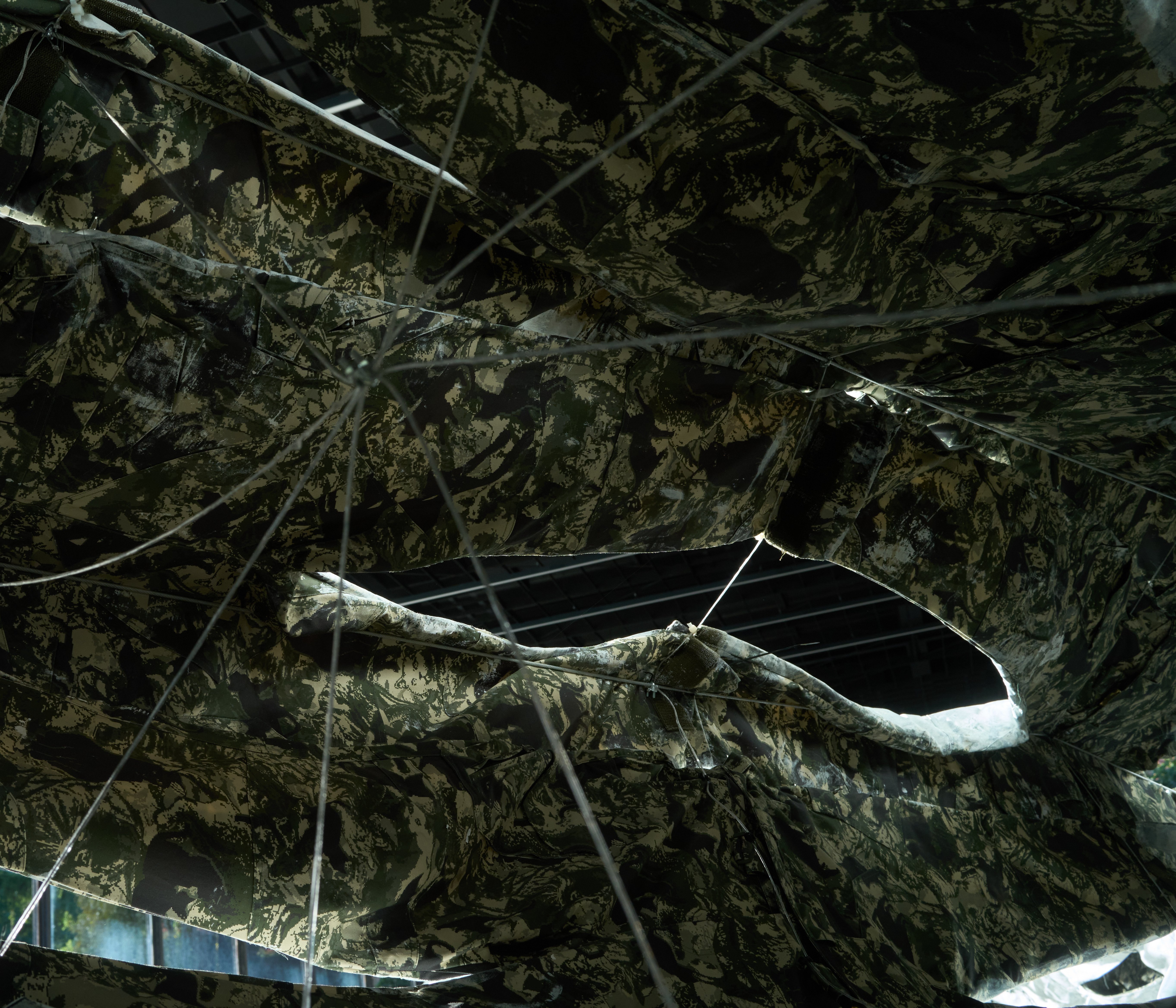
The “camo” designed by Ai and his team was indeed inspired by the markings of rescued cats, reflecting on the often-overlooked suffering of animals in human conflict, says Ai. What is typically a symbol of war and concealment is transformed into something more personal, as animals, especially by pet owners around the world, are often thought capable of absorbing or reflecting the pain of others.
Ai explains that the stark white coating obscuring the camouflage reflects “the irrationality of violence,” adding, “Art should help us face the brutal truth, no matter how irrational or painful it is.”
Taking a stance
Ai’s presence in Ukraine began in early 2025, and I am told he has now visited the country three times. From these visits, many projects are underway, one of them a feature-length film, Ai reveals.
As a legend of the art world, his presence at the unveiling of the exhibit clearly has a double meaning for the Ukrainians there that day. First, as most of the guests are art world figures themselves, they are genuinely enthused by the artist’s presence. I catch him in the corner of my eye, not wanting to stare too much. He himself is quiet, somber, yet I feel he can be quite witty.
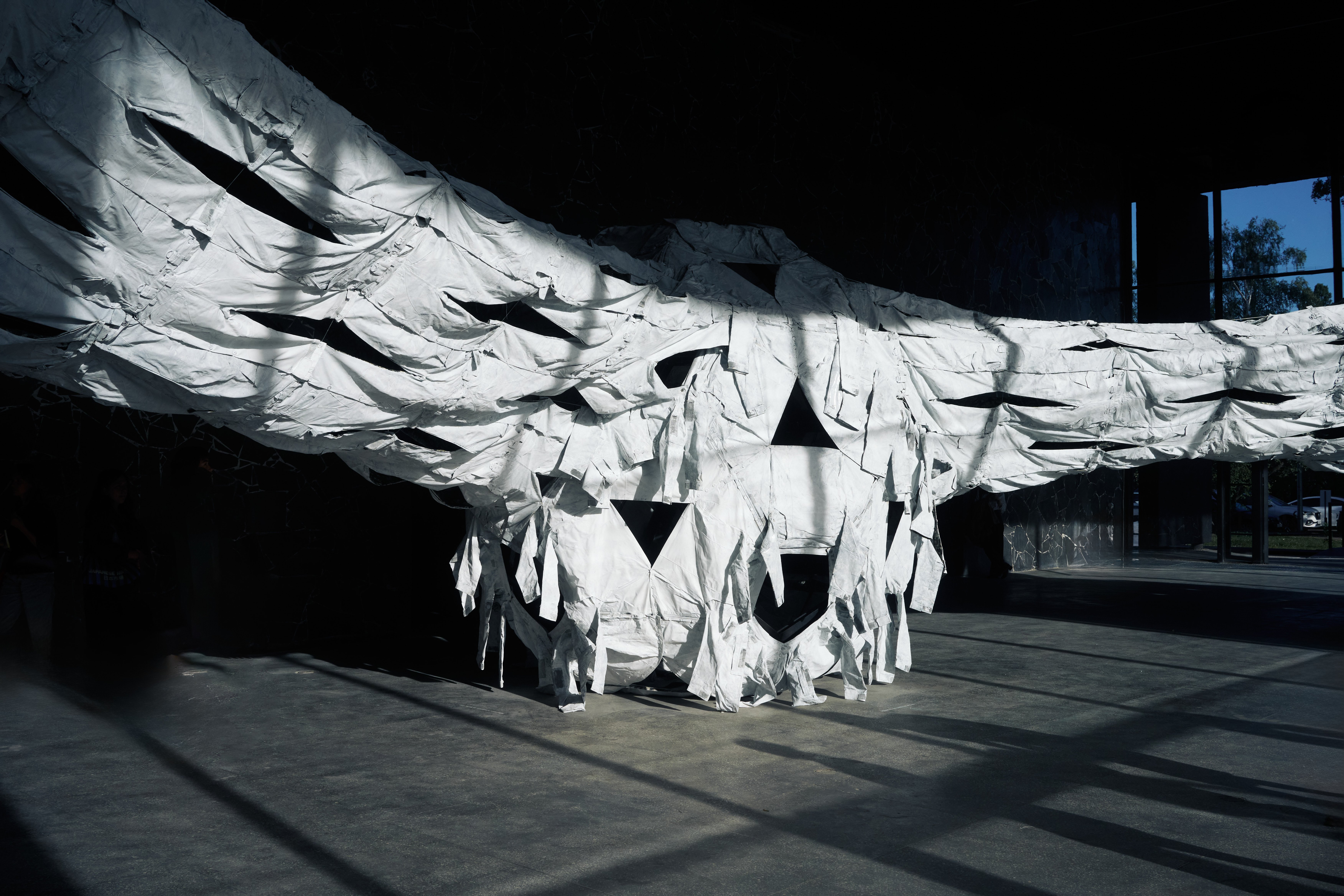
The second meaning of the artist’s presence in Kyiv that day is a clear and unmistakable stance against Russia, as the moderator Butkevych clearly points out, “You will never be able to go to Russia now.”
In 2022, Ai joined 350 cultural figures in signing an open letter to politicians urging resistance to “Putin’s aggression.” The artist also visited Ukraine’s frontlines, speaking with members of the 13th Brigade of the National Guard, Khartiia.
Maria Lanko, curator and co-owner of the Naked Room Gallery, organized the exhibition’s public program “Addressing the Concealed.” Standing illuminated by the expansive glass panels of the Pavilion on a calm Sunday, with visitors milling around their phones aimed upwards, she reflected on Ai’s involvement in Ukraine. Lanko recalled that she and her partner, Lisa, had been preparing for Ukraine’s participation in the Venice Biennale in 2022 when Russia launched its full-scale war.
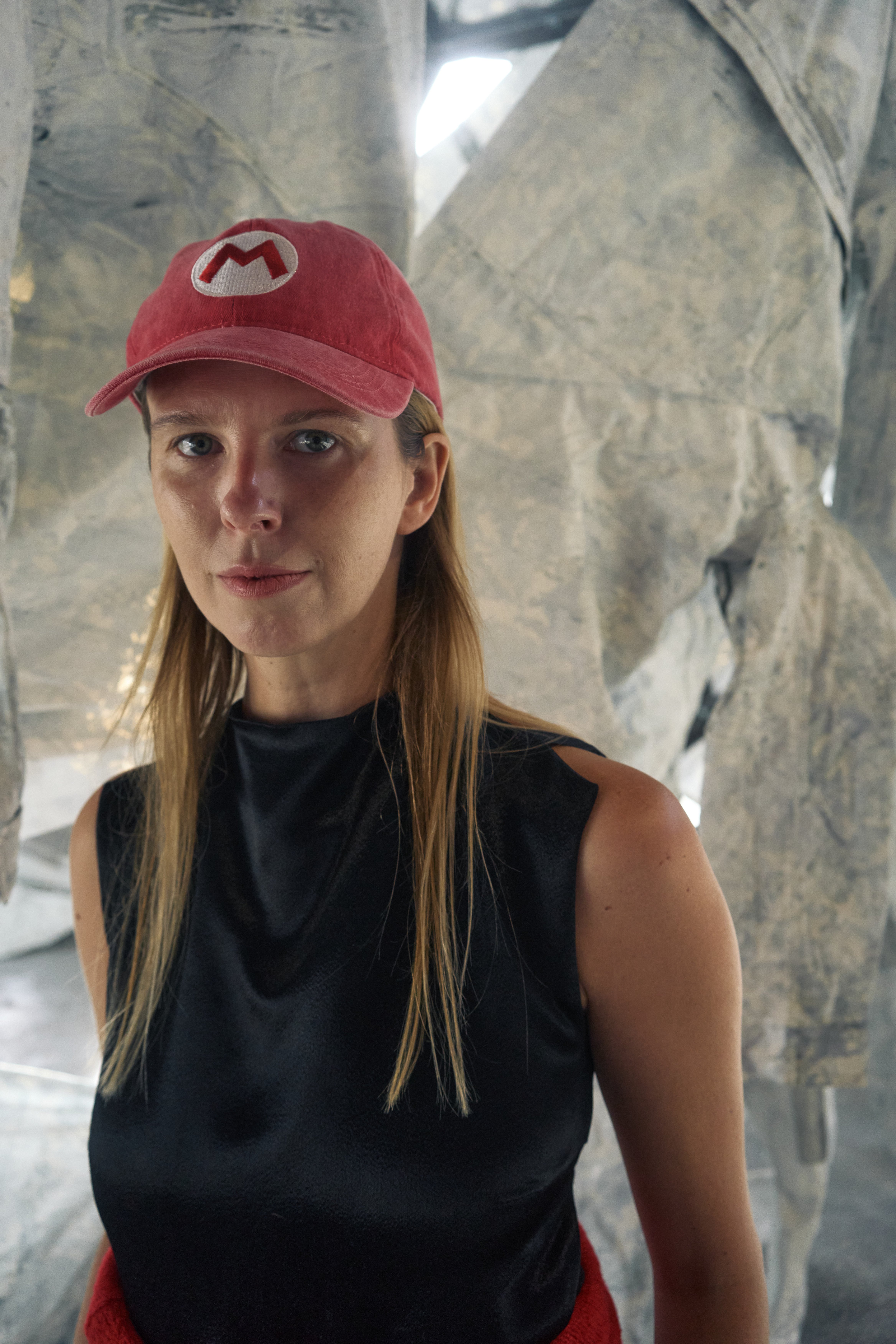
“We started packing up our storage, gathering pieces for the pavilion,” Lanko said. “I drove the works to Venice myself, six days to the border and another week to get to Venice. Despite everything, we managed to set up the pavilion.” Within the context of the war, the biennale would surely have understood Ukraine’s absence. Yet that’s not how the art world works in Ukraine. It does, in fact, soldier on.
In the early days of the war, the warehouse, which would become Pavilion 13, became a shelter for humanitarian aid. “It became a shelter for goods delivered from everywhere,” Lanko said. “It became a mess. Pigeons were flying around. Only this year, with the support of Ribbon International, did we have the chance to reconstruct it.”
Ai Weiwei—controversial in Ukraine and beyond
However, the presence of Ai Weiwei in Ukraine has not been without controversy. “We got a lot of critique from the artistic community. I mean, the Ukrainian artistic community,” Lanko said. “A lot of people think that a big international artist, coming here, just for some installation, who has never been here before… an act of colonialism in some way.”
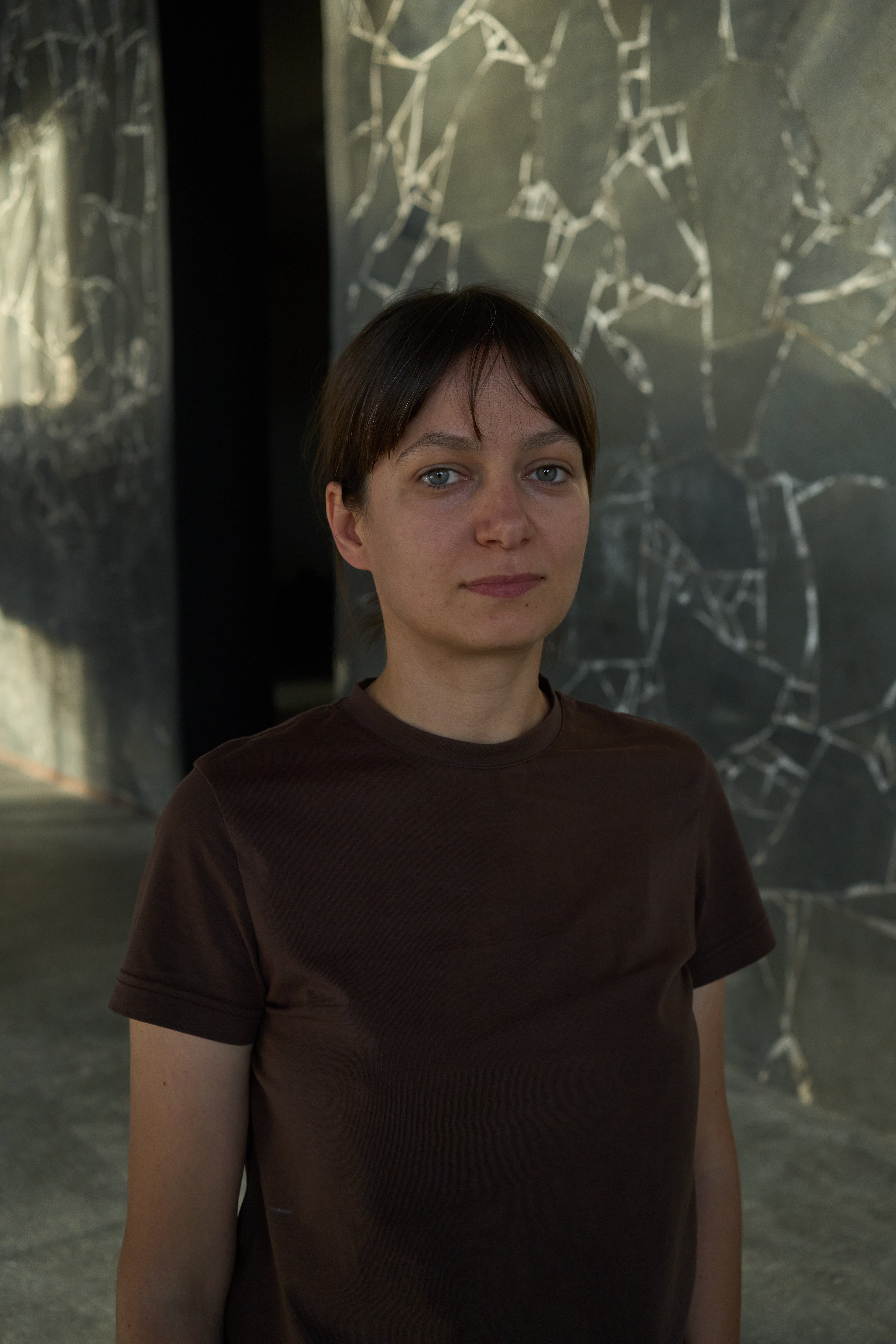
Lanko and others involved with the installation see Ai’s work as transcending this criticism. “Ai Weiwei is such a figure that actually he speaks beyond the artistic community,” she said. “It’s much more than just a work of art. It’s something larger.”
Ai’s work, which often draws intense skepticism for its politicized nature, challenges its viewers to confront uncomfortable truths. His simple statement, sometimes thought of as overly simplistic, “We are all refugees,” encapsulates a belief that we share a common humanity, one that is increasingly challenged by forces of war, nationalism, and authoritarianism.
As the war continues in Ukraine, Ai’s words and work question if art can, in fact, act as a form of resistance. His latest installation seems to serve as a reminder that, even amid ongoing Russian attacks, survival is an act of defiance.
“Stay alive”: survival as resistance
Ai’s experience as a prisoner of war himself, detained and tortured by the Chinese government, adds weight to his message of survival. His own physical endurance was tested under the weight of authoritarian rule, and now, in the context of Ukraine’s fight for sovereignty, when asked by the moderator Butkevych what he would write on a postcard to a Ukrainian POW, he answered, point-blank: “Stay alive.”
But art is far from universally accepted as a pure form of activism. He has been accused of appropriating the suffering of others for his own gain, especially with pieces like his Refugee Vest Installation (2015), which featured thousands of discarded life vests, or his controversial staged photograph mimicking the drowned Syrian child Alan Kurdi.
Ai Weiwei defends his work as an essential tool for confronting uncomfortable truths. “I cannot argue with any interpretation, but there are different interpretations, " he says, acknowledging that art can be misinterpreted but still fulfill a higher function in society.
The ethics of representation and the duty of global artists to respond to crises beyond their borders remained a tangible question for visitors and curators alike, present at the installation’s unveiling.
Ai Weiwei’s guiding principle seems to be wrapped in brutal simplicity, something which has become his hallmark. And, in a world overwhelmed by noise, sometimes the most powerful statements come not in complex analysis but in the starkest of words.
Three Perfectly Proportioned Spheres and Camouflage Uniforms Painted White will undoubtedly remain a lasting statement about survival and resilience, but most importantly about presence, the presence of the artist himself in a country at war that many other internationals have avoided.
The installation will be open from September 14 to November 30, 2025, in Pavilion 13 in Kyiv, with free public access.
Discuss this article:

-e00d178a31a987cd514e15ad3a8c2131.jpeg "Max Klymenko wearing the Etnodim, featuring embroidery inspired by traditional Ukrainian crafts. (Source: Ian Treherne)")

-e88c01988249cd60b6f04f79d29156b7.jpeg "Damage to “Cosmogony,” the largest painting in Ukraine, following a Russian drone attack on Lutsk on October 13, 2026. (Source: @sashyyna/Instagram)")
-480d70a36b9b34492b0b32ca04af4489.jpg "People attend the funeral ceremony of the famous Ukrainian writer Victoria Amelina at the Garrison Church, in Lviv, Ukraine, on July 5, 2023. (Source: Getty Images)")