- Category
- Defense Tech
Lockheed Found a Way to Cut a PAC-3 MSE Missile’s Price in Half—But It Comes With a Major Catch
 Prefer U24 Media on Google
- Authors


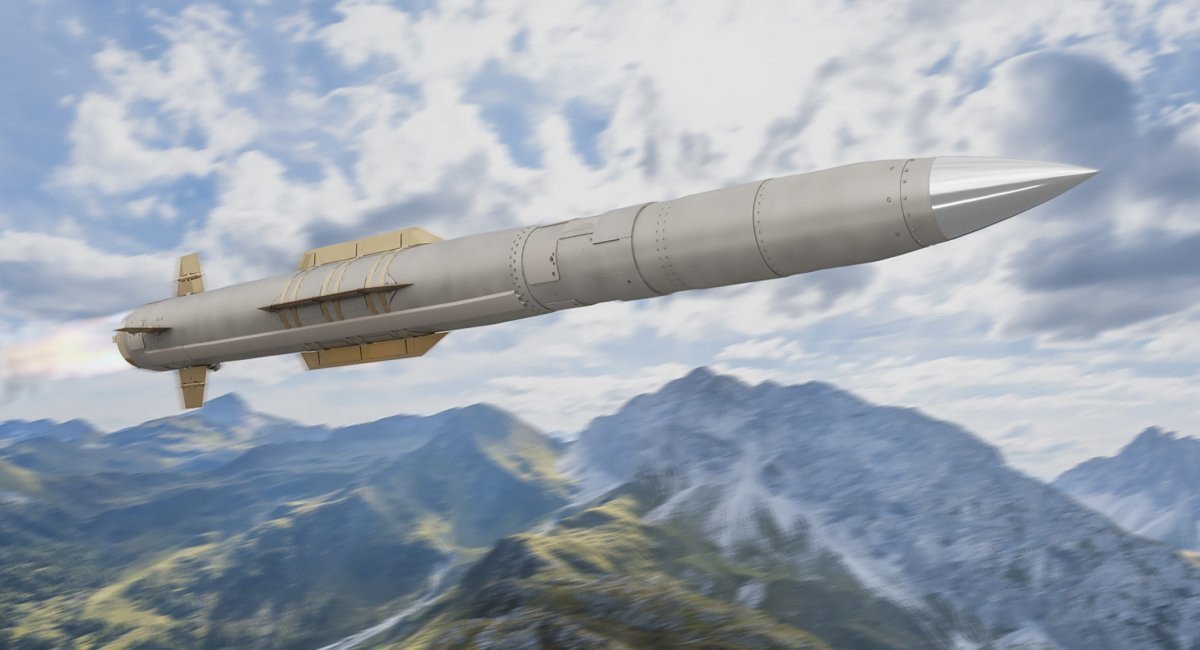
Lockheed Martin’s new PAC-3 ACE interceptor was unveiled as a potential answer to one of the biggest problems facing Patriot operators: severe interceptor shortages and limited manufacturing capacity.
But new details show that achieving a significantly lower price required sacrificing one of the PAC-3 MSE’s defining capabilities, Defense Express reported on August 21.
We bring you stories from the ground. Your support keeps our team in the field.
The PAC-3 Adapted Capability Effector, or ACE, was formally unveiled at the Farnborough International Airshow in July.
Lockheed Martin says the interceptor will cost less than half as much as a PAC-3 MSE and is designed for faster, larger-scale production with participation from US and European defense companies.
For countries facing shortages of Patriot ammunition—including Ukraine, which relies on PAC-3 MSE interceptors to counter some of Russia’s most dangerous ballistic missiles—the concept initially appeared particularly significant.
The lower price, however, comes with a substantial technical compromise.
Lockheed Martin Vice President Jason Reynolds confirmed during the Space and Missile Defense Symposium that the PAC-3 ACE will not use the kinetic hit-to-kill interception method employed by the PAC-3 MSE.
“We basically modified the front end, modified the back end, took out the [Attitude Control Motors], so it’s no longer hit-to-kill,” Reynolds said.
Defense One reported his remarks and also noted that the new interceptor will operate at a reduced range compared with the PAC-3 MSE.
🇺🇸 JUST IN: Lockheed Martin has unveiled the PAC 3 ACE, a lower cost Patriot interceptor designed to expand affordable air and missile defense capabilities against a range of aerial threats.
— Defense Intelligence (@DI313_) July 21, 2026
The new interceptor is expected to cost less than half the price of the current PAC 3… pic.twitter.com/kyjmCGbgPc
That confirmation supports an earlier assessment by Defense Express, which noted after the missile’s Farnborough debut that promotional imagery appeared to show the PAC-3 ACE without the Attitude Control Section used by the MSE to make extremely precise terminal maneuvers before directly striking its target.
Additional details Reynolds previously provided to Janes show that Lockheed Martin has simplified nearly every major part of the interceptor to cut costs.
The PAC-3 MSE’s dual-pulse solid-fuel motor is being replaced by a simpler single-pulse design, while the missile’s midsection has also been simplified.
The Attitude Control Motors have been removed, and the ACE will use a less complex seeker. Instead of relying on a kinetic collision to destroy its target, the missile will carry a conventional blast-fragmentation warhead.
-faa0805607bc8eb0482b2116759ee844.png)
The software and elements of the existing PAC-3 control architecture are expected to be retained or adapted for the new missile.
Defense Express argues that these changes make the PAC-3 ACE conceptually closer to the older PAC-2 GEM-T than to the PAC-3 MSE.
The distinction is especially important when dealing with ballistic missiles.
The PAC-3 MSE is designed to physically collide with an incoming ballistic target at high speed, destroying it through kinetic impact. By contrast, a blast-fragmentation interceptor detonates near the target, damaging or destroying it with an explosive warhead and fragments.
Non-watermark footage showing the work of Ukraine-operated Patriot air defense systems over Kyiv yesterday.
— Status-6 (War & Military News) (@Archer83Able) June 26, 2026
The launch of two PAC-series interceptors can be seen, with two apparent successful interceptions of Russian missiles. https://t.co/HXMN7QarKQ pic.twitter.com/bSRTPuUpNR
As Defense Express notes, that means an intercepted ballistic missile or its warhead could still fall toward the ground after being hit, potentially creating a different risk for the area being defended. The PAC-3 MSE’s hit-to-kill approach is specifically designed to destroy the incoming target through direct impact.
The ACE therefore does not represent a way to reproduce the PAC-3 MSE’s full capabilities at half the price. Instead, Lockheed Martin is trading some of the MSE’s most sophisticated—and expensive—technology for an interceptor that could be substantially cheaper and easier to manufacture in large numbers.
And despite Lockheed Martin’s emphasis on rapid development, the missile will not arrive immediately.
Defense One reported that the PAC-3 ACE’s first flight is not expected until early 2028, with production planned roughly 18 months after that—putting serial manufacturing around mid-2029 if the current schedule holds.
That timeline underlines another point raised by Defense Express: there is still no quick technological fix for the shortage of sophisticated anti-ballistic interceptors.
Even the world’s largest defense contractor cannot simply remove the manufacturing bottlenecks surrounding a high-end hit-to-kill weapon while simultaneously cutting its price in half. PAC-3 ACE may ultimately offer Patriot operators a much larger supply of lower-cost interceptors, but it will achieve that scale by becoming a different kind of missile from the PAC-3 MSE it is intended to complement.
Previously, reports emerged that Ukraine faces a severe shortage of air defense interceptors, leaving advanced Patriot launcher units idling in rural fields.
Ukraine currently holds only 1% of US missile stockpiles, well short of the 5% requested by President Volodymyr Zelenskyy to secure air coverage through the winter.
A system spotted near Kyiv has 16 tubes showing signs of past use, but its unit chief engineer, Dmytro, noted the launcher had not fired in six weeks.
Discuss this article:
-9a7b3a98ed5c506e0b77a6663f5727c5.png)


-111f0e5095e02c02446ffed57bfb0ab1.jpeg "Photo of Roman Kohanets")