- Category
- Defense Tech
Russia Launches Second Satellite Batch for Its Starlink Rival—the Math Still Looks Rough
 Prefer U24 Media on Google
- Authors


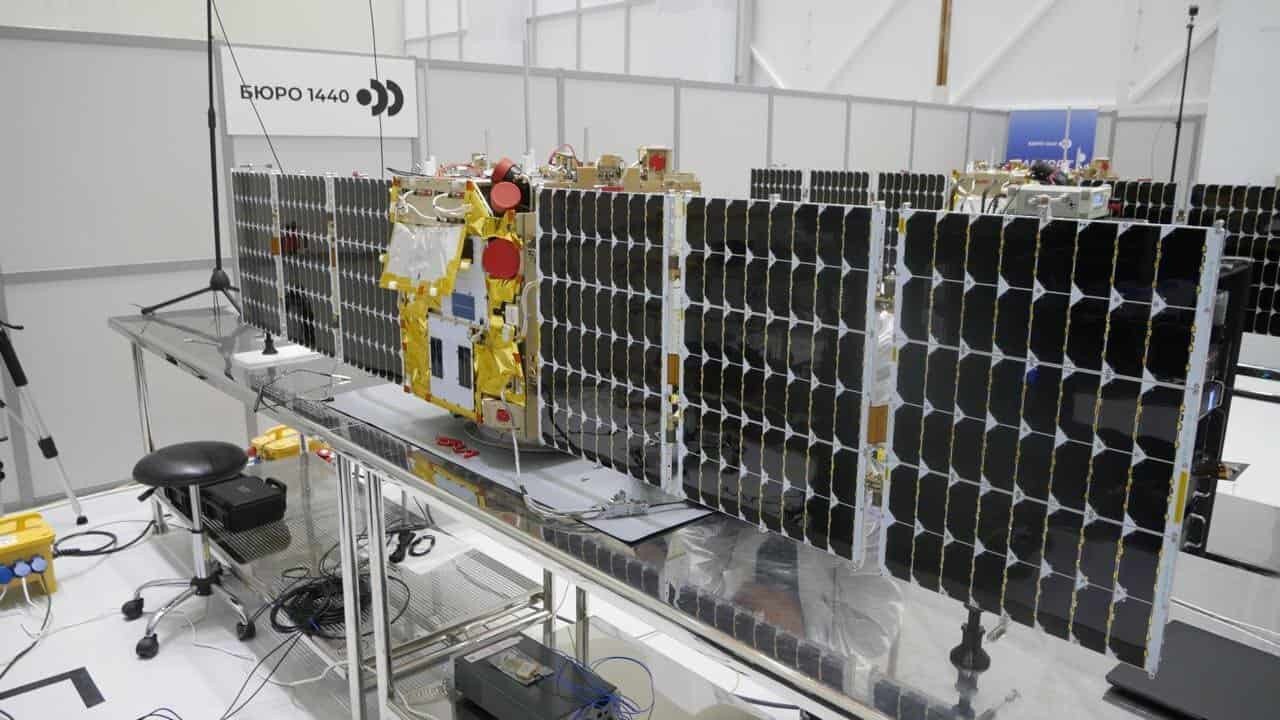
Russian company Bureau 1440 has launched a second group of communications satellites for Rassvet, Moscow’s planned low-Earth-orbit alternative to Starlink.
The spacecraft successfully separated from their launch vehicle and established contact with the mission control center, the developer reported on July 20.
We bring you stories from the ground. Your support keeps our team in the field.
Engineers will begin moving the satellites into their intended orbit after completing system checks and activating all onboard subsystems.
The latest launch indicates that Rassvet has moved beyond isolated testing and into the early deployment of a full satellite constellation.
Bureau 1440 says it intends to build a globally available broadband service using its own low-orbit network.
Bureau 1440 shows footage of separation of 16 Rassvet satellites from Soyuz's third stage pic.twitter.com/jhe2krZ1kA
— afec7032 🇷🇺 (@afec7032) March 24, 2026
The company claims the system will operate at an altitude of roughly 800 kilometers, offer latency of up to 70 milliseconds, and provide download speeds of as much as 1 gigabit per second to each user terminal.
The program began with three experimental Rassvet-1 satellites launched in June 2023 to test onboard systems and communications.
Three Rassvet-2 satellites followed in May 2024, serving as prototypes for key components intended for future production spacecraft. That same month, Bureau 1440 reported a successful test of intersatellite laser communications at speeds of 10 gigabits per second.
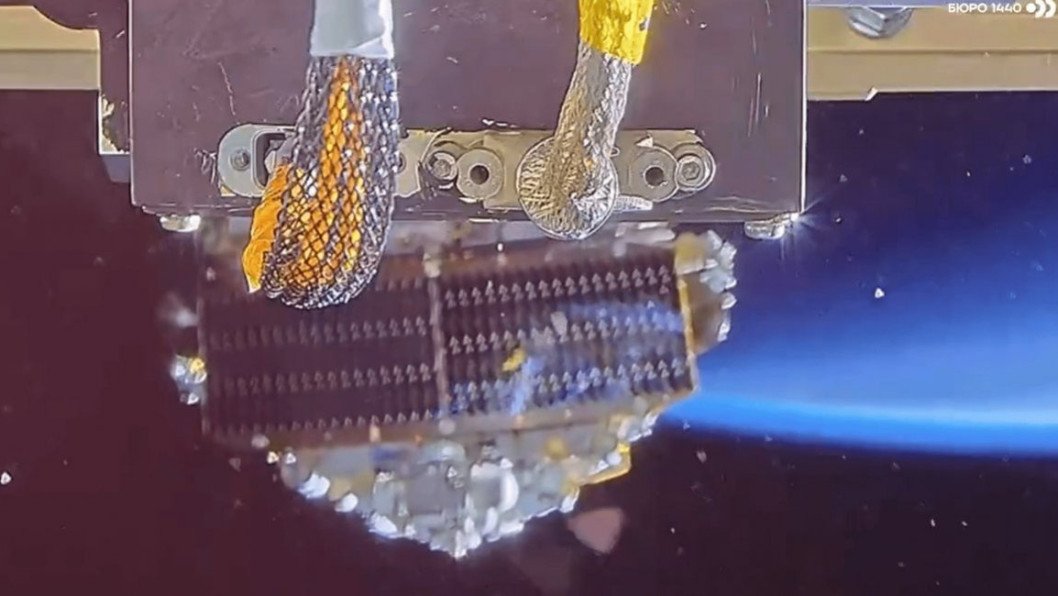
In June 2024, the company conducted its first connection between a satellite and a user terminal using 5G NTN technology.
The first 16 production satellites were launched in March 2026.
Bureau 1440 plans to begin commercial operations in 2027 with a constellation of 250 spacecraft, eventually expanding it to more than 900 satellites by 2035.
In early February, Starlink CEO Elon Musk deactivated devices not included on Ukrainian “whitelists,” following a request from Ukraine’s Defense Minister Mykhailo Fedorov, which significantly weakened Russian command-and-control capabilities in several parts of the front.
Previously, reports emerged that Russian low-Earth-orbit satellites developed under the Rassvet program may already provide intermittent battlefield connectivity over Ukraine, creating an early-stage alternative to Starlink for Russian forces.
Discuss this article:

-c439b7bd9030ecf9d5a4287dc361ba31.jpg "Photo of Katherina Popilnichenko")